
Translated material
"The flour of conscience is the main consequence of the war"
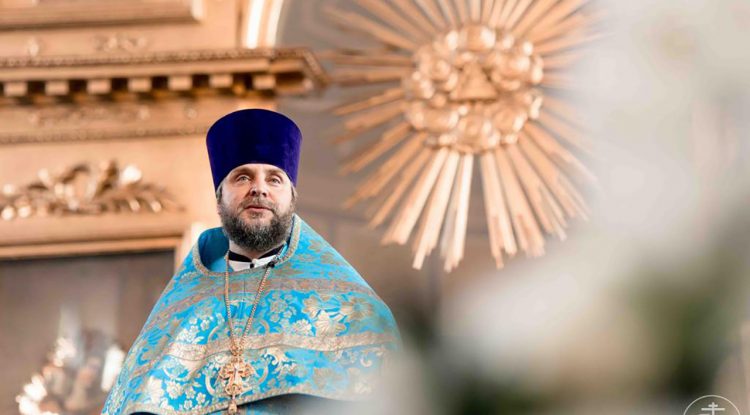
Interview with Archpriest, who served in 1986 in Afghanistan
Priests of the Russian Orthodox Church published an open anti -war letter calling for reconciliation and immediate cessation of fire in Ukraine. “No non -violent call to the world and the cessation of war should be forcibly suppressed and considered as a violation of the law, for such is the divine commandment:“ Blessed are peacekeepers, ”the letter says. Among the signatures of the letter is the abbot of the Cathedral of the Annunciation of the Blessed Virgin Mary in Shlisselburg Yevgeny Goryachev, who served in Afghanistan in 1986. He answered the specialist in the “cold” to Olesa Ostapchuk to questions about how the Afghan war was reflected on him and why now he decided to sign an anti -war letter.
- Tell us when and where did you fight?
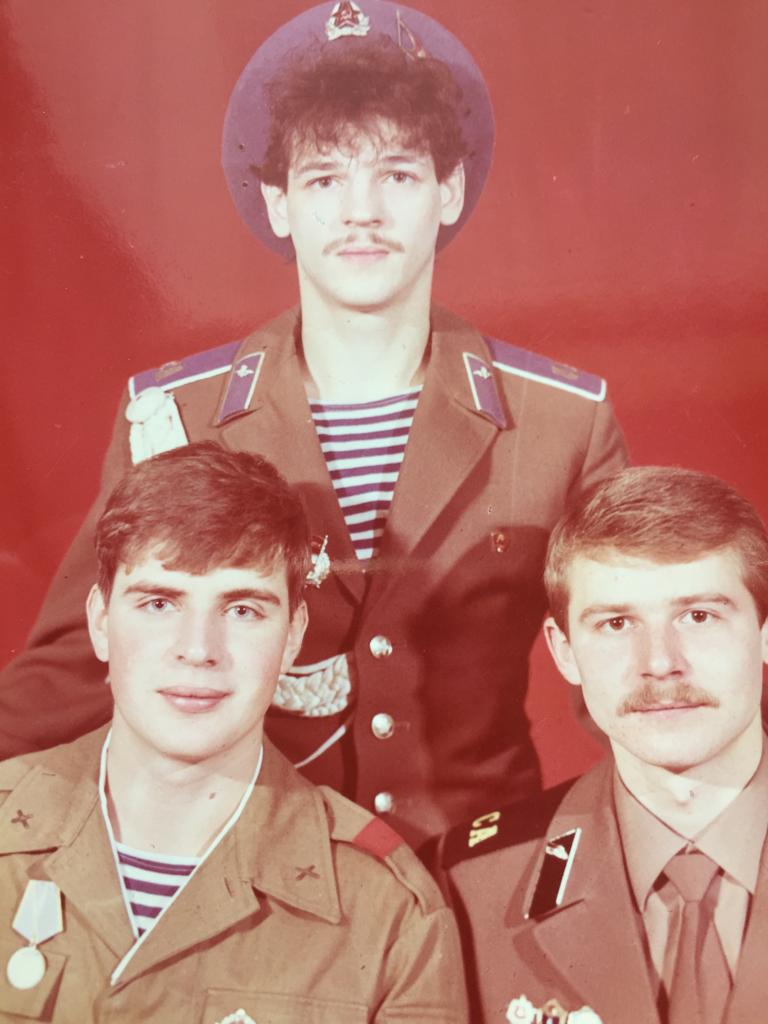
- I served as part of a limited contingent of Soviet troops in Afghanistan for a little over a year, from May 1986 to August 1987. The last rank is the senior sergeant. Specialty is the commander of a self -propelled howitzer.
- How do you feel about war? What do you remember?
- I am disgusted with war. The most memorable was the horror of its own dividedness.
- You were a believer then? Tell us when and how you came to faith.
- I was baptized at 12 years old. He has become believers from the moment of baptism, but not so much that Christian creed principles serve me a guide in everyday life, especially in war. True devotion to God came after, when, returning from the army, I became a university student.
- What are the consequences that war brought to you personally?
- The flour of conscience is the main consequence of the war. Many episodes are still facing my eyes, burn me from the inside to physical convulsions.
- You signed a letter from priests against the war in Ukraine, why did you decide to do this?
-Firstly, because I see my Christian duty in this. Secondly, because I do not want one of my compatriots to happen the same as with me.
- What were your emotions when you saw news about hostilities in Ukraine? Do you have friends there, relatives there?
- Of course, there is. Both army and seminar friends. Many of them are now priests. What feelings? Only pain, only the desire to scream and shout to those on whom the cessation of bloodshed depends: “Stop! Stop the fire! ”
- Now they often ask a question where you were eight years old, when they bombed Donbass, that you could answer this?
- Death is always a tragedy. Forcibly death is doubly tragic. My answer is extremely concise: the elimination of the consequences of the terrible Donbass tragedy cannot be at the expense of another, even more terrible ...
- What do you think, what can a person serving in the church at such a time? What can he influence, how to help?
- Pray for the world. Serve the Panichids about the dead from the other side. To use the church custom of the sadness of the authorities (the compilation and signing of peacekeeping letters is, in my opinion, part of such activities). Do not support, including in social networks, conversations that incite anger in people. Be prepared to take on personal humanitarian responsibility for the bloody consequences of hostilities.
- How do people in your environment react to war? What reaction do you see in the church?
-Everything is different here. There are no problems with friends. Real friendship is always unanimous, the unity of life goals and ways to achieve them. The family has approximately the same mood. But abroad of these communities, things are much more complicated. But it was always like that. Christ would not send disciples to preach the gospel for compatriots if everyone was originally unanimous. Therefore, God's truth in history must be made.
- Priests rarely make statements that diverge from the political course of Russia. Why do you think it happened now?
- Politics is not the main occupation of the clergy. Subminining headlong into affairs ambiguous, the priest runs the risk of losing himself and his flock. However, there are times when the problems that have arisen in external life are clear like a day. And, if you can at least somehow help their resolution, it is not only possible to talk about politics, but it is also necessary. This is quite a church tradition.
Let us recall at least the biblical prophets: John to the forerunner, the apologists of the early Church, the Ambrose of the Mediolansky, John Chrysostom, the Russian Metropolitan Philip and Patriarch Tikhon. In a word, when the blood from civilian wounds floods everything around, including the courtyards of the Lord, the clergy cannot be away.
All photos: from the personal archive of Evgeny Goryachev