
Translated material
Children running from a thunderstorm
Report from the refugee reception center on the Polish-Ukrainian border. The correspondent of "Novy" joined the volunteers
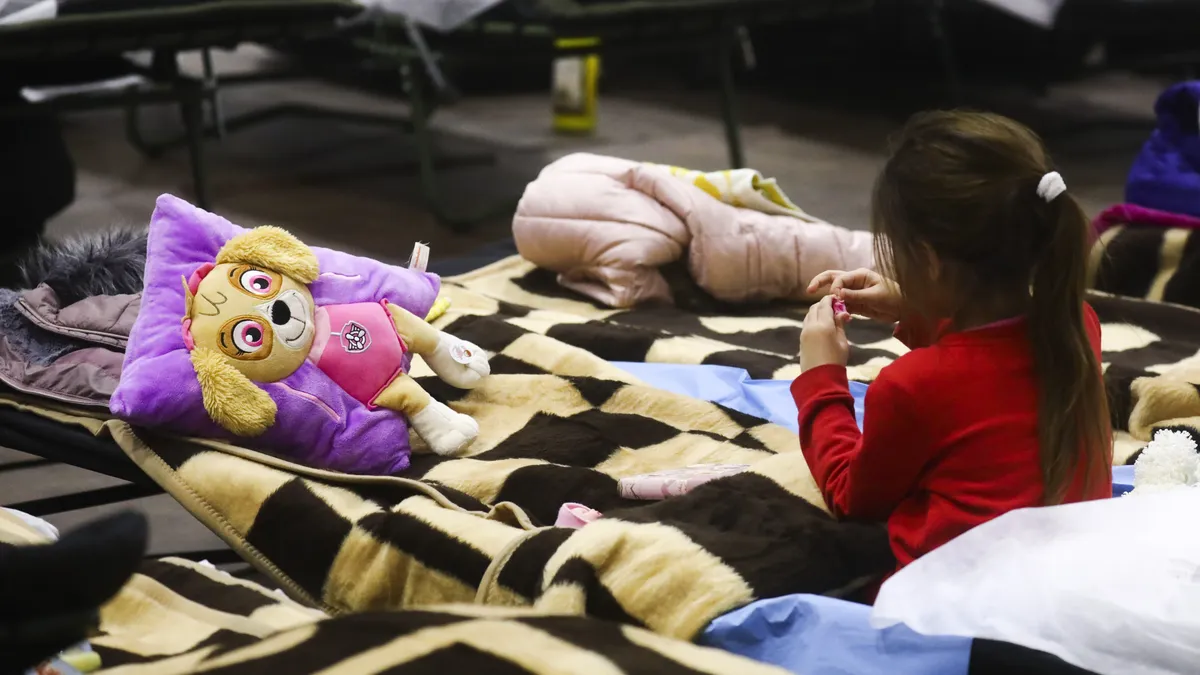
“New people” is not a song of the Spleen group at all and, moreover, not a third -grade political party. “New people” is when the volunteer Anya in the Lublin Volunteer Center shouts in a loud voice: “So, attention! New people are going, is everything ready for us? Food, clothes, blankets? "
New people are another bus or cavalry of cars that bring Ukrainians who have just crossed the Polish border. New people are women with children. There are no men among new people: they bring their families to the border and return home - some to the military registration and enlistment office, some in territorial defense.
Anya is briskly and leads loudly. Talks at once on several phones. At the same time, it distributes tasks among numerous volunteers, collects money for the Armed Forces of Ukraine and packs packages with medicines, food, warm clothes and blankets, which the Red Cross then transports the border to the Ukrainian side, in the endless queue of new people standing for days in anticipation of the transition to the other side, to safety. At first, the volunteer center looks like a psychiatric hospital: in addition to volunteers and new people, the editorial office of a local radio station is located there. Of course, it is called "New Radio" - how else? Here, with the apparent chaos, is slim, logical and beautiful.
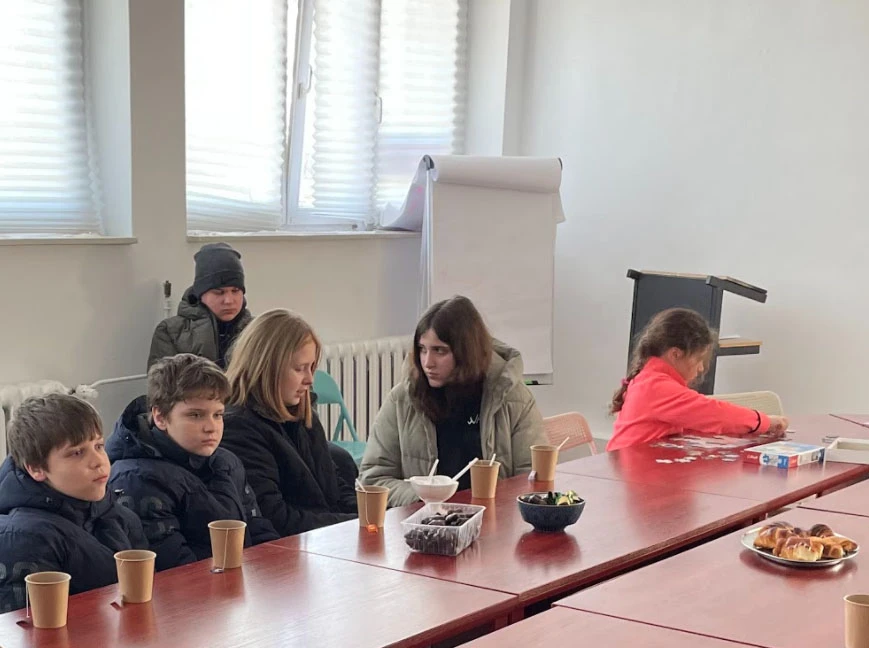
In one room is a warehouse. There things are collected in large bags. On the bags, stickers: “female”, “male”, “children's”. The toys are not signed, plush cubs and hares, whose heads stick out of bags, and without stickers explain that there are in these bags. Children's backpacks with notebooks, penalties, Ukrainian children's books - this is separate. In another room - a large table, a kettle, a cooler of water, a bunch of toys. There, new people feed, calm, explain that now everything will be fine. They are looking for housing and "foster" families. Everyone should have such a family of local ones, which, if necessary, will help with going to local authorities and receiving documents, with transfers and purchases, and without the need will simply be friends. In the third room - the editorial office of the radio, in the fourth there is a studio, but the children who rush along the corridors are completely indifferent - a burning red light bulb, a warning "Do not enter, there is an air!". They run into all the doors closed in ordinary times and laugh. And no one says that you need to behave well and sit quietly when adults work. These children have already sat quietly in the basements at night, when other adults were responsible for dropping bombs to their cities.
At the last door at the end of the corridor there is a sheet of paper with the inscription "Closed to the end (...) [" Specialoperation "]." Behind this door is the priest Mechislav Puzevich, the man who created this volunteer center long until February. Because before there were other refugees. They accepted the Bosnians, Chechens, Georgians, Belarusians, Ukrainians. In the absence of wars, he helped drug addicts and criminals. Now just a lot of work again. Avral.
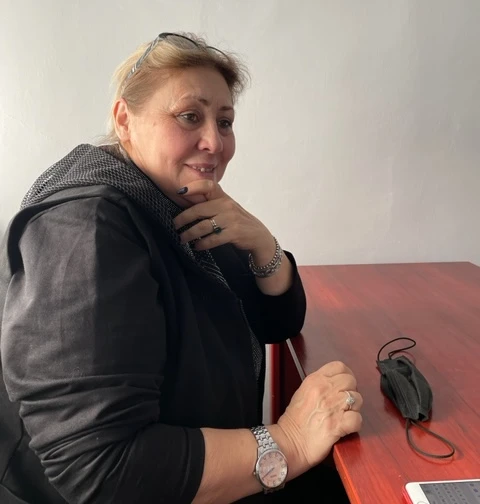
- And so I tell my Chechens that I am not married, since the Catholic priest. And one of them - a widow with eight children - says: "Well, marry me, what's the problem?" - Priests likes to tell stories about his communication with many thousands of refugees. Everyone laughs - both refugees and volunteers. - But, by the way, Leila arrived! She helps Turkish Turkish in Georgia, and now it helps Ukrainians.
Then the priest is said that at the border, some villain offers refugees a transfer for 130 euros.
With screams: "I will kill him!" - The Monk runs away.
And I meet Leila.
- In 1993, Ukrainians saved me. The war began on August 14, 1992, but no one immediately understood this. Two, two - no one yet understood. And then we went to fight. My family too: husband, dad, cousin. Well, I went. She was in the fifth year of medical and went to the sanctuary. So, in 1993, when Sukhumi fell, many went to Georgia through the mountains, to Swannia, and I and my children were lucky to get on a Ukrainian ship. Then the warships of Ukraine helped export Georgians. All the men of my family remained there, and I and my children sat on the ship. There were several ships - they then lined up with a pentagon, and in the middle - the Georgian ship Abkhazia. They covered him with themselves. I remember there were so many people, so they burst into that ship that the youngest daughter fell into the water. Of course, she was saved, but the backpack with books drowned. She still cried, and I did not understand how to cry because of books, if we are saving our lives now. True, when the night came, we all doubted that we would be saved: Russian helicopters hung over us, we called them “dogs”. There are five hundred people on the deck - and the feeling that they were all dead. Because no one is breathing. The silence is absolute. And the Ukrainian sailor says quietly: “Do not worry, they will not bomb us. They know that our shell, if anything, will fly to Gudauta. ” And indeed, they hung - and flew away. Only then did everyone begin to breathe. So could I stay at home now? Ukrainians saved me and my children - it means that I now have to save them.
Leila's brother and father survived. And the husband was killed shortly after her evacuation. Talking with Ukrainian women, comforting them, explaining to them simple actions for the near future, she knows that her husband will return to one, and never to the other. Some will remember the minutes of farewell to the border crossing as a very important event in life together, but no more important than the meeting after the war, while others are the last day when they were still together. But today, both have not yet pulled a match from the hat, they still do not know who will get the one that with a broken head, and, of course, they still hope that it was not for long and everyone will return home soon. In destroyed or surviving houses, it does not matter at all.
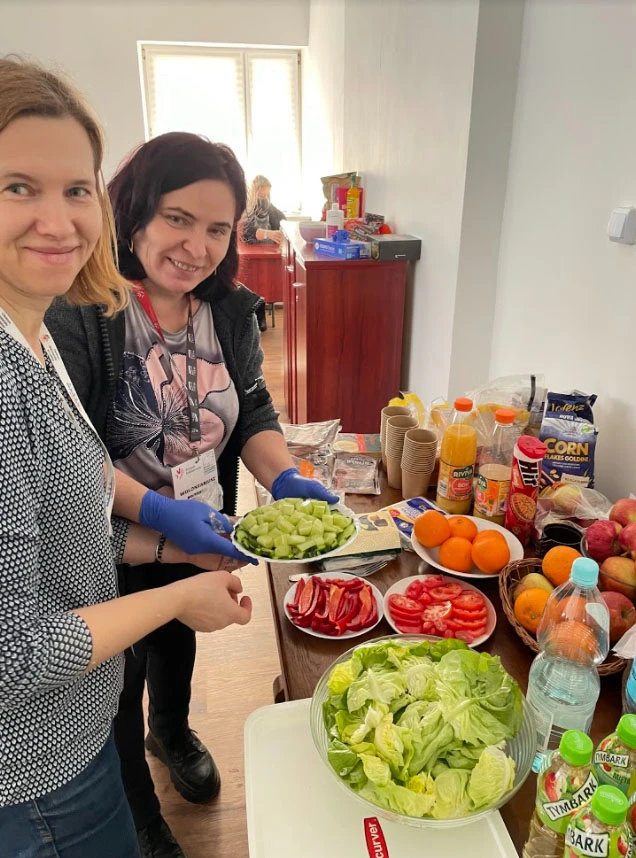
“We have a complete and final international here,” says Priest Mecherslav. - There are volunteers, of course, from Poland, Ukraine, Belarus. You have already seen Leila from Georgia. And we also have volunteers from Kenya and even from Zimbabwe. Who studies here, who works - how they learned what is happening with Ukraine, and came here. ” So, in general, in all of Poland is happening now. The Poles say that now they have solidarity, as in the days of "solidarity". People break off their places - and not only residents of districts near the border with Ukraine. They go from Warsaw, Poznan, Wroclaw, Shchezin. Loads are loaded with food, blankets, clothes and hundreds of kilometers go with one purpose - to help. They unload their cars at the border refugee reception points, they are transported to the relatives and friends of those who are already waiting in Poland. Offer rooms in their own apartments and cottages, pay for hotel rooms (however, this is infrequent
- Hotels themselves give their rooms their rooms for free).
They go shopping and pharmacies when it becomes necessary to replenish the reserves of something specific. In the Polish group of assistance to Ukrainians on Facebook on February 25 there were already 200 thousand participants. March 1 - 300 thousand. Sometimes there are posts of this content: “Guys, now you don’t have to go to the border, we have more volunteers here than refugees, the reception points are equipped with everything necessary beyond measure!” But the work is always.
In the Lublin Volunteer Center, I met four Belarusians at once. Two Nastya, Sasha and Diana study at local universities. They came right away, without any searches - the Kusentza Puzevich’s volunteer center knows all Lublin. On Saturday, February 26, Nastya went to the border crossing of Dolbubovy with classmates. Six people: three Belarusians, three Ukrainians. There were a lot of people at the reception point. Fortunately, the majority had where to go. Farm or friends were supposed to come for them. Those who no one had to come for were engaged in Polish volunteers. Nastya and her friends became a kind of meter-endors: they met new people, showed them where the office is, where the medical office is, and where the waiting room with the caskets. Diana was put on the processing of information: it is not so easy to connect and offer help to help with both of them - hundreds of thousands. (Diana, by the way, studies a very rare science: her specialty at the University of Lublin is called "Russian Philology in Customs".)
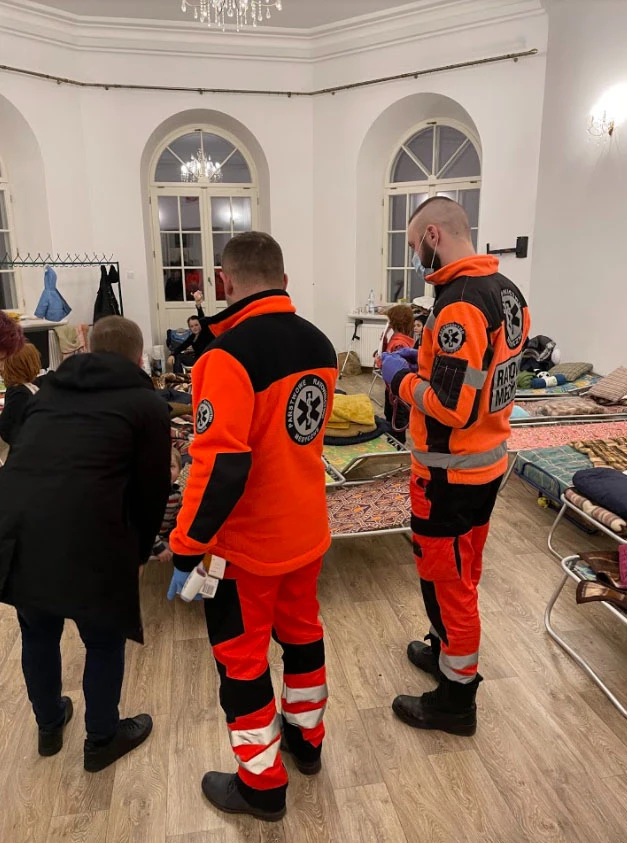
Sasha and the second Nastya worked at night at another border point, in Dorokhuska. They arrived immediately there, without any calls to the coordinators. And at first they were told “thank you, now we don’t need help”, but less than a minute in a minute they called to sort products and pack dry rations. The girls worked all night. Sometimes firefighters came and took part of the dry rations, took it directly to the border. In addition to packing, I had to work as translators. “New people come with children. Poles immediately offer: "Herbatka, canapons!" And they do not understand that these are tea and sandwiches, ”says Nastya. - And we immediately: go to us! They go, we translate, explain. They ask: "Where are you from?" We say Belarusians. They are to us: "Ah, so you are our Belarusians!" We say: "Of course yours!"
Sasha says that there are more children among refugees than adults. Many families gather everyone-from a brother, from a sister, from the cousin-and delegate one of the women to take them out, and everyone else remains and join Terboron. The usual situation is when they are asked to collect food on the road to the family, where one adult (more precisely, one adult) and five or six children. Today's “collective refugee” from Ukraine is a child. It is good that drivers with minibuses come to refugee reception points: large families are placed there. However, passengers and a route are also always located for drivers of small cars. For me too. And by the way, I am in a winning position:
Many women with young children are afraid to get in cars with unfamiliar men. Even after the horrors of bombing, even after several days of waiting on the border, even when a normal night with hot water and clean underwear is already close.
They trust women for women more. Volunteers know about this and, at the request of refugees, record the numbers of the machines on which they are sent. From the Lublin Volunteer Center I am going to Dorokhusk.
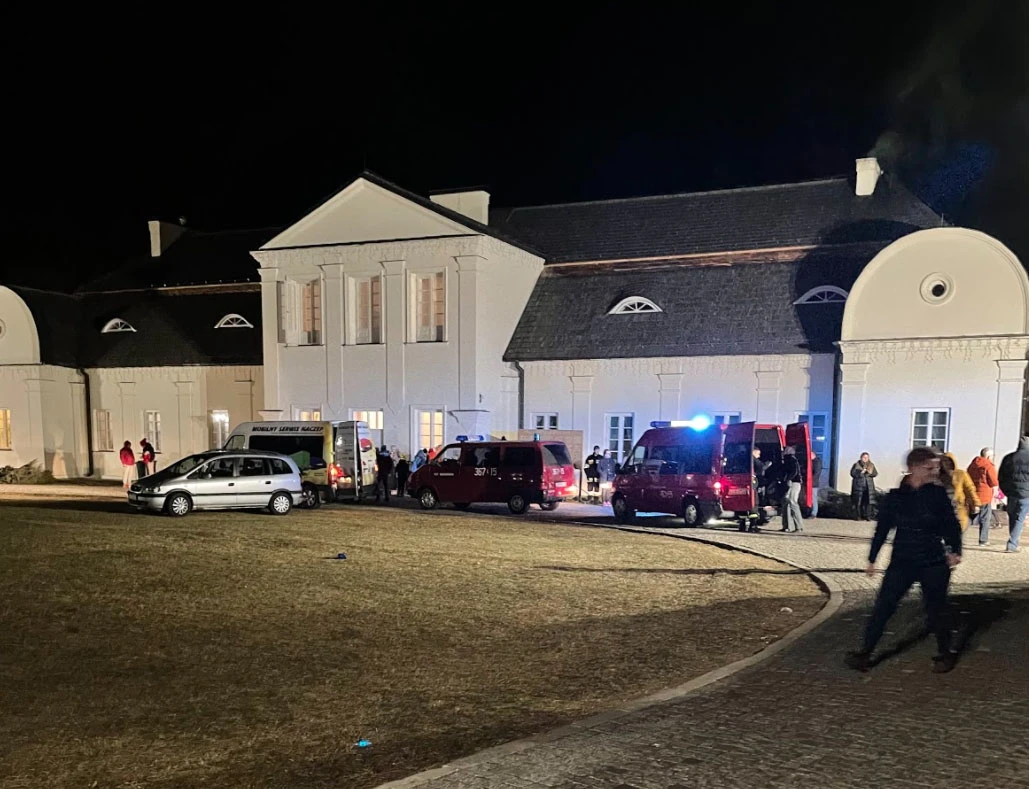
The mayor of Dorokhuska gave the Baroque Palace of Sukhodolsky to the refugee reception point. It was built on the banks of the Bug in the XVIII century. In the XX - restored. Until February 24 this year, it was a local cultural center. Now they accept refugees. A huge board of ads is filled with offers of free housing with phone numbers. In the waiting room are the cot on which someone is sleeping, someone is sitting in anticipation of transport. Cell operators give free SIM cards with minutes on, free calls to Ukraine and the Internet. In general, in Dorokhusk, refugees do not linger for a long time, unlike Przemysl. Trains from Lviv come to Pshmysl, and many are lost at the Lviv station. Those who arrived then wait for the next train for a long time. On March 1, all the volunteers in Pshymysl lost their feet, looking for Tatyana Vasilievna, the wife of Ivan Egorovich. The elderly spouses were lost at the station while landing on the train. Fortunately, Tatyana Vasilievna was eventually found.
Three women are sitting in the waiting room on different benches. One has a sleeping child in his arms, the other has a cat, the third has a dog. They are very similar. At first it seemed to me that they had similar faces. Then I realized: no, not face. They have the same hands. Hands hugging a defenseless creature, it turns out, are always the same. And no matter what creature they protect - a person or a cat.
These are tense, firm, vigilant hands, ready at any moment to clench into fists.
"Can you take three people to Warsaw?" Yes, of course, I can. I will take it in any direction, Warsaw is still a completely comfortable option, only 300 kilometers. My passengers are Yana Loginova and her sons, nine -year -old Vladislav and twelve -year -old Yaroslav. We are going.
Almost immediately, Vladik becomes bad, he is sick. “He always rinses in the car, we usually give a tablet in front of the road, but the pills in the car forgot when the husband brought us to the border.” Nothing, let's go to the pharmacy. Vladik is worse. We stop at the gas station - go out, breathe, drink, wash with cold water. Almost immediately, a car with Ukrainian numbers stops nearby. Yana says: “Maybe they have tablets from motion sickness, I’ll ask now.” Suitable: “Tell me, be affection ...” Three women who got out of the car laugh: “Yes, we are the same as you! Only from the border, we can’t tell anything else. ” They have no tablets.
After washing the boy, it becomes easier, and we reach the pharmacy calmly. After the tablet from the motion, he quickly falls asleep. The eldest, Yaroslav, is also sleeping. They spent two days in line on the border.
On the way we talk with Yana - she does not want to sleep. Rather, it cannot yet. As soon as they drove away from the pharmacy, she received a message from her brother from Zaporozhye: "We blew up a gas station." And Yana with children and husband lives in Irshansk - this is a village in the Zhytomyr region. There is a mining and processing plant. The husband works in a career where titanium ore is mined. Yana - in Zhytomyr at a factory that makes electrical wiring for cars. She gets to work every day for an hour forty minutes. Throughout the field of workers, a service bus is collecting. After the shift, he delivers. Yana's salary is 10 thousand hryvnias (1 hryvnia - about three Russian rubles), her husband’s salary is 13-15 thousand hryvnias. They give 4 thousand monthly for the hostel in which they live. In general, they live not easy. But they save, spend reasonably. They saved money for vacation - they wanted to go to Turkey in May in May. “In May, it is still inexpensive,” Yana explains. - So, we planned vacation and even in January, in advance, made the children passports. They thought we would take them abroad for the first time. So they took it out, and the passports came in handy ... "
The plant on which Yana works stopped on February 25. Vitaliy’s husband said: “You have to go, I’ll take it to the border, and I will return - and to the territorial defense.” The surroundings of Zhytomyr were already fired at that time. When fighters appeared on the career where the husband worked, it became clear that children should be taken away as soon as possible.
Yana says: February 24, in the morning, the bread in the store was still worth 16 hryvnias, and the next day - already 20 hryvnias. “It turns out, indeed - to whom is the war, to whom the mother is relative? This is very disappointing when your own profit from you. ” In local stores, the products were dismantled very quickly. They promised to bring bread according to the schedule, but this is already without Yana and children.
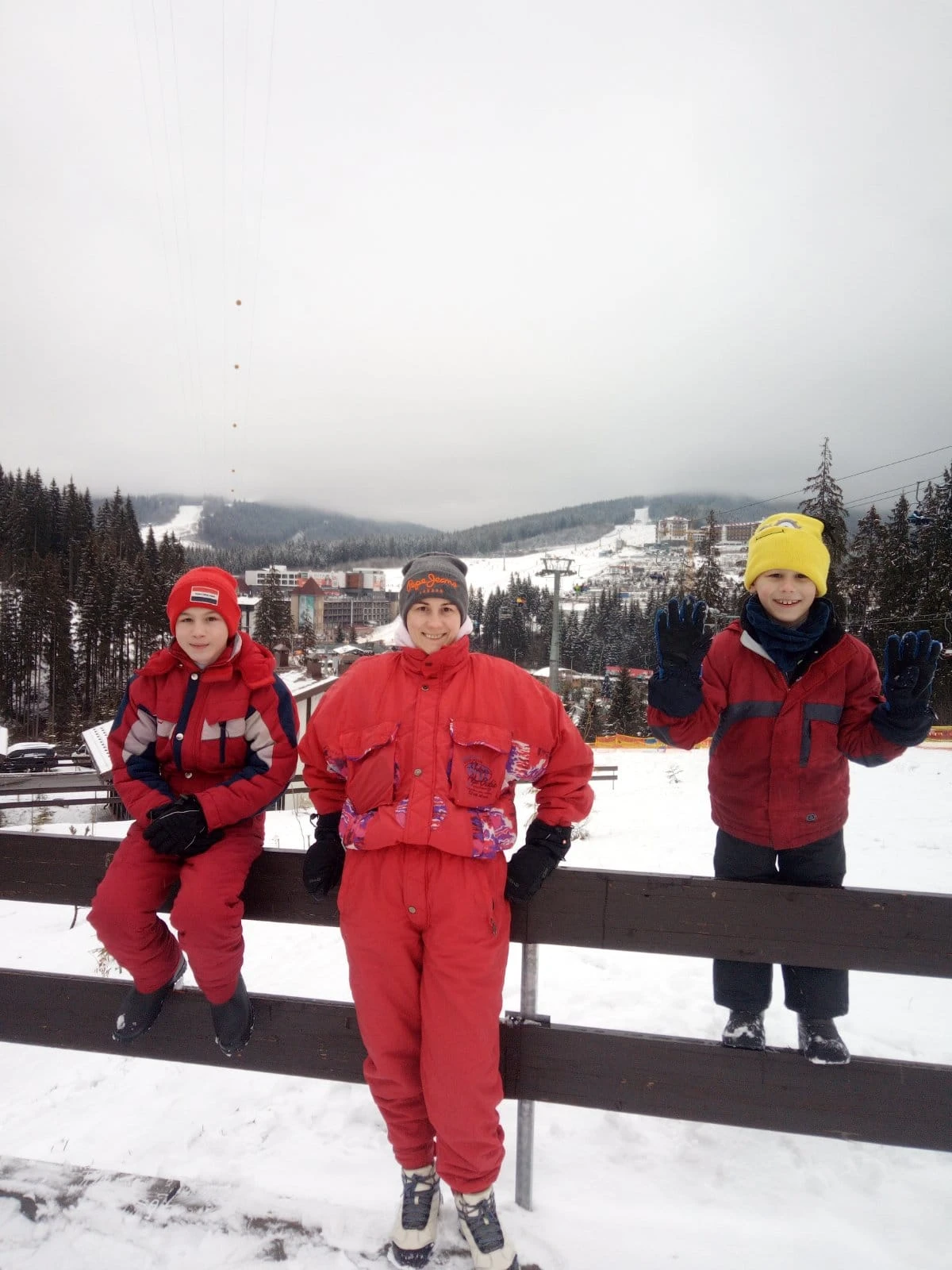
Warsaw is not the final point of their trip. My task is to bring to the railway station, where Rostislav, a fellow villager, Yana, is already traveling from Vroclav. He left Irshansk many years ago, lives near Vroclav, married to Polka Eva, and now, of course, a volunteer. Yana found him on Facebook in a group of assistance to Ukrainians. I saw in the profile that they were from one village, wrote. Rostislav promised to help: settle for the first time, find housing, help with work and school for children. Naturally, he is worried with whom she is going.
- From Minsk a driver? From which: from Minsk Mazovetsky?
- No, from Minsk Belarusian!
We come almost simultaneously. Sleepy children, staggering, are transplanted from one car to another. They don’t care where to go, the main thing is that you could sleep warmly. Hug for Yana. “God sends us people,” she says.
I think: and who then sends us people for whom to put humanity on a barrel with gunpowder and amusement with a burning wick is a basic need?
But I have no answer. I'm going to the border again. There are new people.
Now I know exactly how to fill the trunk and what is needed at the refugee reception point, regardless of the time of day and the number of people who want to help. These are diapers, jars with baby food, juices in bags with tubes, creams for diaper rash (many children remain in one diaper for two days), antipyretic and painkillers, cough syrups. Many cross the border already cold after a long standing in the cold. And I recommend that each driver of the vulture be kept in the glove compartment of the tablets from motion sickness.
In the Lublin Volunteer Center there is a terrible children's scream. The children who had cheered in warmth and satiety rushed along the corridor, and one little boy fell and cut his forehead greatly. Blood, fear, scream - as if in war. The wound needs to be sewn, the doctor is going. But this is already a peaceful injury. So do not cry, baby. Mom will blow - and everything will pass.