
Translated material
Now it's just Babylon
Hundreds of thousands of Ukrainians flee from war to Europe through Lviv. This is what is happening there. Report "Medusa"
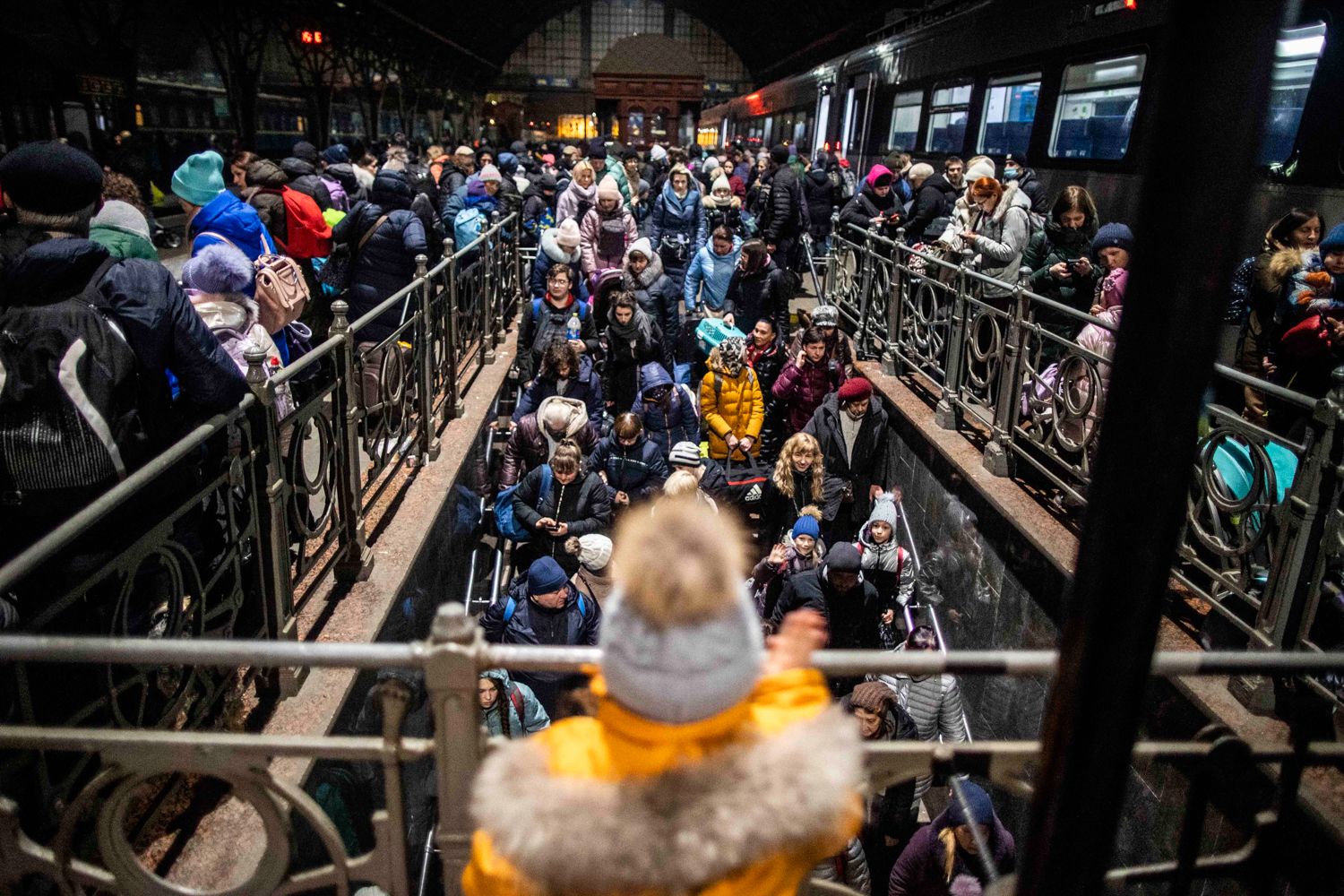
Ukrainians, fleeing the war, flee to the west of the country - to Lviv, who has not yet affected hostilities. Someone decides to wait there, but many move on-to the countries of the European Union, primarily to Poland. According to the Ukrainian Ministry of Internal Affairs, almost half a million people have already migrated . At the request of Medusa, Kiev journalist Andrei Yanitsky, who himself is saved in Lviv from missile shelling, tells how the city became a refuge for Ukrainians from all over the country.
Six days on the road
I got to Lviv late in the evening of March 2, shortly before the start of the commandant at 22:00. He stopped at the checkpoint, repaid the headlights, turned on the emergency rod, lowered the glass and prepared documents. Since the war began, I have done this dozens of times. At the checkpoints, the police and the forces of local territorial defense check documents and inspect cars - they try to recognize Russian saboteurs.
From Kyiv, I took out a six -year -old son, wife, mother -in -law and cat. He took them to the border with Moldova, where we stood in a huge traffic jam for a day. And I had to sleep, and I had to eat in the car. Residents of the border town of Mogilev-Podolsky defeated the field cuisine near the checkpoint and fed all around the clock, borscht, buckwheat porridge, beat with hot tea with sweets.
I took the cat to friends to the Cherkasy region, where it is still calm. And only after that he went to Lviv, where the editorial office of the Espreso television company temporarily left Kyiv, where I work. This whole path took six days-because of the commandant’s hour, which does not allow you to move at night, and also because of huge traffic jams on the checkpoints.
Eight days after the Russian invasion, Ukrainian cities and villages turned into fortresses: at the entrance and exit - barricades, patrols of armed fighters of territorial defense. Checkpoints appeared on the main routes. Each such obstacle has a line of cars. But at the entrance to Lviv, for some reason, there was no queue. The tired Teroboronian in camouflage and with a machine gun shone with a flashlight in the windshield, looked into the salon and waved his hand - pass.
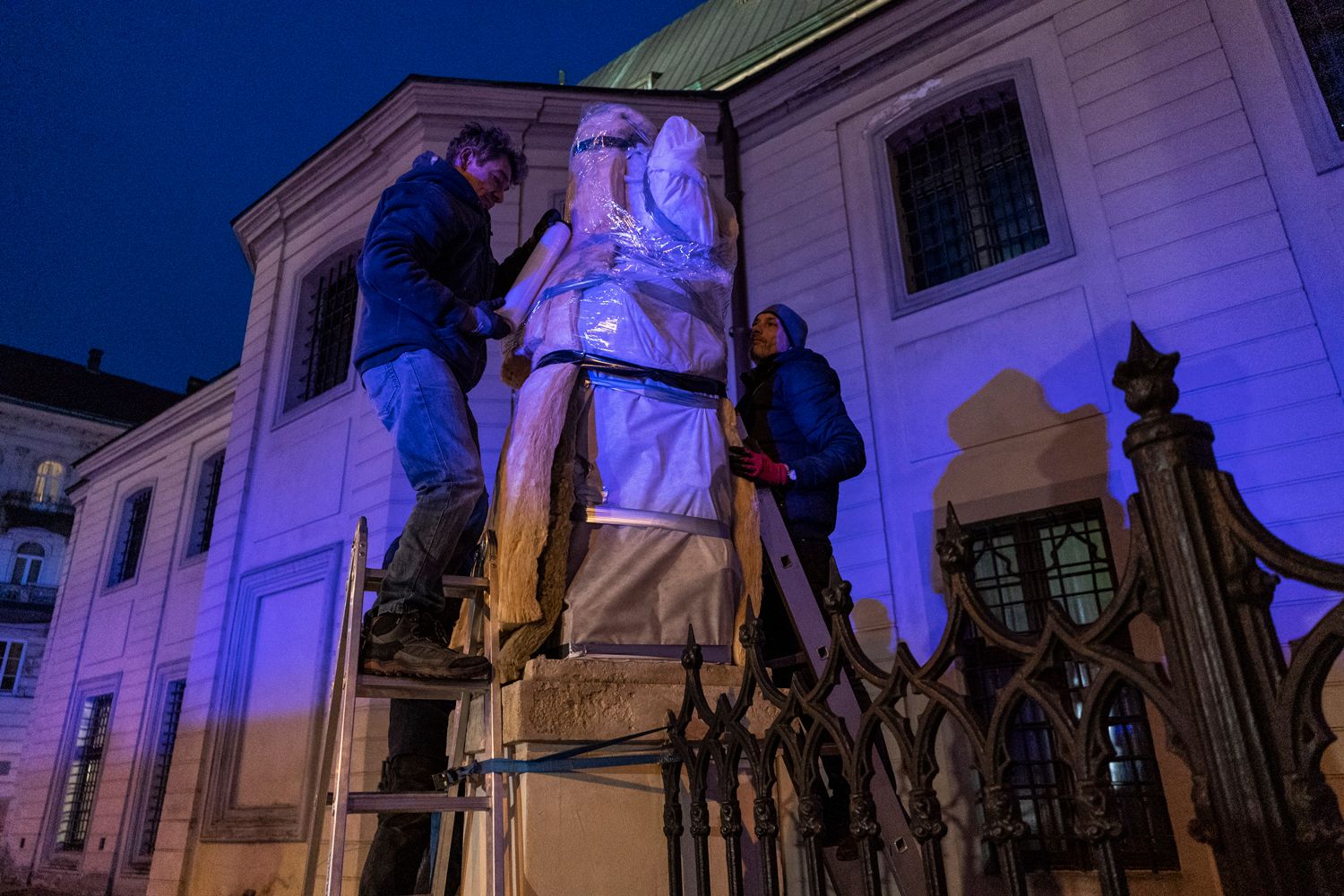
After driving on unlit - for the purpose of lighting - the roads of Lviv were struck by the lights operating gas stations and coffee houses.
I stopped in a sleeping area near the airport, in a new building on the last, 12th floor. It is almost impossible to rent an apartment in Lviv now. But some responsive residents of the city accept immigrants at home, help to find housing various charitable organizations. As soon as I crossed the threshold of the apartment, I earned a siren of air anxiety, but there was no strength to run into the basement.
Volunteers
My apartment was rented by the organization of Lviv Media forum, which helps Ukrainian journalists evacuated to Lviv. Residents in it are changing all the time. Now two live in the apartment: I and Mitya Kobrinsky.
38-year-old Mitya is a curly Odessa with glasses, says in Russian. He works as a designer, published children's books. Mitya studied in Moscow, there he met his wife - Russian woman Nastya, she is engaged in icon painting. In 2013, the couple had a son Matvey, and they decided to move from Moscow to Odessa. After 2014, the couple decided not to return to Russia.
“There, of course, it was possible to live and not stick out. But it would be a compromise with a conscience, ”Mitya believes.
At five in the morning on February 24, Mitya and Nastya woke up from the explosions. For another day they did not go anywhere, read the news about the promotion of Russian troops and waited for Mitin's mother, who was traveling to Odessa from Kyiv. On the evening of February 25, they took train tickets to Lviv.
“I caught tickets for three hours on the booking website. And when we came to the station, we realized that the guides take everyone. In a neighboring compartment, ten people with cats-pins rode. I don’t know if they paid the conductor or not, but there were more people than places, ”the designer explains.
On the eve of my arrival, the Mitya family has already crossed the border with Poland. He himself remained to help other immigrants. His relatives on the Polish side were met by local volunteers, put in a minibus, fed there and delivered to a school, in the gym of which are equipped for an overnight stay.
In Lviv, immigrants are also met by volunteers. “Lviv is fantastic, friendly, helps everyone. I have been here before, but as a tourist. And now it's just Babylon. Everyone is going here from everywhere, ”says Mitya.
In the afternoon, Mitya helps the red cross at the Lviv station. A traffic jam from buses and cars stretches to the station from the center itself, you can stand in it for several hours. Many cannot withstand, get out of cars and go with their suitcases to the station on foot - so faster.
At the station - a huge cluster of people, probably several thousand. There are many volunteers, but at the station is still chaos.
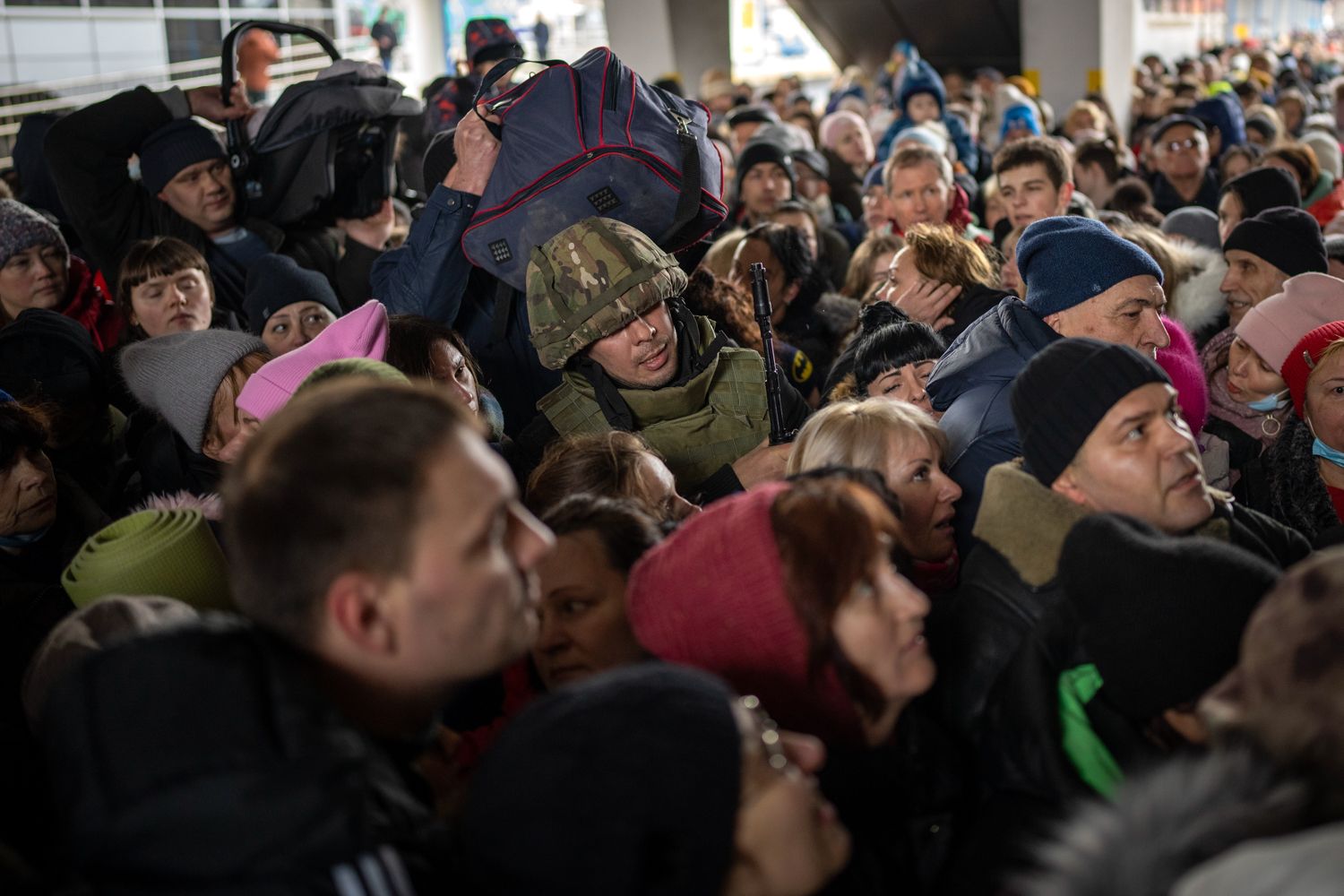
I see a crying grandmother: she came from Kharkov with her granddaughter, but they were lost in the station crowd. Volunteers soothe her, promise to find a child.
I see a family with children: they missed the bus to the border and now the father is trying to find another way to get there. “There are two places in BlablaCar, but this is not enough,” he says aloud with himself.
African students were confused and do not understand where to go. They are looking for who could tell them the way in English, but everyone just shrugs their hands.
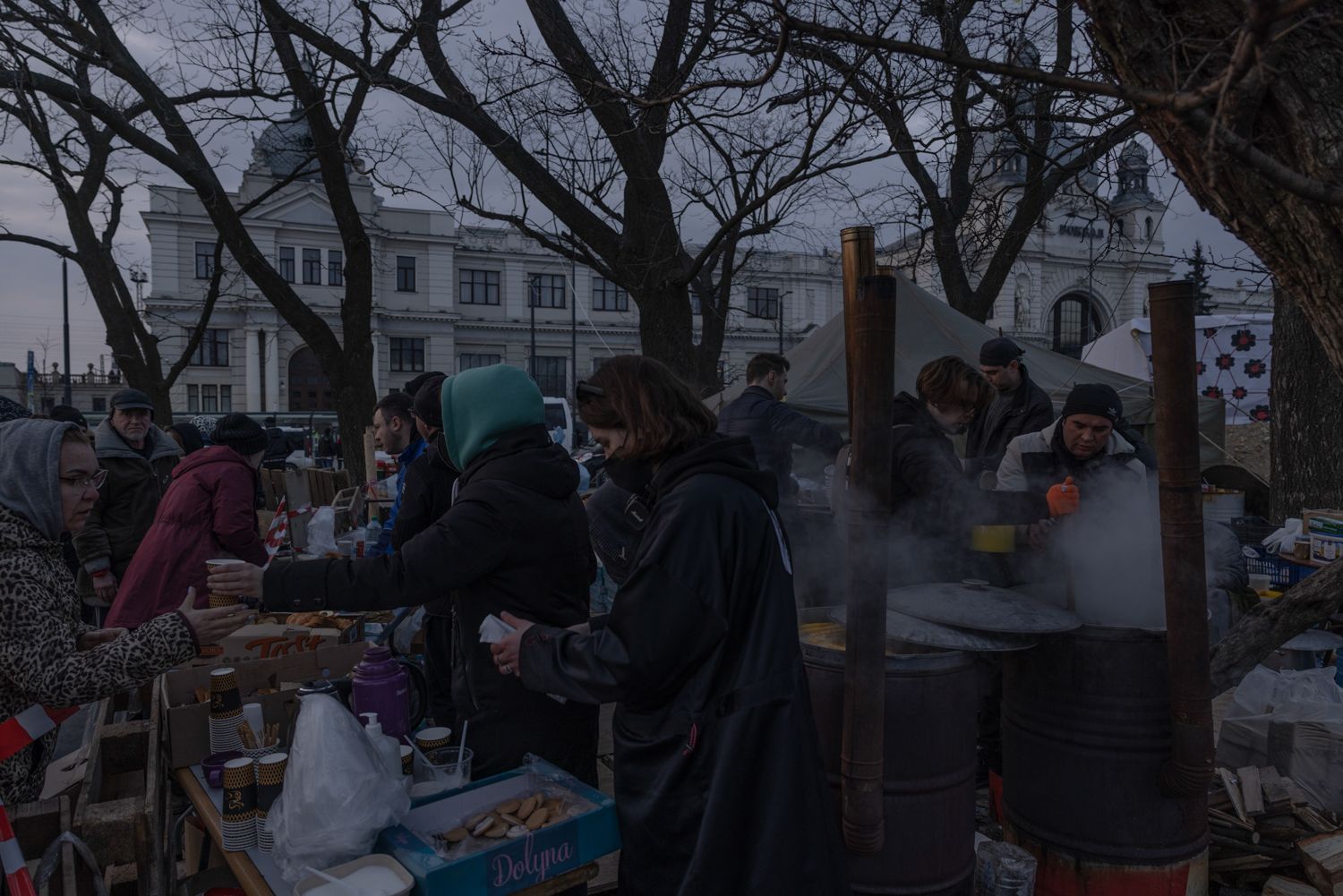
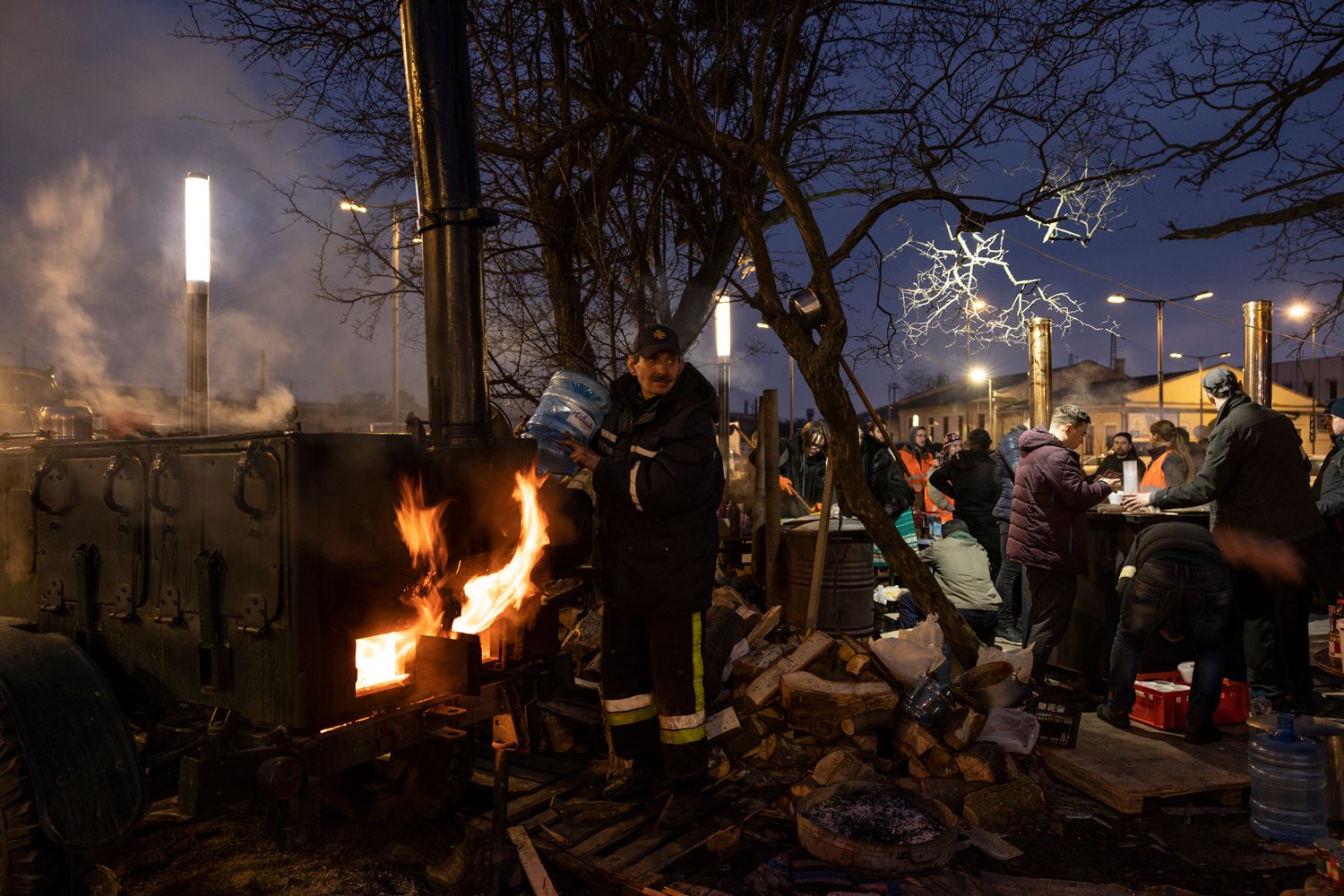
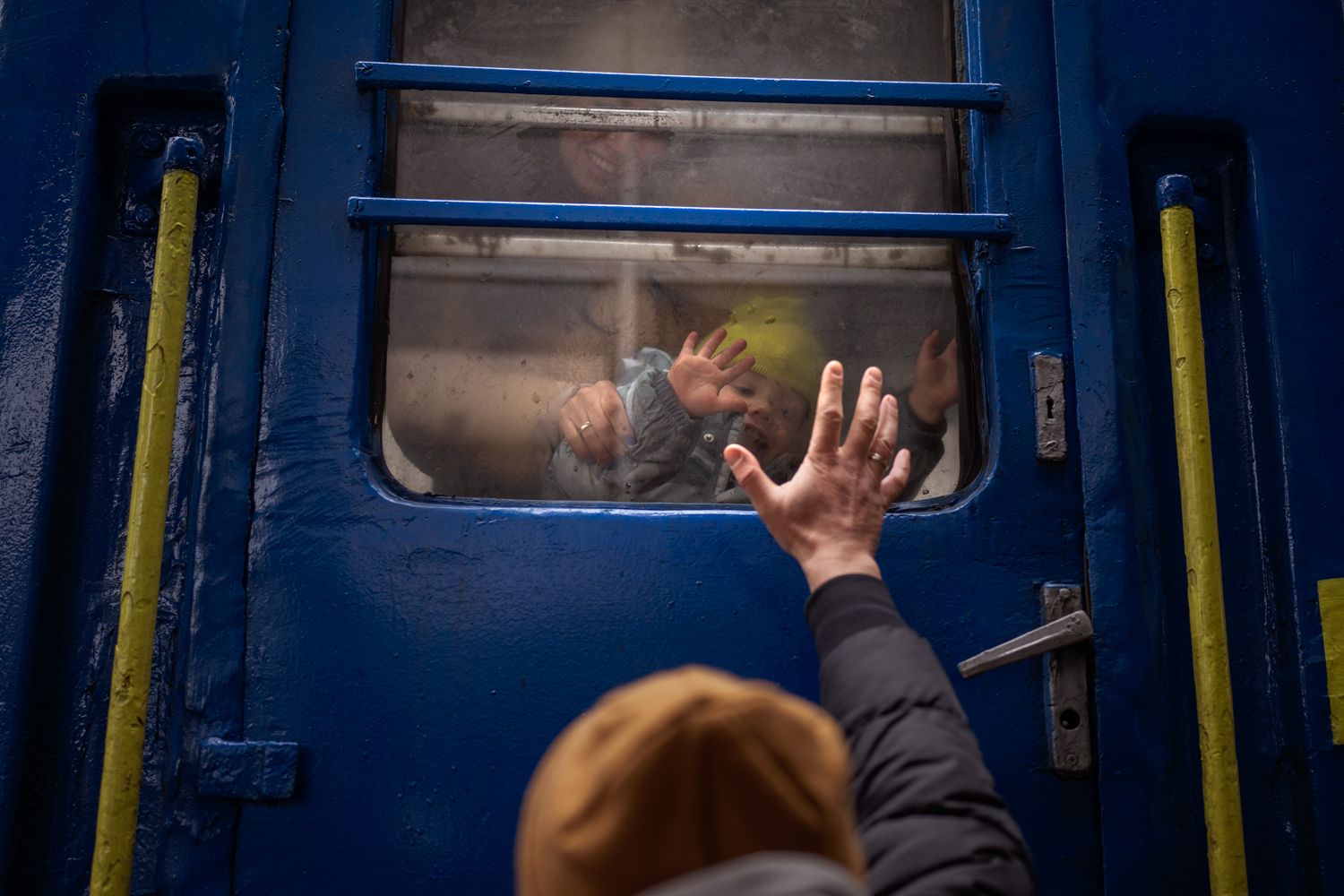
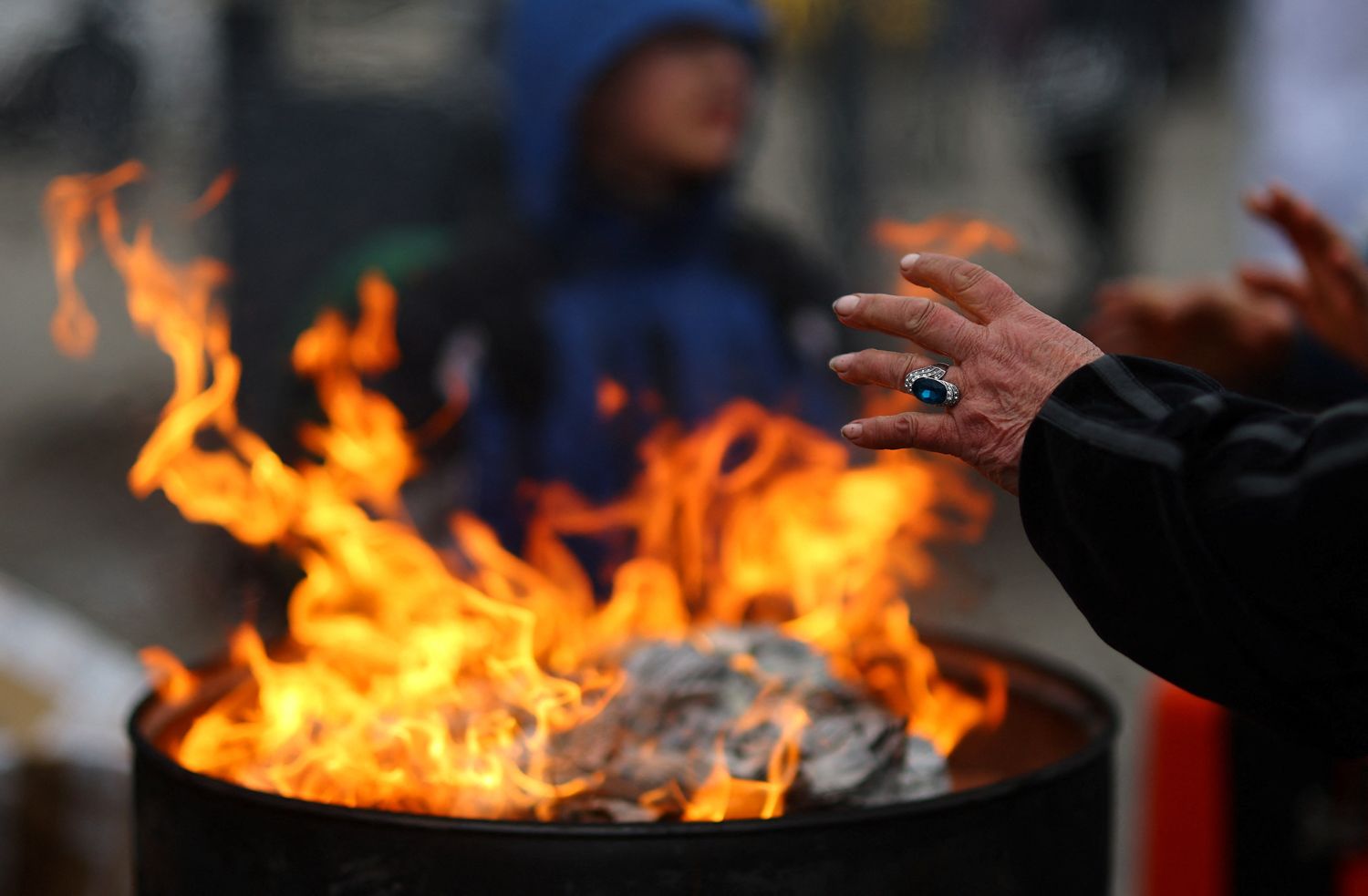
In Lviv, people arrive on free evacuation trains from Kyiv, Kharkov and other cities affected by bombing. The volunteers deployed large tents for heating at the station, distribute food and water, warm blankets, clothes. In several iron barrels, a bonfire was divorced, people are also warming up near them. Someone dragged the piano to the station-now everyone is playing it.
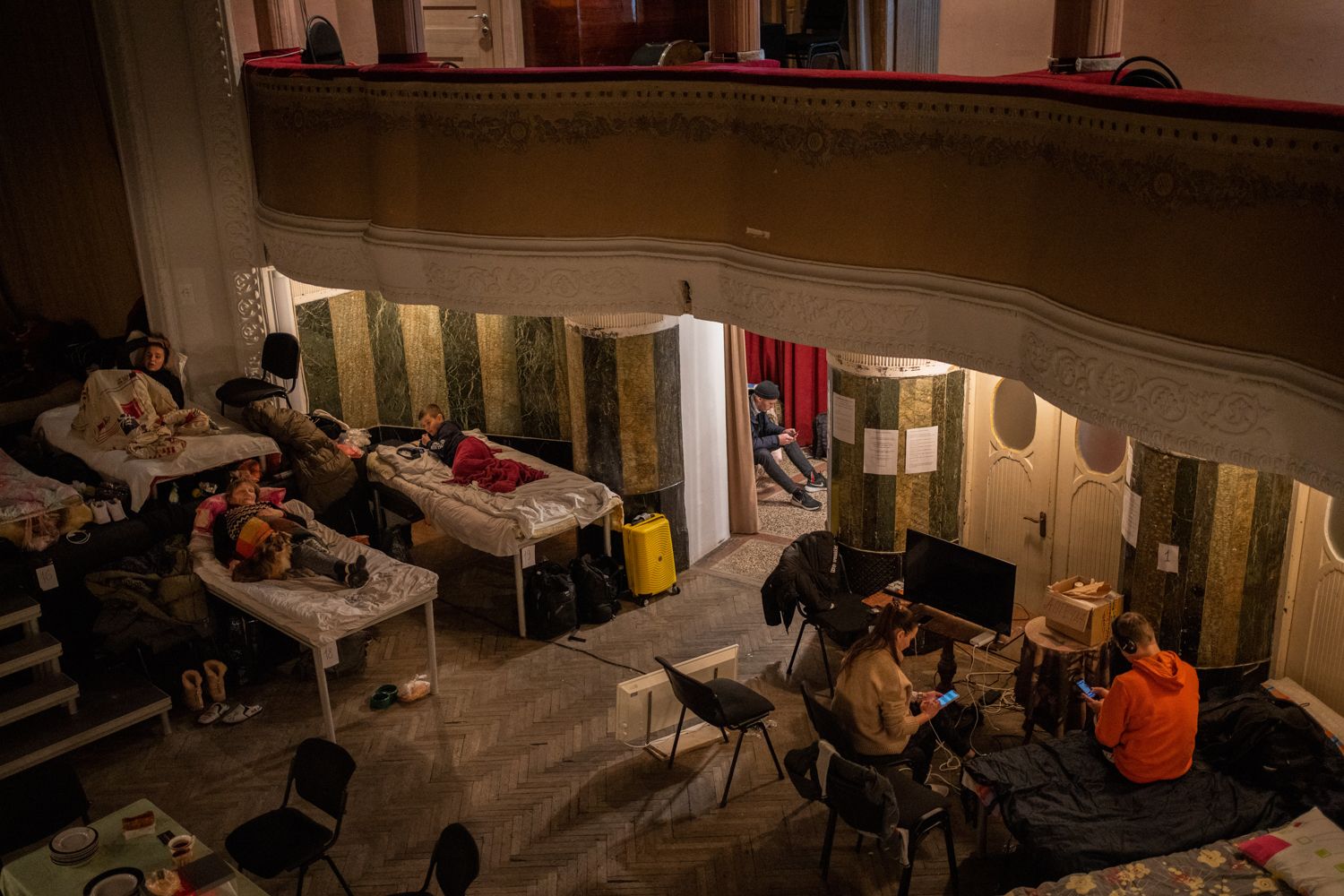
Those who came from other cities and want to stay in Lviv give addresses where they can temporarily stop - these are schools, dormitories, universities and sanatoriums. They accept immigrants in the local Palace of Arts and at the Arena Lviv stadium, which was built for the football Euro 2012. People get to these temporary shelters themselves. Sometimes they are lucky-they manage to meet someone with the car, who is ready to take it for free. Those who want to go further to Europe are waiting for free buses to the border at the station.
“It's strange, but despite the confusion, it still works,” says Mitya.
In just eight days , more than a million people have already left Ukraine. Border guards release men from 18 to 60 years only in exceptional cases (for example, if a large family tries to go abroad or when the father takes the children himself, without a mother).
But there is also reverse migration. According to Ukrainian border guards, from the beginning of the war, more than 80 thousand people returned to the country, mostly men.
Chara
23-year-old Charulata Sandar-fourth-year student of the Kyiv Medical University, a citizen of India from the southern state of Tamilnad. Before the war, she lived in Kyiv, but on February 24, everything changed.
“I heard explosions, and our embassy warned that there could be an exacerbation. Therefore, I was ready to leave. There are two children in our family: I and my brother. My brother studied in Lviv for a veterinarian, and I went to him, ”the girl says.
How are the impressions of Lviv? “LVIV is amazing,” says Charra. Then she feels more safety than in Kyiv. And adds that the people here are "magical."
On March 1, CNN and EURONEWS television channels spoke about the discrimination of Africans and Indians by Ukrainian border guards. Foreign students complained that they were not put on buses to the checkpoints and forced to walk, they did not pass to the checkpoint or forced to wait several hours. Someone complained about beating. This news did not remain unnoticed by the state Russian media.
Chara says that she did not face such an attitude. “Ukrainians gave me food on the road, gave water, helped. Of course, there could be some incidents, everyone in this situation is nervous. But most likely, conflicts arise due to the fact that people help families with children in the first place, but only to foreigners, ”says Charra.
In Lviv, she settled with her brother in the hostel, but her journey was not over. Chara is going to go further to Europe. The girl is not going to return to India without a doctor’s diploma.
“I absolutely do not understand what's next. I have a student ID, a certificate from the university - that's all. Will I be able to finish my studies in Europe, I don’t understand. Most of all I want to return everything as it was, I want to return to Kyiv, ”she says.
"The main Bandera city"
The 33-year-old graduate of the University of Oxford Rostislav Averchuk returned to his native Lviv after the 2014 revolution-on a patriotic wave. He worked as an economic analyst, wrote articles. Recently, he began to think about how to build a career further.
“The war put everything in its place. There was an understanding that I need, what I can help. And anger appeared in Putin, ”Rostislav describes his emotions.
His father is a cardiac surgeon in the Lviv Regional Clinical Hospital. Due to the shelling of Kyiv, all “complex” patients are now sent to operations in Lviv. Pretty quickly there was a shortage of drugs. After that, Rostislav launched a campaign abroad to attract money to a charity fund at the hospital, he says. He also came to the station to help the immigrants, participated in the collection of clothes, purchases of body armor for members of the Teroborne:
I do little, others do much more. I know a family who took 20 people at home at once. This is all very similar to the Maidan, everyone mobilized their strength, everyone wants to help at least something. People show their best qualities, try to be emphasized by polite, to observe the rules. I recently went into the pharmacy without a mask, looked around - and everything around in the right masks. It would seem - there is a war around, it's time to forget all these covid restrictions. But people continue to observe them.
The first immigrants were in Lviv before the start of the war, says Rostislav - after messages in the media about a possible Russian invasion. Someone arrived immediately after the start of missile shelling. We rode first from Kyiv, then from Kharkov.
The war, says Rostislav, has not yet much changed Lviv’s ordinary life - but he still feels danger.
“Putin uses the words“ denazification ”, speaks of Bandera. And the main Bandera city in this mythology is Lviv, ”he notes. - And who knows how he [Putin] he prepared a surprise to Lviv. Therefore, there is anxiety, so some Lviv people also go abroad. ”
Andrey Yanitsky, Lviv, Ukraine