
Translated material
Will Russia be able to build its planes instead of leasing? And to abandon foreign spare parts? And what will happen to flights?
Explains the Aviation Expert Roman Gusarov
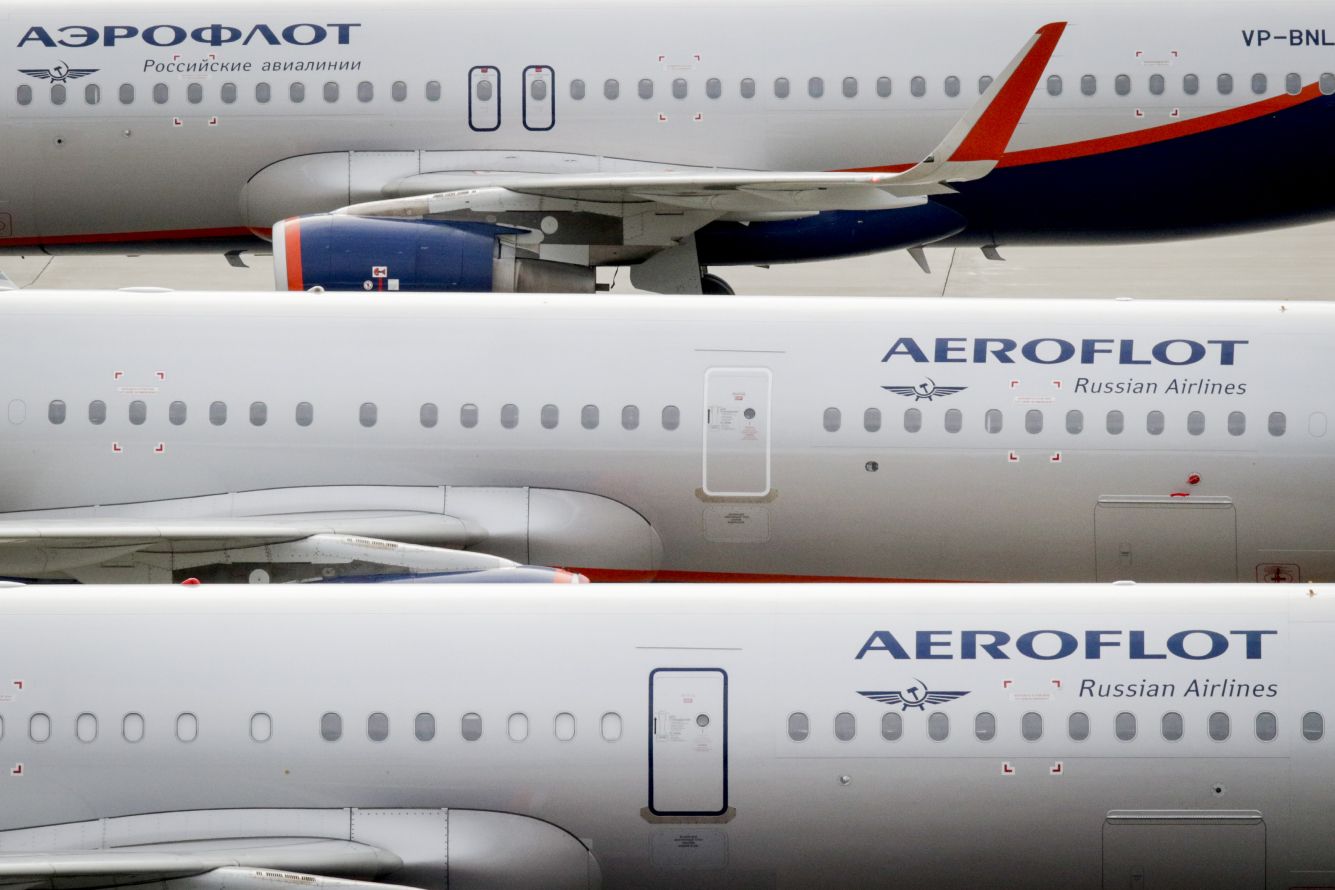
After Russian President Vladimir Putin recognized the independence of the Donetsk and Lugansk People's Republics, and then announced the beginning of the “special military operation” (that is, war), the European Union and the United States closed their airspace for aircraft from Russia. In response, Russia closed the sky for aircraft from 36 countries. Later, the Western countries introduced a ban on the supply of new aircraft and are going to cancel Russian current leasing agreements . Medusa learned from the Avia.ru portal Avia.ru Roman Gusarov how these sanctions will reflect on Russian and international aviation, how new aircraft will be built without imported details and what are the prospects of Russian aviation in the future for ten years.
- The European Union, Canada and the United States closed their airspace for Russian aircraft. How will this affect the passenger flow?
- As for the closure of airspace, it sounds menacingly. But for two years now, it was in the European Union that the passenger flow is very small . As the pandemic, the elbow, the closure of visa centers and the non -recognition of our vaccines began, so we practically do not fly there. The main [European] directions were Greece, Cyprus, Bulgaria. In Western and Central Europe there was a very low percentage of foreign tourism.
We are already accustomed in two years, the airlines were rebuilt. Therefore, the closure of the European Union for the business of airlines is units of interest. Our main foreign traffic is Türkiye, Egypt, Thailand. Neither for a simple Russian, nor for airlines, this is not a big tragedy.
- What to do to a person if he wants to fly from Russia to the European Union zone, but there are no flights?
- Aviation is possible. Through Istanbul you can fly in any direction in Europe. What else to do about it? Wait for some decisions to make.
Weclosed the airspace in response to this, and this is very painful for the EU countries. They lost not just two flights to Moscow, but a dozen flights to Asia. Their message with Asia is blocked: turnover, freight flights. Now they say: "We are looking for a decision."
- What is the decision to fly away, for example, to a citizen of the European Union, to Asia?
“They can’t fly to Asia now.” The solution is one: we will open the sky only when they remove their restrictions. Let them open their sky and will also fly.
But in general, you can fly through Dubai: it is with a transplant, more expensive, more difficult. Asian companies also fly. It turns out that passengers from Lufthansa, Air France, British Airways will go to the Asian carriers who will fly through Russia cheaply and quickly. Asian countries can fly [using the airspace of Russia], because they have not limited anything to us. And they fly calmly.
In this situation, we are talking not only about passengers. We must think about goods, mail, cargo. Huge turnover goes through our territory. And now all this will go to Chinese, Taiwanese, Korean companies.
- The EU introduced a ban on the sale of Russians and spacecraft. This may mean a complete ban on supply and leasing of aircraft, helicopters and other aircraft to Russia. How will this affect the state of Russian aviation?
- We will face a lack of aircraft.
- And on the state of international aviation?
- The EU countries will receive their aircraft back - there are from 500 to 700. But no one will need them: in the conditions of the pandemic passenger traffic fell, and the planes will stand and rust. And tens of billions of dollars invested in them. Many companies will go bankrupt. Western countries in banks took loans to these aircraft. They bought planes, gave us leasing, received monthly stable payments, but now they will not receive anything. They will need to pay our airlines a penalty for early termination. And then it will be necessary to spend money on conservation, insurance - or try to give these planes for nothing. Therefore, there is a hope that they will reach their politicians and soften the regime.
- And if they are ready to pay this price?
- It will be necessary to solve this issue. But I do not think that the nationalization of [courts in favor of Russia] is a good solution.
- Why?
- Nationalization is when we take and say that this is all state property. Western countries will be happy for this decision. Of the Western countries, no one recognizes nationalization. The companies will go to the courts and dry our companies, begin to arrest property and, besides big troubles, we will not get anything. All Western courts will side with their companies and make a decision in their favor. Moreover, we cannot serve planes without their spare parts, which they also block us.
The second option is to redeem the aircraft at the residual value. That would be a good solution, we would be sold to us. We would own them on a normal legal basis. But without spare parts the same question: why do we need them?
-Are there any more solutions?
- Third, yes. Return all these aircraft and take aircraft for rent in Asian countries and in the Middle East. At the same time, we will have big problems, we will have to give these planes, find others, rearrange the economy, the route network. These problems are solved within six months.
- How will the ban on the supply of Western units affect the construction of Russian aircraft in which they are used?
- We do not understand how these sanctions will work. No one understands. Companies too, therefore, are now being reinsured, they are trying to stop deliveries. When they implement sanctions, we will understand if we have any opportunity to make these purchases, make repairs in third countries.
While the European sky is closed, European companies cannot pick up their planes and legally they will fly in Russia. There are no threats to stop these flights in Russia. At least until the moment the sky of Europe is closed.
- Is the construction of your aircraft a way to solve the problem?
- It will save, but in the future of decades. It is impossible to produce 700 aircraft at once, when before this was produced 5-10 per year . It is necessary to deploy serial production. There are such opportunities, and this will be realized. There may be emergency temporary solutions, but the ultimate goal, and we are going to this - to provide our companies with our domestic aircraft and do not depend on anyone.
- Superjet can be done under sanctions? During its construction, imported electronics are used .
- It has many foreign components, yes. Perhaps we will not be able to supply them either. But now Sukhoi Superjet New is being developed, where foreign components are being replaced by Russian, the development of a purely Russian engine. After two or three years, we will be able to get a fully importing Superjet.
Superjet is a niche product. We now have about 200 of them, this is a close -range small plane, and it will not be able to fly along many routes where Boeing and Airbus fly: they have a distance and capacity more. Therefore, Superjet is a small part of the market.
- What will be the main part of the market in such conditions?
-This is MS-21 . Their serial production will begin this year. After three to four years, it will be deployed at full capacity, and by 2030 we will be able to provide ourselves with these aircraft.
- Can they be built even under sanctions?
-MS-21 was originally developed, already understanding our problems that we received from international cooperation. Therefore, it was developed according to another scheme. Developments of all systems, engine and wing are domestic, but some suppliers of systems in their production use imported components partly. You can replace them in a very short time. In Superjet, for example, system suppliers are foreign companies, which is why the systems must be redrawn again.
In MS-21 manufacturers are domestic, they can only not use some imported components that they use now. This can be done in a very short time, because there are no more critical technologies that we cannot replace. The United States imposed sanctions against Aerocomposite in 2018, and in two years we eliminated an important dependence.
By 2020, we had a plant [Irkut Corporation], developed their materials, produced a wing. Now this wing is on an airplane and the plane flies with it. The domestic engine, which is installed on the aircraft, is testing. Everything is completely domestic there, there is not a single imported wiring.
-Can the Russian-Chinese passenger aircraft be a solution?
- CR929 is a large plane, but, unfortunately, this is a long story. But he is completely realized. Its development [also] at the initial stage, it will be developed for a long time, for many years to be certified. And if we accelerate now, then only in the 2030 horizon we will be able to organize its serial production.
We now have a technological renaissance, but we need time: everything is realized for a long time and for a lot of money. We must follow this path, there will be a good product. But already in the next decade.
Talked Sasha Sivtsova