
Translated material
There are reserves - there is no mind
How Russia was on the verge of a financial catastrophe comparable to 1998: Expert opinion
On February 24, 2022, the whole world woke up in a new reality. Let us now leave the question that the country will now have to live behind a new iron curtain, we will leave the question of the most severe humanitarian consequences, from which every normal person has a heart hurts. Let us turn to another: how ready were the financial authorities of Russia for such shock changes, how much were they able to calculate existing risks?
Alexander Zotin
economist, ex-deputy director of the analytical department of the Ministry of Economic Development of Russia
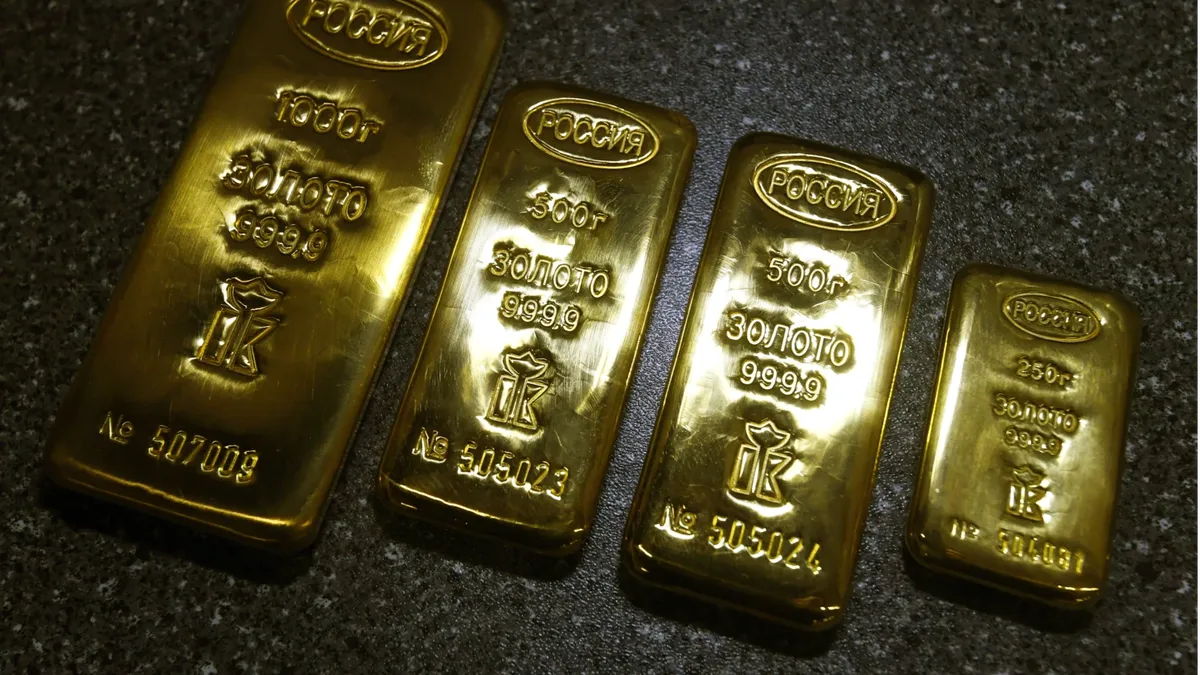
On February 28, 2022, Western countries announced sanctions against the Central Bank of the Russian Federation, "which will not allow the Bank of Russia to use its own international reserves to weaken the impact of Western sanctions," i.e. In fact, they froze a significant part of the gold and foreign exchange reserves of our country, the total volume of which on February 18 was $ 643 billion .
To understand the context, this is a little less than half of Russia's GDP for 2021, a fantastic amount. Of course, freezing will affect only about half of the reserves, since part of the GDR is stored in cash, gold and Chinese yuan. However, the scale of the current de facto loses is measured by hundreds of billions of dollars and all other sanctions, such as disconnecting banks from SWIFT or completely blocking sanctions imposed on some banks, are not so heavy compared to this measure.
How could our economists allow such a failure? To begin with, both the monetary and fiscal policy of the financial authorities of Russia were erroneous even until the current moment, for example, with the “Covidonomics” of 2020-21.
Instead of supporting the country's economy weakened by the epidemic, and the Central Bank of the Russian Federation and the Ministry of Finance did not do little to restore it.
Then the West financed anti-crisis measures sharply expanding its budget deficiency (in many countries it exceeded 10% of GDP in 2020 and 2021). And at the same time, Russia became an anti -rolider to support its own economy among developed and largest developing countries, limiting itself to a very small budget deficit in these years. And this despite the fact that the fiscal space to increase assistance to the population and business of Russia was one of the largest. The public debt of Russia was less than 20% of GDP, lower than that of all other G20 members (given the reserves, the NUND-HOSSIS of Russia is generally negative).
Where did the money go, where did the income from the raw materials exported by Russia very much rise in price in 2021? To a large extent, it is for the accumulation of SVR, in two clicks of our Western “partners” taken from Russia on February 28, 2022.
Why neither the Central Bank of the Russian Federation, nor the Ministry of Finance, nor the Ministry of Economic Development calculated the risks of this policy?
But the frost is used by the West earlier, that is, this policy had precedents:
in Libya in 2011,
In Iran in 2012,
in Venezuela in 2019,
And more recently in Afghanistan in 2021.
Both the Ministry of Finance and the Ministry of Economic Development, and especially the Central Bank of the Russian Federation have entire armies of highly paid economists analysts, entire departments are engaged exclusively in sanction risks and foreign economic relations.
What do they do in reality? Did their leadership set the appropriate risk assessment tasks? Questions are rhetorical. Nevertheless, before the economic authorities of Russia, even before frozen by the West, they indicated a lot of errors and risks in our foreign and domestic financial policy. We note only the most important points:
The accumulation of foreign exchange reserves for reserves is based
The Central Bank of the Russian Federation and the Ministry of Finance persisted in the blind follow of the MVF training manuals to accumulate reserves as called, to the last.
For example, on January 14 and 17, 2022, in the days of a powerful collapse in the Russian stock market caused by sanctions risks, the Central Bank of the Russian Federation on duty bought currencies for about $ 1 billion in GDR. While adequate financial authorities usually take care of investors in national assets, the Central Bank of the Russian Federation and the Ministry of Finance showed only the financing of the budget deficit of Western countries, helping them with their interventions.
At the same time, the SVR has long lost its meaning and as an element of control of the national currency, and as insurance for imports. They saved it for a “rainy day” as part of an outdated “budget rule”, attributing to translating the “excessive” revenue of exporters in the GDR?
So this rainy day has come, and SVR was simply taken away.
The practice of accumulating foreign exchange reserves for the sake of reserves themselves has no justification. In a normal economy, the exchange rate is balanced by cross -border streams of capital, and at the same time finds an equilibrium state naturally due to the demand and supply mechanism. The Central Bank, in a good way, is not needed for this. And in the Russian hypostasis, as it turned out, it is even extremely harmful.
For the course, not reserves are important (how many reserves of the Central Bank of the Russian Federation, etc.), but flows, that is, the state of the payment balance.
The Central Bank of the Russian Federation to the last invested in low profitability
Adequate Western Central Banks, if they were engaged in the accumulation of reserves, then, as a rule, policies of a competent combination of risk and profitability adhered to. Typically, a high risk in investments is combined with high profitability.
Given the super-furry monetary and at the same time super-furry fiscal policy of the Western countries in recent years (starting long before Covid and sharply intensified in 2020-21), some Western central banks changed the composition of reserves in favor of more risky assets since real yield (nominal profitability minus inflation) became negative in state uniforms of developed countries.
So, for example, the Central Bank of Switzerland at one time quite successfully bought shares of American high -tech companies, reducing the share of tools with fixed profitability.
Against this background, the Central Bank of Russia continued to stubbornly buy the lowest instruments, for example, the government bonds of developed countries with negative real yield.
Were they, with all their even low profitability, but moderate loss -making, reliable? As you can see, no
The Central Bank of the Russian Federation, together with the Ministry of Finance, chose the worst of the possible options - low profitability and ultra -low reliability of investments.
We must try hard to come to such a deplorable result.
The Central Bank itself tied the ruble to someone else's inflation
The Central Bank of the Russian Federation with manic perseverance both in the previous time and now increases the rate (up to 20% on February 28, 2022), supposedly to combat inflation.
All this resembles a well -known psychological phenomenon, in which the fact of the presence of a hammer in the hands leads to the perception of any problem as a nail.
The Central Bank of the Russian Federation reacts to any complexity without particularly thinking - as with the formation of lost GRI - we put on a formidable brooch and raise the rate.
The problem is that Russian inflation is mainly external, exogenous in nature. In particular, it is largely determined by food, energy and raw materials inflation imported from world markets. And the latter, in turn, was caused by a completely inadequate ultramoton and fiscal policy of the US Federal Reserve and the European ECB in 2020-21. The United States and European countries have had two -digit budget deficits in the last two years amid a policy of quantitative softening and zero rates. As a result, they naturally came to high inflation (IPC in the USA is 7.5%now).
But how did this inflation come to us? Partly due to global growth in raw materials and food prices caused by the above fiscal and monetary policies of developed countries, which in the past was more characteristic of different banana republics.
Well, another mechanism for Russia importing Western inflation is exactly the same policy of buying currency in the SVR. How did it work? The Central Bank of the Russian Federation with the Ministry of Finance bought several hundred million dollars a day within the framework of the budget rule. At the same time, they bought up the currencies of Western countries with an exceptionally soft budgetary and monetary policy and already the highest inflation and thereby reduced the ruble exchange rate, essentially tieing it to the inconsistent currencies.
Imagine a mental experiment - the Central Bank would buy up the Venezuelan Bolivar or the Zimbabvian dollar of hyperinflation. What would be the effect? Of course, this is a stretch, but the effect of the fact of the binding of the national currency (within the framework of the budget rule) to the currency with a giant double shortage required at least understanding.
Yes, the budget rule could have been at least justified if the United States and the EU had a conservative monetary and fiscal policy (although, in principle, SVR is not needed, as noted above).
But now, with great inflation in America and Europe, it was just a binding of its financial system to the conditional Venezuela.
With similar inflation (so far below) and reliability (as it turned out, much worse). So
In many ways, the Central Bank itself created inflation in Russia and he himself “heroically” fought with an absolutely worthless and dangerous increase in the rate,
In parallel, killing credit activity and post -shoe restoration in the country.
A separate remark is deserved by the last increase in the rate of the Central Bank of the Russian Federation on February 28 to as much as 20%. This step is harmful and not justified by anything, since in the conditions of compression of imports, the simultaneous growth of exports (in the absence of an embargo to Russian raw materials exports), as well as the cessation of sterilization of foreign exchange earnings in the GIT, the ruble and inflation are stabilized naturally. In addition, this will be facilitated by the obligation to sell 80% of the foreign exchange earnings of exporters and the correct decision to freeze Russian assets belonging to non -residents along with currency control measures, which will sharply limit the potential outflow of capital.
In this context
The last decision at the rate looks murderous - the external lending of the economy is completely blocked, so now the Central Bank of the Russian Federation decided to finally strangle and internally.
In addition, they are partly inflationary. The Central Bank all the time contributed to inflation by raising bets, since the business could not develop and create an additional offer.
The financial authorities rule the economy for poor monetarist textbooks of the 1970s, while in the West they have long passed to a balanced policy of stimulating both demand and proposals, including through low rates. I recall the words of the leader of the cadet party Pavel Milyukov, who were uttered by him in the State Duma after listing the errors of the tsarist government in 1916-“What is stupidity or treason?”.
Regarding other measures to stop the crisis,
The financial authorities of Russia should understand that relations with Western "partners" are spoiled for a very long time, therefore, there is no point in trying to keep a good mine in a bad game.
- All portfolio investments in Russian assets by residents of the countries that have announced sanctions against Russia should be frozen , and the capabilities of the export of capital are completely covered .
At the same time, unlike portfolio investors, a dialogue is needed with direct investors, but again, with the primacy of the interests of domestic economists. In this direction, certain correct steps are taken, but they are not enough.
Further, the financial authorities need to engage in stimulating supply and demand in their own country. For example, to reset all taxes on small and medium -sized businesses and reduce VAT (by the way, it will be an anti -inflationary measure). Immediately reduce the rate of the Central Bank of the Russian Federation. It is possible to proceed to the export of energy raw materials for rubles (any other currency will be hidden in itself the same risks for monetary sovereignty, implemented on February 28, 2022).
Given the undermining of the stock market, which indirectly contributed to the financial authorities of Russia in recent months, the fate of 15 million new investors in Russian assets that have come to the market in recent years or even months deserves special attention. The right step would be a complete compensation for losses incurred by domestic retail investors at least in the last two months.
Of course, a whole set of other measures to restore and reconfiguration of the country's financial system in new realities is needed, but it can hardly be carried out by the current economic authorities, which proved their full security.