
Translated material
Dissident from the 6th "A"
In the history lesson, the Moscow schoolboy expressed his position on the “special operation”. After that, the police came to his house and turned off the electricity
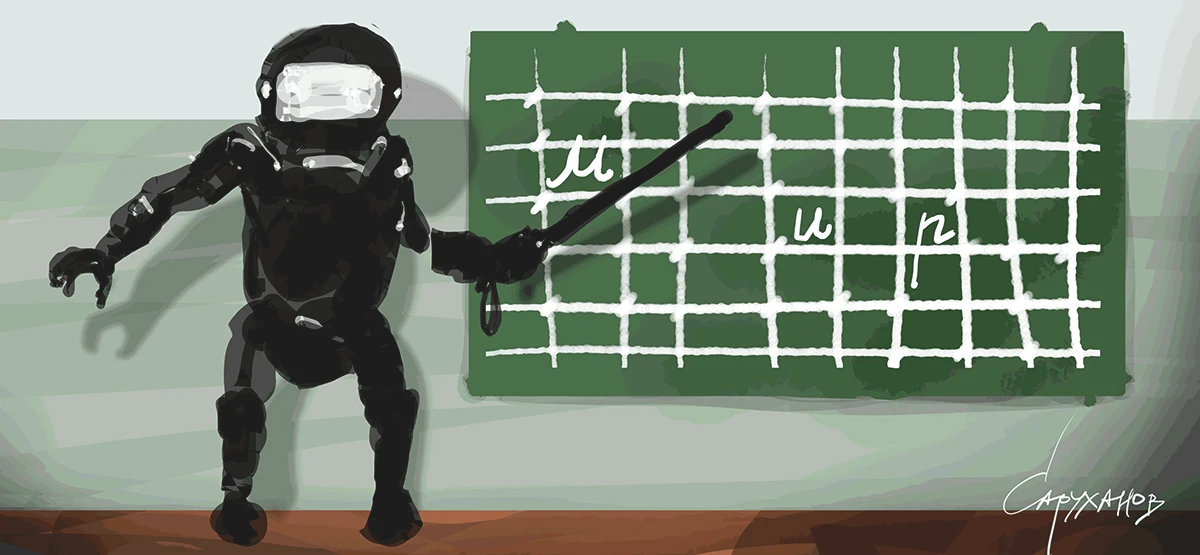
Cyril (we do not indicate the last name at the request of the mother) for 12 years, he studies in the 6th grade of the Moscow school (the number is in the editorial office). His mother Natalia says that the boy has Ukrainian roots, he visited the Ukrainian cultural center. What is happening between Russia and Ukraine now hurts him.
On Friday, March 4, sixth graders had a regular history lesson. Cyril himself talks about what was happening:
-The teacher said: "Actually, this is not discussed with sixth graders, but if you want to understand what is happening, then ask questions." And I began to ask questions. I asked: "Why Putin [started" Special operation "]?" To this, the teacher replied that this is a "special operation". She said: “I don’t know exactly where our troops are now, but if they stopped halfway, then the aggression of Ukraine would continue.” A small part of the class was on my side, they also asked questions. The teacher said: “Specialists of Ukraine and the USA are now making fake posts, they say that they beat people at rallies. But rallies must be agreed. ” I asked: "How can you agree with the government of a rally against the actions of the government itself?" She really did not give me an answer.
After that, I asked the question, why did someone start it and when it all ends? She said that Ukraine began, and it will end when Ukraine is surrendering.
She also told us that the Ukrainians flourish Nazism, that from the first grade in textbooks they write that Ukraine is a superpower. I have many friends from Ukraine, I asked them - they do not have this in textbooks.
After that, as Cyril says, he went to another lesson and screamed in the corridor: “Glory to Ukraine!” Some of the schoolchildren sitting in the corridor responded with a response slogan.
This front of sixth graders did not go unnoticed.
Mom Cyril says that she called her on WhatsApp from an unfamiliar mobile: “A one of a strange cat on an avatar. The female voice, without introducing himself, says he calls about my daughter. I also joked that I may be so bad mother that I don’t know that I have a daughter. And, they say, that is, about your son. Come to talk to the police. I said: “Call the agenda, I will come. She no longer answered calls from unfamiliar numbers. ”
The next morning, at about ten o’clock, she was called the class teacher of her son. She invited Natalia to come to school by twelve in the afternoon. She explained that the employees of the Inspectorate for minors want to hold a conversation with her son and her.
Natalia came to school and wrote a statement that she was taking her son “due to the fact that they put pressure on the child and create unbearable conditions for obtaining education” because of his political views. Put him in a taxi and took him to work. In school doors, I ran into a group of police officers.
The next day, Sunday, Cyril was alone at home. Mom left for work. At this time, two policemen began to knock on the apartment, but Cyril did not open. They knocked about half an hour, then turned off the electricity in the apartment, left the summons “On a call for a survey” under the door and left. On the agenda is an inaudibly written survey date and the threat to “subject” in case of failure to appear.
“I sat on the bed and thought that it would be now,” says Cyril. - But I was not afraid. It was even interesting to me what happened there. How they decide there: here we have a twelve-year-old boy here, let's come to his house. Here he does not open to us, let's turn off his light.
Who came up with the idea to complain about an unreliable sixth grader in the police? The family has a long -standing conflict with the school. Mom now prefers to communicate with the administration in writing. But still he believes that before contacting the police, one could at least write or call her. Who complained to the police does not know. The class teacher allegedly does not know either, she promised to clarify.
Natalia comments: “It seems to me that there is a limit to everything. I understand that if my son hit someone, injured, wrote something on the wall. And, most importantly, what now? I will be obliged to broadcast to him an official point of view? And, in my opinion, it is important to demonstrate to children in such difficult conditions that even if the points do not coincide, you need to look for a peaceful solution, and not call people in the form. ”
Cyril calmly explains his position:
- I believe that teachers are wrong. We are told that the inhabitants of Ukraine were washing their brains, but it seems to me that the brains here were washed.
Even in more peaceful times, children bring directly opposite views and beliefs to school. And in a situation of an acute conflict to the school, it can be very difficult to smooth out these contradictions: for this you need to find innate words and human approaches to children, by whose souls a “special operation” passed with tank caterpillars. But to send their own students, who openly express their views, to re -educate the police is a new word in modern Russian pedagogy.
Present children, perhaps, are more difficult than Soviet children from families who did not share communist ideology. “How does the homeland begin - from the picture in your primer, with what parents said, you cannot repeat in the yard,” - this song, according to his contemporary, was loved by Evgeny Chukovsky, the grandson of the great storyteller.
Over the three post -Soviet decades, several generations of schoolchildren have changed. And some of them have already completely lost the habit of silent, not discovering their disagreement, say the right words, not believing in them, not to bring their thoughts to the public. Will it really have to be brought up again?
“We were considered the first blank generation,” the familiar teenagers sadly told me the other day. - Now everything has come back, we will wait for the next generation. Ours is already generated. ”