
Translated material
"These are people of hope"
Interviews of the Lublin priest, who has been receiving refugees for many years - and not only Ukrainian
“The names of the murderers-loves can be different: Herod, Hitler ... their names are changing, but the worst thing is that the names of their most innocent victims are changing.” This was written on his wall on Facebook by Lublin priests Moshchelav Puzevich - or just a bracket, as numerous volunteers and refugees call it. And such people are called humanists and ascetics.
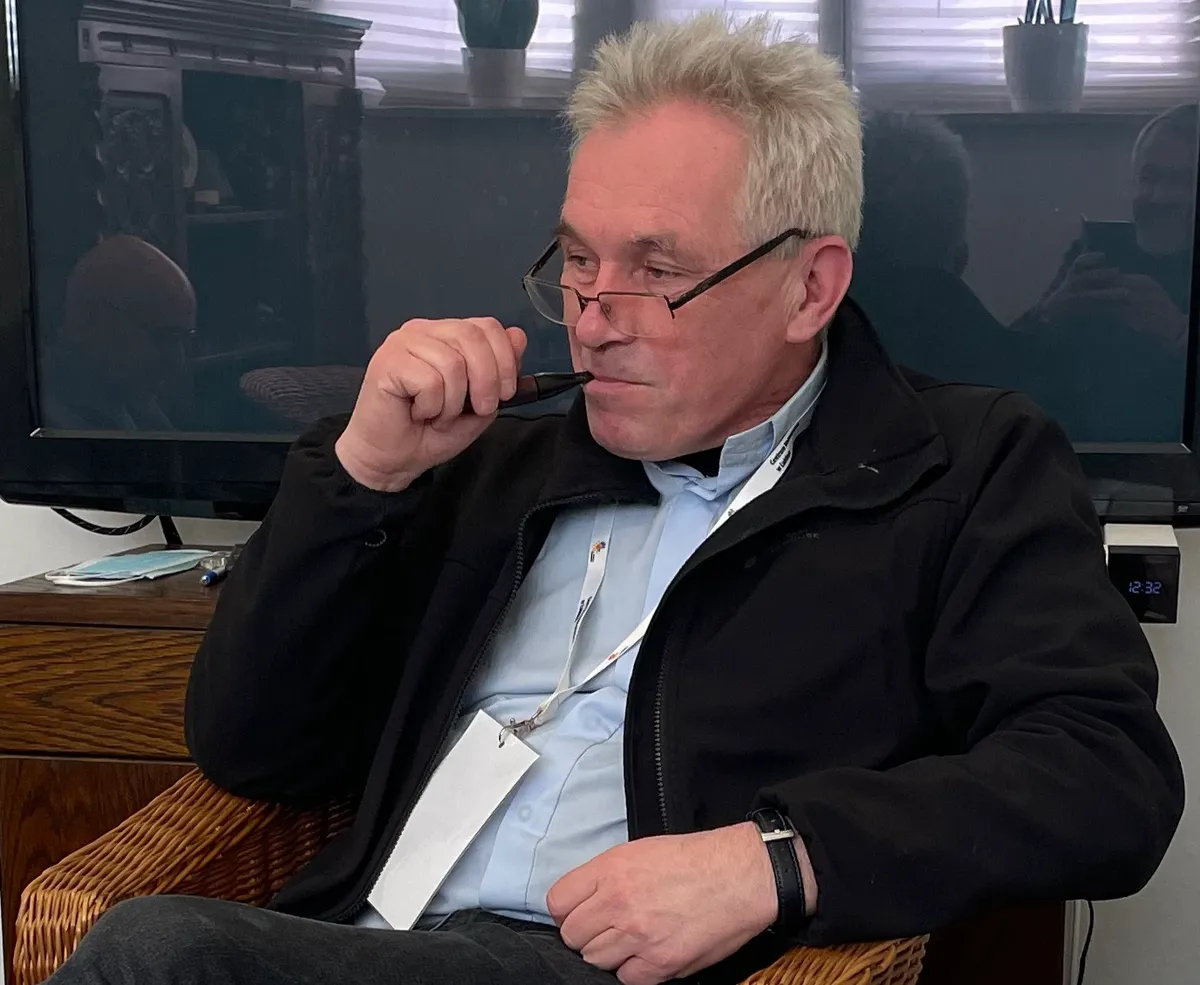
Prince Mecherslav is the creator of the volunteer center in Lublin, who has been helping refugees for thirty years. He already counted six waves of refugees who came to Lublin. He and his voluntary assistants help everyone. And in between waves - drug addicts and former criminals. And now, when hundreds of thousands of Ukrainians go to Poland on foot, I can say that those who ended up in Lublin under the guardianship of the priest Puzevich were lucky. However, everyone else who got to a safe territory is also very lucky.
-Priests Mechislav, in your volunteer center from the first day, when Ukrainian refugees began to cross the border, everything was surprisingly well organized - as if someone had pressed the button and earned the conveyor. This is undoubtedly not only good will, but also experience. How did your help to refugees begin?
- Exactly thirty years ago, I first encountered them. It was during the war in the former Yugoslavia. The first Bosnians began to appear here. They needed the simplest help: go to the store with them, to the doctor or show where the cheap pharmacy is located. These are basic needs, and we began to do this. The first center of reception of refugees appeared in Lublin. But this first wave subsided quickly enough, there were not too much Bosnians in Poland.
The second wave of refugees is 1994-1996, the first Chechen war. Lublin Voivodeship has borders with Belarus and Ukraine. The only railway border crossing was the Belorussian Brest. And Brest became a symbolic gate into a peaceful life - about 100 thousand Chechens entered this transition to Poland then. On this side, many refugee reception centers were opened-the bealah, bows, Radzyn, Lublin and others. And after the beginning of the second Chechen there were even more - hundreds of thousands.
We did very simple things. In the center of reception of refugees, we opened a kindergarten for their children. Then they created a project that still works, partnership of the families. Each refugee family coming to Poland has a Polish partner family. This is friendship, communication of adults and children, simple help - this is how integration is much easier. In general, refugees understand that they are interested in not only border guards and administration, but also ordinary people. It helps a lot. The main conclusion that I made back then - people just need to listen. Everyone comes with a story about his drama, about the relatives who remained there, about their longing. He needs to be listened to. And now everyone prefers to speak. And our main role is to listen, understand and act. It is in that order. With actions, it is just the easiest way: one needs to help find housing, the other - work, the third to arrange children in school. With someone to go to the administration, help with legalization and registration. This is a certain algorithm that works almost without failures. The last wave of Chechen refugees was associated with Kadyrov’s repressions in 2016–2017.
And in 2020 the next wave of refugees began - these were Belarusians who fled from Lukashenko's repression. I then thought: maybe this is the last nation that we accept here.
But last year, the Kurds, Syrians, Afghans, Pakistanis went to us through the Belarusian-Polish border.
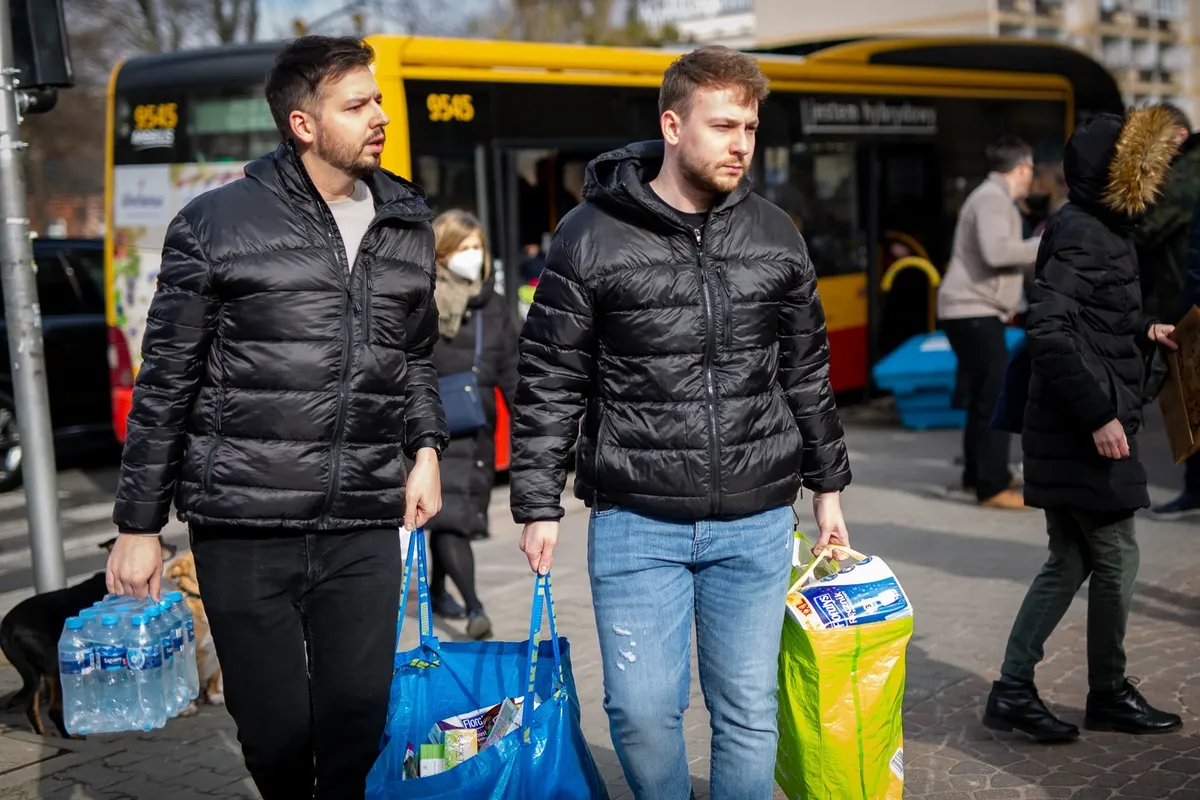
- These are the same migrants who, thanks to Lukashenko, were brought to the border and said “go to Poland!”?
- Yes, they are. Many really managed to break through, we accepted them here. And then we came up with the name of the House of Hope for partnerships. Each family of refugees, except for the roof over their heads, should simultaneously receive guardians - now we already have a lot of them, these houses of hope. Object families understand the features of help to those who were brought up and lived in Islamic culture: one cannot offer them a treat from pork and so on. We began to accept families of immigrants from the east last fall, and only coped with this - a wave of refugees from Ukraine began. But we were ready for this. We began preparations for the reception of Ukrainians in November last year. I knew that this would happen. I just have thirty years of experience. And on February 24, when I turned on the computer, I only had to press Enter - and all our structures earned. Housing, food, transport - everything is organized. Every family has someone to take care of. And this is not some new direction-we took refugees who fled from Donbass, back in 2014-2015. There were not so many of them here - we helped those people who moved to the west of Ukraine from the east. By the way, then we also had the first groups of Crimean Tatars. We cope - not the first generation of volunteers works with me, without which nothing would have happened.
- I well remember the year 2016, when a spontaneous camp of Chechen refugees appeared at the Brest station. Every day they tried by train from Brest to leave Polish Terespol, and Poland did not accept them. You still managed to “drag” many of them to Poland. How did it happen?
- I came there for the first time in Brest, before Christmas 2016. He found a completely heartbreaking scene at the station. I tried not to cry, but it did not work. There were mostly women with children. And imagine very beautiful - such a bright Caucasian beauty - a woman who has not washed for seven months. She recoiled from everyone who turned to her, did not want them to be unpleasant. And one pan, from Poland, who taught Chechen children to sing Polish carols came to that station. And now the children sang carols, starting with the words "there was no place for you." This is just at a time when the Polish government closed the borders from Chechen refugees. And the girls at the station sing with thin voices "there was no place for you." In my country, solidarity had no place for them. It was necessary to do something. First of all, we rented a large room where women with children could be sent. We paid for their attempts to cross the border (the same train tickets every day - they did not have that kind of money, many had no money at all after 30–40 attempts). And then in different ways we managed to transport some families to Poland. Those who were not able to transport, for example, the head of the family in the list of those who are forbidden to enter, the former Kadyrovo, there were many of them, we gave money for the first time so that they could stay in Belarus, get a residence permit, get a job. They bought sewing machines for women, sold Caucasian dolls here, which they made with their own hands, and sent money to them. But I managed to bring 37 families to Poland. Then they also helped to take brides from Chechnya. Parents, for example, tell their son: "Look for your wife in Europe." And he says: "No, I want to marry that girl from our village." And several girls who were waiting for the grooms, we helped to enter Poland. We go to their Kurban-Bayram, they come to our Christmas-in general, we live normally together.
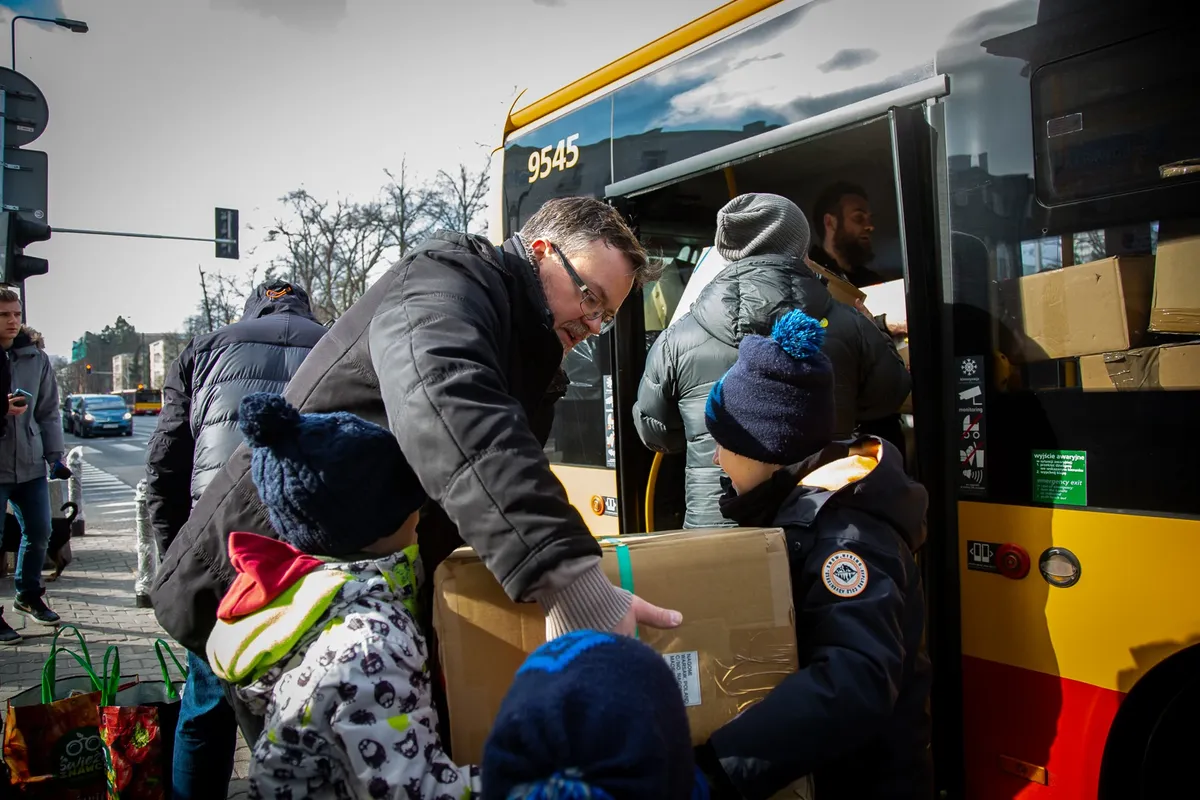
- The current situation with Ukrainian refugees, it seems to me, has surpassed all the previous “waves” in terms of tragedy. But the solidarity of the Poles with Ukrainians was a real surprise. People go from the western cities of Poland here to the border to help not stay at home when trouble is nearby. Does this resemble the times of "solidarity"?
- Since childhood, I have very much sympathized with Ukrainians. Funny, but because of Stalin. The roots of my family near Vilnius in Lithuania and under the Oshmyans in Belarus. When I was a child, my grandfather and grandmother talked a lot about Vilnius, about the sharp Brahma, and I always asked why we did not live there, but live in the Pomeranian Voivodeship. But they did not answer me. Grandfather, however, hated Stalin and spat on the ground every time when he pronounced his name. And he said about our neighbors: "They are from the Vistula." We all know geography: Visas is a river, and I thought that the neighbors lived somewhere on the hang. And then my grandfather explained that Stalin sent us from the Vilenshchina, and our neighbors from the south of Poland during the Visas operation. This is the operation of Stalin and the Polish Communists to relocate Ukrainians from the south and east of Poland to the northern and north-west territories so that they do not help the UPA ( the Ukrainian Patriotic Army, banned in the Russian Federation. - Ed. ). That is, our neighbors were Ukrainians. I loved them very much, we went to school with their children together. And in recent years, Ukraine and I cooperated very closely. They helped to open volunteering centers in Kharkov, Mariupol, Zhitomir, Drohobyche, Ternopol, Kovel, Lutsk, Lviv. I remembered what happened in Chechnya and Georgia and, unfortunately, was sure: all this would be in Ukraine. As for solidarity, the Poles in recent years are used to the presence of Ukrainians, especially here in the Lublin region. I often repeat that a long time ago Bogdan Khmelnitsky could not take Lublin with his army, but many years later, Ukrainians took Lublin without a single shot.
Over the years, the Poles are accustomed to respect Ukrainians for their own solidarity and hard work. Most have colleagues or neighbors from Ukraine. And now the Poles demonstrate solidarity.
This is very pleasing to me, I hope that she will block the memories of the events of 1943 in Volyn. Only I am afraid that the Poles will flare up for a short time, and then this flame will go out. But I hope that this solidarity will last long. Everyone understands that not only momentary help is needed with money, food, transport, but also gestures extended in time. For example, we are already creating temporary kindergartens for Ukrainian children. This work is not for the weekend, but for a long time. In general, forty years after the "solidarity" in the Poles woke up the same spirit. Well, if he lasts a long time.
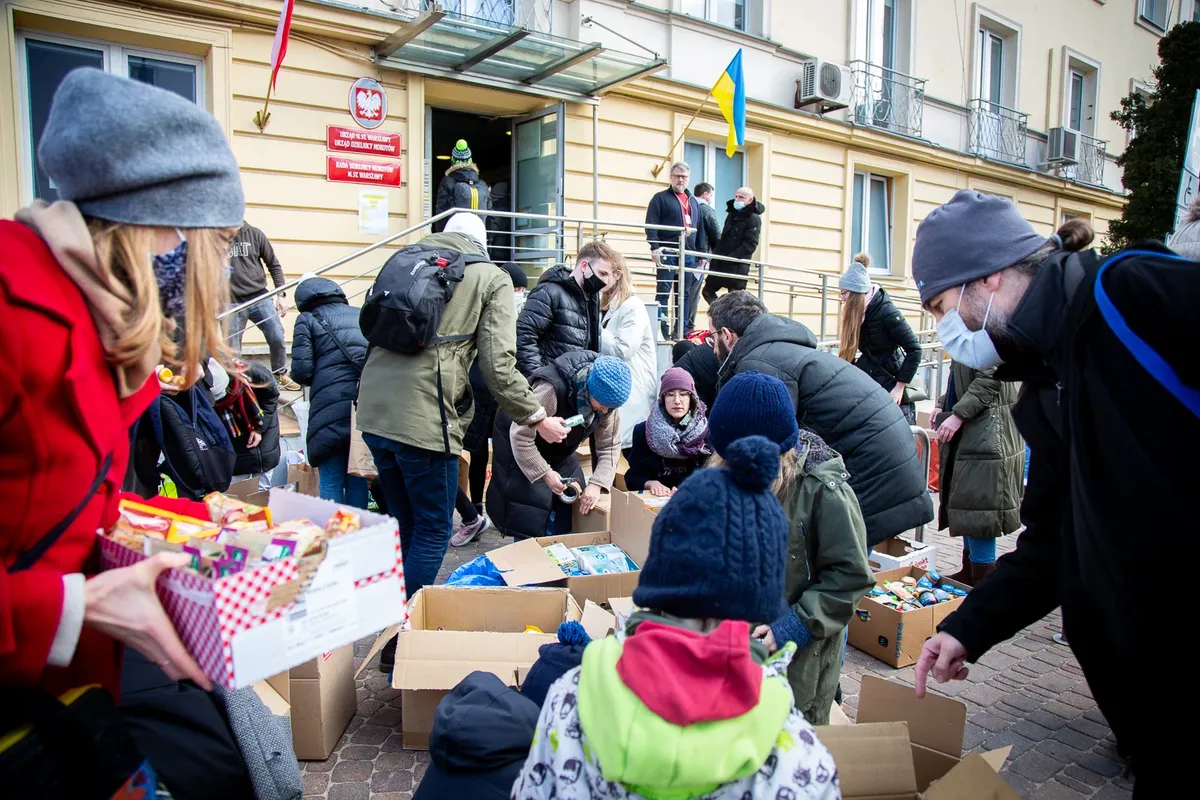
- You worked with many thousands of refugees from different countries. What gives them the strength to survive the blood pressure from which they fled, to accept new conditions and move on?
- We had one of the largest concentration camps here near Lublin - Maidanek. I remember that one woman came here, who got into this concentration camp and survived. She visited the gas chamber. In this cell, some women tore their hair, others prayed, others cursed. And this girl, standing among them, convinced herself that everything would be fine. So, on the threshold of death, that everything will certainly be fine. And after some time the door opened, the German entered and ordered to go out. It turned out that they had too little gas. So, the same thing now. Some say: "We need to save children and run across the border - that's excellent, that's right." Others say that you need to stay and fight - this is also right. But the third, who waved their hand, surrendered and say, “what will happen, it will be, nothing depends on me, the bomb is still stronger,” I will tell them that this is wrong. There is no hope in this. And when it is, people take children, run and are ready to withstand everything. I saw this in the eyes of Chechens, Iraqis, Belarusians. Now I see this in the eyes of Ukrainians. These are people of hope.