
Translated material
"Just do not be silent"
The Union of Journalists of Karelia the only one in the country complained about military censorship
The Union of Journalists of Karelia appealed to the Prosecutor General’s Office with a request to verify the legality of the actions of Roskomnadzor, which forbade to use the word <...> and use unofficial sources in the description of events in Ukraine. This was reported on the official website of the organization. The Karelian organization became the only one of the regional branches of the SDR, which loudly declared the illegality of military censorship. We talked with its chairman - the observer of the publication "Petrozavodsk Speaks" by George Chentemirov.
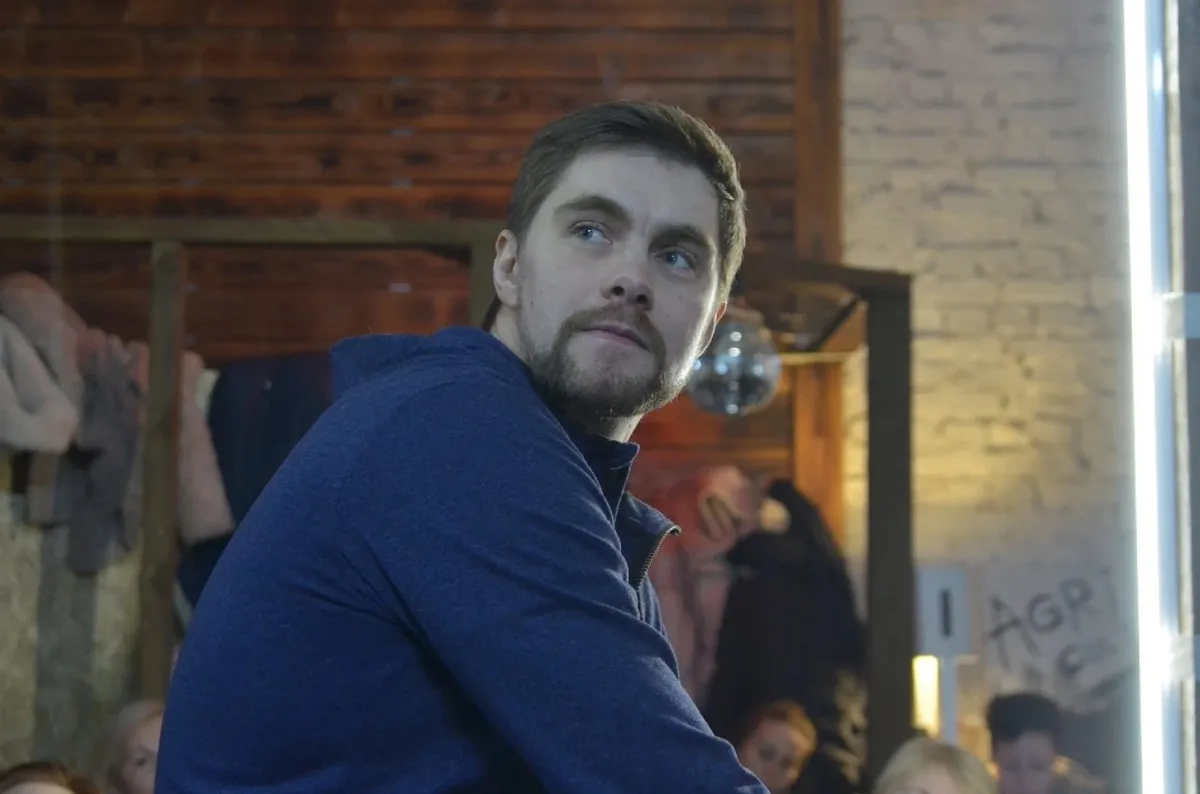
- Why did you decide to contact the Prosecutor General and why became the only ones who went to it?
- I will answer the second question right away: I don’t know. The Union of Karelia Journalists among colleagues is considered to be combat largely thanks to my predecessor Evgeny Belianchikov. We are quite independent guys. Yes, we are the structure of the SDR, by the way, it helps us: our veterans, for example, receive material assistance from him. But, thank God, we have independence, and I will honestly say: in my memory, and I headed the Union in March 2020, almost no one has ever presented us. No one told us what to do and what to do. We act at our discretion. We try, as far as possible, to defend the interests of our colleagues, we are not embarrassed to do it.
And in the situation that arose after the publication of the press release of Roskomnadzor, they almost immediately realized that somehow it was all bad, and, probably, it was necessary, at least, to express our position.
The question of the appeal was resolved collegial, the vote of the board. This is 10 people plus the eleventh - I, the chairman. The board consists of representatives of both independent and state media. The decision was not unanimous: one person voted against, two abstained.
-Do members of the board experience some pressure after the publication of the appeal?
“I will say carefully so as not to damage people.” Let's just say that employers were interested in who voted. Yes, they were faced with some pressure.
- You apply to the Prosecutor General with a complaint about the position of Roskomnadzor, but Roskomnadzor refers just to the requirements of the Prosecutor General.
- Yes. I do not have illusions about what is happening with Russian journalism. As for how the supervisory authorities react.
I understand that we complained about censorship to the body that may welcome this censorship. But this was, as I said, a collegial decision, and when we started a discussion of this topic, when I posted in our conversation the press release of Roskomnadzor, when the blocking of sites began, we thought how to react, how not to keep silent. The idea arose about the Prosecutor General’s Office simply as about the main supervisory authority of the country, which should generally monitor compliance with the laws.
And our position is this: from our point of view, this is a violation of the law, and we indicate to this violation of the law to the bodies that should stop it. With the fact that this body itself takes a very definite position, we cannot do anything.
The results can be predicted, but if the prosecutor's office refuses, we will think what to do next. And also collegially decide. But in the situation in which we are, it is important to voice your point of view, and not to be silent. Our task, including a professional community, to say: we understand what is happening.
- You already had experience of complaints about the obstruction of journalistic activities by the state. What was the result?
- Last year, we fought with the Petrozavodsky city court. We had problems with the prevention of journalists for meetings in one specific criminal case, this is a criminal case against the former speaker of the city council of Petrozavodsk. Maybe not to let the journalists the position of the judge, perhaps, were influenced from above, since there are a lot of defendants with loud surnames for the region. We had problems with access exactly there, this one thing. I don’t know if our appeal worked or the city court changed its position for some other reasons, but now journalists are allowed to be allowed to this process. Even bailiffs emphasize politely. That is, perhaps it worked. I want to think so.
- The pressure on the media did not appear yesterday and not with the beginning of the “special operation” in Ukraine. The detention of journalists at rallies, the inclusion of foreign agents in the register, the application of the Fake Law, tested during the pandemic and now poured into large -scale censorship ... At what point did we miss the situation - and the pressure became irreversible?
- It is difficult to understand where the point of no return was passed. This is all gradually accumulating, and I cannot name the border that we crossed - and since then everything has become bad. The law on foreign agents, after all, also did not immediately apply. Markelov ( Sergey Markelov, Karelian journalist included in the register of media-foreign agents. - T. B. ), because he was not immediately in the register.
I cannot name the moment where we lost freedom of speech. I can name the reason. Objectively speaking, 70 percent that support state policy is by no means a drawn figure. We now see this by comments on social networks, according to the people with whom you are talking on the street. I open the liberal Facebook - not “classmates” - and I see how not bots, but absolutely specific people whom I know personally, write things that seemed unthinkable to me. This is a personal tragedy for me.
Yes, our independent publications read a huge number of people, write and say thanks. The "new" has "accomplices". But at the same time it is impossible to seduct. In society - in a broad sense - there is no request for our quality work. There is no need for journalism that would say some unpleasant things. Perhaps this is the fault of the journalists themselves, who compromised, fulfilled orders. Among them I am: until 2017, I was the editor -in -chief of the government publication. This is our fault: we easily agree with pressure and tolerate it.
Help "New"
On February 24, on the day of the beginning of the “Special Operation” in Ukraine, Roskomnadzor demanded that the media use information and data “only from official Russian sources” in its coverage. “In the preparation of their materials and publications regarding the conduct of a special operation in connection with the situation in the Lugansk People’s Republic and the Donetsk People’s Republic, they are obliged to use the information and data received only from official Russian sources,” the RKN statement said. For failure to fulfill this requirement, a fine of up to 5 million rubles under article 13.15 of the Code of Administrative Offenses and blocking of publication sites faces.On March 4, Article 207.3 was introduced in the Criminal Code - “On the public distribution of knowingly false information about the use of the Armed Forces of the Russian Federation in order to protect the interests of Russia and its citizens.” According to her, up to 10 years in prison for the distribution of “fakes”. If this entailed “grave consequences” - up to 15 years.
Under the text
From the statement of the Union of Journalists of Karelia
“Article 207 of the Criminal Code of the Russian Federation, which provides for the punishment for fake-nuis, says that they can only be considered the spread of knowingly false information. If journalists are mistaken, publishing inaccurate information, but do this not intentionally, but conscientiously, believing that they are telling the truth, this cannot be qualified as fake-no. Especially if the journalist makes a reservation that the reliability of this information has not yet been finally confirmed. Article 47 of the Law of the Russian Federation on the Russian Federation allows the journalist to verify the reliability of the information reported to him (including official sources), and Article 49 of this law obliges the verification before the dissemination of information. The very idea that the journalist in preparing the material does not have the right to use other sources, except for official, contradicts the principles of our work. Journalists are obliged to verify the information, but this does not give the state the right to limit us in choosing its sources. Any information, including received from officials, may be false. In the same way, information obtained from unofficial sources can be completely reliable: for example, from eyewitnesses. According to the Constitution of the Russian Federation, everyone has the right to freely search, receive, transmit, produce and disseminate information in any legal way. Censorship in Russia is prohibited. ”