
Translated material
With a risk to life. Where Russian planes will now reach
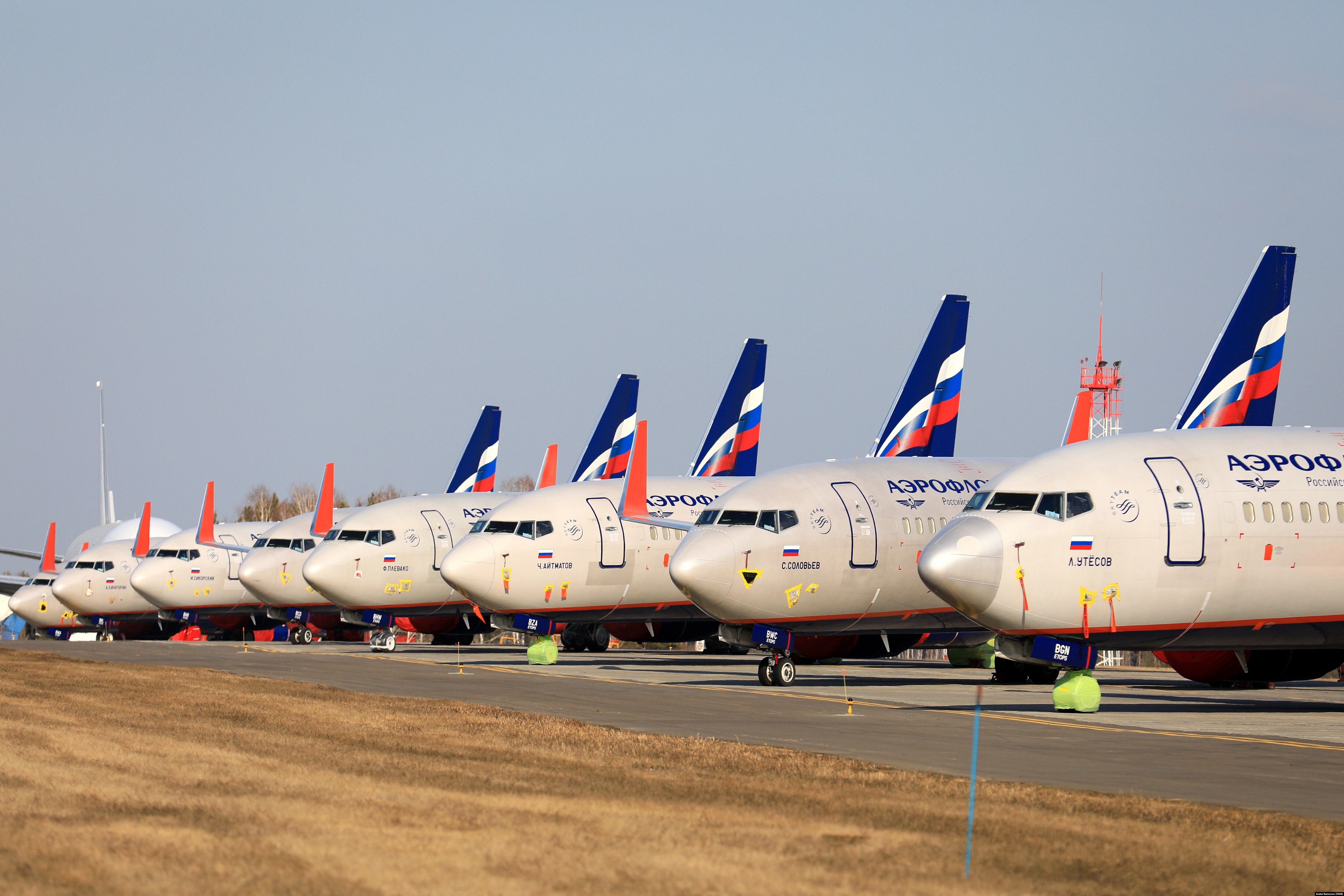
Aeroflot and Russia airlines have suspended all foreign flights since March 8. Passengers with return tickets lost the opportunity to fly from Russia since March 6 - they could leave the country only if they bought a one -way ticket. The Federal Air Transport Agency recommended airlines with aircraft recorded in foreign registers, from 00:00 on March 6, stop flights abroad, and from 00:00 on March 8-flights from abroad.
In Russia, restrictions on flights to Anapa, Krasnodar, Gelendzhik, Belgorod, Bryansk, Voronezh, Kursk, Lipetsk, Rostov-on-Don, Simferopol and Elista were also extended.
These decisions were adopted, among other things, in connection with the sanctions that the countries of the European Union, the USA, Canada and some others introduced in relation to Russia after the invasion of Ukraine. The vast majority of aircraft use Russian airlines in civil transportation are leased by foreign companies that, after the introduction of sanctions, are forced to break leasing agreements and return their equipment. They have, according to the sanctions decision, they have time until the end of March.
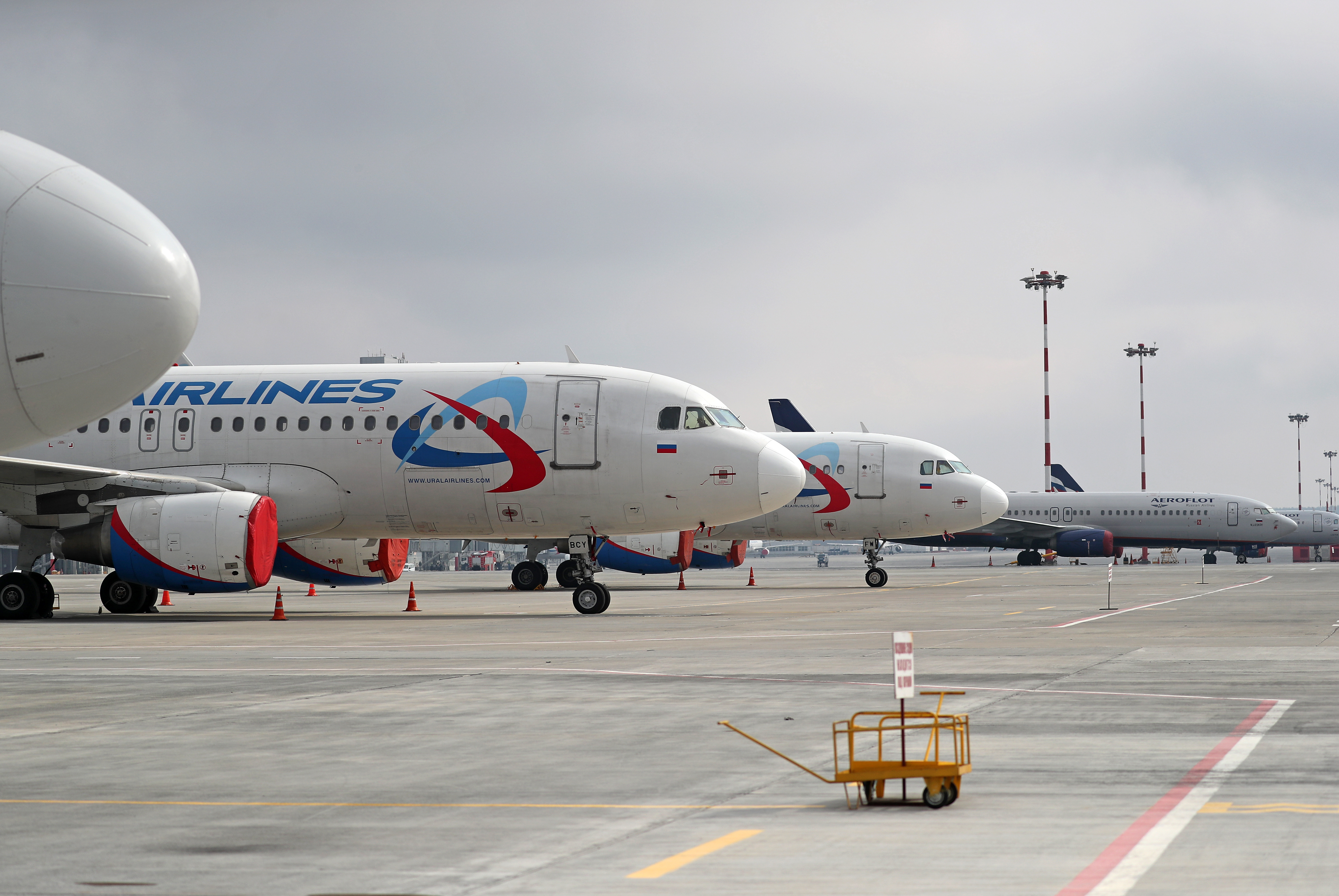
Currently, in passenger aviation, 777 out of 980 aircraft that Russia has in leasing. Of these, 515 aircraft, that is, more than half, are rented from foreign companies. The stop of a passenger leasing system will affect airlines such as Aeroflot, Russia, Ural Airlines, S7 and Azur Air.
In recent days, there were several reports about the beginning of the process of returning aircraft to their owners. On March 4, a charter flight was detained in Canada, which was stated by the Minister of Transport of this country Omar Alhabra. On March 6, on the application of the lessor, the Ural Airlines plane wasdetained in Sharm Esh-Sheikh.
Sanctions that will affect the possibility of the implementation of Russian freight and passenger air transportation will also affect those aircraft that are not in leasing. It is forbidden to service aircraft, spare parts. The American company Jeppesen has already notified the Victory airline that it stops the transfer of air navigation information, which is significant for air transportation safety. On March 5, it also became known that the supplier of IT services for the air industry Lufthansa Systems breaks out cooperation with Russian airlines.
Currently, there is no information about how the aircraft in foreign companies can be returned to Russian companies. The countries of the European Union, the USA and Canada closed the sky for Russian aircraft - the regime was introduced after Russia's invasion of Ukraine. A possible refusal of Russia to submit to a sanctions decision in the future may mean the impossibility for the country to conclude such agreements with companies that provide leasing aircraft and are in those countries of the world that have not imposed sanctions.
The President of the Aviation and Space Manufacturers of the Czech Republic , Joseph Kashpar, in an interview with Radio Liberty, told how the consequences of sanctions can affect Russia's capabilities to carry out freight and passenger transportation:
Own technologies in Russia are not as advanced as in the West
- Thanks to many years of study of the capabilities of airlines in the Russian Federation, we know that the vast majority of aircraft technologies are purchased by this country abroad. Therefore, the direct impact of sanctions on the Russian economy will be unambiguous. Own technologies in Russia are not as advanced as in the West. The current sanctions relate to a large spectrum of aircraft. If you say, as it is called “from top to bottom”, then the Russian Federation uses European Airbus or American Boeing as freight aircraft. The vast majority of these aircraft are leasing. In other words, the termination of leasing agreements means for Russia a lack of such aircraft.
So far I do not know how Russia will respond to this decision. In the current documents on sanctions, there is a ban not only on the sale of aircraft, but also on the provision of what is called Safety Information (security information - RS ). This means that the aircraft will be impossible to operate, since Russia will not have access to a sufficient amount of information for their safe use. If we talk about aircraft of the lower category of civil aviation, then the sanctions are primarily regulated by the components for these aircraft - this is not only electronics, but also the software necessary for controlling the aircraft, then we are talking about certain spare parts that are now not available for Russia. The situation with military aircraft is very similar, but in this area the dependence is not so great, since Russia itself produces almost everything necessary for them.
- If Russia decides not to return the aircraft to be returned, which she took into leasing from Western companies, what will happen?
- Of course, in a situation where we are, in fact, at war, nothing can be ruled out. Including the fact that the Western aircraft available in Russia will serve domestic flights and their owners will not be able to arrest them, since they will not fall into the airports of the countries that imposed sanctions. In the media, information is already emerging that there may be a nationalization of Western assets in Russia. But contracts, of course, are ordered to return planes to their owners. The question remains whether Russia will fulfill these contracts.
It is possible that Western campaigns can resell their leasing agreements to Chinese companies. But in this case, the service of these aircraft will still be impossible. This means that they will not be recognized as suitable for operation. In these conditions, they will have limited opportunities where to fly and where to land: only in countries that are not participants in international law. There are only a few such countries, and this will not help solve the problem that has arisen.
- That is, it will be possible to sit in such a plane only at your own peril and risk?
- Yes, it was with these words that I would describe it. But ordinary people will feel not only that. After all, traveling even within Russia for Russians will cease to be possible with such intensity as it was before - there are simply no aircraft. And, of course, risks need to be taken into account from the point of view of security. Aircraft has a special control regime. There are pre -flight examinations, post -flight examinations, as well as service inspections, which are carried out after a certain number of flights. In other words, civilian aircraft several times a year undergo a service and technical inspection, when certain parts are replaced. Russia now has no access to these details, they are extended by the embargo.
- In the event that this plane is purchased from the company in China, for example, the embargo will also act?
- Yes, now these contracts are controlled. That is, the manufacturer cannot sell spare parts to countries in which there is a risk that they will be resold to Russia. Now the details for civilian aircraft will be controlled in the same way as this happens in case of weapons. Anyone who buys this thing must sign End-User Certificate (a certificate prohibiting the resale of the purchased- RS. ), In which it claims that it is the final consumer of details. That is, with legal purchase, these components cannot get to the Russian market.
But this is not only about civil aviation, but also about space technologies. Russia in this area cooperated closely with the West: Russian engines and missiles were used by Western countries in space flights. Now this cooperation has come to an end. And this will have extremely negative consequences for Russia. Western countries now cannot sell space technologies to Russia - electronics, software, some special materials. But this also works in the opposite direction: it is now forbidden to buy from Russia. The point is that extremely successful cooperation in the space industry will be stopped. You can give a simple example: the Mir space station, it is international. Now a huge question is whether it will exist at all. After all, this is common property that Russia and different countries of the world have. In other words, the problems that have arisen are extremely vast, and now lawyers, politicians, etc. They make decisions on how to solve these problems. But they all agree that it is impossible to return everything to a state before an attack on Ukraine. You need to focus on the consequences, ”says Joseph Kashpar.
The expert of the Association on International Issues, Kryshtof Kruglish says that leasing companies can try to renew their contracts outside the countries where sanctions are operating, but this may be due to large costs and risks:
- In order to understand the consequences of the decision on the termination of leasing agreements, it is worth saying that half of the aircraft around the world does not belong directly to the air carriers. Airlines take aircraft for rent and do not engage in service, for which they pay certain monthly payments. This allows you to have more modern aircraft in the air park without the need to invest their own capital, which eventually makes it possible to carry out cheaper air transportation.
Before the sanctions, the Russian market completely copied the world - that is, approximately half of the aircraft used in civil aviation was in leasing. Sanctions affected leasing companies in the European Union, USA, Canada, etc. At the same time, in the world-in Gon-Kong, Arab Emirates, Singapore-there are also similar companies. But even in the event that Russia decides to reorient its leasing to these markets, this will not necessarily end successfully. Companies, say, in Dubai, may be afraid to conclude agreements with Russian airlines due to fears in solvency. On the one hand, there are sanctions against some Russian banks, and they cannot use SWIFT, on the other hand, payments in currencies are limited. Thus, even those leasing companies that do not operate in countries that have imposed sanctions will be careful.
In addition, there is a Cape Tauna Treaty that allows you to detain planes in all countries that sign it (this is the overwhelming part of the countries of the world - RS ). At the same time, we have already seen how we detained the Russian aircraft in Egypt, which is not a participant in this agreement. I think that in March it will become clear whether leasing companies manage to return planes, and whether Russian air carriers will be able to pay for renting those aircraft that sanctions do not apply. It will become clear whether Russia will return the aircraft itself or decide to violate the laws and not fulfill the obligations. For the market, this will be a signal, ”says the expert Krystof Kruglish.