
Translated material
Atomized bomb
Social disconnection of Russian society is worse than nuclear war
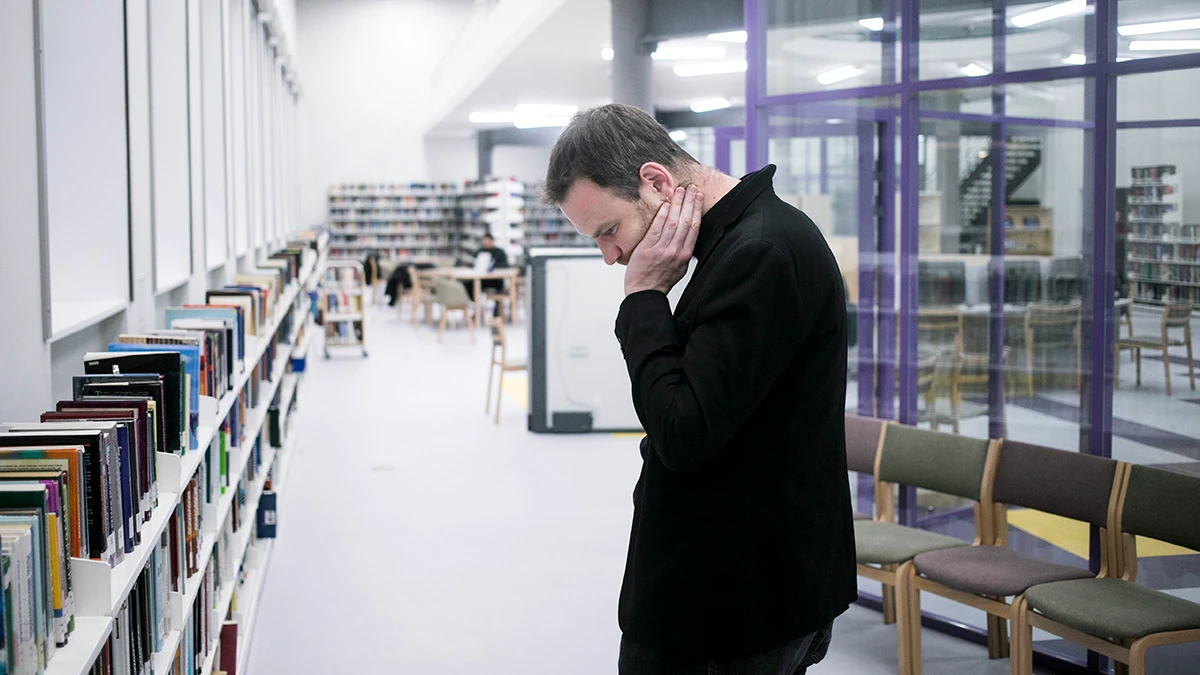
Grigory Yudin is one of the most famous Russian sociologists. He is a candidate of philosophical sciences, senior researcher at the Laboratory of Economic and Sociological Studies of the Higher School of Economics, professor of the Moscow Higher School of Social and Economic Sciences. Yudin represents a classic sociological school, which is skeptical, for example, to polls of public opinion, believing that such polls are needed for the production of legitimacy, therefore they represent society narrowly and wretched, just as a voting or unnecessary population. In this interview, we discussed with the scientist attempts to understand and explain the real processes taking place in Russian society in the turning point of the confrontation with the world and the risk of isolation almost complete from it. The subject of this conversation was the stratification and atomization of society, a split in understanding the events and perception of the world, the dynamics of supporting the actions of the authorities and the scenarios of the way out of this situation.
- Gregory, we wanted to discuss the state of our society at the beginning of the 21st century, especially in the current turning point for Russia and the world. But before starting, I will allow myself a completely amateurish question in order to find myself at least in some kind of coordinate system: does modern sociology have some kind of clear idea of Russian society as such? Well, that is, literally: what is it? What does it consist of today? From what at least layers?
- The question is quite wide. As often happens in sociology, there are different views on the stratification of Russian society, on how exactly it is now divided. But in general, a consensus can be considered that in recent years, inequality has grown in Russia. So significant that it turned into one of the key topics. Often, sociologists focus on economic inequality, but what I do is closer to the research of the relationship between economic and political inequality. That is, how exactly economic inequality is reproduced through the existing political system. And how this system allows you to maintain inequality or even strengthen it.
-But in this inequality, there are still some special social layers, which, so to speak, carry a peculiar systemic code of Russia, allowing it from generation to generation to work out this inequality?
-Well, if we talk about some simple self-reproduction of the system, then in one way or another all layers of society immediately participate in it. The order they can like or not like it, but at least it exists.
Yes, some people may seem meaningless and stupid to us, but since they exist, it means that they have some kind of hidden function.
For example, it is often associated with the realization of power, with a certain attitude towards it. From an anthropological point of view, this is a completely functional and productive thing. Paper, for example, are shifted, batons beat dissatisfied, everything works.
Another thing is that we can now face the change of this system.
- Well, judging by the data of official sociological studies, the system is stronger than ever. If only these data are not taken from some special layers of society, about which we, in fact, know nothing.
- Here you need to make a few comments. What you are talking about is the so -called polls of public opinion. Publishing polls to sociology have nothing to do. Sociology does not deal with such surveys, this is a special area, and it is reckoned to sociology only due to confusion. Moreover, in sociology there is generally a long -standing tradition of criticism of public opinion polls, even at the level of the ideas of such surveys in itself.
But if we are still talking about such surveys, then, of course, everyone is interested in, they are made conscientiously or unscrupulous. There are subtleties. Often this, of course, is not done quite conscientiously, because it is, first of all, a technique that serves the task of production of political legitimacy. This is not only a Russian case, but just in Russia it is most obvious. The thing is that it is good to produce political legitimacy simply by drawing numbers. And large research companies usually do not draw numbers. The dishonesty here is connected with a bunch of little things that are not noticeable to a non -specialist. For example, the share of those who agree to participate in public opinion polls from the original designed sample is approximately 10-15 percent. For the rest, for various reasons, it is simply impossible to reach. They are inaccessible, busy, do not want to answer, they are all uninteresting and so on. This creates a rather serious problem. In fact, about 85–90 percent of people who do not fall into the final sample, we really do not know anything. Of course, we can proceed from the assumption that they are exactly the same as 10-15 percent of those who agreed to participate in the survey. But, by and large, this assumption is not based on anything.
In fact, this is not only a Russian problem, but in Russia it is complicated by the fact that people, in principle, perceive these surveys as communication with the state. Roughly speaking, as an instrument, on the one hand, surveillance and supervision, and on the other, receiving feedback. People through surveys often complain of our main person about his boyars. And this greatly affects the fact that people are answering. And these are things are much more fundamental than just drawing numbers. We get a situation where people who agree to play such games with the state are about the same group of people whose opinion is passed out for the position of everyone else. So or not, in fact, is a difficult question. Theoretically, the position may differ strongly, and maybe not very.
That is, my opinion as a sociologist here is as follows: the numbers that we receive are not necessarily erroneous. However, in the current situation, we cannot know how true they are. To understand this, completely different tools are needed. There are many of them, they are mostly indirect - for example, the dynamics of changes, the scale of displacement. They allow you to mainly adjust the results. But in general, yes, the situation is approximately this: polls are dealing mainly from the audience loyal to power, but this does not mean that beyond its borders there is a disloyal audience, which is only waiting to break Vladimir Putin into a thousand little cubs. This simply means that there are people who do not want to play in any games. They finally lost all interest in what the state is doing, completely turned off from political life, believe that they cannot influence anything, therefore they are engaged in their own business in their separate world. This is generally not very problematic for the authorities, until its sharp politicization comes. Then, of course, surprises are possible.
- Well, then we turn to the polls of public opinion, but directly to sociology. How does it determine the current state of modern Russian society?
- Look, what does the current state mean. The idea of obtaining a cut that would be similar to the results of voting is not the idea of sociology. Sociology does not imagine society in the form of a society of voting people. Rather, we can say that we can track some trends in society and try to explain them. Therefore, if we take some kind of large picture, then this is the first thing that is important for sociology from the moment of its founding and which is critical for Russia is that Russia is a very atomized country. This is its main characteristic. There is very little solidarity between people. Very few horizontal connections. People are deeply immersed in a private life. Aggressively trying to protect this private life from any penetration from the outside. They are completely depolitized, that is, they categorically do not want to have anything to do with politics and bear any responsibility for it.
They are convinced that responsibility can be carried only for themselves. Any collective action is impossible. Nobody cannot prove anything and do not even have to try.
In principle, we are initially enemies to each other, who just need to be eliminated from our path.
But at the same time, it must be understood that people cannot endlessly be alone, it is well known for sociology. A feeling of belonging to something is necessary, I need identity. In recent years, foci of such solidarity have appeared in Russia at different levels. At the level of local communities, charity, even in the field of political activities. Slowly, gradually, mainly in young groups, more integrated into the global world. This began to form another common sense, which gradually began to challenge the atomized consciousness. And then the giant historical event that we are now observing is, among other things, Vladimir Putin’s attempt to click on a stop clock. He was always a preacher of the idea that you need to sit at home and do your own thing - here you have a mortgage, consumer loans and shopping centers - forward. Everything else is not your business, you are not asked. The situation has changed, and now we have witnessed attempts to stop Russia, and by and large - history.
So, yes, I believe that a special operation is being carried out to establish the order of cultural and generally everyday life. And in the course of this special operation, yes, artillery is used, because two fundamentally different worlds cannot get along. One threatens the existence of the other.
- And from your point of view, how viable or, say, atomized society is competitive? Is it some kind of atavism or can it exist quite calmly and safely?
-You know, the STO sociology with a little years ago arose in many ways because of the fact that the atomized societies began to observe. At the turn of the XIX and XX centuries for the first time in global history, societies consisting of masses began to appear. They were not fastened with traditional units of density. Big cities, people who walk the streets are not familiar with each other and will never get acquainted. The question was what to do with it. The founders of sociology realized that this is a very dangerous condition that can lead to disasters of any scale. This is not to say that since then the issue has been resolved. But still, on the basis of the experience that we now have, it can be seen that atomized societies are ending with a collapse, on the ruins of which a new solidarity is created. The scale of this collapse can be any large. In any case, no one has yet experimented during such a collapse with a nuclear bomb. Well, let's try, maybe something will remain.
We will be honest: the world, in principle, is still quite atomized. Just Russia in this situation is a radical case. America, for example, is also atomized and unstable, but there are at least there are structures that still make up a counterweight and retain solidarity. And Russia is a scorched field. How this will affect the future is difficult to say. The world as a whole now has additional atomization, thereby provoking a global catastrophe. Because atomization is a war of all against all. Not in the sense that everyone will be randomly randomly shooting on the streets. People will simply cling to the first identity that falls, go down into the unstable hordes and go to the one they will declare the enemy.
- Then we will return to Russia. Something except public opinion polls is done here? Are there sociological studies that can give an idea of the processes occurring in society?
- I know about three such independent research. Their results are more or less coincide. In fact, these are also surveys of public opinion, they are simply conducted by people more competent, so they try to do everything carefully. What do they show? The positive reaction of society to the actions of the Russian president in Ukraine is held at about 60 percent. Negative reaction at the level of 20–25 percent. The rest found it difficult to answer.
There are many pitfalls. One of the key problems here is the battle for framing. Framing is a frame in which people describe what is happening. The frame “goes there ....” is completely different from the framework “there is a special operation there in order to prevent war”. These are just different universes. In one, innocent people die, in the second they are saved from death. People persistently and stubbornly hold on to these universes. Therefore, difficulties arise in raising questions. So so far about 60 percent of support can only be discussed intuitively.
My intuitive assessment, it is quite possible that it is erroneous, is that about 20–25 percent of Russians are very militarized. They are aggressively tuned and really want to kill.
The rest is more likely to be in a kind of denial of reality, mechanically and quite passively accepts the interpretations that state propaganda gives. They argue something like this: well, what to do, since Putin decided, it means that it is really necessary to conduct a special operation, even if only it will end as soon as possible and peace around the world will come. At the same time, there will be fewer Nazis.
The vulnerability before the propaganda of our compatriots is built on the fact that a significant part of them simply does not want to know anything. This is uncomfortable knowledge. Suppose you will find out that some atrocities are happening in Ukraine. And what to do with this knowledge? Go to the street with him? They will beat there. And well, if they beat. It is much worse that they will beat uselessly, nothing will change. Therefore, it is easier to continue to live a private life and aggressively protect it.
At the same time, a group, which frankly opposes what is happening, is also noticeable. And noticeable in the public sphere. This suggests that a split takes place in society. That is why we see attempts to suppress this group with almost totalitarian methods. So far, this fails. There is no total support for the actions of the authorities. It is predictable that the Putin support group will grow. But the fact is that we are now at the point when it is already ceasing to matter, as well as surveys of this group in itself. If Russia finally becomes a totalitarian country, all this monitoring will cease to have any meaning.
However, I will mention some interesting things. First of all, it is important to understand that the split of society passes, including the young generation. Young people are split, because she has more sources of information, and it is included in the global agenda. There is no unambiguous framework here, and the frame that is proposed by the state does not always work. It is curious that the opponents of what is happening are those who have less income. Because more profitable groups are direct beneficiaries of the regime. They perfectly understand that at a strange expense can exist for as long as they like. I will add one more point. The studies that I rely on show that, regardless of the fraim that I mentioned, the Russians categorically protrude for friendship with Ukrainians. Both of them are convinced that Ukrainians are our brothers who found themselves in trouble.
-But taking into account all these cosmic contradictions that you described, does it exist, from your point of view, of any positive scenario for the development of the situation in Russia?
- To be honest, there are a lot of negative scripts. Because, as we see, atomization makes people susceptible to anything. The last trends that we see over the past two weeks are very, very alarming. To everyone who conscientiously studied Germany of the 30s, this reminds of a lot. We are not there yet, I don’t know if we will come there. But the symptoms are bad. Resentment. Resentmenting. Anger. The desire to take revenge. A constant sense of danger. Horizontal ties are broken. In addition, I still suspect that today's perception of the Second World War, the entire narrative, does not leave the Russian society a chance of analyzing the causes of Nazism, an understanding of its social foundations. We are deeply convinced that Nazism is what can happen to someone else, but not with us.
But there are some grounds for optimism. They are connected with the fact that
Russia, as I said, is transformed. Solidarity originated in it. It comes from younger groups, and this, by the way, is what distinguishes us from Germany of the 30s. There is an understanding that Russia is still part of the global world.
Young people, say, have much fewer problems in order to see Ukraine by an independent state. Lord, well, I lived almost the whole conscious life with ideas about the independence of Ukraine, as with ideas about independence, say, Ethiopia. There is no problem for me at all.
It is not clear to my peers, and even more so younger people, what is the problem. Global communication, involvement in the global communities, which is incompatible with this underwindly and unfinished project of Autarchy ( Autarchy is a system of closed community reproduction with minimal dependence on the external environment, the economic regime of self -sufficiency . - Ed. ). Россия никогда не сможет быть автаркией, поскольку исторически любит, наоборот, добежать и добраться до каждого на свете, чтобы сказать, как она в нем не нуждается и как она к нему равнодушна. Проект автаркии — типичное невротическое или даже истерическое расстройство. Поэтому для прогрессивных групп общества все это выглядит как полное самоубийство. Надеюсь, эти группы не просто заметны в современной России, но у них есть еще и ресурсы, и исторические перспективы. Да, прежде они старались не лезть в политику, поскольку тоже инфицированы безразличием. Но сейчас ставки такие, что уже приходится и еще придется туда лезть.
Что если посмотреть за порог происходящего? Если там вообще будет какая-то жизнь, что, кстати, неочевидно, то у России есть все-таки шанс, как у части глобального мира, причем важной и ответственной его части. Но строить такую Россию придется в чудовищных стартовых условиях. Если мы сдюжим, восстановление страны возможно. Ресурсы и исторические примеры для этого есть.