
Translated material
Ball mill
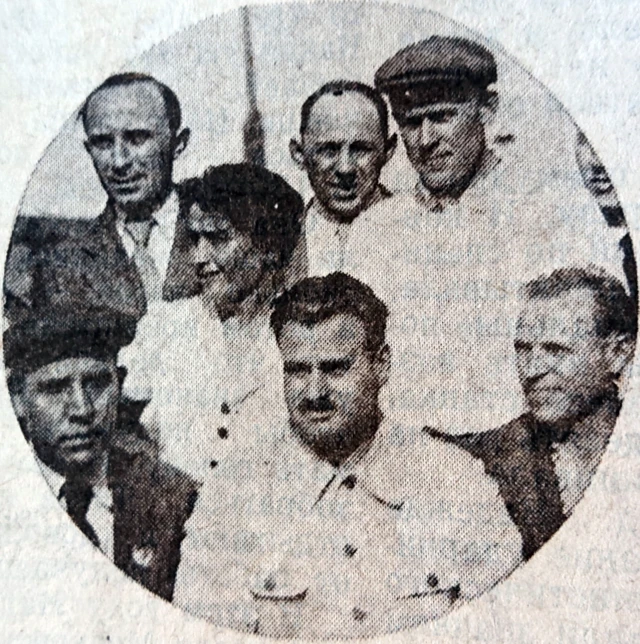
My grandmother, Nikita Mikhalkov and Lyudmila Gurchenko
What are the most used Russian words? (Besides the mat, of course.) Statistics leaves no doubt: "If only there was no war."
While the Great Patriotic War lasted, people repeated as a spell: "If only the war ended." All the words understood these words the same way: you just need to survive this terrible time, and a happy life will come. And when the war finally ended, the people repeated for another three quarter centuries "if only there was no war." This meant that any troubles and hardships can be overcome, if only the worst thing would not happen.
In 1941, the Germans rushed to Moscow, bombed, the panic in October was a terrible ... Stalin (ZIS) automobile plant was evacuated to the east-part to Ulyanovsk, part to Chelyabinsk ... They mounted machines right in the field under the snow, erected the walls of the workshops, the roof.
For machines to work, electricity is needed, and for people to work - warm. My grandmother (the only woman in the team of Likhachev) led the installation of TPP - a heat electrocentral. Such a thermal power plant works on coal. The only and necessary condition: coal must be grinded into powder. This requires a ball mill. There were no mills - it means that there was neither electricity nor warmth.
One morning, my grandmother went to Likhachev after the meeting and, feeling like a complete fool, said:
- Ivan Alekseevich, I saw a dream at night: in the courtyard of the Kharkov Tractor Plant lies a ball mill - exactly the way we need.
According to his grandmother, Likhachev did not swear obscenities; He simply said: "Sonya, the Germans in Kharkov."
At that moment, a black reproduct on the wall came to life, Levitan’s solemn voice said: “Today, Soviet troops liberated the capital of Ukraine - the city of Kharkov!”
Likhachev stared his eyes, grabbed the turntable with shaking hands ... They got through to the defense committee, to the commander Vatutin, to the commander Vasilevsky ...
Sonya said that all this time, breaking through the phone through Moscow and the war in Kharkov, Likhachev periodically twisted his finger at the temple, reminding her that she was crazy. And that he also looks like a fool because of her dreams.
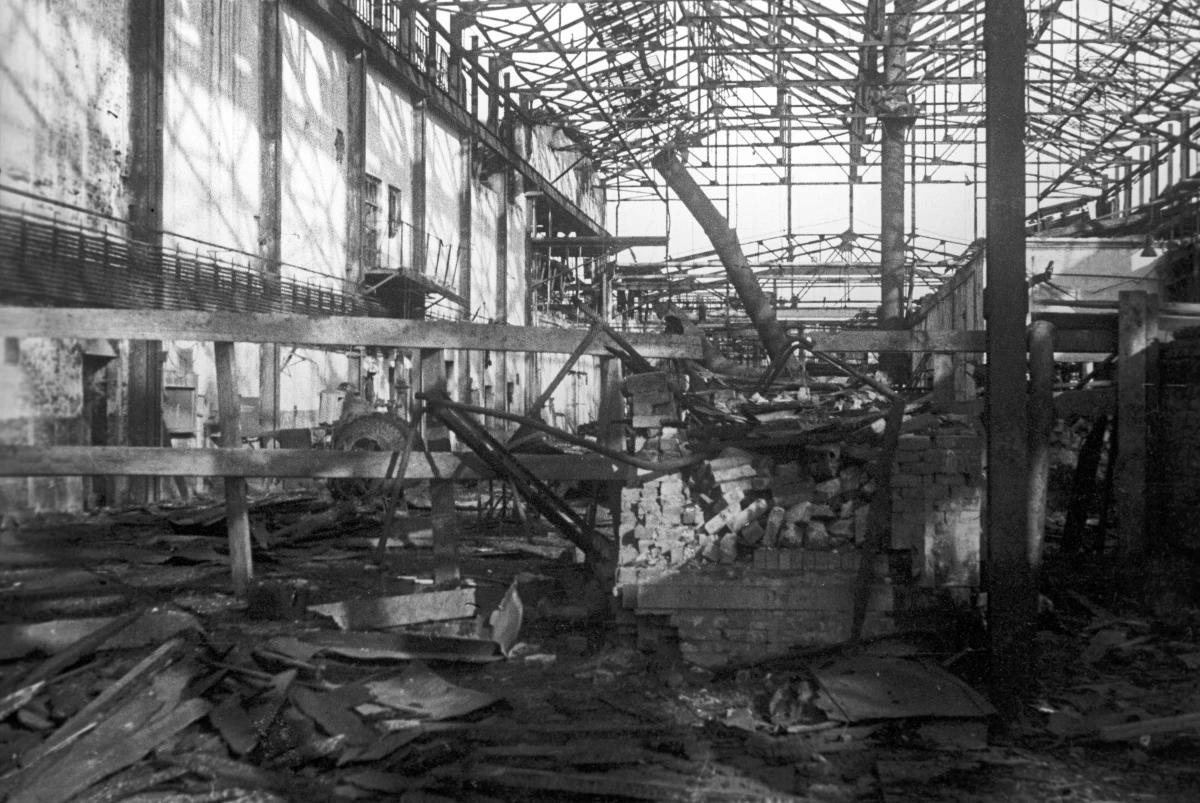
Finally, some Komrota replied that he was on the territory of a bombed KhTZ, and that right in the courtyard between the two funnels there is "some kind of thing, similar to what you are looking for."
It was a ball mill; Weighs, by the way, more than five tons. They dragged to the railway tracks, loaded onto the platform, and the train went east. And the next day, the Germans again occupied Kharkov. (He was released three times in that war.)
* * *
In Lyudmila Gurchenko, the entire Soviet people fell in love in 1956, seeing the film "Carnival Night". Remember "I will sing you a song about five minutes"? "Carnival Night" broke all records, 48,640,000 cinema tickets were sold. But before singing funny songs to the Soviet spectators, Lucy Gurchenko sang them to the German occupiers. She was born in Kharkov in 1935, and when the occupation began, she was six years old. She sang and danced in front of the Germans for food, miraculously did not die.
* * *
If in Russia they say “war” - this means that the Great Patriotic War, otherwise it must be added: with Napoleon, the German (I World), Civil, Finnish, Chechen. Tragedies such as Afghan, Ossetia, Transnistria, Georgia, Syria are not called war at all, these are “conflicts”, it is “somewhere”, and the number of victims (in our understanding) is negligible.
Nikita Mikhalkov (who, unfortunately, became a demonia) shot many films about the war: “Own among strangers”, “Slave of love”, “Buried by the Sun” - 2.
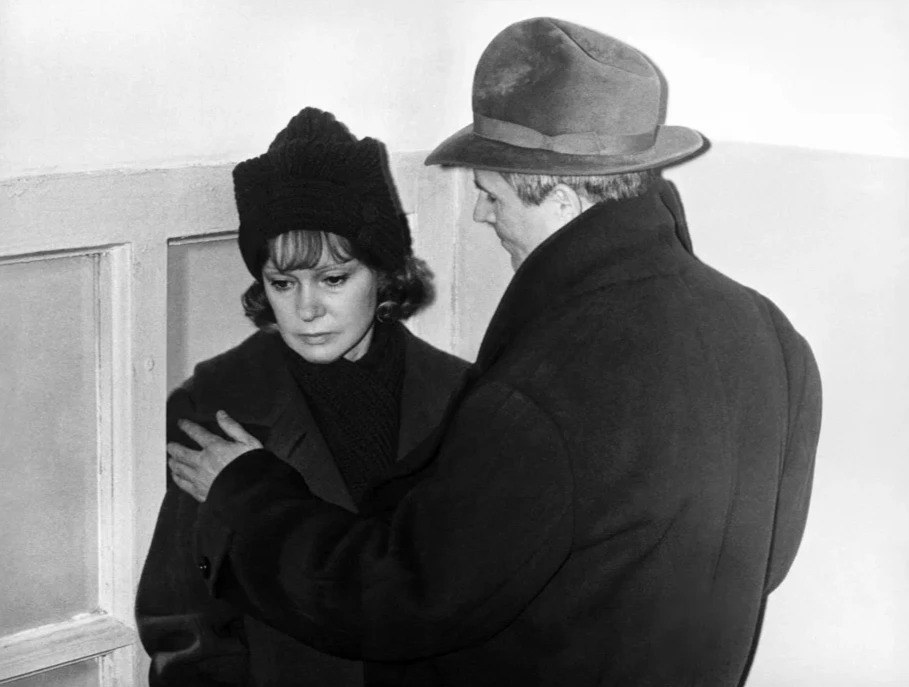
It is unlikely that anyone, listing Mikhalkov’s films about the war, will call a quiet movie “Five Evenings”. After the 17 years of separation, in the late 1950s, two people who once seemed to have love in the late 1950s; Maybe they kissed, or maybe not. Their feelings have lived all these years, as in the freezer, as in permafrost, it is not clear: whether they are hung up, whether they will come to life.
The hero was amazingly played by Stanislav Lyubshin, and the heroine was Lyudmila Gurchenko, who does not look like Helen from the “carnival night”-dry, exhausted, some kind of foreman in some kind of factory.
Heroes cannot adapt to each other in any way, quarrel, swear ... But when he finally appeared in the house, where she dreamed about him for a hundred years, where he was in a hurry for a hundred years, because she decided so and he decided; And it seems that now everything will become good, only Gurchenko’s face remains in the frame: she cries quietly and says quietly:
- Tomorrow Sunday, you can go to Zvenigorod, it is very beautiful there. True, I was not there yet, but they say. It was very beautiful in Arkhangelsk, I was not there either, but they say ... If only there was no war. If only there was no war. If only there was no war.
And letters - the end of the film arise on the screen.
I did not remember how this movie ends, which I saw almost half a century ago, in another life. And suddenly three times - "if only there was no war." He took the play, opened the final. In Leningrader Volodin, in the play of 1959, the last words are: “And in Pavlovsk it is very beautiful. I was not either, but they say. Oh, if only there was no war. "
Muscovite Nikita replaced Pavlovsk with Arkhangelskoye, but these are trifles. It is much more important that the Kharkiv woman Gurchenko did not say “oh”, but “if only there was no war” said three times. I knew what I was talking about.