
Translated material
Not dressed in color
To distinguish “crooks and provocateurs in yellow vests,” journalists are invited to acquire a QR code
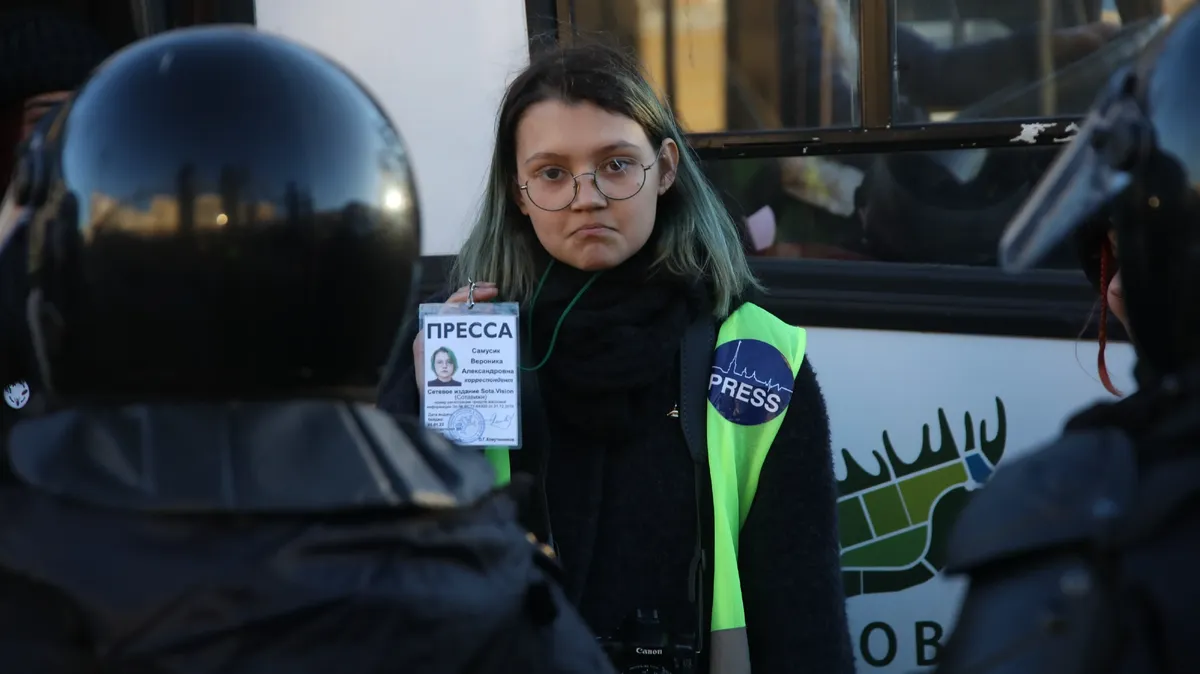
At rallies in St. Petersburg, the security forces were detained and sent to the autozaks not only protesters, but also journalists. Last Sunday, the correspondents of the Novaya, Mr7, Sota, Zaks.ru and Avtozak.live - only about 10 people - were loaded into the bus and taken for 50 kilometers to Kronstadt. The detainees were dressed in yellow distinctive vests with the inscription "Press", had editorial tasks and press cards with them.
In Kronstadt, they were mutated for some time in the police department, at first they asked to write explanations (?), And then they simply released, rewriting the passport numbers. It took all this a few hours.
The media officers remaining on Nevsky Prospekt were detained or released. For example, the silsablshchikov correspondent Elizaveta Strogalshchikov grabbed the correspondent of Fontanka three times. The confusion ended only after the situation at the Gostiny Dvor was informed of the Petersburg Press Committee, journalistic unions and the press service of the Ministry of Internal Affairs.
On Wednesday, March 16, the head of the St. Petersburg police, Roman Plugin, speaking in the city legislative assembly, said that the detention of journalists is part of the struggle with "crooks and provocateurs in yellow vests."
“An employee cannot determine who the journalist is,” he said. “We met with the facts of provocations when the vests put on all sorts of crooks and climb with their cameras, phones in the epicenter of events, thereby simply interfering with legal actions to the police officers.”
The head of the St. Petersburg Ministry of Internal Affairs also noted that the journalist’s authenticity checks are quickly held.
“There are no such facts that we thwarted the working day of a journalist,” Plugin assured.
“I'm laughing. I was detained at the shares twice, ”wrote Andrey Okun, a Correspondent of ZAK.ru, a detained correspondent of ZAK.ru. - The last time I managed to work for about ten seconds. So here is a specific example, dear Roman Plugin: your employees tore off at least my working day. <...> After such a “temporary delivery”, usually none of the journalists has time to get out of the distant regions of St. Petersburg until the end of protest actions. ”
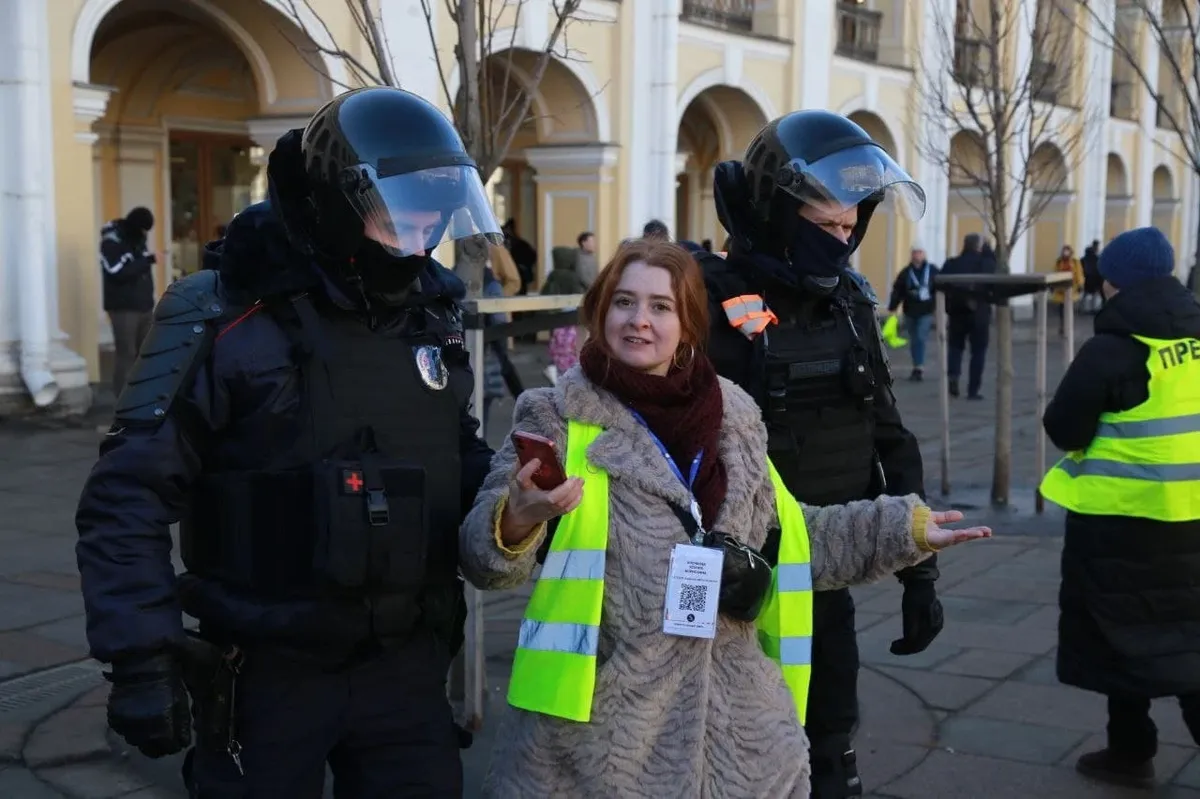
As it turned out, the whole thing is in the wrong color of vests with the inscription “press”: they should not be lemon-yellow, but neon-green. Such an unexpected aesthetic claim of the security forces reminded the brilliant quote from the film “The same Munchausen”. “In one -breasted one? What are you? Do not know that in a single -breasted no one is fighting now? " - the duke screams before the start of the war with England.
The situation is complicated by the fact that there are no green vests in St. Petersburg. Because of this, in the house of a journalist, media employees are offered in addition to the wrong vests, editorial tasks and press cards to issue special QR codes.
According to the 47th article of the Media Law, journalists have the right to attend rallies and demonstrations without additional paraphernalia. The requirement for an excellent sign is spelled out in the Federal Law “On Meetings, Raits, Demonstrations, Processions and Pickets”. In early April 2021, amendments were made there, which were supposed to facilitate the work of reporters at mass events. Roskomnadzor approved three identification features: a neon-green vest with reflective stripes, a press card and an editorial task.
But the St. Petersburg House of the journalist still gives out the vests of the old-style-lemon color. And those approved by Roskomnadzor, according to the head of the St. Petersburg branch of the Union of Journalists of Russia Dmitry Sherich, are expensive and are made only to order.
“Ultimately, the responsibility lies with the journalists themselves and the media,” says Dmitry Sherich.
- The vests in their current form mean nothing, they do not correspond to the order of Roskomnadzor.
What the editorial task looks like, a policeman may not know: each editorial office has its own rules for paperwork. Therefore, the idea arose to create a single method of verification. With QR codes, a policeman does not have to think whether the journalist is in front of him or not. If a person has stopped working in the media, this code will be canceled. ”
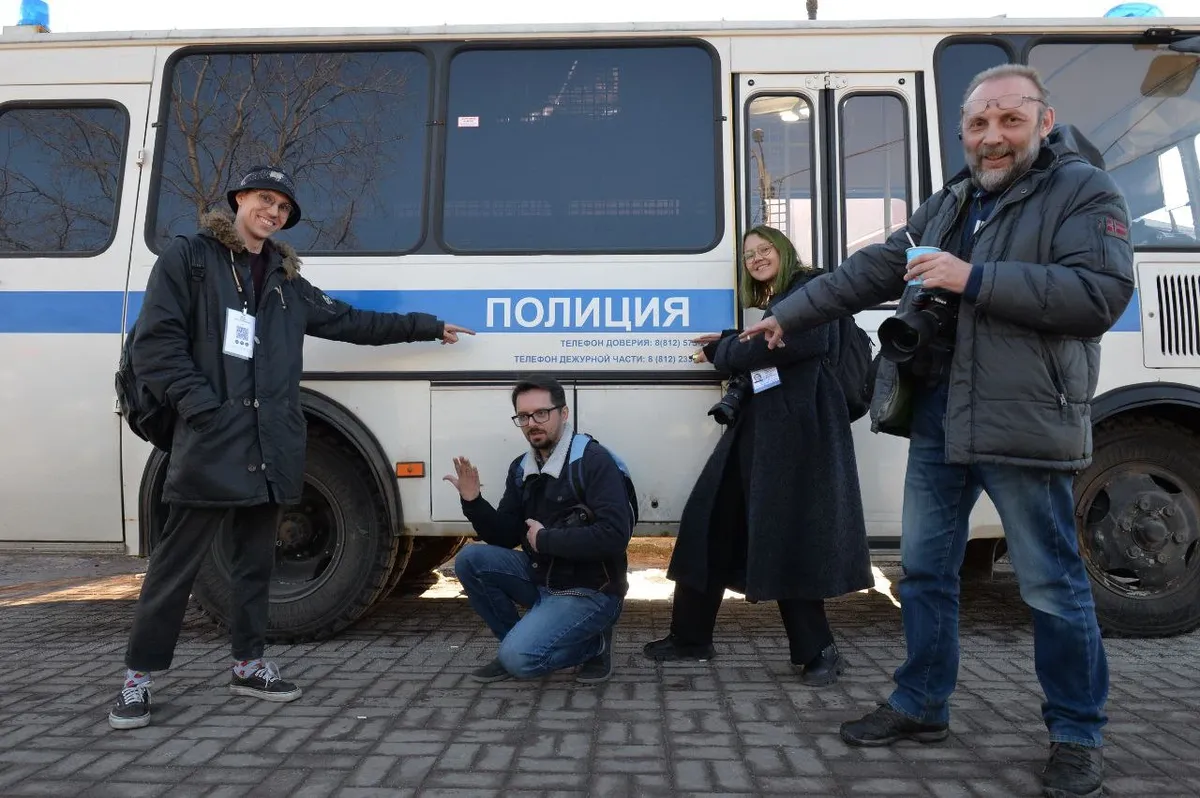
According to Sherich, he knows cases when a person stopped working in the media, and left the vest for himself. That is why he sees a panacea in identification cards in the form of QR codes. They will allegedly quickly confirm the identity and professional status of a journalist. However, to whom and on what principle these cards will be issued is still unclear. So far, about a dozen media have been submitted for their receipt.
Whether the QR code can solve the problem with detentions is an open issue. All journalists detained on shares claim that both police officers and the Rosgvardists did not pay any attention to the documents at all - neither on editorial tasks or certificates.
“I wanted to present my documents when I was brought on a bus,” says Elena Lukyanova, a photographer of Novaya Gazeta. “But no one began to watch them.”
What will make the security forces check the codes incomprehensible to them, have not yet been explained to reporters.
Ekaterina Sergeycheva, especially for "New"