
Translated material
"Fake Fall"
Journalist Todar Bactemir - about how the unprecedented influx of Muscovites affects Armenia
The journalist of the Tatar-Bashkir Service “Radio Liberty” Todar Bactemir, who lives in Armenia and helps with the relocation of refugees from Russia, talks about how Armenia copes with the influx of Russians and what problems are already visible in Yerevan and other cities.

- You have quite fucked there, right? Yesterday I would take young guys from Moscow, and they said that Russia is becoming North Korea, ”the Yerevan taxi driver tells me, while I throw the suitcases of the next acquaintances of someone’s acquaintances who need to be met, consulted and populated into the trunk.
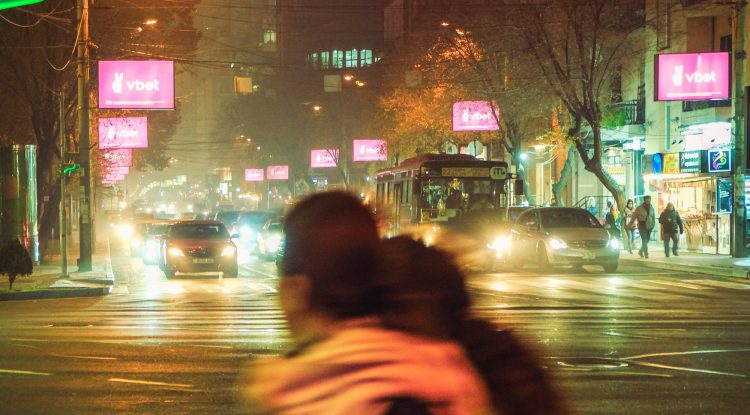
All the first week of March, I went to the Zvartnets airport every day, often - not once. These days, Yerevan accepted 30-40 aircraft from Russia instead of the usual 5-10, and most passengers were not similar to the Armenians returning home or to ordinary Russian tourists. Families with the mountains of bags, cats and dogs, large companies of young people - and a clear generational section is visible between them. Who is older-stand at the exit from the terminal with doomed faces and are silent, who are younger-glow and say something like that he meets: “How good it is to inhale the air of a free country!”. The Russians are filled not only by the airport - to meet Russian -speaking guys with tattoos on their faces and multi -colored hair on the central streets is now almost easier than local residents. On Twitter, they joke that Moscow Patriki moved to Yerevan in full force.
According to Civilnet observer Eric Akopyan, 50 thousand Russians entered between February 24 and 10 to Armenia. It can be assumed that about 20 thousand immediately rushed to Tbilisi and Batumi, using Yerevan only for transit: Russia has no direct air traffic with Georgia for the third year, and it is more expensive to get there through Turkey. Then we have about 30 thousand Russians who came to Armenia after the Russian attack on Ukraine and remain in it at the moment.
Even 30 thousand is a huge shock for Armenia, in which only 3 million people live: Russian refugees now make up a whole percentage of the country's population. I say "refugees", because we are all saying so, without really thinking. We are immigrants and repatriates from Russia who lived in Armenia long before the war, and now they help to get used to newcomers.
Is it correct to consider these people refugees in fact? It is difficult to answer this question, since Russians in Armenia are not a monolithic community at all. Someone is going here from fear-I kept meeting people in a gathering, familiar to me from journalistic work, protest rallies and regional activism. The main motivation for moving for them is to be safe, not go to jail and not be called up for the front. Of course, these are refugees - maybe not legally, but in fact.

Others move here not for political, but for economic reasons-an IT company, for example, they move to Armenia with entire offices, because working under sanctions becomes inconvenient. For such people, fear and moral position are often secondary, if there is at all: it is more about that you can easily receive salaries from abroad, use the usual Western services, and not worry about the shortage of products and the closure of your favorite cafes and shops.
Is it refugee? Perhaps not. Rather, economic migration or, God forbid, digital nomadism. However, immigrants of the second category usually do not need the help of Armenian activists and earlier Russians, almost do not go to integration meetings and rallies in support of Ukraine. In general, they are beyond the scope of the organized reception and arrangement of newcomers, but - not beyond the framework of Armenia itself, which this migration crisis cannot but influence.
The most obvious consequence of the mass immigration of Russians is the situation in the rental market. Yerevan apartments, which cost 350 dollars a month before the war, are rented out at 800 or even 1000 today. This growth has partially artificial nature: IT companies, ready to pay for the relocation of their employees, prefer to do this through services that accept bank transfer and issue checks. Offers on such sites like Airbnb, of course, are less than on List.am - the Armenian analogue "Avito". There are fewer apartments on organized services, high demand at a low offer causes frantic price increases, and it is still more convenient for companies to pay $ 2,000 to a legal entity than 500-a private trader with cash.
Then there is a chain reaction that goes beyond the bingering services. Today I spoke with a web designer who is still renting a three-room apartment in the center of Moscow and thinks about moving to Armenia. He complained that many kopecks on the outskirts of Yerevan even without agents and intermediaries are more expensive than his Moscow housing.
A sharp rise in price of housing, of course, hits local residents. In the early days of the mass outcome of the Russians, I imagined its worst consequences somehow: you live in a small Armenian town, copy it to move to the capital for study or work, it seems that you have already accumulated, but since it is becoming several times more expensive in Yerevan, and you are no longer going anywhere. I wrote about this on social networks, and readers scolded me for unreasonable migrantophobia: “How is it, the influx of Russian migrants will ruin the life of the Armenians? Are you a Nazi? ” But he spoils it objectively without any ideologies: the further, the tougher the market becomes, and now unscrupulous landlords break long -term contracts, exposing Armenia citizens to the street to retake their apartments to immigrants at a new price.
This is how my friend, a student from the city of Kapan in the south of Armenia, lost her housing in Yerevan - now she chooses between the scored hostels and the return to her parents. Yes, decisions on the eviction of local residents are not made by immigrants for the sake of benefit, but by local landlords. But if there were no immigrants, the owners would not have the thought and the opportunity to do it - who, if not the Moscow ITSHAN, would offer them five average salaries per month for a odnushka in Arabkir?
The situation with housing in Yerevan became so critical that the Russians drew attention to other cities and even the villages of Armenia. The next victim of the migration crisis was Gyumri - the second largest city in the country and its cultural capital. Now, many people can’t afford many, and in Telegram, new chats like “moving to Stepanavan” and “relocation to Ashtarak” with detailed guides appear every day. My friends and I joked that a month ago it would have sounded as surrealist as “Green Card to move to Barnaul”, but the world is changing very quickly. Provincial Armenian cities, whose inhabitants went to Moscow to earn money yesterday, have now become a priority for migration for the Muscovites themselves.
The consequences of the migration crisis are also experiencing a vacancy market. I was somehow irrationally touched by one story. The girl from Russia moved to Yerevan and wrote on Twitter: “In Russia, I always respected migrants and tried to help them. Now I myself have become a migrant, and here they call me a person who came in and accused of taking work from the Armenians. ” In one of the comments, she answered someone: “Yes, I’m here for a month, wait until my boyfriend receives a Schengen visa”, but the very next day she boasted that she got a job in Yerevan even without knowledge of the Armenian language.
Before this crisis, it seemed to me that it was almost impossible to find a job in Armenia, without owning Armenian, but now everything has changed. A friend sent me the screenshots of the working chats of the support of a large Armenian company. Its employees wrote: “We now need to hold on to their places, because the authorities talk about how he wants to hire new Russian candidates.”

Photo: Naira Babayan, Unsplash 
Photo: Levon Vardanyan, Unsplash
In one plane, all these unpleasant things are taking place that we are trying to illuminate, for which we get the stigma of “migrantophobes” and listen to jokes about the ultra -right “alternative to Armenia”. In another plane, rallies organized by the Ukrainian diaspora are held against Russian aggression, where new arrived Russian political residents come and say: “We are with you,” and Ukrainians answer how they are happy to see them.
In the same second plane, DJs-Sets are held in a bar, where Armenian left activists listen to how the Russian producer of feministic podcasts mixed with Arabic-language tracks about the life of the Quirs in Lebanon. In the cafe holding an anarchist who immigrated to Armenia from Israel, it is not the first day that integration lectures are held for newly arrived Russians, flowing into cozy drinking, and the history of Armenia and colloquial clubs for studying Armenian are planned.
These two realities are almost in contact. In one, a well-fed programmer offers $ 2,000 for an apartment, which costs 300, and the girl-on-month-free-shelter for some reason is arranged in a large company without knowledge of the language, and we, of course, grumble. In another, former political prisoners without a penny in their pockets sleep in the clashes in our kitchens and look for where to get to the dishwashers and couriers and, of course, we help.
In general, real migratophobia does not smell here - except for classism, and directed from the bottom up. But can it be otherwise when migration comes from the metropolis to the former colony, and not as usual - on the contrary?
Observing the influx of Russians in Armenia, it is impossible not to think about colonialism and its consequences. Here is an employee of the bank tells the Russian woman that he cannot change the amount of less than 10 thousand rubles for dramas because of the new rules, and she shouts: “This is Russophobia!” Here, the guys in the chats by relocation ask if they will beat them with stones for long hair and whether it is possible to fly to Yerevan with a transplant to Baku, as if they do not know and do not want to know anything about the country that they are going into. Here in the comments on the instructions for moving to YouTube, someone writes: “I have long paid attention to the lack of signaling in Armenia with information in Russian. It is advisable to very quickly fix this situation. ” Here the family from Moscow is rude to the waiter who moved to Yerevan from the mountain village, because he speaks Russian with a strong accent.
And why should the Armenian in Armenia know the foreign language perfectly? It should not, of course, but critically most of the newcomers consider otherwise and requires this. The Russians who move to the countries of the post-Soviet space too often perceive them as a continuation of their homeland, devoid of subjectivity, is a kind of “fake abroad”, in which there is no need to integrate, because everything seems to be almost at home. The Armenians and those immigrants who are ready to become part of the Armenian society and learn its language, and not demand from random passers -by announcer pronunciation in Russian, will have to be displeased.
Even if you abstract from the social and economic consequences of the influx of Russians, I just am a humanly offensive to me. I am also an immigrant, but I wanted and was able to connect my life with this country and its society, I try to invest in it, I have been teaching Armenian for a long time and, with joy and pride, I wait for the day when I get the citizenship of Armenia. No, of course, I cannot call others to do the same. But it’s sad for me to see how Armenia becomes a faceless transshipment point for many, the “wild and poor” outskirts of the former empire, where you can update the Russian passport or get a visa without fear of police under the windows, and then continue their way to “really worthy emigration of the country”, leaving only three times the apartments. In this approach, probably, there is nothing illegal or immoral, but Armenia is not a purgatory or a protracted transplant, but a beautiful sovereign country.

Of course, the current situation also has objective advantages - Armenia is experiencing an unprecedented influx of new companies and private entrepreneurs. During the day of the war, March 7, the status of IP in Armenia received four times more Russians than for the whole of January. These people will pay taxes here and create jobs, which, hoping, will move not only to the same Russians. The state understands this and actively offers assistance - the Ministry of Economics of Armenia advertises the services of comfortable relocation of business, the office of the Commissioner for Diaspora Affairs publishes guides not only for repatriate, but also for immigrants without Armenian roots, and even the veterinary service reduced the requirements for the import of pets to help Russian refugees quickly and easier to transfer their own to their best and easily transfer their pets.
How all these changes will be reflected in the future of Armenia, it is difficult to say now. Migrantophobia is, of course, an incorrect reaction, but it is also impossible to turn a blind eye to problems that came with the mass outcome of Russians. So far, we can only help those refugees who need it and wait for what will happen next.
The author’s opinion may not coincide with the opinion of the editorial office
Todar Bactemir is a journalist in the Tatar-Bashkir Service "Radio Liberty", author of the Podcast DOXA "Country of Regions", ethnic-language and regional activist.
Photo on the cover: Levon Vardanyan, Unsplash