
Translated material
Deficiency and black market. What threatens state price regulation
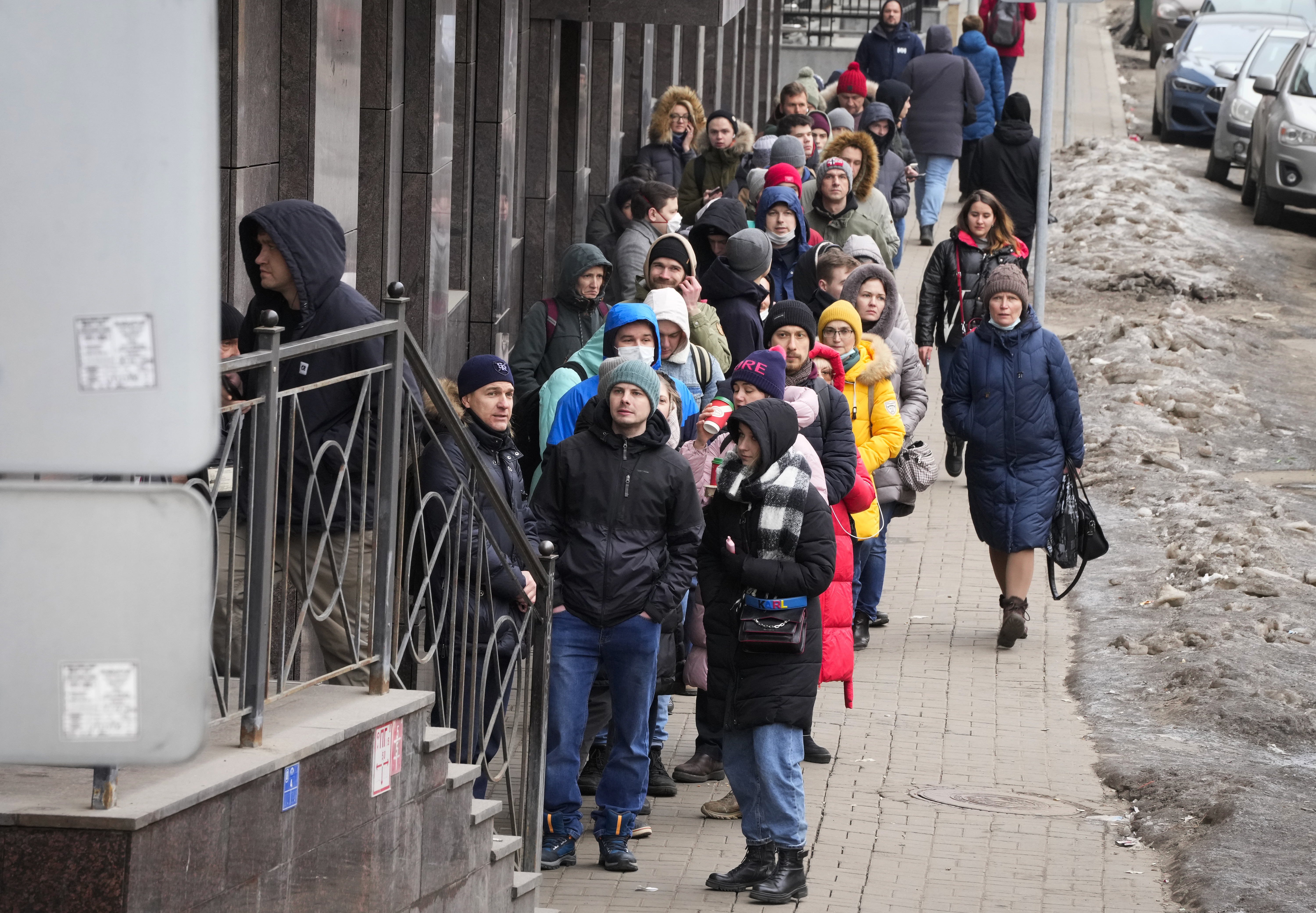
Against the backdrop of a worsening economic situation, the Russian authorities demand from retail chains not to increase food prices. The cost of first -need goods is controlled by the Federal Antimonopoly Service and the Prosecutor's Office. Tint networks allegedly voluntarily limited the margin of these goods (5 percent).
The Russian authorities reduce social tension, but, on the other hand, they balancing on the verge of deficiency, empty shelves and the black market in the late Soviet style, experts say.
Sugar panic
With the outbreak of war and the introduction of sanctions, prices in Russia went up almost all goods. According to Rosstat, weekly inflation from February 26 to March 4 accelerated to 2.2 percent, reaching the indicators of the 1998 crisis. She is not going to stop.
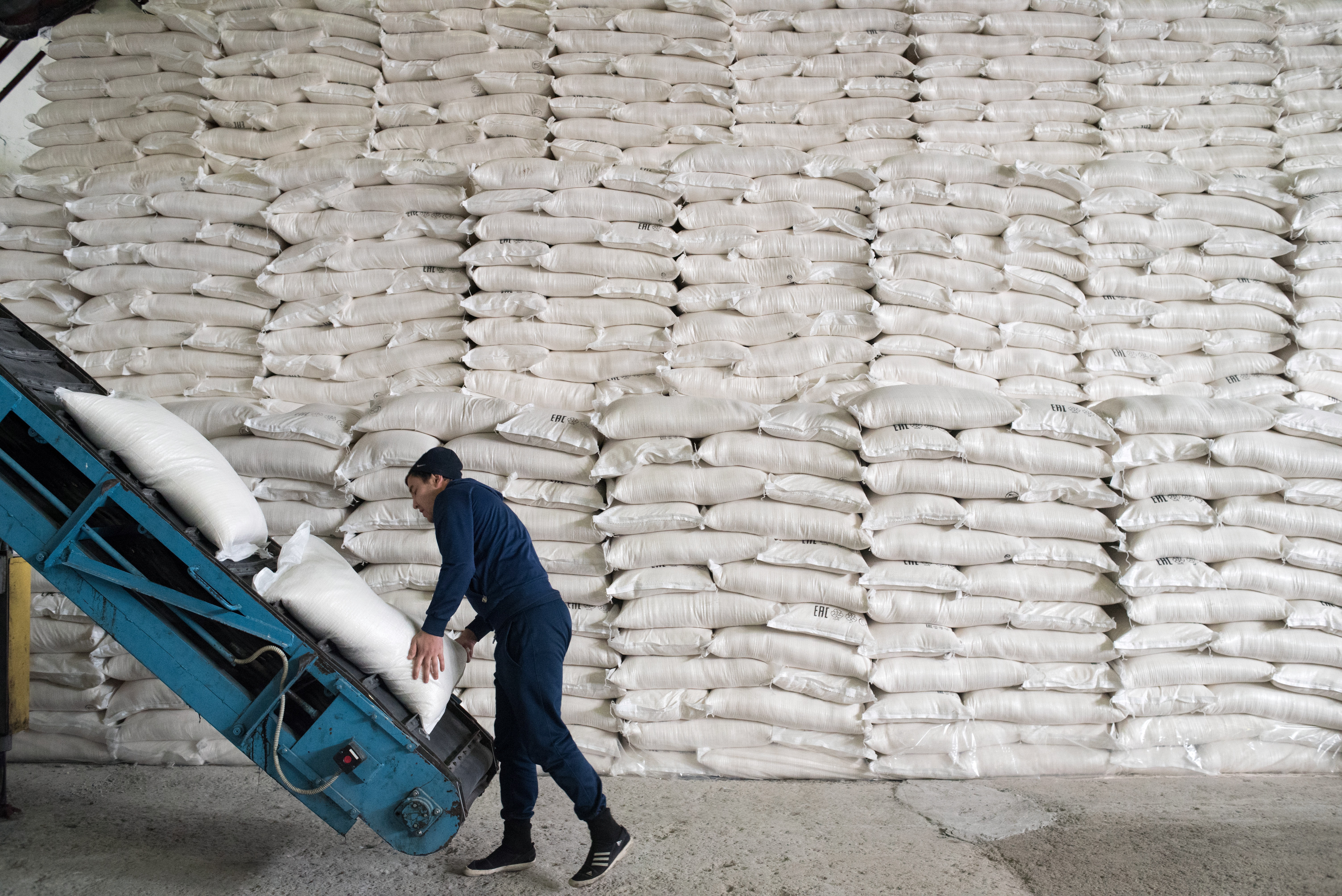
Sanctions are just starting to act, now prices are largely provoked by panic among the population. Fearing the depreciation of the ruble, the Russians buy everything that can be stored for a long time. The most acute situation has developed with sugar: in many stores it is not, in social networks the video spread almost with fights for sugar in the trading halls of supermarkets, sugar is sold even on Avito.
The Prosecutor General’s Office announced the values of the validity of the growth in sugar and chicken eggs.
On March 10, the Federal Antimonopoly Service initiated 217 values of the validity of prices, announced the development of new bills that would give the state the opportunity to control pricing at all stages of the supply of goods.
Eugene Ivanov , senior expert on the sugar market of the Institute for the Agrarian Market, noted in a conversation with Radio Freedom that the sugar shortage - the situation caused by panic moods of the population. People buy more sugar than business manage to pack and bring to stores. Before the sanctions, Russia exported more sugar than imported. Russia in the production season from August 2021 to June 2022 (tied to a sugar beets) must produce 5.7 million tons of sugar with a domestic consumption of 5.6 million.
Denis Puzyrev , the creator of the telegram channel about the alcohol market "Drunk Master", told Radio Liberty what changes should be expected in this area:
- So far, nothing dramatic, except for increasing the cost of imports, is expected. Another thing is that everywhere there are many imported components. Even if you produce Russian wine, you buy a cork in Portugal or Spain. There are already manufacturers of traffic jams who said they would not work with Russia. Even if you decide to abandon traffic jams in favor of the screw caps, the same problem, the caps are also imported. The bottles of easier make glass plants in Russia, high -quality bottles are ordered abroad. The brewers have the main alarm - about the hops. Hops in Russia are grown, for example, in Chuvashia, but not enough, and it is very simple. Good, fragrant hugs, mostly American. Everyone has reserves: hops are stored for a long time, maybe five years lie. So there is some safety margin, ”says Puzyrev.
A five percent restriction
- Like a network selling in a low price segment, we have a very simple paradigm. If we have high prices, our buyers will go to other stores. Low prices for us are a matter of survival. Our network supported the initiative that the margin should have a maximum of five percent for a number of socially significant goods. We trade in some products at all in minus - it happens too. Now we see that suppliers are raising prices for some products. We try to maintain low prices, in some cases we are forced to interrupt contracts. But we cannot leave the network without goods, and in some cases we are forced to raise prices, ”says Oleg Vysotsky , General Director of the Verny store chain.
The obligation not to put an extension above 5 percent on bread and bakery products, dairy products, vegetables of borscht and sugar in March 2022 were also announced by Auchan, Attas, Magnit, O'Kay, Pyaterochka, Crossroads and Carousel. The press release of the antitrust service claims that the retail chains have voluntarily.
According to the expert of the Confederation of Labor of Russia, economist Alexei Gaskarova , in a situation of panic, prices can grow faster than it is due to objective costs. Then prices will drop, but with the help of purely market mechanisms, this will happen non -fast. So the regulation of prices for basic products is a logical effect on the part of the state to reduce social tension. Whether this regulation will provoke a deficiency, will depend on how thoughtfully the regulation will be performed.
Ghost of the deficit
- You are asking a question that I cannot answer on my own behalf. Read the textbooks of the economy, see what will happen to state price regulation, ”the founder of one of the large retail chains said Radio Liberty.
Holding the state of prices cannot be an effective long -term strategy, the director of the Analytical Center "SOECON" Andrei SIZO in .
- So you can achieve a short -term effect, but this is a mine that will sooner or later explode. No one will be able to sell for a long time at a loss. There are still reserves. Fearing the pressure of the authorities, shops can sell at a loss. But when the capital is burned, the work will stop. To restrain prices by the commanding shout is trying to stop the law of earthly attraction by order of the government. There will be a shortage, empty shelves and the black market, ”he explains. Sizov notes that the regulation of food prices in Russia began not with the war with Ukraine. Prior to this, Vladimir Putin painfully reacted to a global increase in food prices in the second half of 2020, caused by crop failure in Brazil, an increase in imports to China and a violation of logistics chains due to coronavirus pandemia. Since then, the state regulates sugar and sunflower oil prices, limits wheat export.
Denis Puzyrev recalls that in 2009 the law on trade was adopted as a populist.
- There was a famous scene when Putin was heading from his residence near Moscow and told the driver to stop and go to the Perekrestok in Krylatsky. Putin was indignant at high prices. Somehow in the same store there was one of the owners of the retail chain. There were also television journalists, ”recalls Puzyrev. The record about this meeting is still available on YouTube, in 2009 the first channel filmed the plot about it.
- The law was written under the dictation of large retail chains. It provides many restrictions, but large networks can bypass them. In peacetime, this is not so carefully watching this, although now the state has mechanisms for controlling retail chains, ”the expert notes.