
Translated material
"The prestige of Russia has reached the bottom"
How the war with Japan brought the collapse of tsarism
In the series “Modern Western Russiastry”, the book of Frank Jacob was published about how the Russian-Japanese war changed the course of history and led to the global cataclys of the 20th century. We publish an excerpt from the chapter “Road to the Revolution”, which tells why Russia was defeated, and the king lost the image of the caring father of his people.Starting from February 24, 2022, we were all in the face of the advancing barbarism, violence and lies. In this situation, it is extremely important to preserve at least the remnants of culture and support the values of humanism - including for the sake of the future of Russia. Therefore, the editorial office of Gorky will continue to talk about books, reminding our readers that the world remains in the world and fiction.
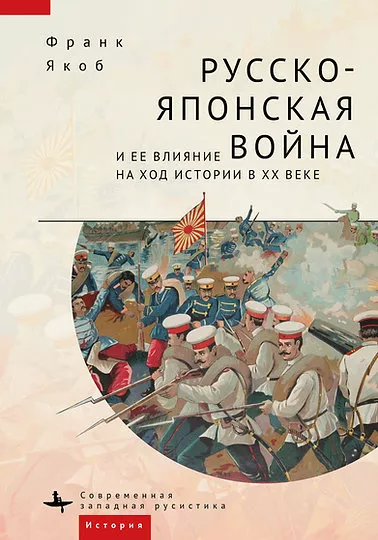
Frank Jacob. The Russo-Japanese War and its influence on the course of history in the XX century. SPb: Academic Studies Press / Bibliors, 2022. Translation from English Maria Chendsova . Content
 As a result of a long war, the poor state of the Russian army and navy became obvious; In addition, economic pressure on the Russian population intensified. The workers of the Putilov plant suffered from poor working conditions, and the priest G. A. Gapon (1870-1906) began to organize these poor people around him. The workers discussed the war and began to realize their own poverty, it seemed to them that the government was directly guilty of it, spending more on a distant war than on their own people. Gapon clearly described the situation: “How little is necessary to console these sufferers. From one good word, their faces shone with gratitude and hope. The complete lack of rights, both personal and public, increasingly increases the bitterness of workers. ” This problem was obvious to workers: "Everyone standing at a higher stage has the right to unlimited oppression of his subordinates."
After four members of the trade union were dismissed in December 1904, the workers of the Putilov plant began a strike demanding to grant them more rights. Gapon hoped that such pressure would work, especially because the directors were necessary for the production to work for a government order to supply the front in Manchuria. It is symbolic that the strike began simultaneously with the surrender to the Russian army of Port Arthur. Following the fall of the Far Eastern fortress, the heart of the center of Russian industrialization stopped. Gapon knew that this strike could be used to pressure the government; It seemed to him that the surrender of Port Arthur is a good reason for his movement to start acting. Therefore, the priest decided to transfer the requirements of workers directly to the king. He invited the revolutionary parties to join the workers who supplied the petition; The procession to the autocrat’s palace in order to achieve peaceful changes was scheduled for January 22, 1905. Gapon ordered the participants to bring a portrait of the king to emphasize the “peace -loving and decent character” of the demonstration.
What happened later was a real nightmare. The Cossacks attacked the crowd, the soldiers opened fire on their own people. In the history of Russian revolutions, this event became a point of no return. The king lost the image of the caring father of the nation. He became the ruler of a terrorist who kills his subjects. When in 1905, the foreign policy of Russia turned from East Asia back to European affairs, as a result of the war, a revolutionary movement was already formed, whose participants lost confidence in the tsar and sought not only to change the political situation in the country, but also to get rid of the old symbol of special Russian relations between the ruler and those who controls. Bloody Sunday, as he would be called later, indicated Akashi and Cilliacus at the growing probability of a revolutionary explosion in Russia in the near future. The Japanese officer realized this opportunity and requested 450,000 yen from Japan to finance the final blow to the Russian Empire. However, the Ministry of Foreign Affairs doubted, because they were afraid that other forces interested in Poland or in stable Russia could learn about Japan's plans and use this preposition to start the war. Doubts were scattered when the Japanese army could not win a convincing victory in the battle of Mukden. Russian troops remained in Manchuria, and Japan's military machine was close to its economic limit; All this prompted the leadership in Tokyo to consider other ways to end the conflict and coercive of the Russian Empire to negotiations. At the same time, the Japanese government was informed through various channels about the shortcomings of such a plan, in particular about the lack of unity among the Polish revolutionary parties. The Messenger in Austria Makino Nobuaki wrote in the report:
My agent living in Krakow informed me about the following:
Although the Social Democratic Party and Socialist-revolutionaries endlessly seek to begin the revolution, their activities chronically fails. The Party of Socialist Revolutionaries is the most organized of all opposition parties and is the leading force of the opposition movement. Other opposition groups are enough that they follow this party. The plan to mobilize reservists in Lodz and Warsaw was postponed.
Trade and industry are in complete stagnation throughout Russia, and economic problems are almost inevitable.
All troops are engaged in the protection of railways and cities in martial law. It is very unlikely that the Russian government will continue the war. I think that the unrest inside the country will continue, despite the rebuff of the government and the doubts of people in the fact that their lives will improve after the “political reform” of the government.
Nevertheless, in mid -March, Akashi's request to transfer money was satisfied. The situation was affected by the fact that the final decision was made by Katsur and Kodam, who with their own eyes saw the position of the Japanese army in Manchuria.
In April 1905, the second conference of opposition parties was held in Geneva. 17 organizations were invited, but only 12 were present. The Mensheviks did not participate in it at all, since they realized that this event was financed by the Japanese, and the Bolsheviks left the conference on the second day, because they did not get the opportunity to influence the supply of weapons to Russian opposition groups. Unlike the Paris Conference, the remaining participants agreed that an armed uprising was needed. In addition, Finland and Poland demanded the convening of constituent assemblies so that they, as well as the Caucasus, could become independent and sovereign states. It was expected that the armed uprising would be successful, since the morale in the Russian army seemed to be completely lost, in particular, after numerous defeats in the Russian-Japanese war. However, in August, Japan decided to stop further support for these movements, as it could harm the negotiations in Portsmouth. Since the money has already been received, the preparation of the uprising continued without leadership from Japan.
The John Grafton steamer was shocked, and with the money that Cilliac received from Japanese sources - he received a million yen in total - weapons were purchased. These guns and revolvers needed to be smuggled in St. Petersburg, where it was supposed to begin the revolution. Abraham Asher called this plan "the most ambitious attempt of smuggling weapons into Russia during the 1905 revolution." However, John Grafton was failing. The steamer sat aground in Finland, after which it was blown up by crew members. Despite the fact that we could not transport the weapons, "the Poles organized riots and an endless series of extremist actions and demonstrations in different places." These riots went to no avail, and Poland still had to wait for independence.
The General Staff of Japan treated revolutionaries as "mercenaries." After the war, Akisi left Europe, to a large extent because the Russian government published a brochure with a description of the activities of the Japanese military attache during the war. The cynicism of the Union of Japanese and revolutionaries was also condemned in it: "Some of the fame of weapons stained with mud of a bribery, the other the great word of freedom was defiled by the sale of their homeland." In 1907, Akashi was transferred to Korea, where he became the head of the Japanese military police. After the First World War, he was appointed Governor General Taiwan. It can be confidently argued that Akashi's activity did not affect the outcome of the Russo-Japanese War, but unintentionally it influenced the growth and unification of revolutionary movements throughout the Russian Empire. Although while “revolutionary parties have been incapable of tsarism, the wheel of history, which would lead by 1917, began to spin. The revolutionaries were not lucky that different parties could not combine their efforts, since the system of royal autocracy was very vulnerable in the war years, especially in 1905.
The soldiers sent to Manchuria could not suppress the revolution in continental Russia, and in the government they realized the danger of further recruitment into the army. After a bloody Sunday, it seemed impossible to form new regiments for sending to East Asia. In addition, conscripts could hardly be called the most reliable soldiers in the tsarist army. From September to December 1904, the recruitment was interrupted due to 123 incidents with manifestations of violence, during which the Russian population went their anger on Jews. In 1905, the set was not declared. By the time of the Mukden battle, a million soldiers were sent to the Far East, as a result of which the Russian military forces were scattered in vast space. Because of this, the revolutionary movement began to pose a real threat to political leadership. The tsarist government had no other choice of how to enter into negotiations with Japan and hope that his enemy wants to end the war even more than it itself. Although the Portusmut Peace Treaty and the October Manifesto put an end to the ambitions of Nicholas II regarding the expansion of East Asia, it was not easy to convince to think about the world.
Despite the fact that his advisers after the start of general strikes prayed for the world and the introduction of the Constitution, the king did not want to change his attitude to the rule. His “mysterious personality” and the general unwillingness to make serious decisions complicated everything for those who understood the danger that the strikes, a revolutionary movement and war occurring simultaneously. Witte described the king as an infantile person whose actions were only due to the influence of bad advisers. The case described in one of the previous chapters with Alekseev and Bezobrav in East Asia confirms Witte's conclusions. Nikolai sincerely believed that he was an anointed of God, who was responsible exclusively to the highest force. He believed that the war would not begin simply because he does not want it. Naturally, he was wrong. He until the end believed in the absolute triumph of the Russian army, even after the surrender of Port Arthur. He was a bad military strategist; He did not understand the importance of time, logistics, planning and forced the second Pacific squadron to wait for unnecessary reinforcement from old ships, giving the Japanese enough time to repair and training. And even having decided to send the Baltic Fleet to the war to East Asia, the emperor has repeatedly changed his opinion, and “Nicholas Nadezhda for Victory was probably more based on faith in God than on confidence” in the Russian fleet. But, despite the experience gained, he also did not see a revolutionary danger in 1905 and sought to preserve the autocracy exactly in the form in which it existed. Only when his uncle Grand Duke Sergei Alexandrovich died of a terrorist bomb on February 17, 1905, the emperor changed his mind and thought about reforms.
Witte tried to bring Nikolai to the idea of how the situation was developing in reality, and about the hopeless position of the Russian army in Manchuria, sending long letters in which he called for peace and political changes. After the battle of Mukden, the situation changed in favor of the former Minister of Finance, since the world realized that the Russian army did not pose a serious threat and would not hinder the victory of Japan, and the support of the world leaders of Nikolai’s decision to continue the war evaporated. Maria Fedorovna, the emperor’s mother, also supported the desire for peace and tried to influence Nicholas. Since her son refused to listen to her, she tried to contact the French government in order to provide a political, or better financial, pressure on her son. But the French ambassador Maurice Bompar and Theophilus Delcass in France did not want to intervene, fearing that later Nikolai would accuse them of concluding an unprofitable world as a result of such a diplomatic intervention. Unlike French diplomats, French bankers have already admitted that the war was coming to an end, and on March 13, 1905 they stopped all negotiations on loans with Russia. This increased financial pressure on the tsarist government, since it could not continue the war without French money.
After the Tsushima battle, his work as an intermediary to restore the balance of forces in East Asia finally began theodore Roosevelt. In the end, both sides were forced to sit down at the negotiating table due to internal economic and political problems. However, in Japan they put up with the situation earlier than the Tsar, whom the US President did not like his attitude to peaceful negotiations, which he expressed in such words: “This king as an autocrat of 150,000 000 inhabitants is an absurd creative. At first he was unable to fight, now he is unable to conclude the world. ” After the battle of Mukden, the Japanese military turned to the political leadership in Tokyo with a request to begin the process of concluding peace, because in the supreme surveying they realized that the complete victory of Japan was now impossible when military capacities were at the limit. Although the Japanese understood that in such conditions it would be difficult to achieve the payment of indemnity, they tried to insist on this when concluding peace. However, the king in a similar situation, having been defeated in the battle of Mukden, still hoped for the success of the second Pacific squadron. Only after the Tsusim battle, negotiations finally began. The prestige of Russia has reached the bottom due to serious defeat and almost complete destruction of the fleet. The Japanese government turned to Roosevelt with a request for mediation. However, he was convinced to do this as if “on its own initiative”, since the Japanese government was afraid to be during negotiations in a weak position, if it was the first to ask them. Roosevelt used his connections, in particular, he turned to the emperor of Germany to put pressure on the king and convince him to participate in peace negotiations. In September, the Russian-Japanese war was over with the signing of the Portsmut Peace Treaty. However, the wheel of the revolution will not stop until 1917.
Some observers, for example, the German von der Goltz, confident that, “despite the numerous forecasts, the Russian Empire will survive without any significant shocks and even stronger in some kind of reform”, did not recognize the enormous influence of the war on the revolutionary movement. Of course, in 1905 it was suppressed, but this happened more due to the separation of revolutionaries than due to a lack of potential for political changes during the revolution as such. It is impossible to study the events of 1917 without looking back at 1905. The revolutionary cycle continued until the potential of the will of the people to change led to an explosion provoked by a war, which was larger and closer than the Russian-Japanese. The Japanese established relations with various opposition movements throughout Russia, and also trained both future politicians and sabotage. To some extent, the consequence of the Russian-Japanese war will be a change in the whole world. In the case of Russia, the effect was huge. One of those who recognized the relationship of war and the Russian revolution was Witte. He noted that "Russia has outgrown the current regime and was hungry in the order based on civilian freedoms." Kovner agreed with him, calling the war the "main catalyst" of the revolution.
Thus, the Russian-Japanese war must be considered as a trigger that launched a revolutionary cycle in Russia. Despite the fact that the tsar issued the October manifesto and granted the constitution and the parliamentary representation - the Duma, the reforms were half -hearted, and Nikolai quickly began to return to the autocratic style of government. The 1917 revolutions became only a matter of time and needed another trigger, which eventually became the First World War with a new series of defeats of Russia. If we consider the Russian revolution as a starting point of Soviet history, and therefore, as an initial event that led to a cold war in the second half of the 20th century, then the Russian-Japanese war must be considered as a starting point for Russian revolutions and, therefore, as an event that changed the entire history of the 20th century, although this was not obvious to contemporaries. Thus, we can trace the first major influence of the Russo-Japanese war on world history, since the consequences for one of its parties ultimately affected almost the entire population of the Earth in the 20th century. Однако это только одна из причин, почему эту войну можно назвать событием, сформировавшим мир последующих десятилетий. При ближайшем рассмотрении отношений Японии и Америки с момента переговоров о мире в Портсмуте мы увидим еще одну интересную перспективу, также поддерживающую эти тезисы.