
Translated material
Your food will be prepared for a very long time
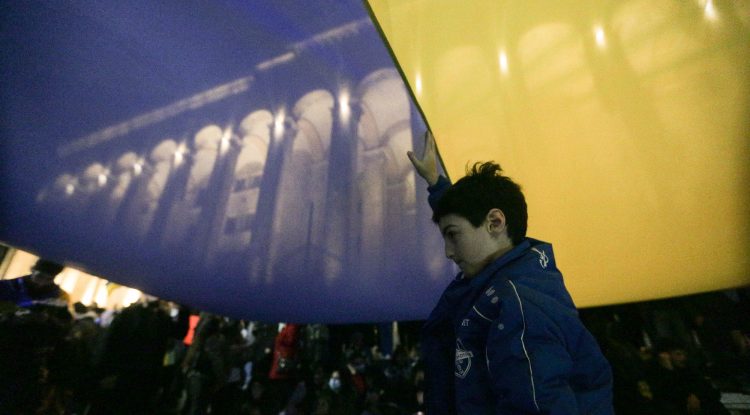
How Russian emigrants are accepted by Georgia, which 14 years ago survived the war with Russia
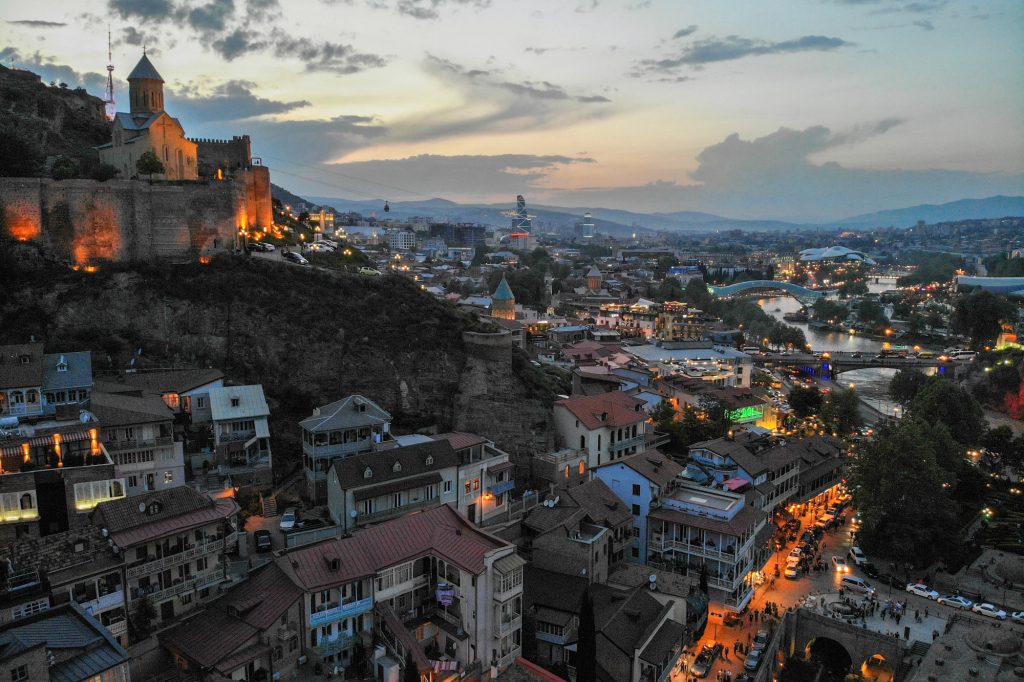
Since Russia started the war with Ukraine, more than 30 thousand Russians urgently arrived in Georgia; Most are in Tbilisi. Almost half of them still remain in the city-perhaps for months and years. For a small country, where three times fewer people live than in Moscow, such an influx of emigrants is a cultural and political shock. Correspondents of the "cold" spent two weeks in Tbilisi and recorded what was happening in the city.
In the underground crossing to Rustaveli - the central avenue of Tbilisi - an elderly Georgian in a scarf and a baggy jacket sits on a folding stool. At her feet are a cardboard box, where blue-yellow ribbons lie in a heap. "Ukraine! Two Lari! " -The woman screams in Russian after passers-by who look like tourists.
On the trays near the metro, where cigarettes are sold in a piece and seeds by weight, now there are also stacks of wreaths on the head from plastic yellow-blue colors. In front of the clothing store of Georgian designers, after which Muscovites and Petersburgers loved to come to Tbilisi for the past couple of years - a mannequin: a yellow velvet coat and a blue fur cape.
“I already had this four times: you sit in a taxi, the taxi driver turns on to you, sees your Slavic Haru and says:“ Glory to Ukraine, ”says Dmitry, a journalist from Moscow, who moved to Tbilisi after the start of the war (the name of the interlocutor was changed). - I honestly answer: "Glory to the heroes." Well, that's all, there are no more questions. I also have on the mask - the flag of Ukraine, a familiar Georgian woman and my wife said: buy yourself, a bunch of questions will immediately be removed.
In Tbilisi, before, after the Russian-Georgian War of 2008, to the question "Are you talking in Russian?" The bartender could have answered coldly: "Are you serious?" For the past few years, the ice cream store promised to give a discount to those who say that “Putin is Huylo”. This, however, did not prevent a million Russian tourists from coming to Georgia every year. All Russian expanses who moved to Tbilisi before the war, with whom the “cold” spoke, said that after Russia’s invasion of Ukraine, the Georgian attitude towards them did not change.
Now in every Tbilisi restaurant at the entrance there is a Ukrainian flag; Two hearts, yellow and blue are glued to the lids of coffee; The cocktails are served with two tubes - yellow and blue. On the balcony twisted by the grapes next to Lolita’s fashionable cafe, every two days change stretching: one with the inscription: “Russian warship, go fuck!”, The second is “The glory of Ukraine”. However, waiters and bartenders are still moving into Russian without any problems. And at the tables in restaurants there is no speech other than Russian at all.
“Max was canceled by a flight on the 14th,” the guy in glasses and a checkered shirt complains to his companion, looking at the phone. At the table neighboring from him, a man in Hudy says to the phone: “I’m in Tbilisi, but I’m flying away tomorrow, it’s unrealistic to rent housing, I decided that it would be more logical to sink in Istanbul.”
The hotels are crowded. From the open window of the hotel in the center comes the cry of the child:
- I want to go home! I won’t go, mom, I won’t go! I will not go! I want to go home!
"We will have to hoist the neighbors to yourself"
On a crowded street, Kota Abkhazi, where guides grabbed tourists from the crowd every summer and called on trips in Georgia, now other proposals. “Rent! Rent! " - the Georgian shouts after the Slavs running along the street.
People who seek housing are visible everywhere. On the sidewalk of a narrow alley in the old Tbilisi, a girl in a long coat is standing in a phone; Next to her are several road bags folded on top of each other. A guy in a jeans jacket with difficulty rolls past a dresscase.
- Well, have you still not found an apartment? He throws on the go. The girl smiles in response and shakes her head.
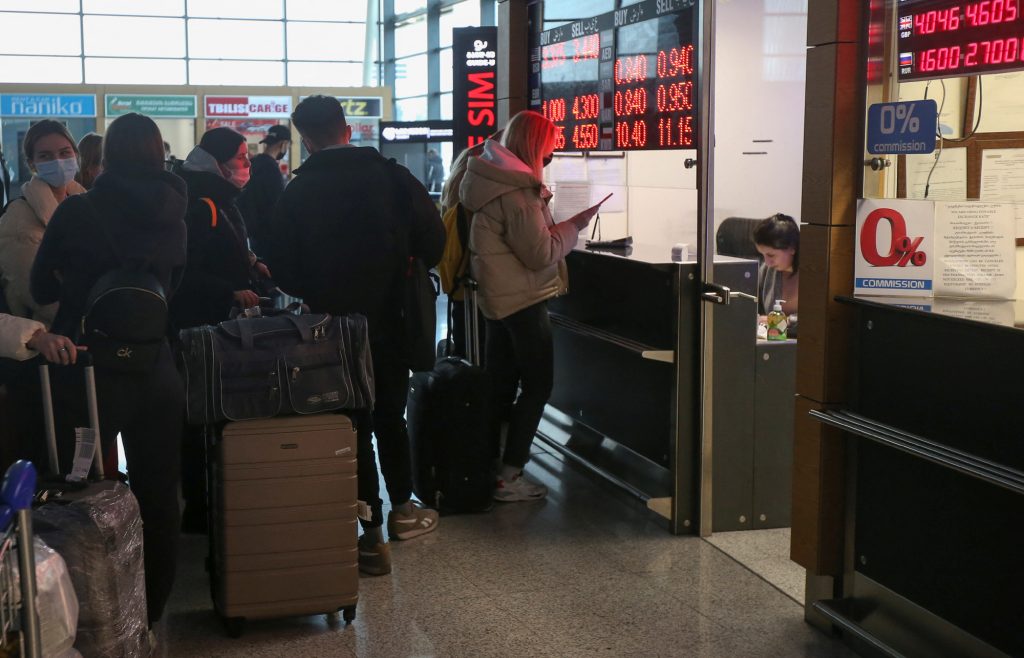
Housing prices in Tbilisi over the past three weeks have grown almost doubled. A bad apartment can be rented for $ 700, good - for 3.5 thousand. “The owner of the apartment, which I rent now, most likely, will increase the rent - it is not profitable for him to rent at the same price, he can easily quit me and receive twice as much money,” says Elizabeth, who moved to Tbilisi more than six months ago. “We'll have to hook the neighbors to do to cope.”
Among the owners of apartments in Georgia there are those who refuse to rent housing to the Russians, but their minority. “I booked an apartment on Airbnb before the war - I planned to go on vacation, but I had to go on exile,” says the translator Alena from St. Petersburg (the name changed). “Shortly before I arrived, the owner of the apartment sent a message that she would post me, but actually tries to not receive guests from Russia after the start of the war because of the unclear reason for their stay here.” And in the end she clarified: “We hope that you recognize the independence of Georgia and Ukraine and that you are against this war.” I replied that, of course, against the war - and then we talked perfectly, pierced each other's hearts. ”
“We heard conversations that sometimes Russians are appointed to view the apartment only to offend them. And they were ready for the fact that we would come to the lessors, and no one would open us or tell us some muck, ”says Moscow journalist Dmitry. For the first few days, he and his family rented housing on Airbnb. They were met by the owner of the apartment-60-year-old Georgian Maya. “At some point, we told her that we were starting to look for permanent housing. That it is very difficult, that everything has risen in price. And she immediately said: “So, now I will come to you, give all the phones of all the ads that you found,” says Dmitry. - I came. All rang. I agreed with everyone on views. She drove us in apartments in her car. When we called a taxi, offended. ” Dmitry did not even have to agree with the owner of the apartment, which they eventually rented, the Maya did everything: “I don’t know Georgian, so I didn’t understand what they were talking about, but, apparently, our Georgian mistress praised us for a long time - because we rented such an apartment in which I had never lived in my life, for which, as we were told, it was impossible to rent anything. She pulled us out of such Ahuya with her enthusiasm. She became our mother. ”
"We need gross power, it is better to look for something else with your education."
About the influx of emigrants from Russia, they talk a lot on Georgian television. “Opposition to the government, channels focused on the party of Mikhail Saakashvili, claim that the Russians are not leaving because they do not agree with the policy of Vladimir Putin, but only because of the inconvenience caused by the sanctions,” says Alina (the name was changed at the request of the heroine), the Georgian who lived in Moscow, but moved to her homeland after the start of the war. - They say that Russian emigrants do not learn the language and do not plan to assimilate in the country, but buy property, that is, they want to stay forever. And they translate the fears that the Russian authorities under this pretext will begin military operations in Georgia. ”
“There is only one password:“ Putin is a huilo, ”he shares advice on how to take root, a Ukrainian who has been living in Tbilisi for eight years: he moved after the start of hostilities in the Donbass, married a Georgian and opened an electronic cigarette business. - I say to all my Georgian friends: you don’t understand that the smartest Russians are coming to you now, they will bring ideas to you, bring money, start a business.
Those emigrants who cannot work remotely, after moving, have to look for sources of income - despite the fact that the unemployment rate in Georgia last year was at the level of 20%, and the average salary , according to official figures, is about $ 450.
“I set myself up that I would have to engage in less qualified work. This was, of course, an annoying note. But since childhood, I haven’t earned it-I was a little worker and a waiter, ”says 24-year-old Nikita Levkovsky from St. Petersburg. The pediatrician by education, for the last three years he worked as a nurse first in cardiac surgery, then in the department of children's oncogematology and bone marrow transplantation.
Levkovsky moved to the capital of Georgia with his girlfriend a week after the start of the war: “I have relatives in Ukraine, my girlfriend has the whole family from Ukraine, she lived there since childhood, knows the language. We learned all the news from first -hand. It is difficult to worry, being in the aggressor country. ” His girlfriend, she is an ITSHAN and works remotely - in Tbilisi went to the volunteer to collect humanitarian aid to Ukrainians: “It becomes easier to do what we help - and in Russia it would be at least unsafe.”
Nikita does not know Georgian, but in other languages, children in Tbilisi do not speak, so he had to say goodbye to the pediatrician with his thoughts about working. First, Levkovsky decided to try the bake Lavash. “But the man I called, said:“ It is necessary for a gross force, it is better to look for something else with your education. If it fails, then, of course, come, we will teach everything, ”says Nikita. -He was a Georgian, but spoke Russian very well, and that I was from Russia, he did not bother him. During the search for work, I did not meet any Russophobia. We read how to behave, and first we clarify in English in which language it is more convenient for them to speak. ”
Further, Levkovsky found the vacancy of the assistant of the dentist. “But there they offered to work nine or ten hours a day six days a week and receive 550 Lari - $ 170,” he says. “The bakery promised a salary more than twice.” As a result, now a young doctor is in an internship in a cosmetic salon: learns to do a facelift and build eyelashes. “I like it, develops fine motor skills,” he says with irony. - Without embarrassment, he agreed. This is in demand and is well paid, and even if I return to Russia, I can do this, but there is no bake on the lavash. ”
Nikita counts about $ 250 per month. This is much less than what he received in Russia. “But I have never shook it, to reduce the costs for me is not a problem,” he says. “This is a fee for the opportunity not to associate yourself with Russia and help Ukrainians.”
"This is almost the same as going to Lviv now"
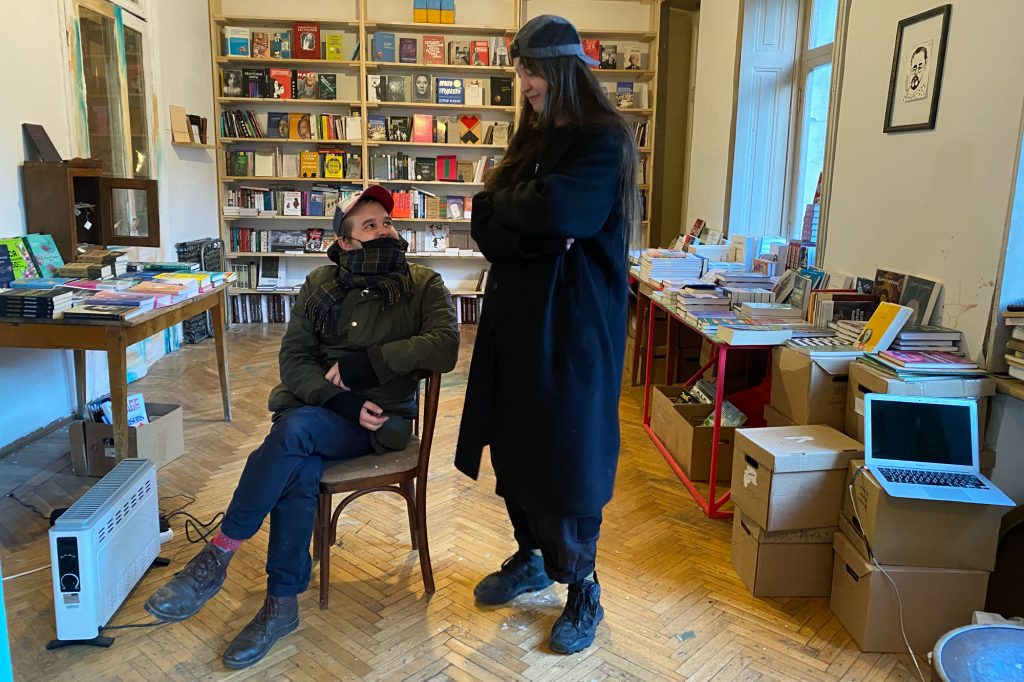
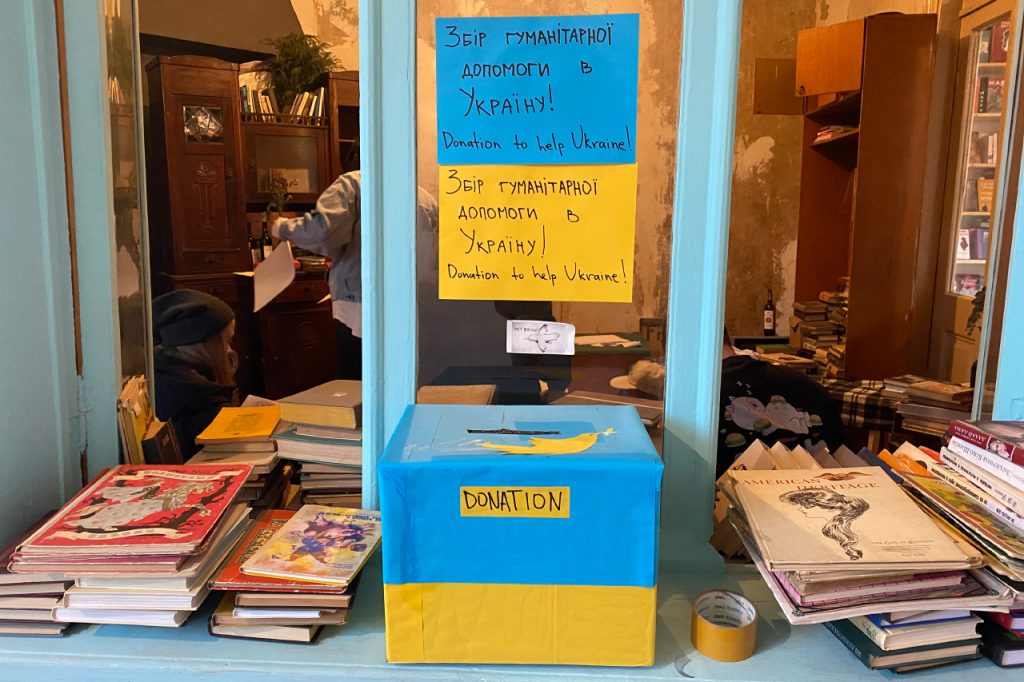
Among the Russian expanses in Tbilisi - both those who emigrated after the war, and those who have moved before - many people who help Ukraine. Entrepreneur Stas Gayvoronsky, who lives in Georgia for two and a half years, collects in his Tbilisi bookstore an Itaka Books warm clothes, medicines, baby food, diapers, and also albums, pencils and paint: “Imagine, a family in a basement or in a bomb shelter, children are nervous, and they need to be occupied with something. Therefore, we have a helmet for their belongings for creativity. " His eight -year -old daughter helped to pack humanitarian aid of Stas. The colleague of Stas Nastya settled an unfamiliar girl who fled from Kyiv at her house and is going to let two more guys from Lviv.
Familiar from Russia, who, after the start of the war, decided to urgently go to Georgia, Stas Gayvoronsky dissuades. “Georgians are very patient people in the best of the meanings, and they are always happy with Russian tourists. But the tourist lifestyle cannot last forever, ”he explains. Gayvoronsky believes that Russian emigrants “will spoil the life of those Russians who have moved here for a long time and consciously, knowing something about Georgia,” because “because of their colonial habits” they will not learn the language and will not want to integrate into society (the entrepreneur gradually masters Georgian). “There are many other countries where a Russian person can calmly come and sit out. 20% of Georgia are occupied by Russia. And Armenia, for example, was not occupied, and Kazakhstan, Israel, and Latvia with Lithuania are not occupied, - says Gayvoronsky. - This is so stupid now - to go here that it is difficult to explain. This is almost the same as going to Lviv now with the words: “I ran from the Putin regime, I want to live in Lviv”. ”
Certificates of conflicts between Georgia and Russia are in abundance, including on the streets of Tbilisi. In a huge underground crossing under the river Kura, a young guy in a sweatshirt finishes working on graffiti. He painted both walls of the transition with white, and then drew them on the columns with black lines. In each column there is a story about how Russia depressed Georgia for centuries. Everything begins in 1801 - when the Russian Empire "annexed the kingdom of Georgia and forcibly deported the royal family of Bagrationi." It ends 2008. Near this date on graffiti in Georgian, it is written: "War."
The support of Ukraine is no less noticeable. Humanitarian assistance in Tbilisi is sorted right on the wide steps of the building of the Georgian parliament. Usually, the opposition camps on these steps, but now instead of tents - a mountain of packages of diapers. Nearby in the picket is a fair -haired girl. She has in her hands - a poster with a drawn flame and the inscription: “Russian Against War! Putin, Burn in Hell! ”
“I sharply became an oppositionist here - I went to almost all actions against the war,” says Ekaterina Kovalevskaya, who moved to Tbilisi almost a year ago. Once in the square during a protest, Catherine says, a young Georgian approached her and asked "to speak English, because Russian is the language of the invaders." “But I said that it’s easier for me to convey my thought in Russian,” she says. “We calmly talked in Russian and even hugged at the end.”
Having moved last summer in Tbilisi, Catherine began to read more about the 2008 Russian-Georgian War: she now and then popped up in conversations with the locals. “On the second day after the move, we were called to the party that Georgian youth arranged,” the girl recalls. - The Georgians said that Russia occupied and took the territory from them by force and imperial power, that the Georgians had to leave their families and leave. They have civil pain. For some, this pain is personal: already in the last days in the square during a protest rally, I met a Georgian who said that his brother was dead during the Russian-Georgian war. ”
“Georgia remains a safe country, but it is now not for those people who go only for economic reasons,” Kovalevskaya believes. - And not for those people who are not a position that “I am for peace around the world, war is just bad”, and that’s all. Because Georgia is definitely not the country that will accept such people: they still have 2008. ”
"I am not sorry that you were uncomfortable now"
“We were put a deuce today,” the waiter says with pleasure in the Radio cafe, where they also collect humanitarian aid to Ukrainians. - We said to the visitors: “Glory to Ukraine!” And they answered us: "We are for peace." What does it mean - for the world? Why not "glory to the heroes?" Well, we answered: your food will be prepared for a very long time.
In a tiny wine bar in the old Tbilisi at the only table - a large company of young Georgians. They drink, laugh, talk loudly in Georgian, shouting the music that the DJ at the counter, stroke a large red dog, which runs along the bar.
In the corner, a fair -haired guy and a girl look at shelves with wine bottles. The waiter is also a young Georgian-in English tells them about winery and grape varieties. Pouring a glass of wine to try before buying. When the waiter leaves, the guy and the girl clink their glasses, looking into each other's eyes, kiss and whisper to each other in Russian-you can’t hear what exactly.
- Are you from Russia or from Ukraine? - Georgian, one of those who sit at the table, addresses them loudly.
“From Russia,” the girl answers with a sigh.
“And what do you think about all this?” We are discussing here: what should we do now? What should we do?
The music becomes quieter: the DJ reduces the volume to give visitors the opportunity to talk.
“I will say,” the Russian guy, holding the girl's hand, turns to Georgians and goes into English. - You must force your government to impose sanctions against Russia.
- We must? - The dark -haired girl from the Georgian company explodes. - We must force our government? What about your government?
“You came to our country,” the Georgian, who began the conversation, goes to the cry; Now he also speaks English. - To stand and kiss, while your country kills Ukrainians? Why aren't you in Russia? Why don't you force your government to stop the war?
DJ sharply adds music. This does not help - now everyone screams even louder.
- Why did you come? Why here? What are you doing from here to influence your government? - He sees Georgians to the Russian girl.
“Yes, they can be sent to prison there for 15 years only for the word“ war ”,” the administrator of the institution touches him by the shoulder.
- My neighbor in Moscow is a Georgian. It never occurred to me to ask her why she came to Russia, - the Russian guy was trying to shout to Georgian.
The bartender silently pours wine into the glasses of bewildered Russians - they do not touch them and leave. Behind them, an administrator of the bar goes out into the street.
— Извините, что так вышло, все очень эмоциональны, — по-английски говорит он русскому парню. — Приходите, мы вам рады. Но мне не жаль, что вам было сейчас некомфортно. Потому что людям в Украине сейчас более некомфортно.
Владелец этого бара Нико рассказывает, что спустя несколько дней после конфликта увидел в окне ту же пару, выбежал на улицу, догнал их, извинился и подарил бутылку. «Моя страна исторически принимала все народы, когда они были в беде, — объясняет он. — Сейчас в беде русские — значит, надо принять их. А то, что некоторые говорят, что русские должны были остаться у себя в стране и бороться с Путиным, — это так не работает».
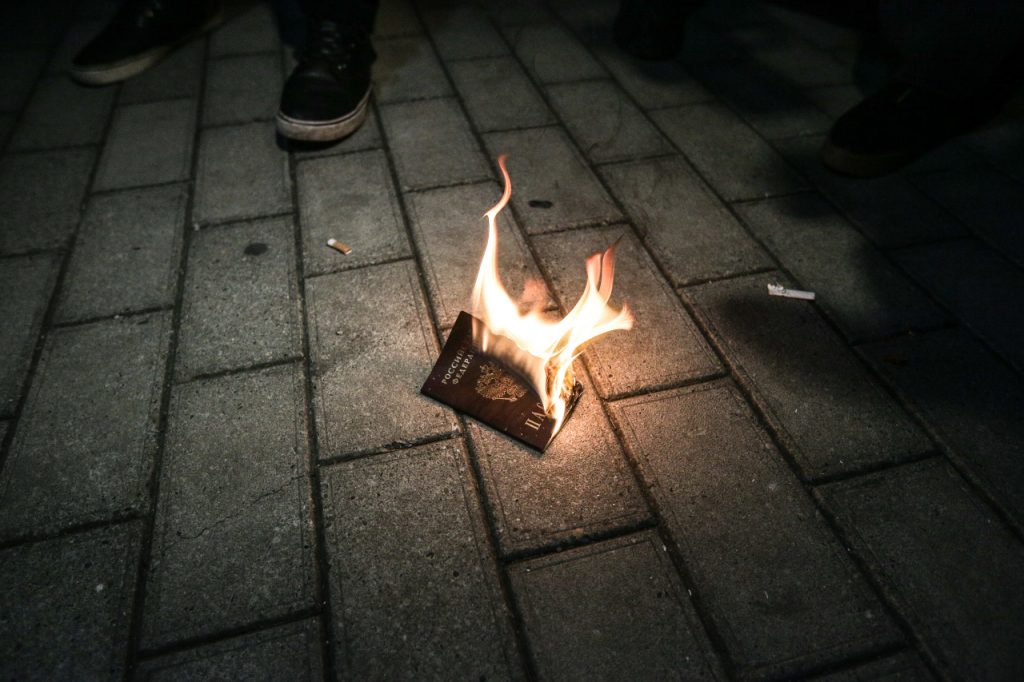
— Я смотрю на это так: с тем паспортом, который у меня сейчас есть, у меня нет никакого права рассчитывать на хорошее отношение, — говорит журналист Дмитрий из Москвы. — Но ощущение — пиздец, полный пиздец. Оказаться гражданином фашистского государства — то чувство, которого я никогда не хотел испытывать.
Через несколько дней после переезда Дмитрий шел по Тбилиси вместе с другом и остановился у маленькой пекарни, чтобы купить свежий грузинский хлеб — шоти. «Мы с другом разговариваем по-русски, рядом с нами стоит грузин, который тоже ждет своих шоти из печки, — рассказывает он. — Грузин на нас посмотрел и ни с того ни с сего сказал: „Путин — гондон, вот его мы ненавидим. А вы — русские братья“».