
Translated material
Megasammit
Further consolidation of Western countries against the Kremlin. What happened at the European meetings of the European Union, NATO and G7
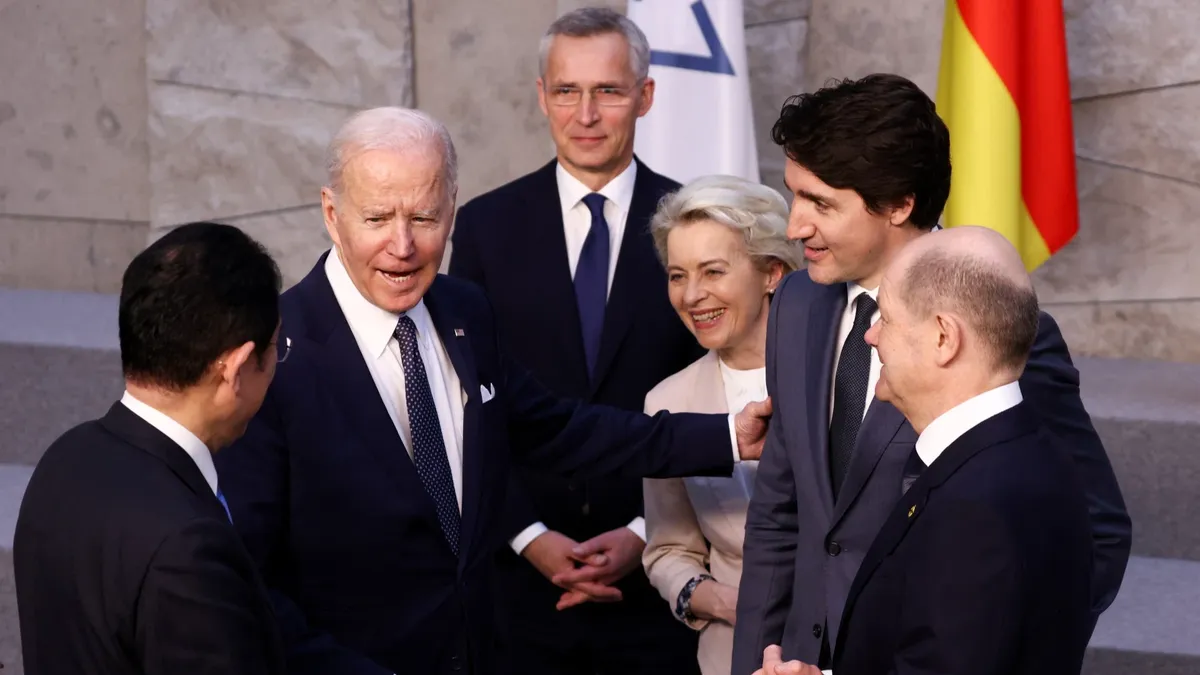
The military “special operation” of Russia in Ukraine gave rise to a crisis in Europe and the world that they did not know after the Second World War: military, political, humanitarian, energy and, probably, food. In Brussels on March 24 and 25, an international summit was held, also unprecedented. The first persons gathered in everything, as it is customary to call, the “conditional West”: the European Union, NATO, “Big Seven” (G7). Heads of state and governments of three and a half dozen countries.
On several sites at once
On Thursday morning, they sat at the NATO headquarters next to the Brussels airport. In addition to the leaders of the Bloc members, the EU bureaucrats, as well as the heads of neutral Finland and Sweden, participated. The G7 summit was also held there, on which colleagues from America and Europe (Joe Biden, Boris Johnson, Olaf Sholtsu, Emmanuel Macron, Mario Draga, Justin Trudo) joined the Japanese Prime Minister Fumio Kisid.
Discussions behind closed doors and on the sidelines, final documents, press conferences and approaches to the press. Mixing genres, erasing institutional boundaries in a single impulse against the Kremlin.
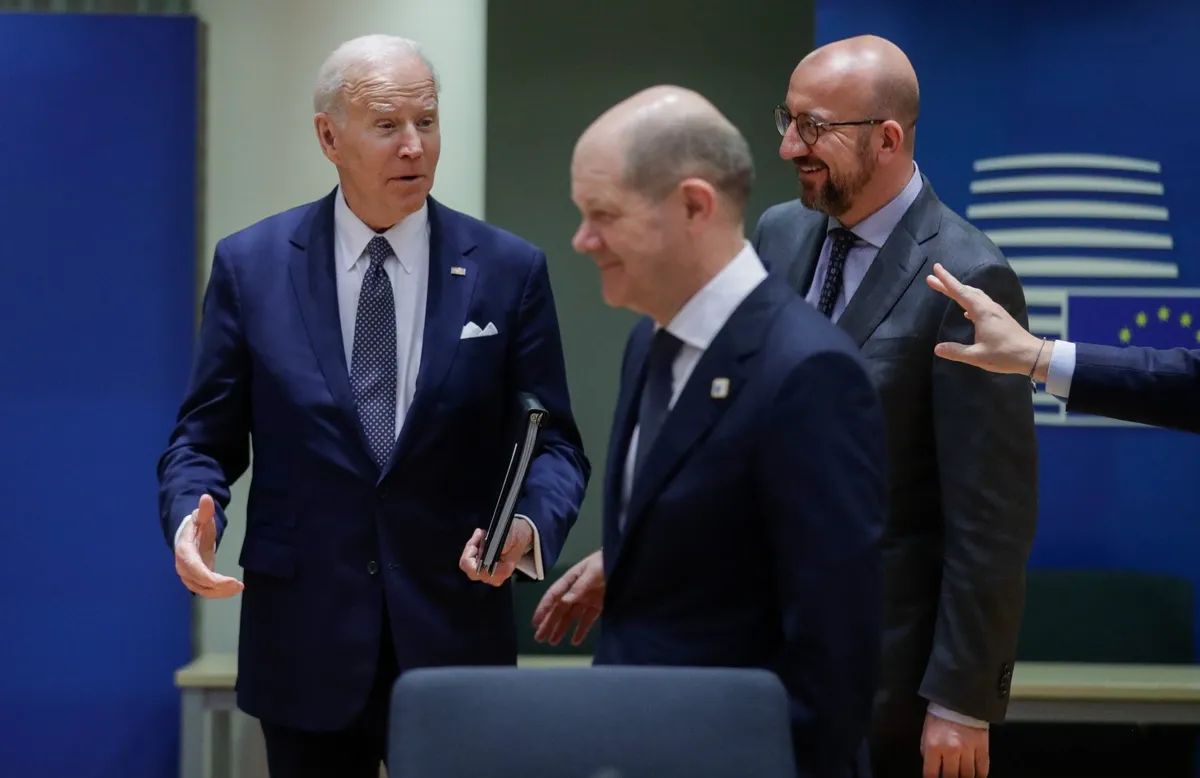
By evening, everyone moved to Schumann Square, to the EU headquarters. There, the leaders of the EU countries consulted all day on Friday. For the first time as a guest there was the president of the United States.
In the Summit of NATO and in a meeting of the European Council, Vladimir Zelensky remotely participated. Emotionally, sometimes with reproach and challenge.
The head of the fighting Ukraine became an indisputable hero in the eyes of the international community, in any case, that represents the Western world. In the same environment, the President of Russia appears in the image of an universal “bad guy”.
Joe Biden was the initiator of Megasammit. As he admitted to a press conference in NATO, two weeks ago he called Brussels and offered the Secretary General of Jens Stoltenberg to collect the leaders of the alliance countries in order to summarize the month of the crisis, not to weaken the support of Ukraine and the pressure on Russia. The chairman of the European Council Charles Michel and the current chairman of the Seven Olaf Sholts took advantage of the visit to Brussels of the head of the White House.
On collective summits, they usually do not make decisions, discuss problems and ideas, feel for compromises, convince the hesitation, and set the political tone. The decisions are then prepared by ministers, and specially trained people are being developed and taken. This time, the leaders of the EU countries, having spent almost until midnight in the meeting room on Friday, did not agree to a general decision to reduce energy prices, leaving several options for discussion until May.
In the final documents of all three meetings, there are general formulations, definitions, requirements. The “special operation” of Russia in Ukraine is called “aggression” and “the most serious threat to Euro -Atlantic security over the past decades.”
According to the participants, she violated the world in Europe and causes huge human suffering and destruction.
NATO, the EU and the Seven condemned the military operations of Russia in Ukraine, called on Vladimir Putin to immediately stop them and withdraw troops from a sovereign country. All of them condemn the actions of Russia in someone else's territory that cause death and suffering to civilians. They urge Russia to provide quick, safe and unhindered access to humanitarian organizations, a passage for civilians, as well as the delivery of humanitarian aid to Mariupol and other block cities of Ukraine.
All of them promised to work with the rest of the international community in order to hold guilty in violations of humanitarian and international law, including war crimes. The leaders of the EU and the USA welcomed the beginning of international investigations, including the prosecutor of the International Criminal Court (MUS), and the continuing collection of evidence of crimes.
NATO is focused on the military side of the crisis, European and global security, the EU - on compliance with economic sanctions, the problem of refugees and energy, the “seven” - on global political and economic aspects.
NATO: to support Ukraine, to strengthen safety, but not to get involved in military operations
At the NATO summit, Secretary General Stoltenberg told reporters, the Blok leaders agreed to provide further support to Ukraine, continue to do everything so that Russia suffered unprecedented costs from its military operation.
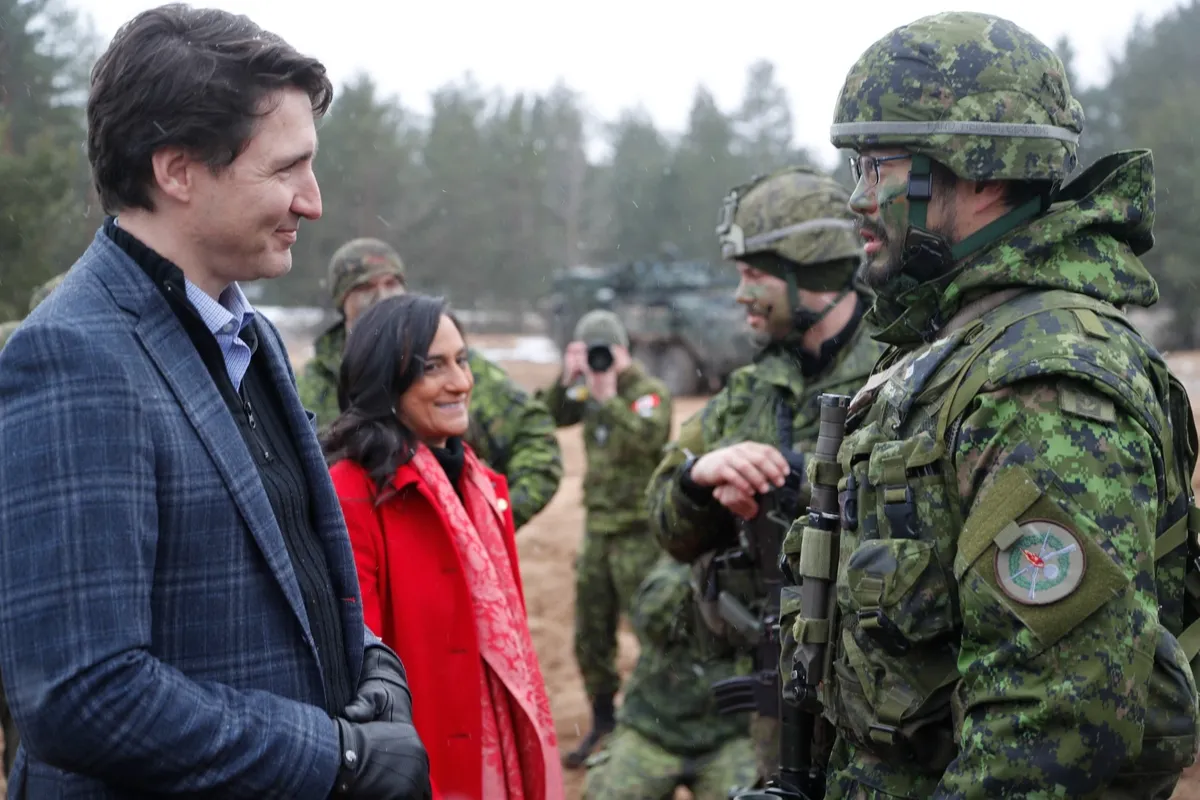
The summit approved the creation of four new NATO shock groups in Bulgaria, Hungary, Romania and Slovakia. They complement four existing shock groups in the Baltic countries and Poland. Thus, eight multinational NATO combat groups are now deployed on the line from the Baltic Sea to Black.
In Europe, after a multiple reduction by the beginning of the 2000s, the number of US troops began to grow again after 2014, and from the current (...) [a word prohibited by Russian power] this growth has completely accelerated. Now there are one hundred thousand US troops on the continent. European members of NATO and Canada also increase their forces under the direct command of NATO: now it is 40,000 military personnel, mainly on the eastern flank of the alliance. Including five aircraft carriers, from the Arctic to the Mediterranean Sea.
The leaders of the NATO countries agreed to reconfigure the deterrence and defense system to the long -term perspective. NATO will have much more forces on the eastern flank that are highly readiness, they said. And more in advance of detailed equipment. The decision on the details will be made at the NATO summit in Madrid in June together with the new strategic concept.
NATO leaders confirmed the open -door policy. The expansion of the alliance, the reception of former members of the “Soviet bloc”, they called the historical success, the spread of democracy, freedom and prosperity in Europe.
Thus, the “special operation” in Ukraine did not help the declared goals of ensuring the security of Russia, which the Kremlin set in the December ultimatum NATO members.
The military infrastructure of the alliance not only does not return to the state of 1997, but also significantly intensifies on the eastern flank even compared to the "post -Khresny" years. Moscow not only did not achieve guarantees of NATO non -expanding, but, on the contrary, made me seriously think about entering the block of traditionally neutral neighbors - Finland and Sweden. The actions of Russia rallied NATO, strengthened the transatlantic connection between European and North American members of the Alliance, and the lie in preparation for the operation (assured that “we would not attack”) undermined confidence in the Russian side on any issues of international security.
The leaders of NATO countries agreed to provide further support to Ukraine. Her right to self -defense, they emphasized, is fixed in the UN Charter. NATO countries will continue to provide Kyiv with weapons, advanced air defense systems, anti -tank and other means, including drones. This time, among other things, they decided to provide equipment for protection against biological, chemical, radiological and nuclear threats.
The “special operation” of President Putin in Ukraine “changed our safety environment in the long run. This is a new reality. This is a new norm, and NATO reacts to it in the long run, ”said the Secretary General of Stoltenberg at a press conference.
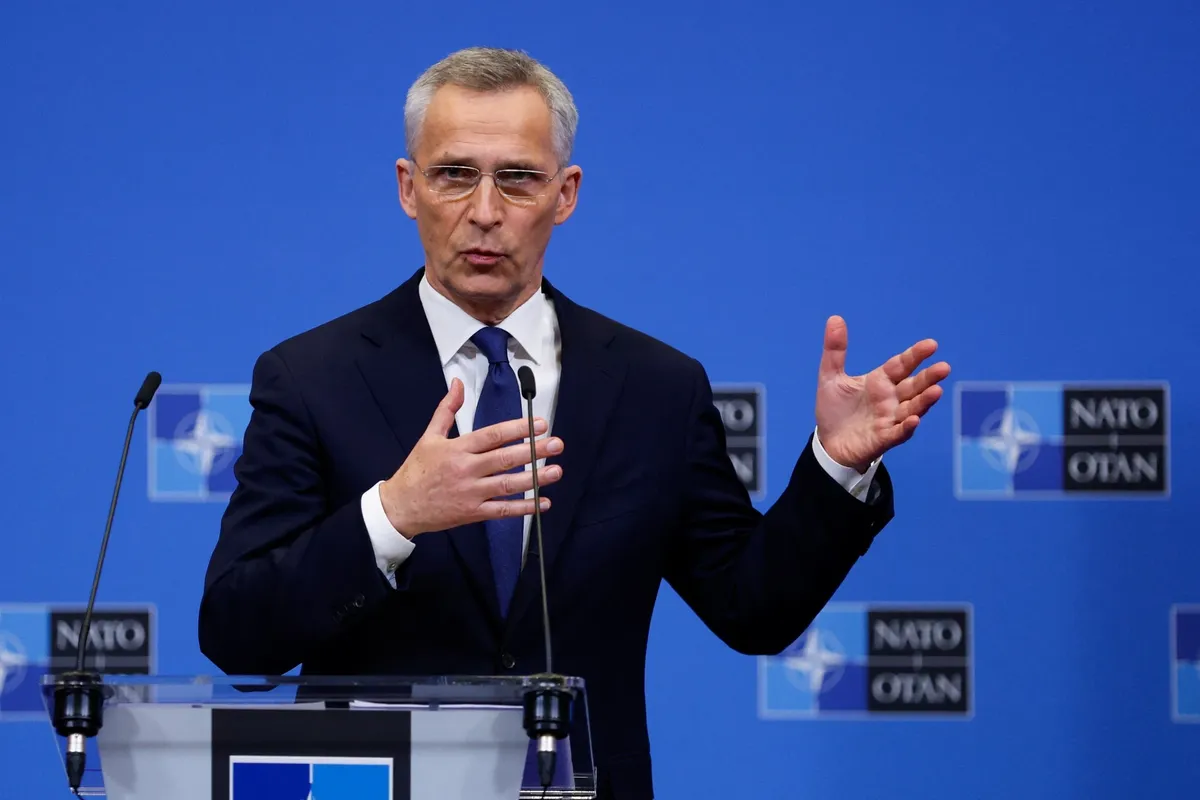
At the same time, the Alliance confirmed that he was not going to directly participate in the hostilities in Ukraine, close the sky above it and send NATO troops there. This was unanimous to report to reporters at press conferences and Stoltenberg, Bayden, and Johnson, and Macron. NATO countries “are responsible for not turning this conflict into a full -fledged war between NATO and Russia”, into which not only Ukraine and Russia will be involved and which would “be much more dangerous and destructive”.
Refugees tragedy
The West did not discuss any new sanctions against Russia. Firstly, the sanctions war, like the classical, are damaged by both sides, and no matter how rich the countries of the West are rich in comparison with Russia, their endurance is not infinite. Secondly, in the globalized world it is difficult to ensure the impeccability of the action of sanctions. "Holes" appear, which are difficult to keep track of. Participants in Megasammit focused on eliminating ways to bypass sanctions.
A particularly acute problem in connection with the military actions of Russia in Ukraine is a problem of refugees. Europe did not know such a scale of mass outcome since the Second World War.
The flight of Ukrainians from "special operation" is already the largest humanitarian disaster. They run in both directions, but the stream to Russia seems to be a stream compared to the tsunami to the west.
Before the high instances were swinging, the migration challenge took on the lower. The movement in support of Ukrainian refugees is organized at several levels: at the national, regional and local (arrangement, budget support for families that place refugees at home). The collection of donations was organized by a variety of groups (for example, I received a letter with an incomplete payment from NPO “Aviation without Borders” in Brussels by mail). At the box office of the supermarket you are asked if you want to sacrifice Ukraine, and they include this money in a check (local NPOs are engaged in collection). In each town, prefabricated points are organized, where people carry clothes and products.
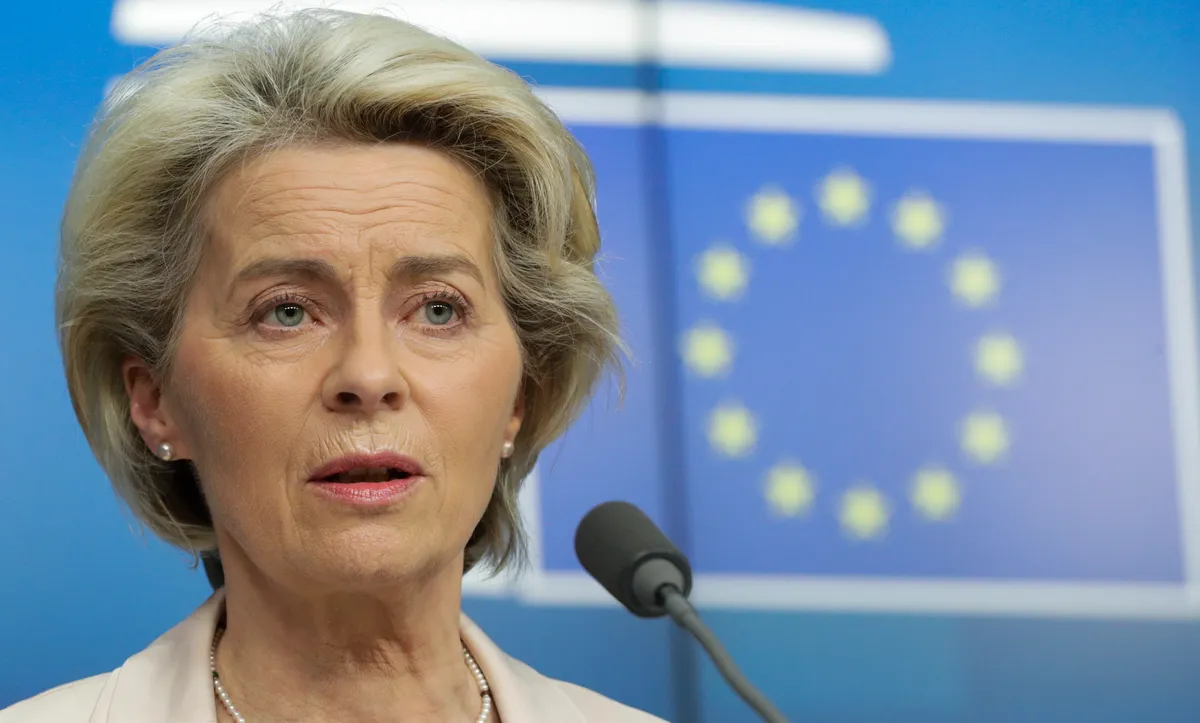
The head of the European commission Ursula von der Lyain announced at the Brussels summit that about three and a half million people left Ukraine in the western direction. Half of them are children. And the numbers grow every day. This week, the European Union allocated refugees (laid down in its normal budget) for an additional 3.4 billion euros and promises even more. Help will go to the EU states, which accept more refugees. The Union Directive of Temporary Protection offers them quick help and legal status. In addition to assistance at the border, reception and civil protection, it provides the beneficiaries of access to education, healthcare, temporary housing and employment.
Assistance also needs help from Ukraine who left their homes and moved within the country. According to estimates, there are about six and a half million. The problem is the delivery of this assistance to the city besieged by Russian troops.
Biden in Brussels announced that the United States was ready to provide humanitarian assistance to more than a billion dollars to Ukrainians affected by hostilities. Many Ukrainian refugees will want to stay in Europe, closer to their homes, he believes. But Washington is also ready to accept 100 thousand Ukrainians in the United States, mainly through the reunification of families. Poland, Romania or Germany should not bear this burden each alone, he said. This is international responsibility. And the United States "as one of the leaders of the international community, they are obliged to participate and do everything possible to alleviate the suffering and pain of innocent women and children."
As for the assistance of the Ukrainian government for urgent needs, and then - to restore democratic Ukraine, the European Council decided to create a trust fund of solidarity with Ukraine and invites its international partners to participate. And also calls for the speedy convocation of an international conference to raise funds to this fund.
How to get out of the crisis of energy resources
The United States and the EU stated at the summit of a decrease in European dependence on Russian energy resources. They created a working group in European energy security. The United States pledged to provide the European Union this year for an additional at least 15 billion cubic meters of LNG. Then the United States and Europe will provide stable demand and offer for an additional minimum of 50 billion cubic meters of American LNG until 2030. This will not immediately replace gas supplies from Russia, but in the transition period should help.
But the EU leaders could not agree on a decision of the crisis in the energy market for the near future. The sharpness of the discussion was aggravated by a 12-day strike by truckers in Spain due to the rapid increase in fuel prices. On Friday evening, in the midst of discussion, the Prime Minister of Spain Pedro Sanchez in his hearts left the meeting room. In the end, the members of the European Council came to a compromise and left a number of questions unresolved.
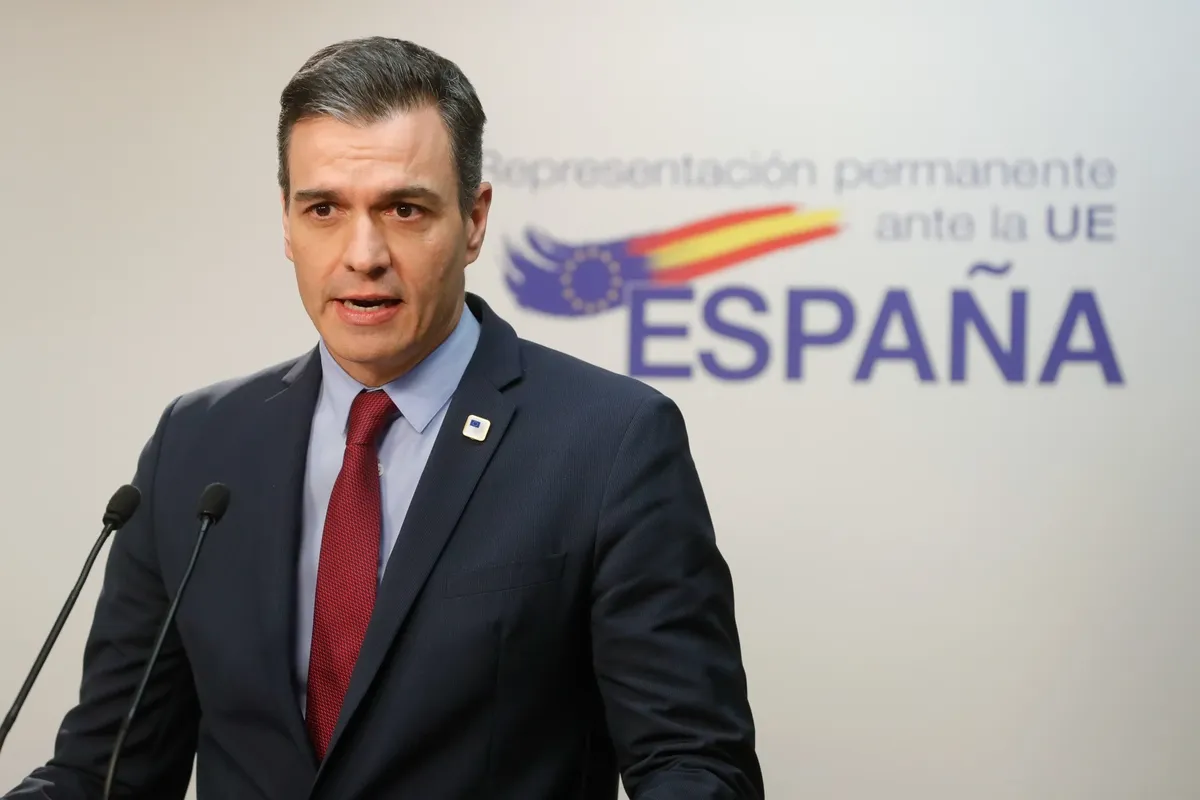
Military events in Ukraine pushed energy prices to a record high level and prompted the EU to try to reduce the consumption of Russian gas by two -thirds this year, buying it in other places and stimulating renewable energy sources. While the Mediterranean states insisted on restricting wholesale gas prices to protect poor households, the opponents said that this would entail subsidizing the production of fossil fuel by budget money. Leaders instructed the European Commission to urgently evaluate, options for reducing gas prices and electricity for the short term. Spain and Portugal received permission for temporary measures to contain prices.
The Pyrenee Peninsula for a long time was an energy enclave in the EU, because he had few pipeline formations with the main territory of the Union.
“Today we are talking about everyday problems of people, namely about electricity and gas accounts,” said Belgian Prime Minister Alexander de Koo. “We are in war, and in the war we need to take extraordinary measures.”
Earlier, 27 EU states have agreed on a plan for joint procurement of gas to contain prices. The European Commission will find out the demand and supply of gas until the next winter, following the model, with the help of which Brussels bought a vaccine from the Covid-19 on behalf of the Member States. Not every state is separately traded, but the whole EU with its own economic weight.
The dependence of Europe on energy from Russia means that the example of the United States, which introduced the embargo on the import of Russian oil and gas, is associated for Europeans with great economic risk. Therefore, on Friday, according to the results of the EU summit, a decision on this issue was not made. Germany, Hungary and Austria, for a clear reason, were especially restrained to the option of introducing a ban. The EU unified position has not developed regarding the demand of Russia to pay for gas by rubles.
In particular, Macron and Dragons at their briefings called it unacceptable, as it would be a violation of the contract.
Previously, this was stated by Scholz. But some are less categorical. Before the countries depending on Russian energy carriers, there is a dilemma: either agree, and this will strengthen the ruble and weaken the action of the sanctions they have imposed, or refuse, risking energy hunger and social consequences.
On the threshold of the food crisis
The European Council and in the G7 spoke for a long time about the threat of a global food crisis. Russia and Ukraine are the largest grain exporters, and (...) ["Special operation"] will inevitably affect countries that depend on food imports. Mostly from the third world. The United States, the third largest manufacturer of wheat in the world, and Canada, which is also a large manufacturer of grain, promised to find reserves of export increase. The United States and the EU will use its influence to encourage other countries with significant agrarian potential. In turn, the Americans called on European and all other countries to cancel trade restrictions on food supply abroad. In general, America and Europe are closely working together on the softening of a food problem.
And about China
The “collective West” discussed in Brussels the role of China in a complex equation of his conflict with Russia in connection with Ukraine. NATO leaders called on Beijing to refrain from supporting Russia in its actions against Ukraine. China should not provide economic or military support to Russian invasion, but, on the contrary, should use its influence on Russia and promote immediate peaceful settlement. Bayden admitted to reporters that in his recent conversations with Xi Jinping “he did not threaten, but made it clear” that the economic future of China is much more closely connected with the West than with Russia. A similar thought was expressed by the leaders of the European Union, although they will have the main conversation with the Beijing leadership on April 1 at the next EU -CPR summit.