
Translated material
“If Putin’s mission was to“ denact ”Ukraine, then he destroyed evidence of the crimes of real Nazis”
The historian Gregory Parmut for years studied the actions of the invaders (we are talking about the 1940s). His archive burned on the second day of the war
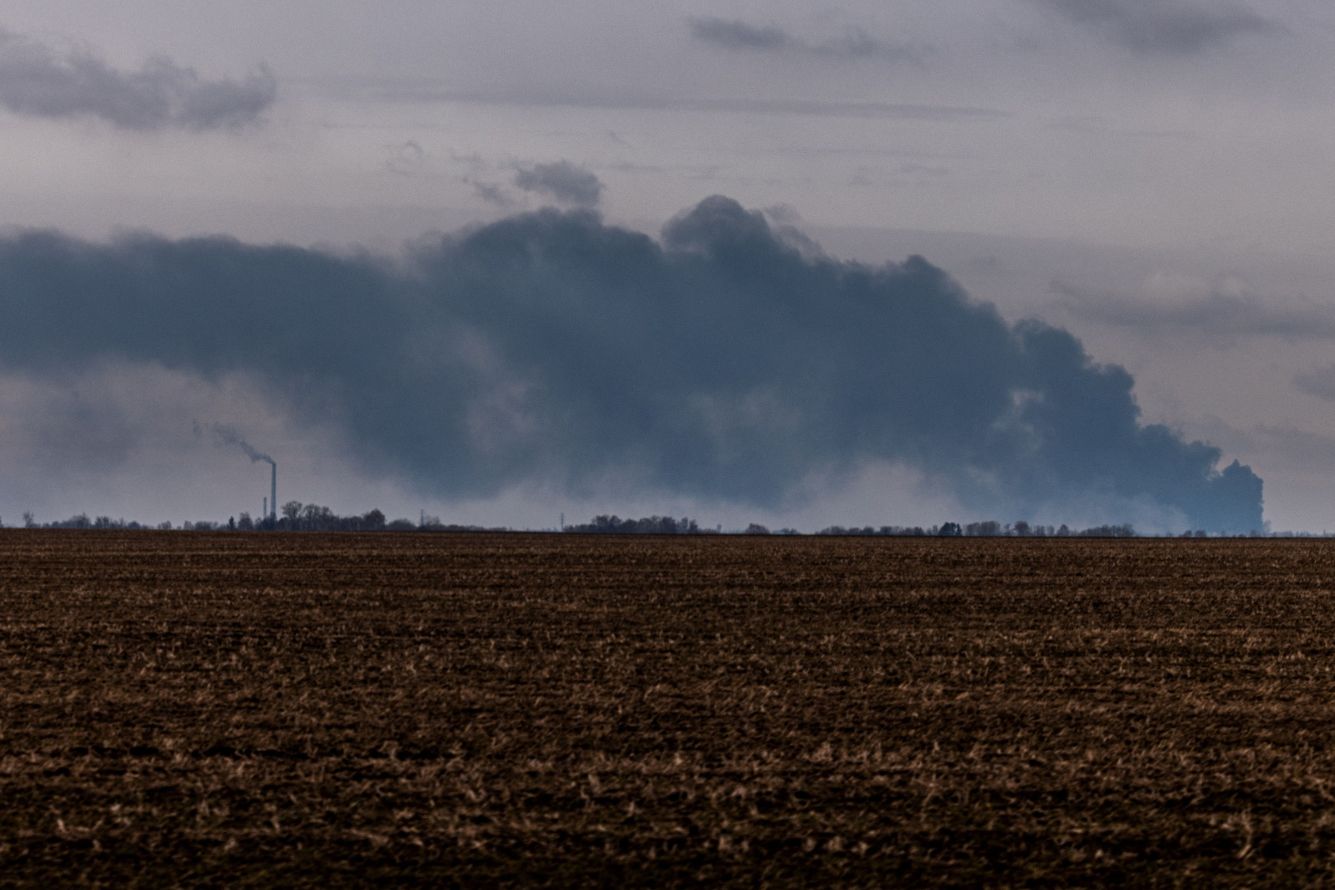
On the second day of the war, on February 25, the SBU Office building in Chernigov fell under the shelling - and the archive of 13 thousand documents was destroyed with it. Historian Gregori Aimaro Parmut regularly came to this archive from Chicago for the study of the Nazi occupation of the Second World War: he collected evidence of crimes against local residents and even planned to move to Ukraine to continue research. At the request of Medusa, journalist Kirill Rukkov recorded his story.
“I learned about the shelling of the building on the day when this happened - but there was a hope that the documents themselves survived,” says Gregory Parmut. - Only March 25 ( a month after the shelling - approx. Medusa ) I had confirmation that the archive could not be returned. Honestly, I was horrified. I could not cry only because I still had friends in Chernigov, who is now in danger - and I began to think about them "
Gregory Aimaro Parmut was born in 1989 in a typical American Mixed-Family : Father is an iso-American, mother is a Christian Jewish. “My mother almost did not communicate with relatives and was not interested in the roots of the family,” Gregory recalls. “Parmut is a rare surname, but we did not know anything about it until I began to study the story at the university and became interested in the origin of my family.”
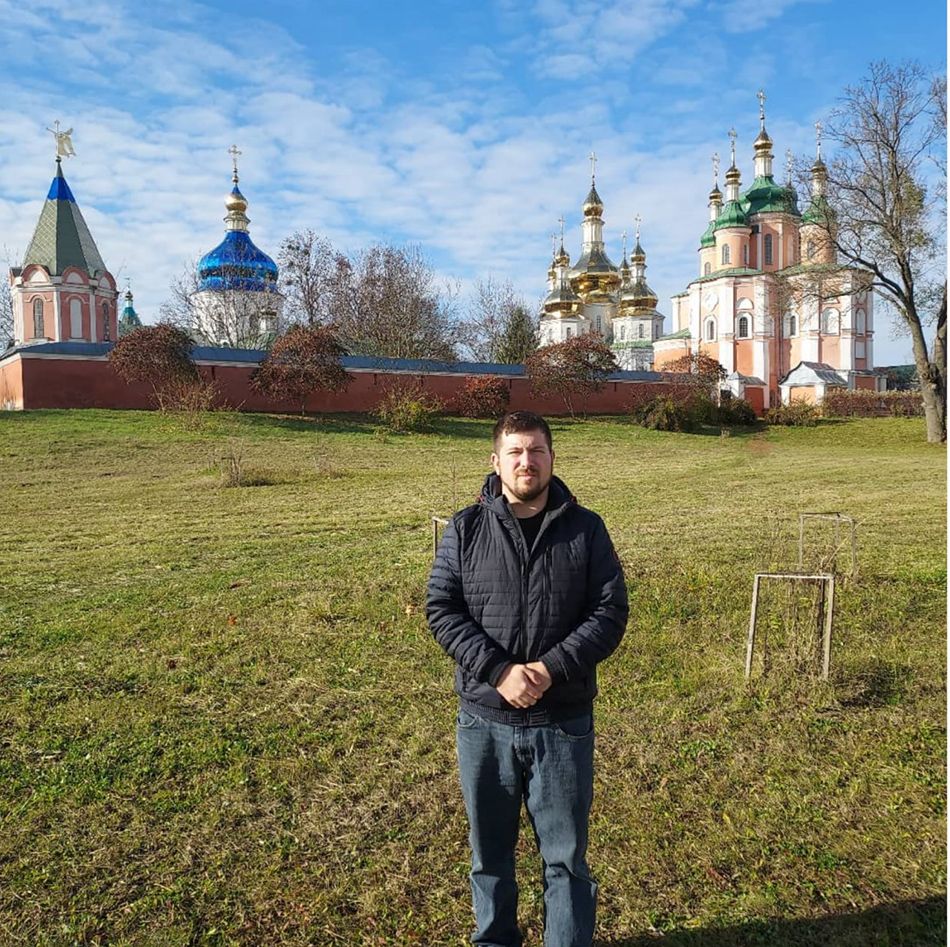
At first, the search was not led to anything, but soon Greg was lucky. Just a week, before he turned to the Museum of Yad Vashem in Israel, someone added to their database the missing details of his family history .
Gregori later found out what Evgeny Parmut did, a rather famous lawyer in Russia, who represented Dima Bilan, Alla Pugachev, Philip Kirkorov and Yana Rudkovskaya in the zero. He turned out to be a distant relative of Gregory, and it was his information that the historian brought to the city of Priluki in Ukraine, from where their family came.
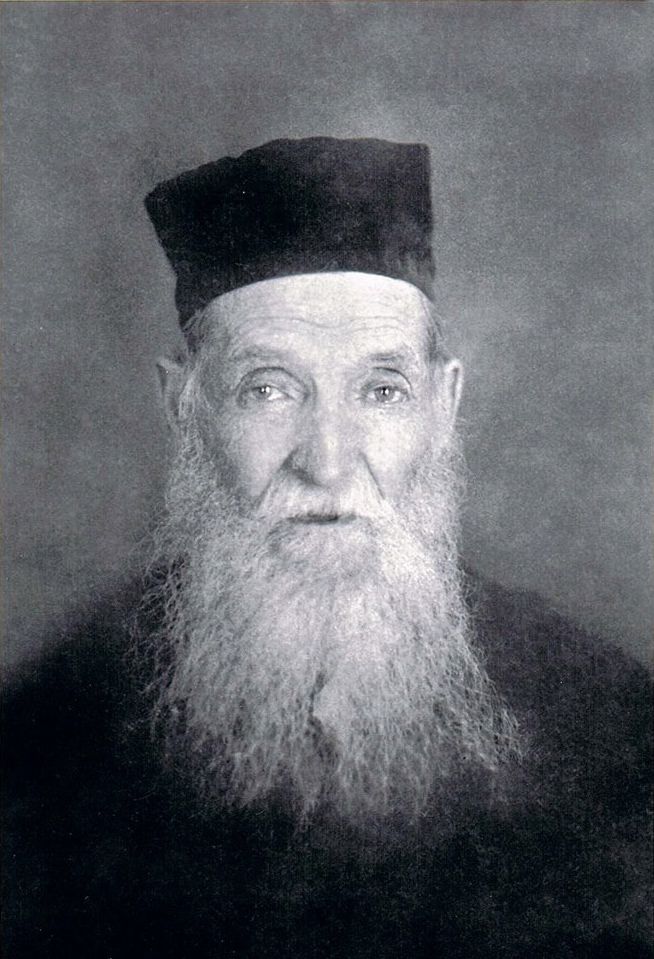
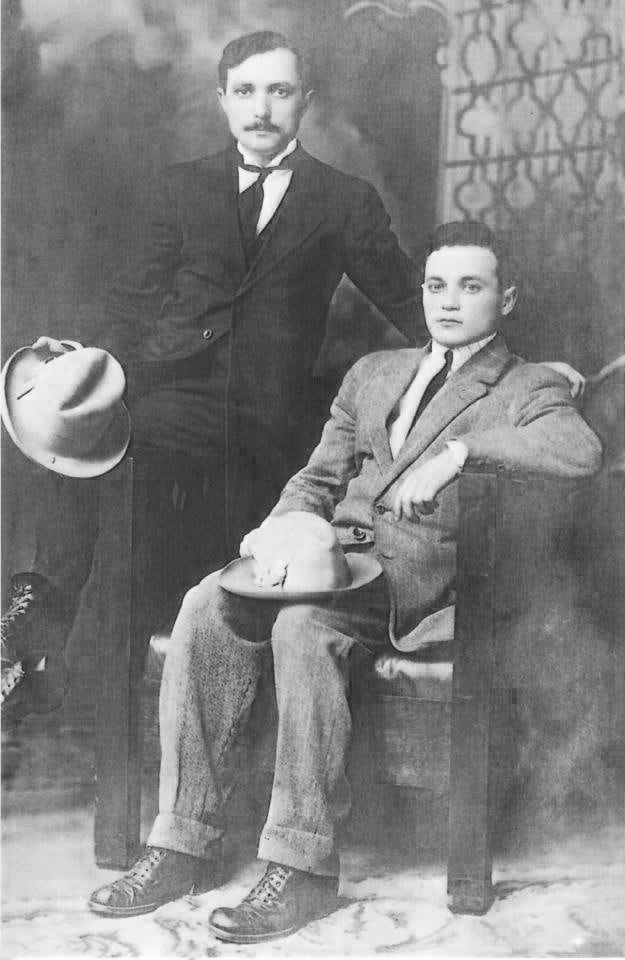
In the next few years, Gregory became almost obsessed with the studies of the Chernihiv region: "The current city of Priluki is for me like a Mecca for Muslims."
The Chernihiv region in the north of Ukraine was the "epicenter of the Soviet partisan movement", Parmut believes. Here, partisan detachments were in all main settlements: “That is why the Chernihiv region experienced a disproportionate share of violence from the German and Hungarian troops, it lost about 127 thousand people. The vast majority of the dead were Ukrainians - and they wrote much less about these victims than about the victims of the Holocaust. This spurred me in research, I focused on the study of the extermination of the Slavs as an ethnic group. ”
In 2015, as part of the decommunization, the Security Service of Ukraine by decision of the Parliament proclaimed the KGB archives. Documents continued to be stored in the SBU archives, but now they opened access to them to everyone. In 2018, Gregory Parmut flew to one of these archives in Chernigov.
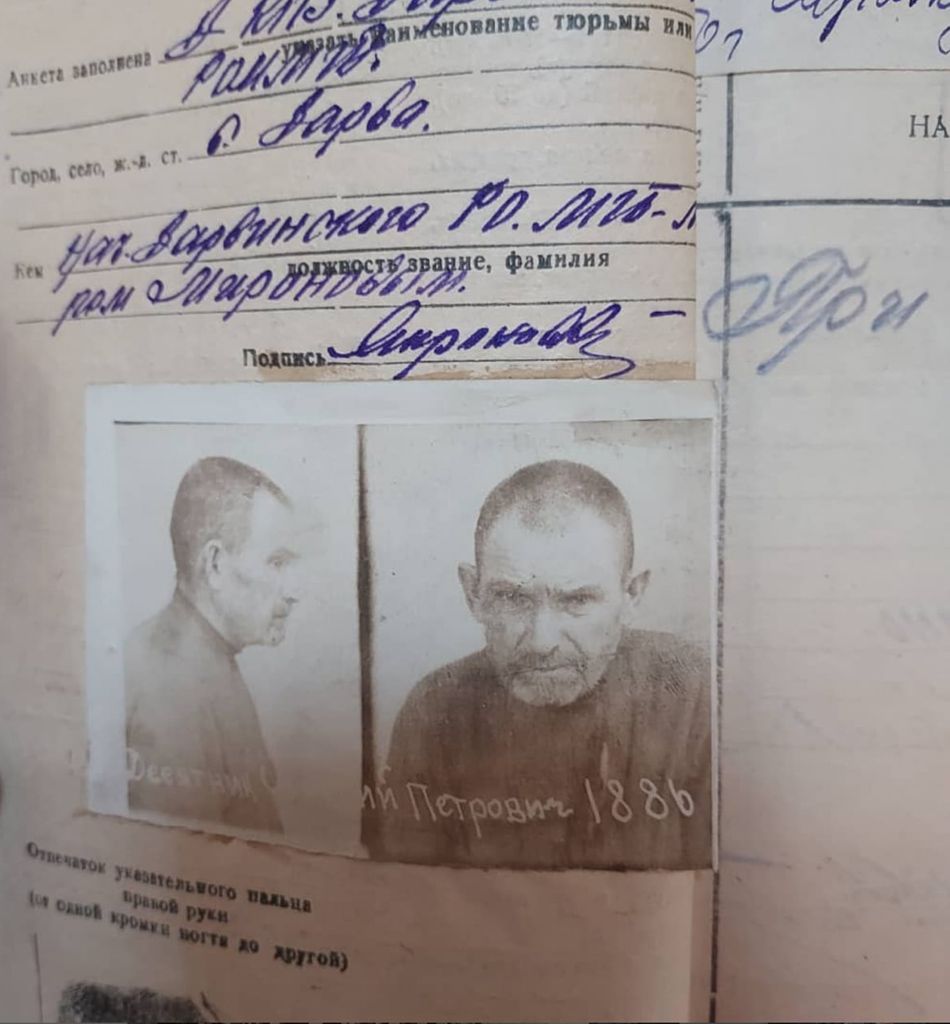
“At first I was nervous, passing through the armed passage, where the guard with Kalashnikov assault rifles stood. But they turned out to be polite, everything was smooth, - Gregory recalls the first day of work in the archive. - No bunker or basement, the archive was simply on the ground floor of the mansion. Inside is a typical Soviet interior, rather archaic. Only four giant rooms with folders and papers. ”
“The dream has embodied. And then they came ****** Russians "
During the Nazi occupation, the local police also complied with the requirements of the Wehrmacht officers - the unique collection of personal affairs, protocols and testimonies arose. The basis of the SBU archive in Chernigov was just such police documents - about 13,000 unique evidence.
Gregory worked with him for three years, remaining for the summer, and in the fall, returning to Chicago to study-in the magistracy of the University of Indiana in the field of Russian and East European history. The result of his research was the scientific work " Genocide under any other name ."
Quotes from the work of Parmut
“January 7, 1943, the city of Priluki in the northeast of Ukraine. Vladimir and Tatyana Britsky, party workers, are awaiting execution. In a desperate attempt to save their little daughters - three -year -old Lyudmila and six -year -old Svetlana - they are left in the house of a neighbor Maria Vlasik. Over the next three days, more than 1,500 people of a party asset with families were shot at the hippodrome in the city center. This massacre has become the culmination of the campaign of terror and extermination, which began in the Priglies in the late autumn of 1941. The campaign lasted nine months until the city is liberated by the Red Army. Having sheltered the daughters of party activists, Maria Vlasik put herself in an extremely dangerous and shaky position - if they are caught, Maria and her husband are also threatened with execution. Either because of fear, or sincerely believing that the girls would be transferred to the shelter, Maria brought Lyudmila and Svetlana to the local Ukrainian police. They have never seen them alive again. ”
“On February 21, 1943, at 20:00, 19-year-old Olga Lysak, her brother Alexander Lylka, Martha’s sister and daughter-in-law Nadia, as well as 25 other Gritsevka families were detained in the village of Grybtsovka district. The arrests were part of a large -scale operation, carried out in each village and farm of the Sristen district against party functionaries. These twenty -five families of Grytseviki escorted into the school building, which was already stuffed under the eyeballs: they gathered 680 people, men, women and children, in the cold, without food and water. In the evening of February 23, part of the arrested was taken to the courtyard, where a pit was already dug for them. Those who stayed in the building listened for several minutes the screams and cries of their loved ones while they were executed. And then the school was set on fire. Those who tried to escape through the windows were shot by the German field gendarmerie and the Ukrainian police. Lysak miraculously managed to climb through the back window, her escape remained unnoticed in chaos. In addition to her, units survived this massacre. ”
On the night of March 2, 1943, the Germans burned the village of Koryukovka to the ground and shot each resident - about 7 thousand people. “Koryukov’s tragedy” is now known as the most massive reprisal against the civilian population in the Second World War - although in Soviet times it was hushed up. Parmut investigated her too:
“Thirteen -year -old Valentina Nikolaeva notices a column of German trucks heading to the center of the village. She briefly sees soldiers inside, people dressed in a gray uniform and caps with signs of the difference in the form of a skull and crossed bones. Soon smoke appears on the horizon and shots sound. Valentina and her parents decided to run into the forest and hide in a swamp. Many of the neighbors of Valentina did exactly the same - she realized it later, when she saw their bodies floating in standing waters. All night Valentina listened to shots and screams. Patrols combed the terrain in search of survivors. Two soldiers, dressed in the form of the Wehrmacht, were talking among themselves in Russian-one of them stepped into the hands of a fixed Valentine, taking her for the deceased. "
Basically, Gregori Parmut's research concentrated in the southern regions of the Chernihiv region. It is believed that these lands were “left in relative rest” because of the idea of Nazi ideologists, like Alfred Rosenberg , who made a colony from Ukraine, and not to destroy it completely. Parmut also proves that this propaganda work was quickly rolled up and did not affect the scale of the executions.
“In the region that I investigated, there were no“ Bandera ”or OUN-UPA detachments,” says the historian “unless individual agents who were killed very quickly, at the beginning of the occupation, by the Germans themselves. It is difficult to call their propaganda work successful: for example, I analyzed the case with two local men in the Priluki, who came to the head of the village of Grigory Romansye, and offered to spread ideas about independent Ukraine - to which Romanta replied that this was a very bad plan, and the Germans would never approve. Both men were then arrested, one was shot, and the second was made by a slave. "
Gregory also found out that specifically in the shelters, most Jews in the ghetto survived when they were on the street, “even on rations of 50 grams of bread”: “Because Ukrainians and Russians, who themselves had almost nothing to eat, helped them, fed potatoes and grain, even under the threat of execution - there were many records on the archive documents just for such help.”
Translated from English specifically for "Medusa"
Gregory received several international grants for his research, but did not manage to use them. He paid all the flights of Chicago - Kyiv paid from his savings, only about 3 thousand dollars took to tickets. In parallel, he worked as a teacher of English in local schools: "In Priluki I am a local celebrity, I feel absolutely at home there, there is my heart."
Last summer, before Pandemia, when Parmut talked about his project at a lecture at the Shevchenko Chernihiv College, he met a girl. They have a relationship, later they parted, but maintained communication. Gregory hoped that he would soon return to her.
“My plan was to move to Ukraine as soon as possible after the end of the epidemic,” says Gregory. “I dreamed of it, improved my Ukrainian language and Russian too, of course.”
In the fall of 2021, Parmut, finally, was able to come to Ukraine again. “The dream was embodied in the past autumn. And then they came ****** [Damn] Russians, ”says the researcher.
Due tothe accumulation of Russian troops near the border at the beginning of 2022, he had to evacuate on the advice of the American embassy. The former girl remained in Ukraine.
“I actually didn’t want to leave, I even argued, but my old parents just begged about it from the moment the United States began to evacuate their diplomats from Ukraine,” says Parmut. - My friend, Kostya, also a historian, served as a contractor in the Ukrainian army before the war. On the morning of my departure, he made me a gift - a token, which was worn by Soviet prisoners of war in Chernigov. Specifically, this one was broken in half - this means that the Soviet soldier did not survive. "
Kostya was very optimistic. He asked Parmut when he returned to Chernigov. “I said:“ As soon as the Russians remove their tanks from the Belarusian border, ”Gregori recalls. - He was sure that Russia would not invade and nothing would happen. The last time I talked to him, he entered the territorial defense. ”
"Putin destroyed evidence of the crimes of real Nazis"
On the eve of the destruction of the archive, Gregory began to study the partisan movement in the villages of Varva and the Sleepy, in the south of the Chernihiv region.
“These documents, as well as materials near the neighboring small girl are completely destroyed. Due to ****** [fucking] bombardment of the archive, all this information is simply lost, ”the historian scolds. - If Putin’s mission was to “denact Ukraine,” he destroyed the best evidence of the crimes of real Nazis in the Chernihiv region. Just like my plans for the study of the Holodomor: now getting the names of the victims will be unimaginably more difficult. ”
Of course, the archive itself was not the goal of the attack, Greg understands. “Even in 2018, when I worked there for the first time, a historian colleague said that“ if Russia starts an invasion, this building will be the first goal in Chernigov, because this is the Office of the Security Service of Ukraine, ”he recalls. “Just the documents were there, and there was neither the time nor the opportunity to engage in their movement.”
Now many archives employees are hiding from possible persecution by the Russian military. Some of the historians had special traffic, formally they could be listed in the SBU bases, Gregori explains: “Some escaped from the Chernihiv region to other regions. Archivist Tatyana Gapienko , who took care of me as a son and oversaw my work, is also on the run, because her husband was an officer. I pray so that everything is in order with them. ”
The colleague of Parmut on research - historian Elena Lysenko - managed to copy and send Greg to all their joint developments two weeks before the destruction of the archive, when the American was already evacuated on the advice of the American embassy: “The saved files will not be compared with the volume that has been lost. Everything related to the Stalinist and post-Stalin repression-everything is now lost. It's just monstrous. ”
Meanwhile, Elena Lysenko and her husband and daughter went to the north of the region, hoping to wait out the war in the country.
Their area is now occupied by Russia. There was no connection with Lena, but two days ago he was able to accept several calls from our common friend. I know that Russians and Ukrainians boast of how they can survive during periods of disasters and even in extreme poverty. But I want the world to know that Elena Lysenko is the best historian of the Nazis crimes in the Chernihiv region - now in fact a hostage in the territory occupied by the Russians. She said that the troops were standing right in her village, and the soldiers threaten to shoot at anyone who tries to leave him. Locals are trying to shelter refugees in their homes and hide them. You can’t imagine how much it looks like that I have met about military occupation in the documents, ”says Parmut.
Parmut is sure: before the start of the “denacing operation”, the inhabitants of the Chernihiv region had no negative attitude towards the Russians.
“Honestly, before the invasion, most people whom I know in the Chernihiv region treated the Russians just as partly as before. The father of the girl I met until the last moment said: "Putin will not attack us, because we are still brothers." So people really thought. A few dissatisfied after the Maidan - such were also, albeit not in large quantities - they said: "I will meet Russians with flowers." But none of them do this now. When you see how Russian tanks shoot in your hometown when they bomb your village, you cannot kiss such “liberators”. ”
Most friends of Gregory in the Chernihiv region have relatives in Russia or Belarus. In Chernigov itself, many spoke Russian, he emphasizes: “I even spared a little about my decision to live specifically in this city, because I know Russian worse, and on the street they spoke much more often than in Ukrainian.”
“Putin’s plan was completely insane and destroyed the Ukrainian-Russian kinship,” concludes Parmut. “Now it is dead.”
* * *
Greg thought that he would return to Ukraine no later than a month after the start of the war - since he hoped that politicians would find a diplomatic decision. On March 24, he was going to fly back to Chernigov:
Now I'm just waiting. I send part of the money directly to those who serve in the territorial defense of Nezhin and Chernigov so that they can buy food, water and other supplies. In Priluki, I have a friend who makes long and dangerous trips to the Polish border back behind humanitarian aid - I helped him with gasoline for and consumables. Medicine and food are the main thing that is now necessary. My mother and I even bring them [medicines and products] to our local Orthodox Church in the suburbs of Chicago - they send humanitarian aid to Ukraine.
Parmut says that only one thing saves him from the “total depression”: “My wonderful apartment in Chernigov is still intact, after shelling my friends regularly check the house. I will return to it when I get into the humanitarian mission. This is my plan - to return as soon as possible. ”
Kirill Rukov with the participation of Ilya Gromovikov