
Translated material
“See the turn? These are all of them - Russians "
Because of the war, thousands of Russian citizens-businessmen, artists, musicians come to Almaty. This is how they are met in Kazakhstan. Report "Medusa"
Because of the war, thousands of people left Russia. The most popular areas for departure were Turkey, Georgia and Armenia , but, escaping from repression and economic sanctions, Russians are in other former Soviet republics: Kyrgyzstan, Uzbekistan, Kazakhstan. At the request of Medusa, a journalist from Kazakhstan Daniyar Moldabekov talked with those who left Russia and stopped in Almaty, about how they chose a direction, whether they plan to return and how they see their life further.
"We all sat in a daze"
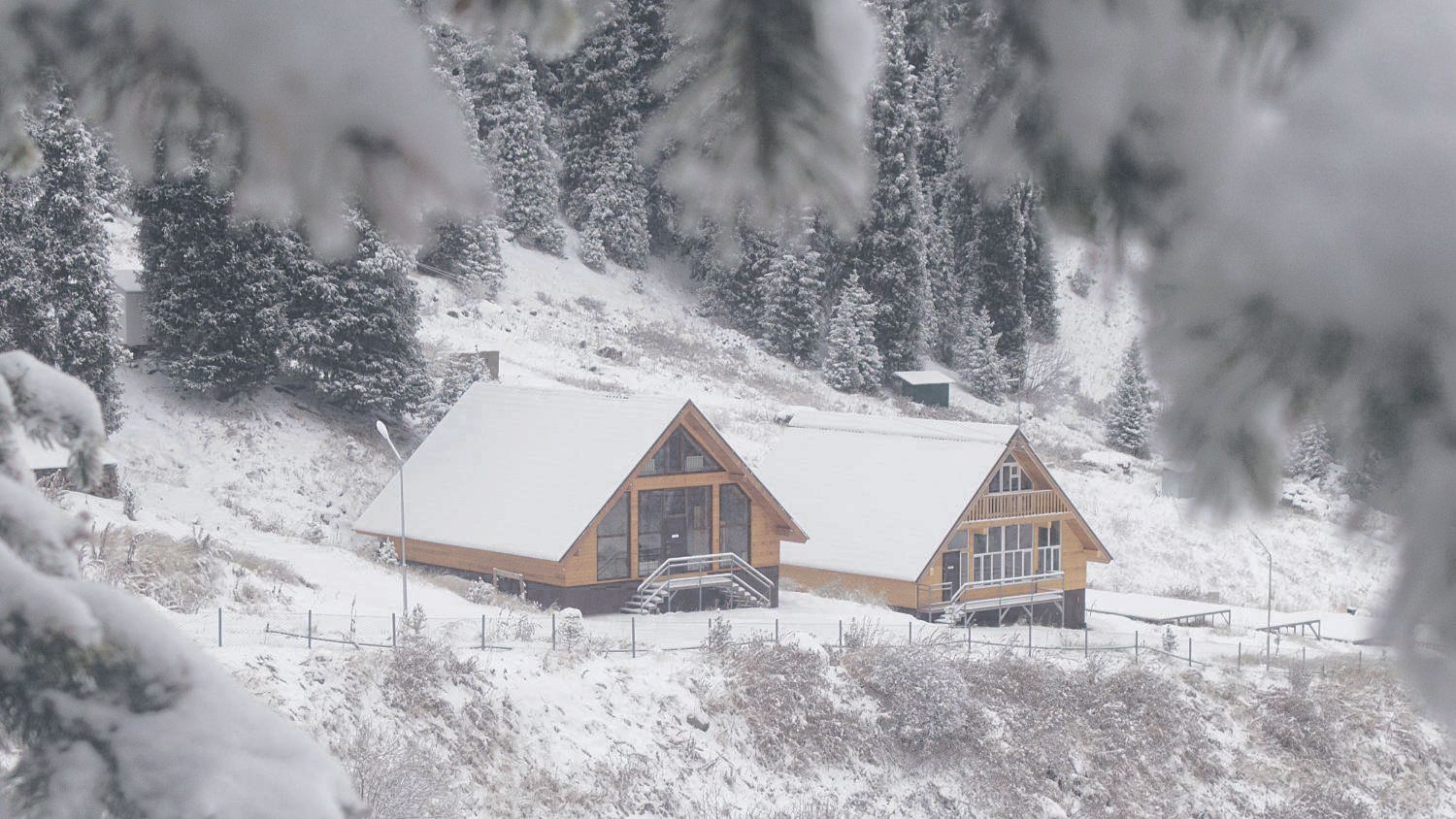
On the first day of the war, the 20-year-old theater artist and activist Dmitry Efremov participated in an anti-war rally on Pushkinskaya Square in Moscow. A month later, it rakes snow in the Almaty Mountains, around the Alpinist camp Tuyuk-Su , which provides asylum to Russians and Ukrainians.
“On February 24, we had a premiere day of a new performance. When we started to do it, I already thought to leave and was sure that this was my last project in Russia, ”says Dmitry. - The war began. The director of the Center for Voznesensky, in which we showed the performance, sat in a daze - we all sat in a daze. The rally [against the war] was scheduled for 19:00, we canceled one of the two shows of the play and from the last show, together with the audience, went to the square. ”
The action did not last long: soon the participantswere dispersed . In the evening of February 24, almost a thousand people were detained in Moscow. The next five days Dmitry and his friends tried to come up with other forms of self-organization and protest: because of the riot police, the access to the street seemed simply ineffective to them.
“And then it was necessary to choose where I would be more useful,” recalls the artist, “locked for 15 days in jail, which was just a matter of time, or continuing resistance at a distance. I made my choice. "
Even before the war, Dmitry was going to a close girlfriend in Kazakhstan to support her after the January events . As a result, support was needed by the artist himself. On February 28, he flew from Russia through Novosibirsk in Almaty.
“I was met very warmly, I have never encountered problems due to the fact that I came from Russia,” says Dmitry. “There are no enemies and no Russophobia if, when you come to the country, you take into account and study the context in which it exists, you listen to the local life and customs, you know history and with basic respect you treat every person living in this country.”
Now Efremov is working on the Resque Forum platform, the purpose of which is to support cultural workers who were evacuated from Ukraine, as well as dissidents from Russia and Belarus. He also prepares a podcast about what to do to people to try to stop the war right now. “In Kazakhstan, it is psychologically easier to work on such projects,” Dmitry admits. “You don’t wait every morning that they will knock on you or come with searches.”
For the past few weeks, the artist has been living in the Tuyuk-Su camp, which provides refuge for Russians and Ukrainians.
In a conversation with Medusa, the director of the camp Artem Skopin says that ten people from Russia and Ukraine turned to him. He sets people free. “It hurts us that politicians allowed this war, and we are very worried about our friends. Unfortunately, we have limited resources, but in order to somehow support people and help them, we decided to open the opportunity for them to live in a camp, ”explains Artem Skopin. - So far, until April 25, then, perhaps, we can also leave them. And yes, we are open not only for Russians, but also for other victims in this conflict. ”
"He stood in the queue, but no problems"
In the center of service of the population of Almaty is crowded, the line is mainly from visitors. The center employee admits that she has never seen so many Russians here. “Previously, the Uzbeks were mostly from foreigners. Now, as the sanctions began, the Russians immediately appeared, ”the woman says and points to the crowd. “Do you see the turn behind you?” These are all of them. " In the hall is fifteen, the line is electronic, moves quite quickly.
People came to the center for Iin (not to be confused with the TIN) - an individual identification number that every resident of the country has. Without it, you can’t open an account with a bank, buy real estate or conduct a business.
A child walks between the seats, next to the father looks at the scoreboard, where the “coupons” are displayed. The man came from Moscow, his company was now closed, in the Central District, he, like the rest, for Iin, wants to open an account. When he returned to Russia, he does not know. “I think the change is not enough,” he argues in a conversation with Medusa. - There is a feeling that after that a bright future will not immediately come. There will be some more recovery process. ”
Nearby in line is a citizen of Belarus. “I arrived on March 1,” he replies. - I like here, friendly people, eastern hospitality. You know, I have many friends now in Georgia and Poland. They collide [with a negative in their address], but I have never met such a time here. My brother, who is now in Bulgaria, the courier brought pizza and showed the middle finger. Belarusians are scratching. From the territory of Belarus there is aggression towards Ukraine, people spill emotions so. ”
Two residents of Yakutsk say that they are comfortable in Almaty, because the cities are “mentally similar”. “We want to continue the business here,” says one of them.
Already at the door, a man of about forty says that the company in which he worked in Kazan turned his work in Russia. Employees were offered a relay to Kazakhstan. “I got the number,” he says. “He stood in lines three times, and so without problems.”
Hands and brains migration
On March fifth, in the Kazakh version of Forbes, an article was published with the heading: “Migration of hands and brains: Russian specialists are preparing for a massive move to Kazakhstan.”
“First of all, these are, of course, representatives of the IT sector. But in general, experts from different sectors began to explore our labor market, evaluate demand and proposal in order to have some long-term plan in case their field of activity in the Russian Federation suffers,-commented on the situation of Forbes Oleg Parakhin. - At the same time, it is worth noting that other countries of the post -Soviet space are also considered as a relocation, as the most comfortable in mentality, language. But Kazakhstan, according to the estimates of those with whom I spoke, is seen the most attractive. ”
“I moved to Almaty, because it was cheaper to fly here than Istanbul, there was a visa-free regime and I had someone to meet with,” says an analyst Anton (the name changed). After the start of the “special operation”, he wrote an anti -war post on the social network, and this attracted the attention of the police - Anton was awarded the warning “on the inadmissibility of violation of the law”.
“Until 2021, I did not see any huge problems in the Kremlin’s policy, but I noted some aspects that I did not like (the irremovability of power, the lack of discussions in parliament, propaganda),” recalls Anton. - Then the repressions, in my opinion, intensified: they placed Sergey Zuev , despite his poor state of health, closed the Memorial . Now, of course, I am against the closure of many media , Instagram, Facebook and Twitter, against censorship, against conducting hostilities in Ukraine. ”
Olga (the name changed) has not yet left Russia, but her son-student has already moved to Kazakhstan. She plans to do the same in the near future. They both were fined for participating in an anti -war rally in Moscow. Olga is a marketer, works with foreign brands, in the conditions of economic sanctions and the departure of companies from Russia, a woman cannot work in their homeland anymore. “I understand that I cannot stay here with my beliefs and ethical position,” the woman says. “In addition, I understand that everything will be so bad here that I do not see the opportunity to do what I love.”
Olga does not believe in Avarchia , which the authorities of Russia sometimes speak: “I understand how much the Russian economy depends on foreign supplies. We have no chips, foreign planes, foreign turbines ... Even if everyone tenses and begins to engage in import substitution, this will not happen quickly. ”
People of creative professions go to Kazakhstan. The co-founder of the most popular in Kazakhstan of the art space “House on Baribaev, 36” Dauren Tyuleev says that recently he had several meetings with children from Moscow and St. Petersburg, who arrived in Almaty.
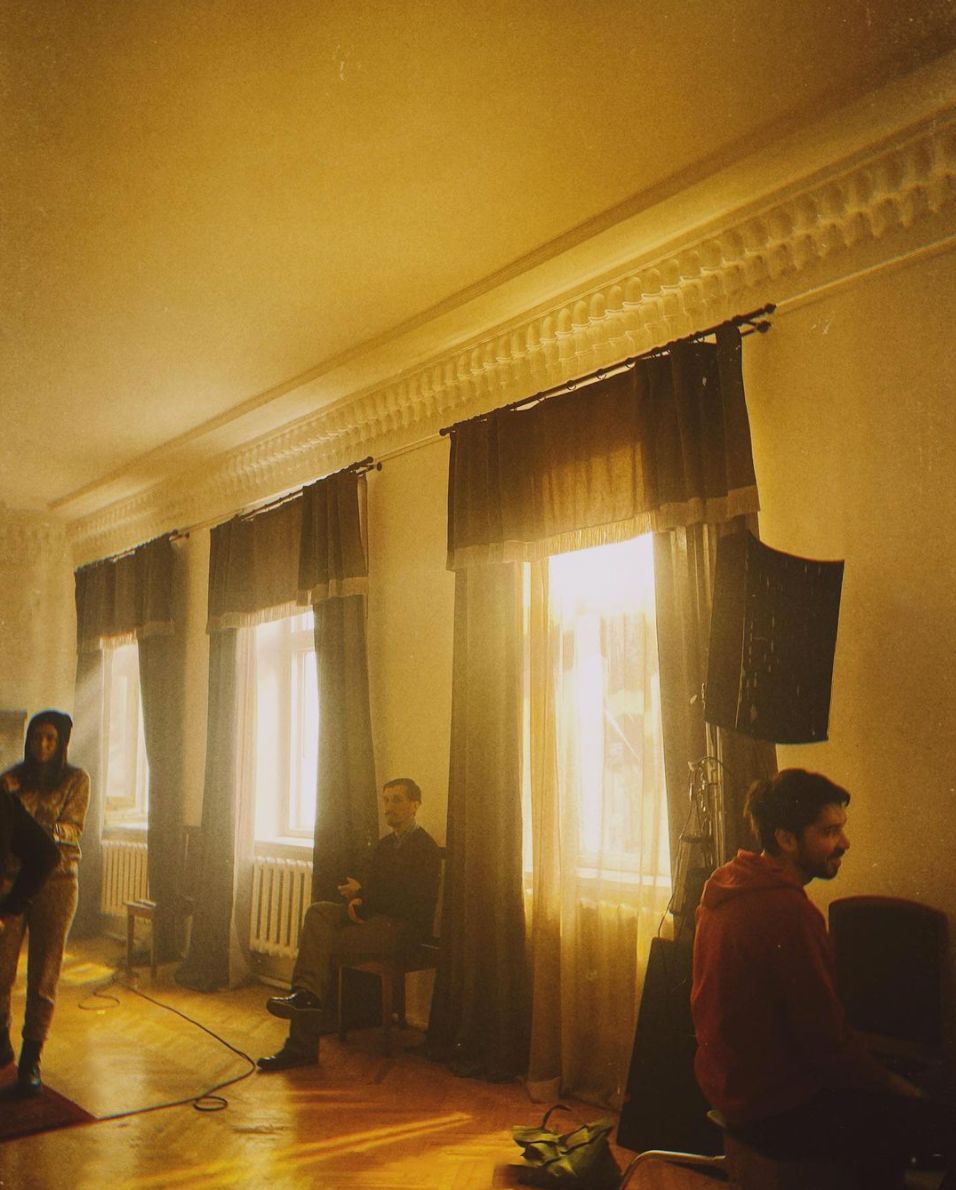
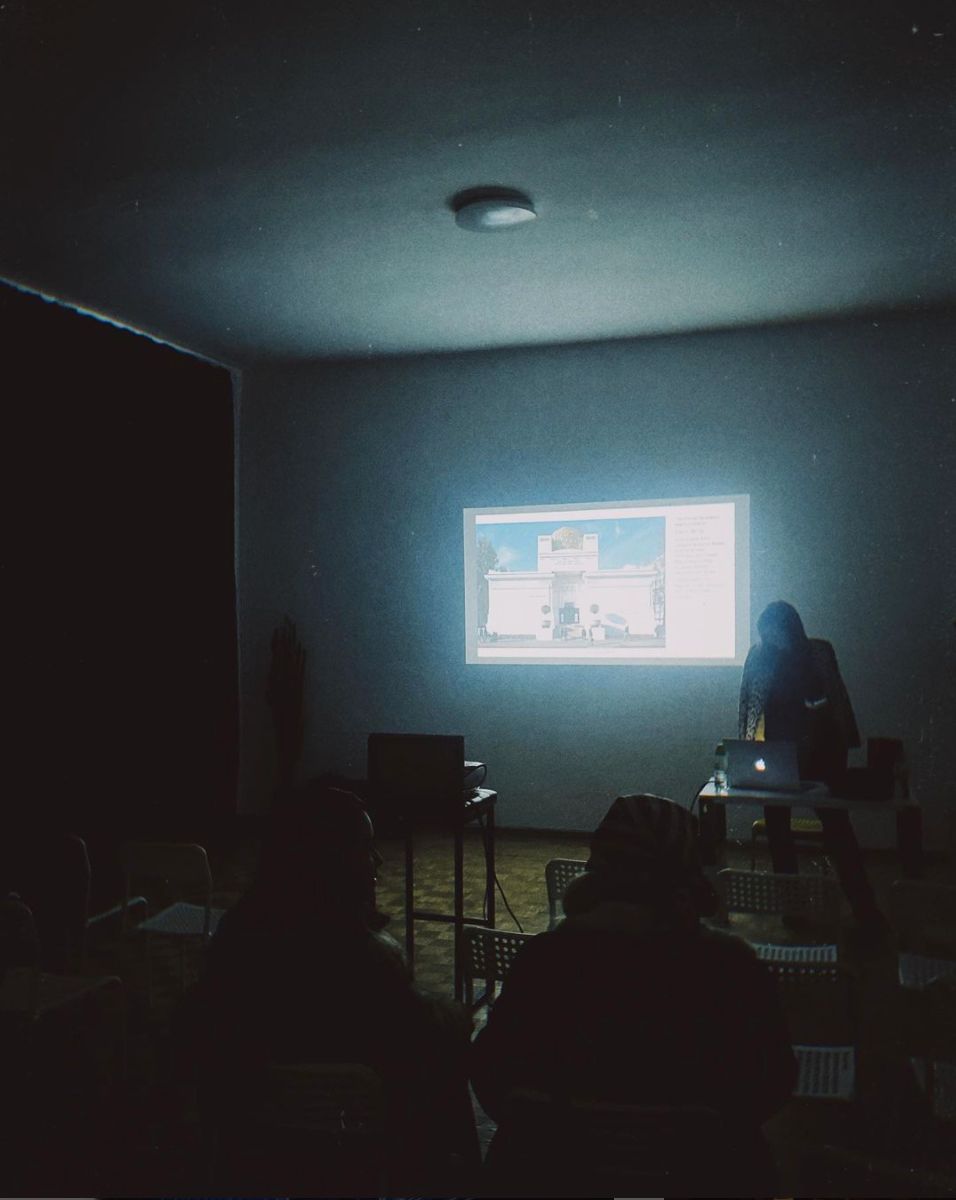
“They are addressing questions from household (where to live) to professional (how to find a job, integrate, be useful for local communities),” Tuleyev retells. - These are photographers, artists, designers, creative entrepreneurs. Our residents help to adapt, build connections, establish contacts. And soon examples of the first collaborations [local and emigrants from Russia] will appear. ”
Comiciks Anastasia ( the heroine asked not to mention her last name - approx. Medusa ), living in Russia, often went to rallies, including anti -war ones. But when the revolution did not happen, I realized that “there was no positive dynamics”, and bought a plane ticket to Almaty. “In my environment, nothing has changed much,” the girl says. - There are no more people [to rallies]. I did not see a chance for a change in the country. I felt pain and fear. "
Anastasia is twenty -two years old, she was born and raised until Russia was ruled by Vladimir Putin, and did not know another leader. After the January events in Kazakhstan, despite the power suppression of protest, Anastasia had the feeling that it may be much freer. When the war in Ukraine began, and military censorship was actually established in Russia, Anastasia strengthened the opinion that here, far from St. Petersburg, she will now feel more comfortable. “I am deprived of freedom of speech, it is very difficult,” the girl admits. “After the start of the war, I could not continue ... I was tired of being not free, I was tired of being silent.”
For Anastasia, Almaty is a place where she can continue to engage in creativity. “I like how the entertainment industry is developing here. I have long watched the successes of Kazakhstani guys, for example, clipmaker Aisultan Seitov . I like Irina Kairatovna , just two days before the start of the war I was at their concert in St. Petersburg, ”the girl recalls.
Arsen also moved to Almaty because of the war. He was born and raised in the Orenburg region, in the city of Orsk. Having studied in the Chelyabinsk State Academy of Culture and Arts with a degree in the “teacher-choreographer”, he began working as a ballet artist in Moscow. “After they invited the dancer to work in Israel, he lived in Jerusalem for two years. Then he returned to Russia, ”says Arsen.
His parents moved to Kazakhstan under the Kandasov resettlement program ten years ago. After the start of the war, the son followed their example.
“There was a feeling of guilt, as if it was [a military invasion of Ukraine] did not make Putin, but I,” recalls Arsen. - I have many friends in Ukraine. I perfectly understand that this is no special operation, they bomb the civilian population. ”
“I was in three cities of Kazakhstan - these are Astana, Aktobe and Almaty. Now I'm in Almaty. It seems to me that Almaty is a more Europeanized city, judging by people, by their views, by the way they dress, Arsen shares his impressions of life in Kazakhstan. - I like the eyes of teenagers, like what they say to each other. In their eyes I do not see gravity, I see childish naivety. One of them said that he would create a time machine. But the most important thing is nature: mountains that give you energy. ”
Laysan is twenty years old, she is "from a small city in Russia, from a simple incomplete family." On the eve of the war, she managed to enter the Western University, next year she should go to study. Since February 27, Laysan consulted with her parents to temporarily leave for Almaty. She was already going to Kazakhstan to get a visa to the country where she would go to study, since it is impossible to do this in Russia. Parents supported the girl, but then the family considered the departure to premature. Already in the evening of March 2, when Russia was spoke about the possibility of martial law, Laysan flew out of the country almost immediately.
“There were messages in telegram channels, and after 15 minutes I was already going to the airport, reading an article about interrogations at the border,” the girl recalls. - Now my colleagues and friends in unison are criticizing my impulsivity and emotionality. They are right. I am glad that they are right. I am also glad that I have not shifted responsibility for their lives. I can’t imagine what my family and my family would feel and my friends and colleagues would say if I had left behind closed borders without education. ”
She chose Kazakhstan because she is close to Kazakh culture. “I am a Tatar,” the girl explains.
In a foreign country, Laysan feels "superfluous, impoverished and deceived." For her, relocation to Kazakhstan, future study and even work far from home - all this is temporary. “I do not see my life without Tatarstan, without working for the creation of Russia the future,” the girl says. - The fourth goal of the UN “High -quality education for all” has been accepted for a reason. I am probably an idealist and a romantic. But it seems to me the most realistic and mundane to believe that "no one, if not us". "
"In Almaty, the Russians are quite normal"
Friendly attitude in Kazakhstan to Kazakhstan. Basically, local residents answer questions, try to help with housing and generally treat with understanding. There is only a question: is it worth considering Russians leaving the Putin regime, refugees and whether their flow can harm Kazakhstan.
Safety specialist in Central Asia, Professor of Kazakh-German University in Almaty, Rustam Burnashev, emphasized that while we are talking about legal and regulated migration, she does not create any problems.
“Firstly, migration from Russia occurs within the framework of the EAEU , where the migration of labor resources is seriously simplified, so it is extremely difficult to transform into illegal or unresolved,” the expert explains. “Secondly, those who can most likely be considered from Russia as political emigrants leave Russia now. That is, these are people who are critical in relation to official Moscow and the policy it pursued. ”
The owner of the Mountain Lab photo laboratory Beibarys Tolymbekov says that foreigners often came to them, but if earlier they were mostly Europeans, then in recent days there are more Russians.
“There were few of them. Now more, there are rather wealthy people. Both young and adults come in, ”says Beibarys. According to him, he is not against the Russians to come to Kazakhstan, but he does not believe that they need help. “They are not refugees. They do not run away from war or discrimination, I can’t name them with political refugees either. If I were a citizen of Russia, then I would not choose Kazakhstan, because our country is more likely a partner in Russia, our authorities are in normal relations. I think ours, if necessary, can issue political emigrants to the Russian authorities, ”the entrepreneur argues.
IT analyst Anton has been in Kazakhstan for almost a month and says that in "Almaty to Russians is quite normal, they speak Russian everywhere, there are no difficulties."
In his opinion, many who planned to leave Russia "were afraid to go to Kazakhstan originally, because it seems that Kazakhstan supports Russia in political issues." “Tokaev at the very beginning of the conflict announced neutrality,” the interlocutor says. -I am sure that Kazakhstan will remain neutral , since it is unprofitable to participate in this because of the sanctions and possible internal discontent. In Kazakhstan, no problems should arise. ”
Today, another fear for Russians leaving for different countries is manifestations of “Russophobia”. In Almaty, you can also hear the story of how several Kazakh guys called out Russian: “In the evening it went to the grocery. Five or six guys whistle to Russian, ask: “Are you Russian, from Russia?” He replies: “ JOX, Men - Kazakhpyn ”. And they immediately left him alone. ” But this is a rarity. The country is still one of the few in which Russians are now friendly. Many residents of Kazakhstan have close relations with Russia.
Interethnic conflicts
Interethnic relations in Kazakhstan are quite complicated. In recent weeks, the level of criticism of Russia and the “Russian world” has noticeably increased on social networks, but this is due to the actions of the Russian authorities in Ukraine, and not with “Russophobia”. The rights of the Russian -speaking population in the country are not limited.
For years, more difficulties with obtaining services in their native language in Kazakhstan had just Kazakh -language citizens of the country. Films in the cinemas of Kazakhstan are mainly in Russian, Kazakh -language citizens have to be content with subtitles. В большинстве кофеен и ресторанов Алматы меню только на русском.
Иногда это вызывает локальные конфликты. В 2021 году в Казахстане завели уголовное дело против блогера Куата Ахметова, который снимал видеоблог под названием «языковой патруль». В роликах Ахметов посещал магазины и требовал от кассиров обслуживать его на казахском языке. Активист покинул страну, его ютьюб-канал был заблокирован самой платформой за «многочисленные или серьезные нарушения правил YouTube в отношении оскорблений, издевательств и угроз».
Погромов и вооруженных столкновений между русскими и казахами в истории страны не было. В 1990-х в Усть-Каменогорске было несколько сепаратистских выступлений, но властям удалось справиться с ними за счет административного слияния областей с преимущественно казахским и славянским населением. Также регион заселяли за счет репатриантов.
Власти Казахстана внимательно относятся к высказываниям по теме сепаратизма. После 2014 года в новом Уголовном кодексе появилась статья «Сепаратистская деятельность», по ней было заведено несколько уголовных дел за посты в соцсетях. А также ограничен доступ к сообществам, где обсуждалось возможное отторжение территории. С 2014-го, после репортажа о сепаратистских настроениях, в стране была заблокирована «Медуза».
Сергей, администратор одного из чатов по релокации в Казахстан, говорит, что всегда любил помогать людям и раньше занимался этим в России. «Во времена жизни в Питере мы с друзьями создали проект „ Доброе сердце Петербурга “. Я помогал и волонтерил там почти до закрытия, — вспоминает он. — А по возвращении в Казахстан был одно время частью „ Добряков Шымкента “, там мы тоже помогали нуждающимся». Сегодня Сергей отвечает на вопросы мигрантов.
«У меня большой опыт переездов между странами. В прошлом году супругу (россиянку из Крыма) перевез в Казахстан, так что знаю тонкости миграции и с той стороны», — объясняет Сергей. С супругой они поженились уже в Казахстане, девушка, сказала, что хочет получить местное гражданство. «Не хочет больше ассоциироваться с Россией. А помнится, я сам когда-то готовился к смене гражданства, думал остаться в Питере после учебы, но что-то внутри подсказало, что не надо. 12 лет, прожитые в России, только укрепили эти сомнения».
Сергей уверен, что в Россию больше никогда не вернется, но считает, что вне зависимости от гражданства всегда можно найти, чем помочь другим людям: «В нынешнее время сложных общечеловеческих потрясений это очень важно — не забыть, что мы, люди, друг у друга есть».
По словам администраторов чата по релокации, им часто приходится блокировать аккаунты провокаторов.
«В первые недели появлялись в чате люди (чаще за полночь), которые начинали издалека о том, что, россияне, вы себя там нормально введите (в Казахстане), — рассказывает один из администраторов. — Приходят иногда наши националисты, которые пишут, что россиянам тут не рады, вплоть до оскорблений. Иногда просто левые (явно не живые аккаунты) присылают ссылки на мертвые группы в телеграме. Возможно, это попытки как-то отследить тех, кто по ним пройдет. Все это оперативно удаляется».
* * *
Возвращаться домой в обозримом будущем большинство россиян, приехавших в Казахстан, не планирует. Анастасия и Ольга уверены, что вернутся в Россию, только когда там сменится политический режим. Другие затруднились дать точный ответ, но речь идет про месяцы и годы.
Некоторые на этом фоне уже начинают учить казахский язык. “How else? — удивляется вопросу Ольга. — Я приехала в страну, где есть свой язык, меня эта страна приняла. Это даже не практический вопрос — это вопрос уважения».
Daniyar Moldabecov