
Translated material
"Europe is stunned by this wave"

How to get around the lock?
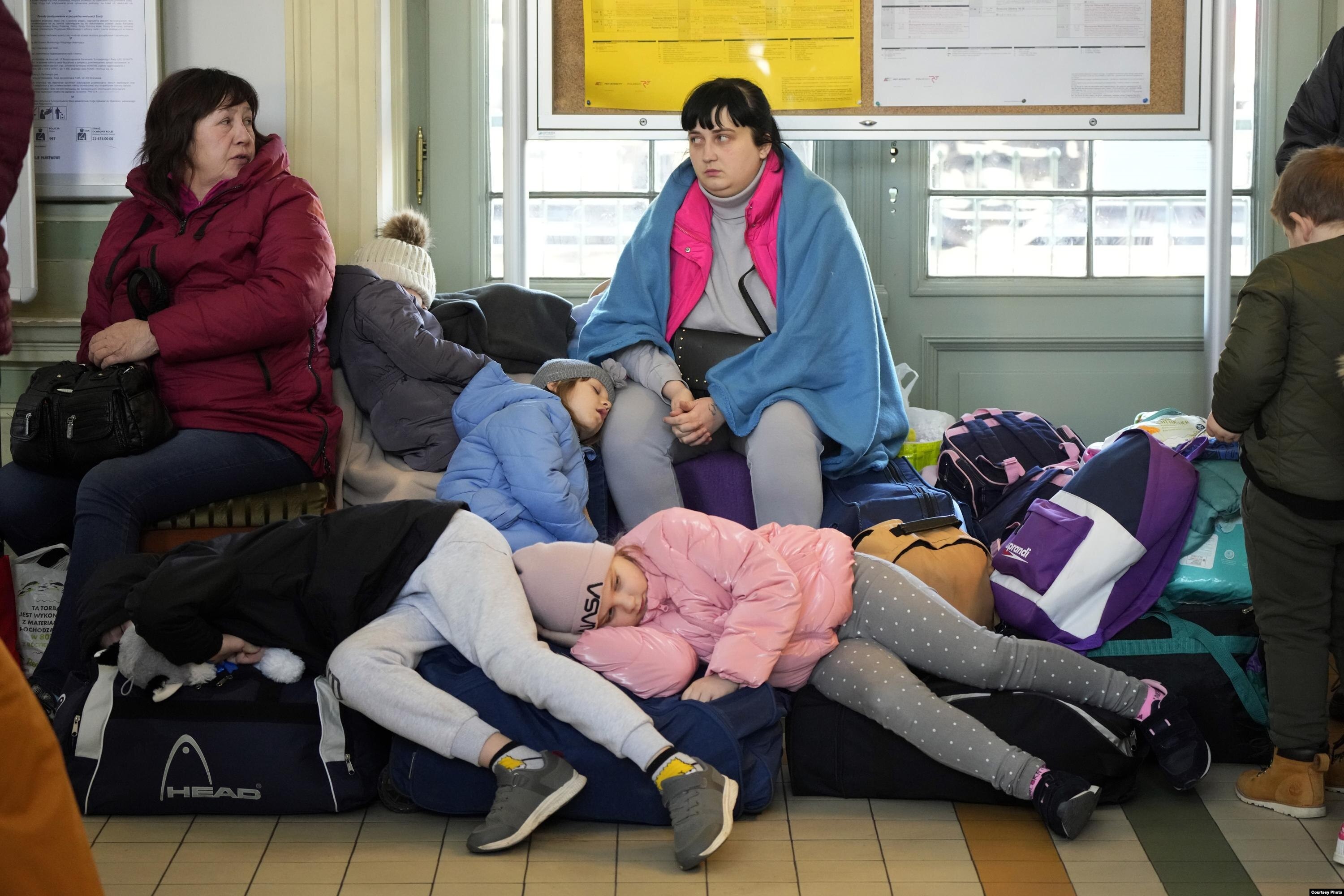
Read>Several million people left Ukraine over the past month. Each of them has its own living, screaming story. The war does not allow man to prepare, come to his senses. Things in an armful, documents, money for the first time - and run! A man in the face of trouble. What and who helps him save himself and loved ones? How can I reach the island, to the shelter, to a peaceful strip? About this - in Podcast-series Radio Liberty "Humanitarian Corridor" . Its authors Ivan Tolstoy and Igor Pomerantsev consider this to be their journalistic duty - to help the grief to find a voice.
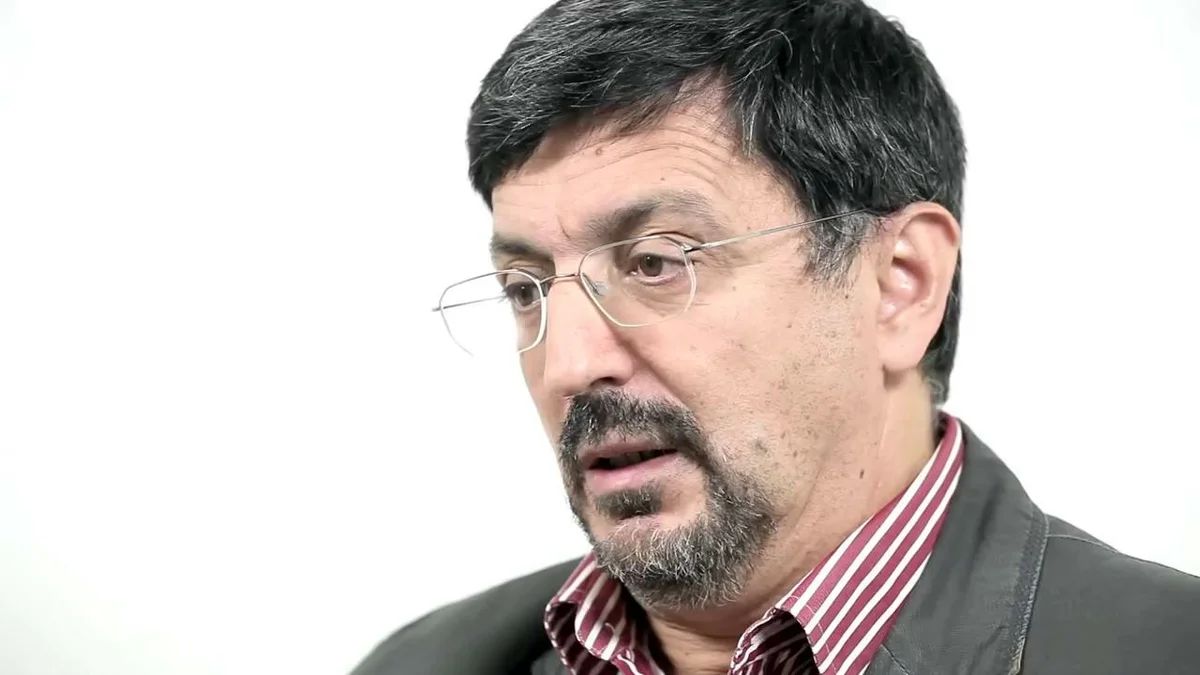
Our first interlocutor today is a philologist, linguist, and teacher Hasan Huseynov now in Germany.
Ivan Tolstoy: Hasan, from different European capitals tell us about the atmosphere in the city, about what refugees are similar to, how both the authorities and the audience perceive them, what experience has appeared this month. By the way, in which city are you now?
Hasan Huseynov: I am in Leipzig for this minute. The first, this is a very powerful contrast with those refugees who arrived several years ago from Syria, from the Great Middle East in general. In that wave, accepted rather cordially, albeit with some fears, and I watched it in another federal land - in the Northern Rhine - Westphalia, where I worked at the university at that time, there were thousands of people, but these were mainly young men, although women and children came across. This caused some scraping for everyone, because well -dressed, a new crowd appears.
And now refugees are mainly groups of women, children, adolescents and elderly men. There are young people of entrepreneurial age, sometimes a draft. Men from 18 to 60 years old cannot come from Ukraine. The first impression is real refugees. Of course, they are dressed not like refugees who arrived in wartime, all these are decent dressed people with some luggage, without great confusion on their faces, very concentrated, very ready to accept help. Indeed, different people try to help them at every step - translators, just passers -by. As a rule, no one leaves the station just like that, necessarily accompanied by someone. There is a contrast between refugees from the Great Middle East and refugees from Ukraine.
And all the other signs - they are in small things, in individuals, in separate family stories. A car with Odessa numbers arrived in our eyes, peppy, but not so young people, unloaded the granddaughter, they sent her, they sent it, accompanied by their aunt in their apartment, they already lived in Germany for a long time, and they got into the car and went back to their home in Odessa, because two adult sons are fighting there, and they have nothing to do here. This, of course, made a strong impression on everyone around. They were not some young people, they were not very healthy, as Chekhov said, "another strong 56-year-old old man."
Igor Pomerantsev: You, of course, remember the Soviet word "seal". Who is compacted, where do new refugees live?
The willingness of individuals accept an amazing completely
Hasan Huseynov: There are wonderful acquaintances who are compacted themselves, several families have passed through their house. At first, some people take for several days, sometimes for a couple of weeks, and then refugees are settled in other people who provide their apartments or rooms with a shower and a toilet in their large apartment for a longer time. The willingness of individuals to accept at all amazing.
Ivan Tolstoy: Hasan, if you cast a big humanitarian look from a bird's flight, is there any prospect of Ukrainian refugees to get settled in Europe? Is Europe contained for these purposes, how much can it absorb?
Hasan Huseynov: The first and most significant that I am observing is the desire of 90 percent of those who came to return to Ukraine as soon as it all ends. A small part of refugees has a desire to take advantage of the situation in order to somehow catch on in Europe. This is such a basic property that distinguishes all those who come from Ukraine. There are exceptions, but the general mood is this: we are going for a short while. Another question is that many come with children, so they try to ensure that the children enroll in school, where there are other children who came from Ukraine. Therefore, they avoid staying in small villages, villages, where even better conditions are provided for them than in big cities.
What a pity that I am old and cannot pick up a weapon
At that moment when bombs stop falling, despite all these beautiful cities, on all this well -being, bursting here, from the point of view of those who arrived, they will go back. And many people have such a feeling to trembling in their lips: what a pity that I am old and cannot pick up weapons.
Igor Pomerantsev: I have a philological question for you. The image of the refugee was mastered by German and Austrian literature, I mean the novels of Joseph Roth, Stefan Zweig, Feihtwanger, Remarque. These are mainly refugees in World War II. Is there such a thing as a national memory, or is it a metaphor? For ordinary Germans, is the image of a refugee somehow associated with the new history of the twentieth century?
Hasan Huseynov: In very few people. According to my observations, and for 30 years they are already 30 years old, only a generation of people who directly experienced such refugees, for example, from East Prussia, kept their experience before his eyes when he met the first Jewish immigrants or “late immigrants”, the Germans of the Volga region, who came from exile in Kazakhstan or from Tajikistan. This generation of people who are now under 90 really kept this experience even without book perception, because they saw this and were often mistaken.
I have several such episodes, I won’t tell them now, they are more likely from the field of comedy, as these people were waiting for those eastern Jews who were once in Poland, Ukraine ... But these people have not been in the world for a long time, some hard workers from Zaporozhye, from Chernivtsi, who have had nothing in common with the existing human sea, which has long been high.
As for people who did not find the Second World War, but found the unification of Germany in 1990, they have an understanding that some kind of wall collapsed, and people who are bombing are trying to move through this wall, they should run away and hold out for some time. And the receiving side is stunned by this wave itself, people still do not believe what is happening, they are also confused.
Igor Pomerantsev: You came up with the phrase "cloinated tongue" - so you determined the Kremlin propaganda. What is happening with this language: Cloaka ran out, or did the war breathed new forces into it?
Pushkin is recruited for this cloak
Hasan Huseynov: The war inhaled new forces. Unfortunately, the language of culture was also subject to this language. It turns out a perfect madness with a ban on saying a “war”, and instead we need to say “military operation”, with a ban on saying “our troops”, we don’t have any troops at all, it cannot be said that the Nazi infrastructure is being sheated ... that is, a shaft of clods in the sense of a lies authorized by the state, and literature, poetry, Pushkin are subjected to this lies.
The army was allowed to work out that we will record the videos “speak the language of Pushkin”, we will read patriotic poems, let's speak in Pushkin’s language. Pushkin is recruited for this cloak, a whole generation will grow, which will listen to these verses with disgust, because they were pronounced in this context. So cloality, unfortunately, opened, and instead of cleansing the Augish stables, which could be dreamed of several years ago, we received such a descent of all these sewage into the water supply.
Ivan Tolstoy: We are talking with a Czech philologist, a researcher of Russian culture, a translator of modern Russian literature, Prazhanin Tomashe Gennz.
Igor Pomerantsev: Tomash, large countries, like England, France, Germany, are used to emigrants, are used to refugees. The Czech Republic is a small country, what does refugee arrival for it?
Tomash Glants: This situation is completely unique, which has never been over the entire 20th and 21st century, and the reaction to it is unique. What I see in newspapers, on social networks and in my family, among their acquaintances - they all try to help one way or another.
Ivan Tolstoy: Tomash, remember, in Vladimir Nabokov’s novel “Gift”, the hero is mocking the dumps of emigrants who reason with such large geopolitical blocks. They say: "France will not allow, England will not forgive." Does the Czech Republic have such a subjectivity to afford to have some kind of opinion in this European Union? Does the Czech Republic have a position in relation to refugees that would allocate it against the background of Europe?
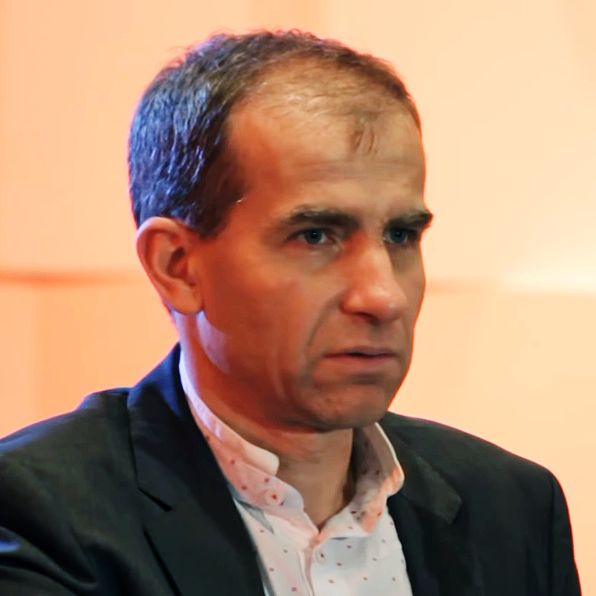
Tomash Gennz: I myself, when I discuss the affairs of affairs in Russia, in Ukraine, and in the Czech Republic, is very skeptical to any constructions of a group or even national mentality, to these generalizations. These are all categories very unstable. This can be proved if you turn to a very recent past, to the moods in the Czech Republic in relation to refugees from Syria, from Afghanistan. When in Germany in a bad manner they took refugees in huge portions, the Czech Republic took a position, even within the framework of the European community, in the very tail of this wave of solidarity. What has changed, what's the matter? I think that the whole situation plays a key role - who is now in power in the Czech Republic, how the war of Russia against Ukraine was presented in the media space. From the first day, support and help became the norm. Of course, it is very pleasant to watch this.
Then there was already a conversation about analogy with the occupation of 1968
Igor Pomerantsev: The memory of the intervention in August 1968, when the Warsaw Treaty’s troops entered the territory of Czechoslovakia and strangled the “Czechoslovak spring”, helps to better understand Ukrainian refugees and the Ukrainian situation?
Tomash Glants: Of course, I'm absolutely sure of that. Since this whole war began with the occupation of Donbass, from the separatist republics. Then the reaction, this applies to the whole of Europe, not only the Czech Republic, was too neutral, not active enough, not sufficiently emotional in the political sense of the word. But then there was already a conversation about analogy with the occupation of 1968. Now, when we see Russian tanks in the territory of Free Ukraine, it is clear that this analogue with the occupation of 1968 is very alive and relevant even for those who do not remember this who was not born then, and there are most of them in the Czech Republic. This remains a great topic that is present in collective historical memory.
Ivan Tolstoy: I wanted to ask you as a specialist who has been engaged in Russian culture all my life: you have probably heard concern, anxiety in Russian circles, among the ethnic Russians and people who are engaged in Russia, Russian culture, writers, artists, musicians that Russian culture will be canceled, “Cancel Culture”. There is an ethical rule, which works especially now, when in the house of the hanged one they do not talk about the rope. But the Russians, nevertheless, are terribly concerned that the cross will now be put on everything that is "our Russian Great Heritage." What do you think about this? Will Russian culture be canceled, and to what extent is it canceled today in the West?
Tomash Glants: Yes, this is very large, very complicated and personally touching me. Yesterday, for example, Maria Stepanova, one of the most outstanding poets and representatives of modern Russian literature, wrote her personal little manifesto, where she proposes to stop talking about poetry, about art. This, of course, is an extreme position, but it seems to me in a sense indicative that there are people among representatives of Russian culture, who are very good this shock and this certain impossibility of talking about the sublime is well understood and divided.
Another manifesto from the field of contemporary art also appeared yesterday. This is the proposal of a group of artists and curators, art historians who also say: we cannot arrange exhibitions now, we cannot even continue the projects that are already being implemented in this situation. How it will be and what to boycott is a question for me is very relevant. I think we will have to deal with this issue in great detail, not trite, not schematically.
On the one hand, to continue or begin cooperation with state institutions that belong to the state structures of the Russian Federation, at the moment, is very difficult to emotionally. Although we understand that people also work there who completely disagree with what is happening now in Ukraine. It seems to me that now a boycott is needed or the termination of at least temporary, let's see what will happen next, cooperation with the state institutions of Russia.
But at the same time, we must listen to the votes that we hear from Russia, people who do not support the aggression of Russian troops in Ukraine, who suffer from this no less than the thoughtful Europeans and Ukrainians who fell under this wave of negative attitude to state institutions. I think that here you just need to be very individual, based on knowledge, based on a public discussion to make decisions that will not be absurd. We heard that Sergey Loznitsa was expelled from the Union of Ukrainian filmmakers. These absurd results, it seems to me, cannot be allowed.
Igor Pomerantsev: Tomash, before the Second World War, for about 20 years, part of the territory of Transcarpathia was part of Czechoslovakia. Moreover, my friend Czech ironically said: "It was our little colony." I have been to Transcarpathia, people remember this period and always remember with warmth of it. The very fact that the territory of present-day Ukraine was part of Czechoslovakia, plays a role, is there any kind of cention?
Tomash Glants: Oddly enough, in the public space in the Czech Republic this question is that some of today's Ukraine was not mentioned too often as the end of the 1930s. But this fact left deep roots in the Czech cultural unconscious, since Olbracht and other writers made this topic to some eternal and returning in different hypostasis, at different stages of the Czech culture of the already post-war period, there is a certain nostalgia, there is Transcarpathian Ukraine as a kind of topos. Although this was the topic then already complicated. The relationship was, on the one hand, relatively harmonious, on the other hand, you yourself called this ironic designation "colony". It was a construct that is still being studied by historians. But the moment of a certain warmth, connection, nostalgia is certainly present.
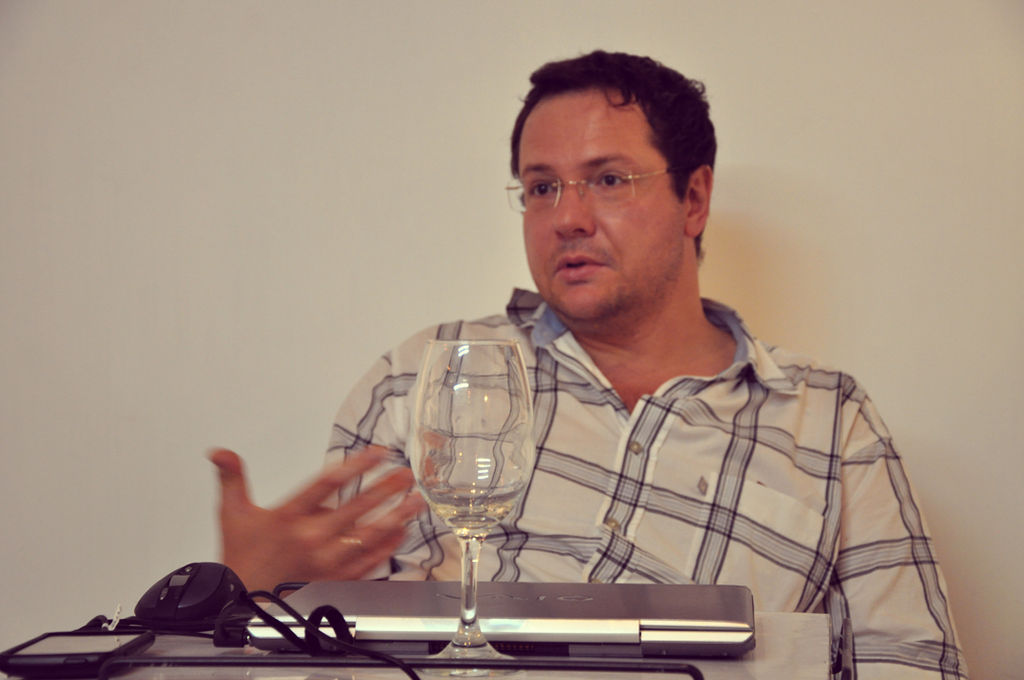
Ivan Tolstoy: We called Israel. Our interlocutor is the writer Alexander Ilichevsky.
כ+ זמן אתה בארץ - How much time are you in the country, in Israel?
Alexander Ilichevsky: Israel is a country of 99% of emigrants. To the emigrants here, respectively, to refugees, an absolutely delicate attitude. "Kama Zman Ata Be Aiser?" (כ+ זמן אתה בארץ - "How much time are you in the country, in Israel?"), This phrase is a parable in a tongue. On the one hand, she measures your experience on Earth, on the other hand, the degree of heat that can be expressed to you if you call in response "two or three years I am only in the country." This means that you are still warm, that you need to treat you gently, in atertically. Accordingly, refugees, emigrants, those who committed Aliya, inherit this warm attitude.
At the moment, about six thousand people have been taken from Ukraine - this is Aliya. But, of course, refugees also fall into this country for humanitarian reasons. If the family has one Jew, the father of the family, the Russian mother or Ukrainian, the Russian mother -in -law, of course, is completely impossible to leave in the situation in which the country is located. For humanitarian reasons, those people who are not suitable in their category to the law on return come here. Here is a common thing - a free distribution of food, especially on the eve of the Shabat. If you go to pray, I don’t know now, but a few years ago it was possible to eat well. The completely free distribution of food right against the wall of crying.
My wife and I in our 50-apartment building hung an ad that we were collecting things for refugees. The people fraught their wardrobes, very willingly carry bags with various warm things. Then the House of Culture, which is located in our area, where we brought these things received to transfer to Ukraine, was quite quickly saturated. They loaded to the eyeballs there, the need for warm things disappeared, but the need for household items, personal hygiene is preserved by this time.
This is an absolute perception of the situation of World War II
I am friends with people who returned to the border of Moldova and Ukraine two days ago, their profession is to transport people, organize them, help to do consular audit for confirmation of repatriation rights. These are absolutely heroic guys. We have “friendship” and “dry” - these are two organizations that deal with the problem of repatriation, but along the way they deal with the refugee problem. I cannot tell specific cases containing confidential information, but believe me, they are absolutely dramatic. Those stories that I heard are supernatural in their human content. This is crying, tears, this is the birthday of a girl who is used to meeting in a peaceful environment, here the mother does not know how to organize it. Ребята берут клоунов-аниматоров, дело происходит в Кишиневе, устраивают не только этой девочке, но и другим детям, представление. При этом это все в походных условиях, это все ситуации абсолютного аута, когда сотни машин выстраиваются возле границ, люди бегут, в основном, женщины. При этом какие-то "копейки", старенькие "Жигули" соседствуют с роскошными "Бентли", "Поршами" и прочее.
Игорь Померанцев: Какие ассоциации возникают у большинства израильтян, когда они слышат слово "Украина"?
Александр Иличевский: Все невероятно сочувствуют. Это абсолютное восприятие ситуации Второй мировой войны. Я видел, конечно, отдельно взятых людей, которые нахрапом ратуют за противоположную сторону. Но в моем ближайшем окружении не может быть людей, которые воспринимают ситуацию промосковски. Украина – это символ борьбы за справедливость.
Listen and subscribe to us at Apple Podcasts, Google Podcasts, Spotify, Yandex.Music, YouTube and other podcast applications. Leave comments and share with your friends. "Гуманитарный коридор" - моментальные истории жизни.