
Translated material
Genetic study confirmed the kinship of ancient avars with buzzing
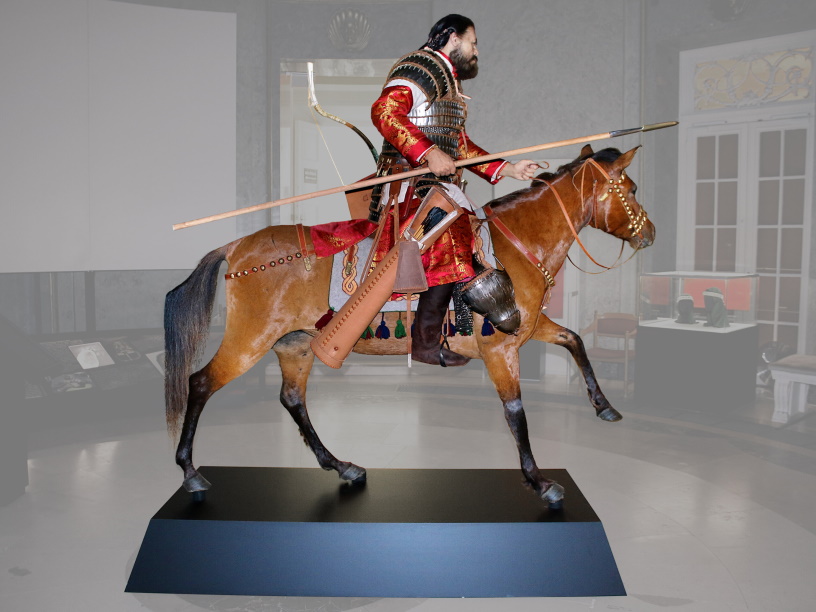
The team of scientists under the leadership of the Paleogenetic Iohannes Krause from the Institute of Evolutionary Anthropology of the Max Planck Society in Leipzig read genomes extracted from human remains of the 4th - VIII centuries found in the Carpathians to establish family ties of the ancient Avars.
Avars come from Central Asia, from where they were supplanted by the Turks and migrated to the territory of modern Western Kazakhstan in 555. Two years later, they moved to the North Caucasus, and then went to Central Europe, where the state of Avar Kaganate on the Middle Danube arose since 526. In Europe, Avars fuck long wars with Byzantium and even in 626 besieged Constantinople. After the defeat under Constantinople, it is believed that the decline of the Avar began. But the Avar Kaganate existed until the beginning of the VIII century, when it was defeated in wars with Karl the Great (788–803) and with the Bulgars (803–804). Avars dissolved in the local population, their modern descendants are supposedly considered to be seconds - the ethnic group of Hungarians.
The origin of the Avars is not clear to the end. According to the most common version, they were descendants of Zhuanzhanyan (Zhuzhans) - the people of the Mongol group. Their power - the Zhuzhan Kaganate - existed in 330–555 on the territory of Mongolia and Northern China, and then was defeated by another nomadic empire - the Turkic Kaganate. But there are assumptions about a different origin of the Avars: Turkic, Tunguso-Manchu, Iranian or Ugorsky. Monuments of the Avars language were not preserved, with the exception of a short inscription on a gold vessel from a treasure found in 1799 near the city of Nadi-Sent Miklosh (modern sonnicolau-marra in Romania). But in it, researchers find both Turkic and Tungus-Manchu features.
In a new study, a team of scientists from the Institute of Evolutionary Anthropology of the Max Planck Society, the University of Elte and the Archaeogenomy Institute in Budapest, the Harvard Medical School, the Austrian Academy of Sciences and the Institute of Prospecting in Princeton analyzed 66 people from burials in the Carpathian basin. Of these, 18 burials precede the appearance of Avars in the region (IV - V centuries), and 48 belong to the Avar time (VII - VIII century). The study included eight richest Avar burials with a large amount of funeral equipment, which includes gold vessels. “We turn to the issue that remained a mystery for more than 1400 years: who was the Avar elite, the mysterious founders of the power, which almost defeated Constantinople and for more than 200 years by the Earth, Romania, Slovakia, Austria, Croatia and Serbia?” - explains Johannes Krause.
Scientists made conclusions about a significant genetic difference between the pre -Avar and Avar population. Avar DNA turned out to be the closest sample from the Zhuzhan Kaganate. In addition, representatives of another ancient Mongol people - Xianbi, as well as the Turkic -speaking Huns, were close to the Avars. In general, the genome of representatives of the Avar elite is 90 % correlated with the ancient residents of East Asia. The remaining 10 % bring Avars closer to the residents of the North Caucasus. In the 7th century, the ratio is slightly changing, the share of the genetic heritage of the nomads of Western Asia and the peoples of the North Caucasus increases to 20-30 %, which, according to the authors of the work, indicates the arrival of additional groups of the population after the relief of the first Avars to the Danube.
East Asian origin is found, first of all, in people from burials in the interfluve of the Danube and Tisa in modern central Hungary. However, outside the main region of the resettlement of the Avars, a high variability of the share of DNA of a different origin is observed. Scientists in connection with this believe that the Avar elite ruled the population with the help of a heterogeneous local elite.
“The historical contextualization of archaeogenetic results allowed us to narrow the terms of the alleged migration of Avars. For several years, they overcame more than 5,000 kilometers from the Mongolia to the Caucasus, and another ten years later settled on the territory of modern Hungary - this is the fastest distant migration in the history of mankind, which we can reconstruct at the moment, ”says one of the authors of the study by Chungvon Zhon.
The study is published in the journal Cell.