
Translated material
Non -explosives
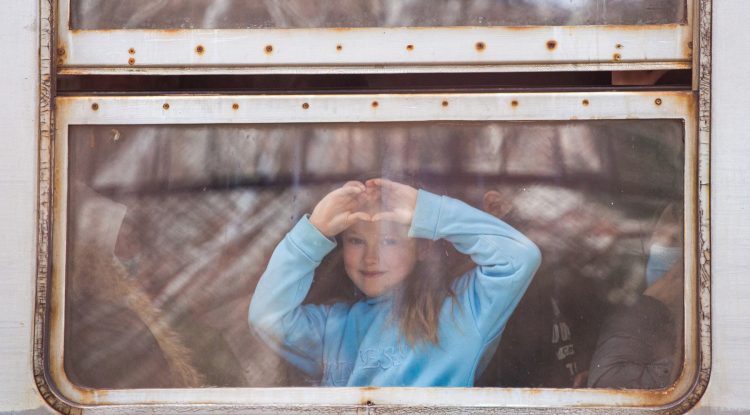
Olga Beshley - about women who fled from the war
Journalist Olga Beshley, living in Prague, settled two women who fled from Ukraine, and tells their story. At the request of women, Beshley changed their names. “We are not public people,” says one of them.
Humanitarian status
According to the Office of the UN Supreme Commissioner for Refugees, on April 4, more than 4.2 million people left Ukraine during the war with Russia. These are women, children, old people and LGBTK-loves who decided to leave the country (but there are also LGBTK-PASNA and women who remain and serve in the army of Ukraine).
In the early days of the Russo-Ukrainian War, I left a request on the project’s website , which is engaged in the search for housing for people forced to leave Ukraine. There was a free room in the apartment that I rent with a partner.
“Displaced people”, “forced immigrants”, “leaving the war”, “fled”, “saved” - what words I did not find these days, just not to speak, not to write the word “refugee”. Those Ukrainians that I met after the start of hostilities avoided this word. “We are working, independent people who want to return home,” the woman who applied for advice on social networks explained to me. - We have a house! We were not taken away from us! Refugee status is unacceptable for us. ”
Refugee status closes the possibility of a quick return home, even in the event of the end of the war. The statements themselves for several weeks or even months are considered by state bodies. While the applications are being consideration, people are forced to live in special camps or refugee centers. For people who have recently had their own apartment, relatives and friends, plans for life in their city and in their country, refugee status as if blocking hope for a quick ending of hostilities and returning home. Having taken into account these circumstances, the European Union countries proposed a different status that left Ukrainians - temporary protection. Documents are executed quickly: within a few days, people get the opportunity to live and work in the host country for up to one year. So the main problems of the new arrivals are housing and work.
In the first week of the war, my application remained unclaimed, but then messages and calls fell upon me.
- Hello! Hello! Are you setting at yourself? My wife and her sister! Do you hear? They will come soon! - In the tube, as if from afar, there was a voice of an excited man. The call was with a delay, so we constantly interrupted each other.
- It is very important to me ...
- When will they come?
- What?
- What is important to you?
- It is important to me ...
- I say, when will they come?
When it was not without difficulty on both sides that it turned out that the wife of an excited man and her sister go to Belgium, and not to the Czech Republic, I, having completed the conversation, burst into tears: far, among the war and flying from the sky of shells, there was a confused person who was important to get confirmation that close people had a roof over his head, and I had nothing to help him.
***
Daria wrote to me in English: “We are two women from Ukraine. Is your housing yet? We will be very grateful. We will not bother you. ” I answered her questions and added: “Do you prefer to continue correspondence in English or can we go to Russian?”
Daria, an internship student, and her mother Elena, an employee of accounting in large production in Odessa, said in Russian. And, sending me a message, they hoped that I was saying in Russian.
- It was scary to go to the unknown. Choose in the language. So that you could talk so that ... Well, people are familiar with the mentality, ”Elena said later, cutting a salad in the kitchen. Before the war, she and Daria went abroad only a few times: they reached the bus to Istanbul, flew on a low -cost airline to Austria and Germany. Daria knew a little German and a little worse than English.
A few years ago, for me there was a huge stress planned move from Moscow to Prague. What two women from Odessa experienced, who had recently went to study and work, who were preparing in their kitchen, who had their clothes that did not plan any significant changes - and now the people who were nightn by strangers, work, work, language knowledge, almost without money and intelligible prospects, putting on a jacket issued by volunteers on the Polish border, because all things were left at home, and there was a war at home ...
“It's just some kind of pipets,” Lena delicately described their position.
They reached our house for several days: it took thirty hours to cross the border with Poland, where the volunteers placed them in the rest house, which was in Katowice, and only then Elena and Daria went to Prague. While the “women” were moving (without asking about anything of their future guests, I only knew that these were “two women”), my partner and I bought warm blankets and equipped the guests room - March turned out to be unexpectedly cold.
The day before their arrival, I wrote to my friend Sonya, who from the first days worked as a volunteer in one of the hostels for Ukrainians: “Something I am very worried. Will I be able to help correctly? " “I think these people also did not learn to escape from the war in a strange house,” answered Sonya. “You will learn everything together.”
On March 9, almost at night, I opened the door of the apartment and saw a woman in a black down jacket and a girl in a strange jacket not in size climbed the stairs. Bag and backpack - all that they had with them.
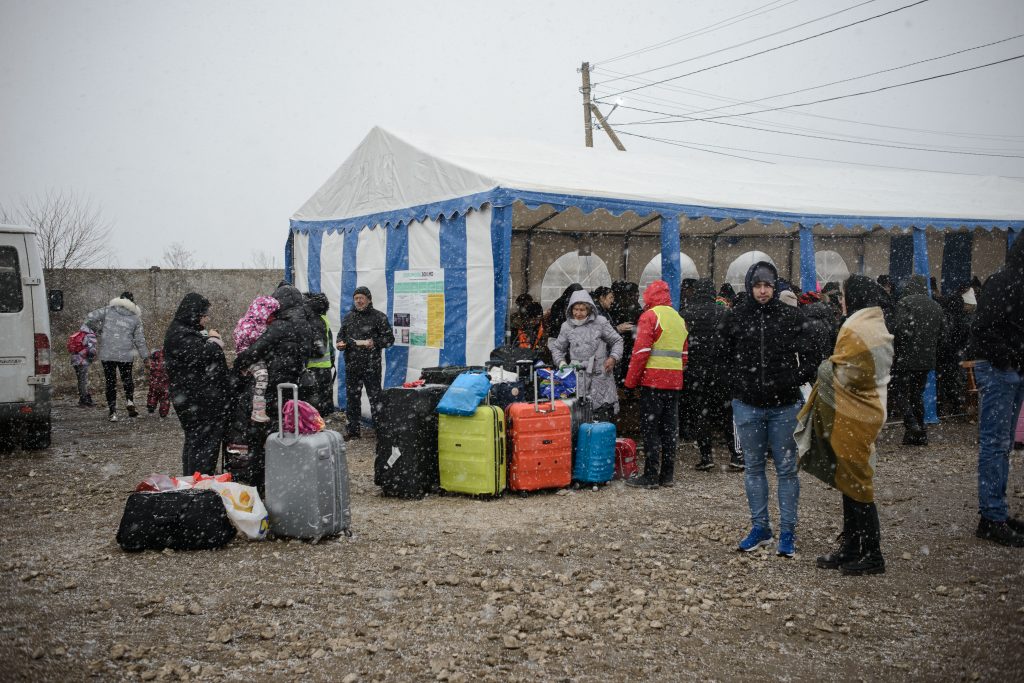
Housing
Of Dasha and Lena's clothes, it was only that they put on to themselves - jeans and black turtlenecks. They ran away in a hurry and forgot food: Ukrainian volunteers helped - on the border with Poland, baking and hotter were brought to the train. Daria gave a warm jacket. It was supplied with hygiene.
“We don’t need things,” Lena snapped when I offered to share clothes. - Until we decide on housing, we do not want to grow things. You need to be light.
They acted very practical: having calculated the money, they cooked at home. We moved around the city on foot, although transport for the owners of the Ukrainian passport became free: “We do not need why we can ride for free,” Dasha led her shoulder when I asked her about it.
Getting documents were in no hurry. According to the Minister of Internal Affairs of the Czech Republic Vita Rakushan, about 300 thousand Ukrainians came to the republic from the beginning of the war, almost half - children, more than 80% of adults - women. By the arrival of our guests, the Prague Center for Assistance already processed up to 3,000 statements per day, and Prague’s housing stock was exhausted: it was about the placement of those who arrived in gyms.
Elena and Daria spent one day in the Prague Center, then they decided not to wait for state resettlement, to independently look for permanent housing and work, and only then to apply for the design of temporary protection status and benefits.
Subsequently, this strategy justified itself. Volunteers from other countries - for example, Anastasia Chukovskaya from Budapest - say that, having not received worthy housing, tired of bureaucratic delay and difficulties with the search for work, some people return to Ukraine in desperation. Those who have more strength and resources travel from the country to the country: for example, two girls who stopped at my acquaintance in Prague, then flew to Spain, where the flow of visitors was not yet so large - they entered the custody of the Red Cross and settled in the hotel; Another familiar Ukrainian decided to leave the Czech Republic to Turkey, where she has friends.
We started with housing: on local volunteer resources, announcements were published on the readiness of residents of the Czech Republic to provide apartments and rooms - for free and for a long time. But Prague was clogged. Only farmers from Olomouts were invited to live in their household. Lena and Dasha were noticeably nervous.
“You can live with us as much as you need until you find more suitable housing,” I tried to calm them down, but the tension did not fall: people wanted certainty.
After two days of the search, I even called the completely exhausted Sonya: in the hostel, where she worked, she had her own base of housing - she managed to find a one -room apartment for our guests in Prague.
- Sheeeeeeeeeeeeeeeeeeeeeeeeeeeeeeeeeeeeeeeeeeeeeeeeeeeeeeeeeeeeeeeeeeeeeeeeeeeeeeeeeeeeeeeeeeeeeeeeeeeeeeeeeeehhe ends! I screamed.
“And two other women - I didn’t find it,” answered Sonya.
The owner of the apartment Martin spoke good Russian well, like many residents of the Czech Republic, who made the country of the occupation of the USSR: it turned out that he was ready to evict from the apartment of the Student’s apartment to provide housing to Ukrainians. (Son, if anything, they didn’t evict the street - Martin had his own house outside the city.) It was a one -room studio, without a washing machine, but with a kitchen, furniture and dishes.
“What a good person,” Elena rejoiced. - He even offered to call for us personally in order to take the apartment.
Then something clicked in my head.
“Let's take you better yourself.” And at the same time let's see what kind of housing is and what the owners are there.
A day earlier, I met a memo of the provision of volunteer assistance: they warned about the danger of trafficing - human trafficking and forcing sexualized work. Women who fled abroad from the threat of war are people who are in a vulnerable position. Their trust can be used, so everyone who wants to provide housing and work should be checked.
- You need to make it clear to the owner of the apartment that you are not alone in Prague, that you have friends who will be interested in your fate. We will also take data from him and look at the documents.
“Now this Martin seems suspicious to me!” - Lena was scared.
We laughed and exhaled a little.
Job
It was much more difficult with work. Lena and Dasha did not know Czech and English. Dasha had a base German, which she taught herself.
The boarding school in Odessa was her pride. To get to the hospital I liked, Dasha went to persuade the head physician 11 times. A girl without money and connections, she insisted on her training, achieved what she wanted and worked with pleasure. Someday I thought to go to study in Germany. But later, already taking place as a doctor in Ukraine.
- I and German taught slowly. And here.
Here are the sounds of explosions, which were distributed in the region of 5 a.m. on February 24. Russian troops struck missile strikes on several military facilities in the Odessa region. Among them, for example, there was a military unit in the village of Lipetskoye, where 22 people were killed, according to the regional administration of Odessa.
Having received more than a clear confirmation of the outbreak of war, Lena and Dasha hastily left for the region. In one of the tiny towns in a private house, their grandparents, mom and dad Lena lived in a private house.
- Grandmother is sick with us, he himself cannot go down to the cellar. When we left, Dasha put her a chair in the doorway so that she was hiding there if shells fly, ”said Lena. - Grandfather is strong, rides a bicycle every day. He can go down to the cellar.
The calculation that in the regional village will be calmer than in the port city turned out to be wrong: the Russian military beat the villages around Odessa, even fired at the resort village of Zatoka. During anxiety, Lena and Dasha hid in the cellar. The last time, rising upstairs in a hurry, Dasha pulled her head on the crossbar - his forehead healed already on the train.
“I never thought we would leave,” said Lena. - Never. And then they gathered in one day. They dragged food and water, stocked up, it seems, for several weeks. We’ll sit out, thought. Could not. Very scary.
Dasha called her grandfather in the morning and evening. In the application on the phone, she monitored air alarm, strictly asked if the old people managed to hide. Grandfather - peppy, prepared food, engaged in economy, replied that he was not up to anxiety there. Dasha cursed at him. Then we laughed quietly in the kitchen with Lena - about how severe Dasha is, how she leads everyone, and the old people, of course, a little like children, like everyone else, probably old people. But once the grandfather forgets to get a pipe, and Dasha hears him crying.
For employment by a medical worker in the Czech Republic, it is necessary to confirm his diploma and take language courses. In the center, where they help those who left the war, Dasha was invited to leave a request and stand in line: if there is a vacancy of a nurse or another position that suitable her qualifications, they will contact her. When I propose to consider this option, Dasha is annoyed:
- We will return home soon. I will return to my internship. I want to finish studying in Odessa.
- But suddenly ...
- We will return home soon.
Dasha and Lena had little money, from the strength for a couple of months of a very modest life, without payment of housing. When registering the status of protection, Ukrainians are allocated 5 thousand kroons per person - this is about 230 dollars. That is, having issued a visa, Lena and Dasha would receive $ 460 for two. Transport for Ukrainians who made documents is free. In assistance centers, you can get a SIM card with a small balance in the account. The fee for calls to Ukraine was canceled. Finally, for Ukrainians in the city there are points of free hot meals, and volunteers give out clothes, shoes and hygiene products. Thus, without expenses for transport and the relationship of $ 460 in Prague, this is money.
“But what are we going to sit and wait for us to call us?” We need to look for work, we cannot do anything. We do not want to sit on benefits, we are not overflowing, ”Lena was worried.
Every day they went to the city to look for work. They interviewed people in stores - sellers, cashiers and consultants. They searched among them Ukrainians or Russian -speaking. There was either no work, or she demanded knowledge of the Czech language. Two women from Ukraine, who lived with my colleagues, got a job at the production plant, where they were provided with a hostel, but they had acquaintances at the factory, and the places there were already over. According to my other colleague, her guests are now calling for volunteer bases for the second week - they also expect to return home soon and do not want to plunge into work, which will require studying the language and other resource investments.
“It seems to me that we should tell them that we need to proceed from the worst sceno,” my partner said one evening, when Lena and Dasha returned from the city terribly exhausted. - If they make decisions that are based on the desire to return home soon, these decisions can lead to the fact that they are stuck in the country inappropriate for them, in the work inappropriate for them.
“But this is their solutions.” It’s easy for us to reason with you, ”I answered.
Soon, again, I neatly invited Dasha to think about the opportunity to continue education: a friend from Germany, who lived in one of the university cities, came out with me. He promised to help with primary housing.
“It's very difficult,” Dasha answered immediately. - I looked everything. To confirm the diploma, it will be necessary to study a few more years, plus it will be necessary to pass the German language, plus there is still a special language exam for doctors, it is very expensive, it is several thousand euros ...
“We will collect ...” I stckled.
- No! We are adults. Hands, legs, head on the shoulders. We ourselves will earn everything.
The fact that in their search for the best place they not only did not consider distant countries like Canada, but even Spain, France, the Netherlands, Finland, Norway, Sweden were also talking about how strong the desire of Lena and Dasha was also said.
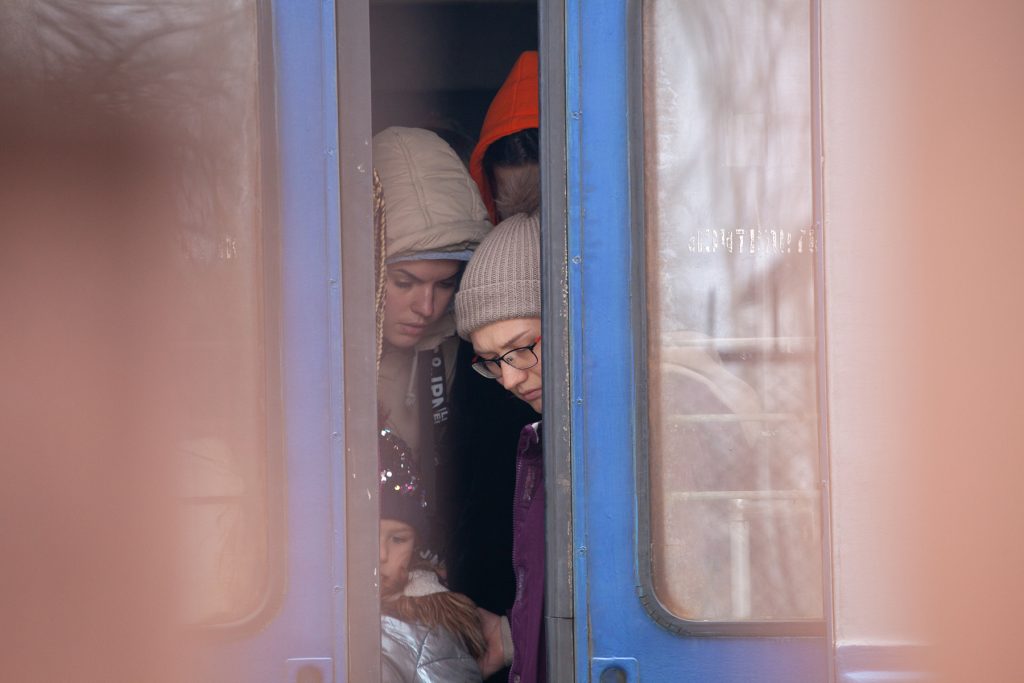
Choice
Lena cooked every day: cutlets, meatball soups, chicken tags, pancakes. She was inconvenient to live in our house and do nothing for us. I myself began to cook more so that Lena did not work as a cook. But she really needed to take herself.
“Well, here there is a dishwasher, let's wash everything in it,” I said, trying to take the salad bowl from Lena.
- No need to the dishwasher, I myself.
- Yes, it's simple, I will load everything now.
- I'll wash it myself.
- Well, why will you wash the dishes? Rest!
- I need. Please. I need it.
“I need it,” said our House Hope (name changed), when I tried to free her from work, paying the money two months in advance.
“I will go crazy without work,” Nadia wrote to me. In Lviv, she works with a volunteer eldest daughter. An old mother remained under Lviv. In the Ukrainian village, where her husband was born and raised, already two men were buried - they were military. Nadia laid out in front of me these fragments of other people's lives while washing the floors, and I lay out styled things.
Lena asked me to find out from Nadi if there was a job as a cleaner. I promised, and thought to myself about what a blow the war inflicted on women: squeezed out of their houses with tanks, they are forced to take up any work, despite their qualifications and aspirations, efforts invested in education and career. In the ranking of the World Bank, which reflects the so -called “gender gap” - that is, it shows the situation with the equal rights of the sexes, Ukraine according to 2019 was in 12th place of 26 among the countries of Eastern Europe and Central Asia. And at 59 out of 153 in the world ranking. The study noted insufficient involvement in politics and economics, but still the situation was not an example better than the Russian (Russia at 81 of 153, and fell by almost 30 positions since 2006).
“Of course, I would like to work with the ground,” Lena said with another evening. - I read that in the Netherlands you can work in greenhouses, but they write that they pay very little there. Maybe I will be able to get a flower store in Prague? It would be good. I like to work in our area, for the elderly. We plant something there every year. Eh, the berries will go soon.
- I planted such raspberries! - smiled Dasha. Она редко улыбалась — только в моментах, когда удается отвлечься. — Малины будет полным-полно. А еще дедушка у нас — смешной такой. Я его просила посадить мне персики и черешню. А он посадил абрикосы и вишню. Вишня же кислая!
— Эх, вот бы вернуться скорее. Будем опять на участке копаться, — Лена посветлела лицом.
Я пыталась предложить Даше почитать вечером книжку, но она вся вспыхнула:
— Ну какая книжка! Нам же работу искать нужно, у нас вон сколько дел!
— Иногда для достижения результата нужно немного ослабить усилия, — в такие моменты я аккуратно говорила какие-то фразы, услышанные от психолога. Опыт Даши и Лены был не похож ни на что, прожитое мной, и я старалась не лезть с советами.
В один из дней Даша и Лена вышли из дома, чтобы немного пройтись, но сколько бы ни ходили по округе — неизменно оказывались на нашей улице. Напряжение внутри них было так велико, что глаза застилала тревога: они ходили по кругу в своих поисках, и они ходили по кругу буквально, даже отправившись на прогулку.
Войну мы обсуждали только по вечерам. Мой партнер, служивший в израильской армии, давал сдержанную оценку боям. Лена и Даша рассказывали, как живет Одесса и городок, где остались из бабушка с дедушкой. Посреди одного из таких разговоров Даша вдруг резко сказала:
— Надо мне смотреть варианты с учебой. Может быть, мы не скоро вернемся домой. Может, меня из интернатуры уволят.
Я не знаю, какая новость привела ее к этому перелому. Но уже через два дня Лена и Даша объявили, что уезжают в Австрию и надо отменить жилье у Мартина.
— Вы простите, что мы отказываемся от хороших вариантов и вдруг меняем планы, — переживала Лена.
— Да, всех переполошили, волонтеры из-за нас напрягались, — Даша переживала тоже, а я вспомнила еще одну фразу своего психолога:
— Вы поступаете правильно, выбирая самое лучшее для себя. Ведь речь идет о вашей жизни.
Now
Лена и Даша живут в деревне под Грацем. Рядом лес, в лесу — лисы. В доме, где они остановились, им выделили комнату, отдельную кухню и ванную. Хозяева прописали их у себя и смогли предложить работу в саду у соседей. Даша уже записалась на курс немецкого. Когда они с Леной закончат оформление документов, то встанут на биржу труда. Даша нашла возможности для продолжения образования. Говорит, ей нужно будет проучиться еще два или три года: «Это не много».
Каждый день работая с новостями, я отдельно смотрю Одессу и то местечко, где живут дедушка с бабушкой — незнакомые мне, но уже не чужие. Где растет малина, вишня и абрикосы. В ночь на 3 апреля российские войска нанесли по Одессе ракетный удар. «Дым стоит, — ответила мне Даша. — Бабушка с дедушкой не открывают окна».
У меня снова живут две женщины. На этот раз из Киева и Киевской области. Юристка и швея. Одна из них провела в оккупации почти две недели, прежде чем выбралась по зеленому коридору. Родственники прятали ее в погребе — чтобы российские солдаты не изнасиловали.
Фото на обложке: Mirek Pruchnicki, Flickr