
Translated material
New "German wine"
In Germany, they argue about what role the foreign policy of the Angels Merkel and its associates played in Putin's attack on Ukraine
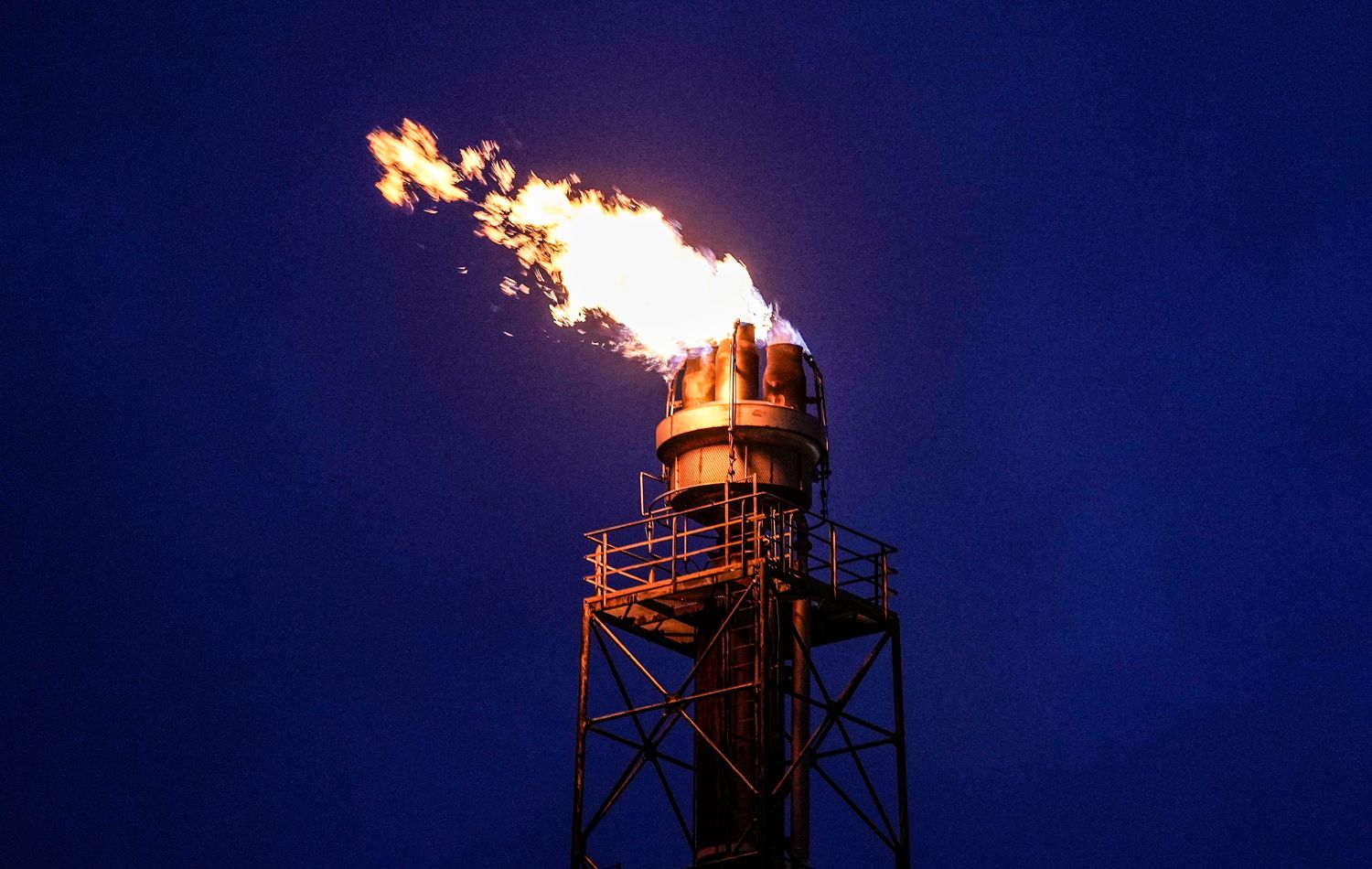
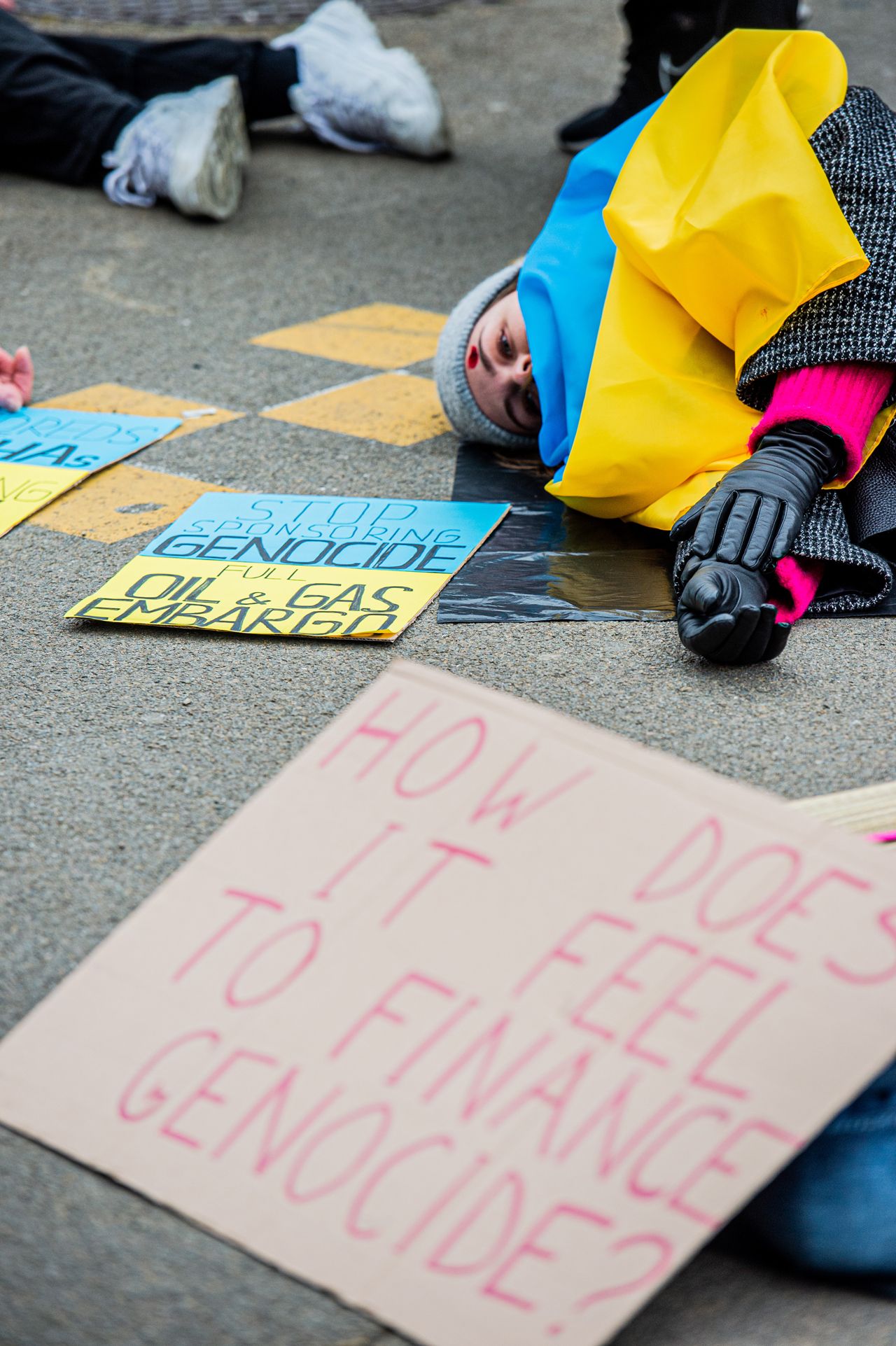
German politicians and journalists have been discussing the issue of German guilt and responsibility for the war all last weeks - including for a disaster in Buch and Mariupol. The most difficult questions go to the president of the country-Franc-Valter Steinmeier-who for many years oversaw a special relationship between Russia and Germany. Indeed, it is now difficult to explain why Germany, having supported the sanctions against Russia for Crimea and Donbass in 2014, did not get rid of dependence on Russian gas - in fact, this dependence has only been growing. As a result, Berlin, fearing to bury his own industry, cannot refuse supplies even now - and, from the point of view of the Ukrainian side, helps to finance the war.
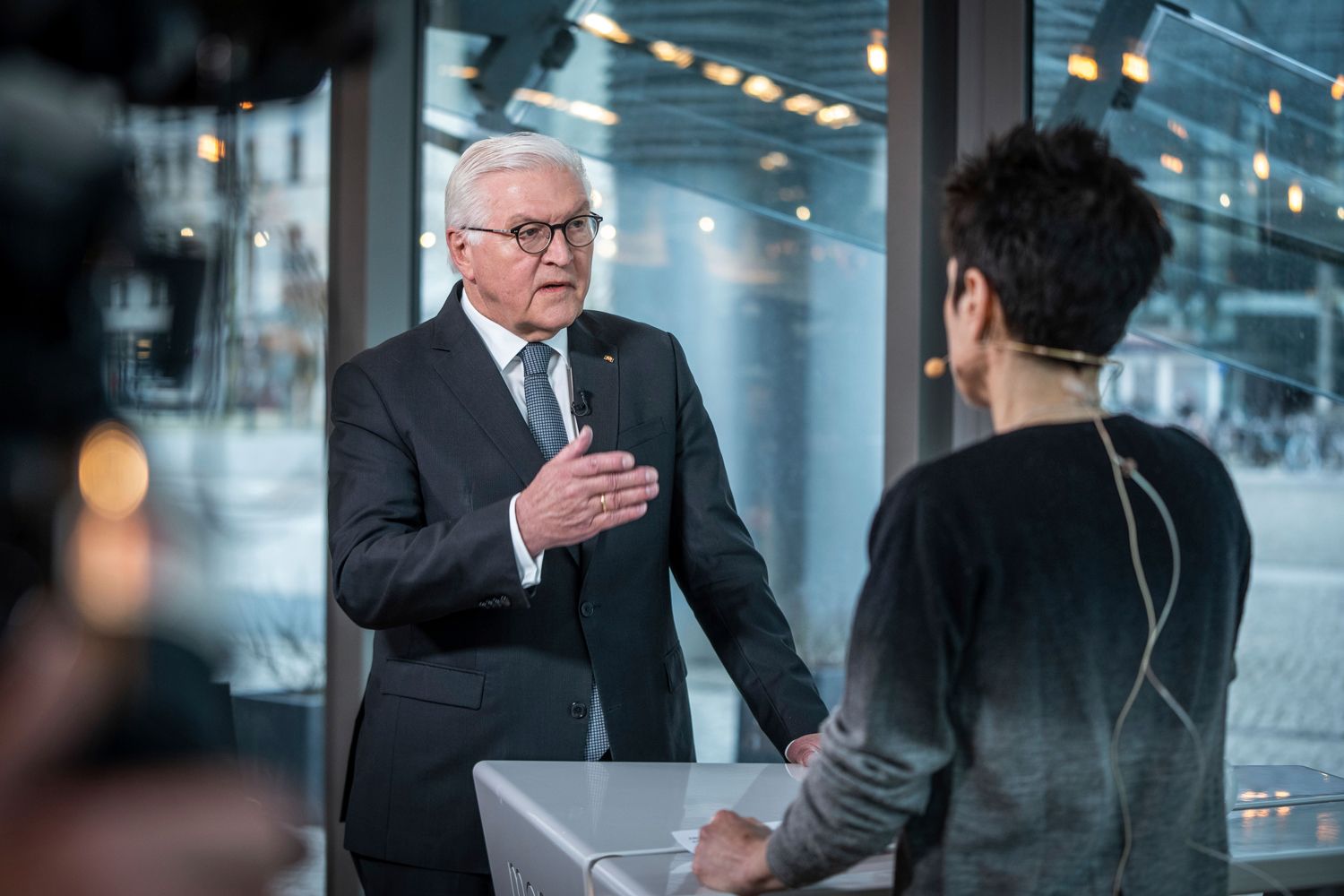
On Monday, April 4, Germany President Frank-Walter Steinmeier (according to the Constitution-it was he, and not the Chancellor is the head of the German state), he acted as a historical scale. “The fact that I kept holding on to the Northern Stream - 2 gas pipeline was definitely a mistake. We clung to bridges that Russia itself did not believe in, and [made mistakes], which our partners warned us about, ”he said, adding that Germany crashed in the creation of a“ common European house with the participation of Russia ”, and thereby actually signed in the collapse of three decades of German policy in the Moscow direction.
Steinmeier’s performance was not a complete surprise: the president was forced to somehow respond to statements by the ambassador of Ukraine Andrei Melnik. In recent weeks, the Ukrainian diplomat accuses Steinmeier of the fact that the president, despite the war, continues to consider relations with Russia “something holy and fundamental”, is closely connected with the Kremlin informal connections and still refuses Ukraine to be subjectivity. The miller on March 27 refused to accept the invitation of Steinmeier and ignored the government concert “Solidarity with Ukraine” with the participation of Russian musicians - pianist Evgeny Kisin and Bariton Rodion Pogosov (both live outside Russia).
In addition, the leitmotif of Steinmeier’s performance, who in the Cabinet Merkel for many years served as Minister of Foreign Affairs, was still not recognizing mistakes: he opposed the idea that he personally (and Germany as a whole) should share responsibility for the war. According to the president, responsibility lies only with Russian President Vladimir Putin. “We should not [this responsibility] adopt. However, this does not mean that we should not rethink some things in which mistakes were made on our part, ”he emphasized.
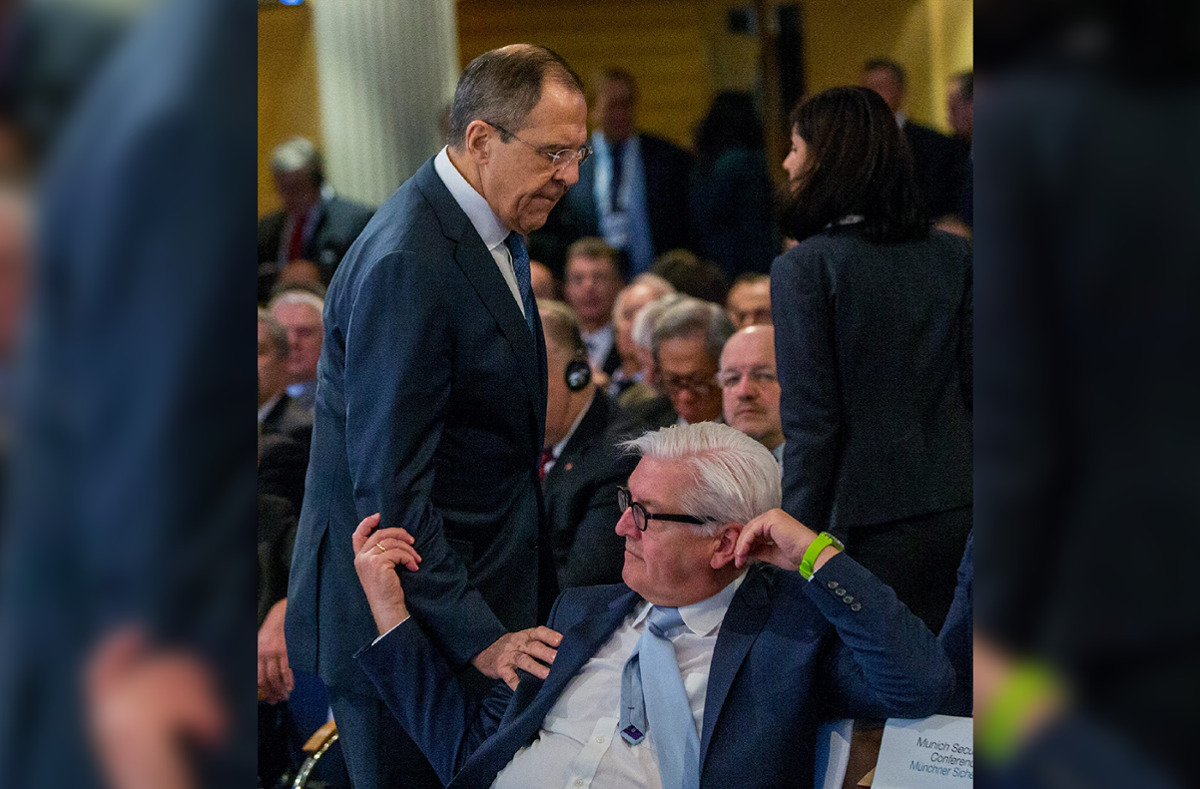
It can be recalled that in 2008, heading German diplomacy, it was Steinmeier who became the ideologist of the policy of “partnership for the sake of modernization”, which was built on the old German idea that political transformations should follow political. And the photograph of 2016, in which Sergei Lavrov pats the Steinmeier’s shoulder in the shoulder during the Munich Security Conference, has become a meme in recent days - Steinmeier himself was even forced to say that he did not see anything friendly in this gesture, as evidenced by the tense expressions of both.
In defense of the previous course in the East European direction, Angela Merkel, who practically did not speak about current events since the Chancellor’s post, also performed . On Monday, through her press service, she reported that she still considers the position of Germany in 2008, when Berlin opposed the adoption of Ukraine and Georgia in NATO.
The mistakes that the same Steinmeier recognize could be redeemed with effective support of Ukraine, but the turn of the German policy is given not easy - except for the really impressive efforts to receive Ukrainian refugees (there are more than 300 thousand of them in official and incomplete data in the country). The decision on the supply of German weapons to Ukraine, although it has become a truly revolutionary for Germany, but so far looks, rather, a symbolic gesture, and not an attempt to actually turn the course of the war. Supported portable anti-aircraft missile systems “Strela” are also from the reserves of the GDR, according to the German press, are really unsuitable for use. And the attempt of the German Minister of Defense to hint that Germany simply does not advertise the real volumes of the military assistance of Ukraine and the range of weapons, is poking at the bewilderment of the Ukrainian side.
The concept of “German guilt”, which denoted the collective responsibility of the Germans for the outbreak of World War II and which became part of the post -war German identity, acquired a new sound.
In 2014, Germany condemned the accession of Crimea and imposed sanctions. And then eight years increased its dependence on Russian gas
The speeches of Merkel and Steinmeier were caused not only by the sharp statements of the Ukrainian ambassador, but also to questions that are increasingly sounding in the intra -German discussions, including from the pages of newspapers - about the measure of German responsibility for what is happening.
The longer the war is, the more doubtful the German policy against Russia, which was carried out from 2014 to 2021, looks more doubtful. After the accession of Crimea and the Donbass conflict, it would be logical, today's critics say, to expect a gradual reduction in dependence on Russia in the field of energy. Moreover, such goals were repeatedly proclaimed (especially after Russia raised prices for gas in the first sanctions in 2014), but in fact, Germany all the years, until February 24, 2022, only strengthened its own dependence on Russian gas.
If in 2012 Germany purchased about 34 billion cubic meters of Russian gas, then in 2021 - already 56 billion (which was about 55 percent of the total gas imported into the country). Approximately the same theoretically draws up the throughput of the completed in 2021 (the decision on its construction was made in 2015, after Crimea and the war in the Donbass!) Of the Northern Stream 2 gas pipeline. If he had earned, this dependence could become almost total.
“Germany neglected all the warnings of experts in Eastern Europe in 2014-2016, built a“ second pipe ”, continued to increase the volume of trade and make the Business as Usual , when everything was clear with Putin: he had already started the war, he destabilized the entire region. In fact, the Merkel government threatened the energy security of not only its country, but throughout Europe - and now we are reaping these fruits. Because now it is impossible to adopt the very painful sanctions for Russia that would lead to the rapid end of the war, ”the head of the Berlin NPO“ Decembrists ”, political analyst Sergei Medvedev, explains Meduza.
Klaus Gaiger, the head of the Department of International Policy of the newspaper Die Welt, is even further and writes that "the German authorities share the guilt for the massacre in Buch and Mariupol." In the same Die Welt, an open letter of Ukrainian intellectuals was published , which also has responsibility for the war. And not because in the recent past they called Putinfersteracy , but because of the abandonment of the embargo to supply energy from Russia right now. There is nothing to replace Russian gas in the near future, this decision will disable German industry and hit Germany “stronger than Putin”, the government of the Chancellor Olaf Sholtsa said .
Especially vulnerable (and partly irresponsible) is now also looks like after the Second World War, Germany’s pacifist approach to world politics. Berlin, who already in the early fifties with great difficulty convinced Israel to take reparations for Nazi crimes against Jews, was used to solving all problems with negotiations and money, but was completely at a loss after February 24, when these funds did not work.
“The German position of mediation between Russia and the countries that are around it suffered a complete moral collapse,” Berlin political scientist Alexei Yusupov states in a conversation with Medusa. - The same mediator position, which suggests that the main tool is diplomacy, the main tool is compensation, and in general “there is enough for everyone”, therefore the best solution to the problems is to participate in the general economic growth. The war showed that this is an illusion. Germany was blind, mistakenly interpreted what was happening in Russia and is now naturally in a state of shock. She feels and is responsible for the inability to understand what everything is going on. ”
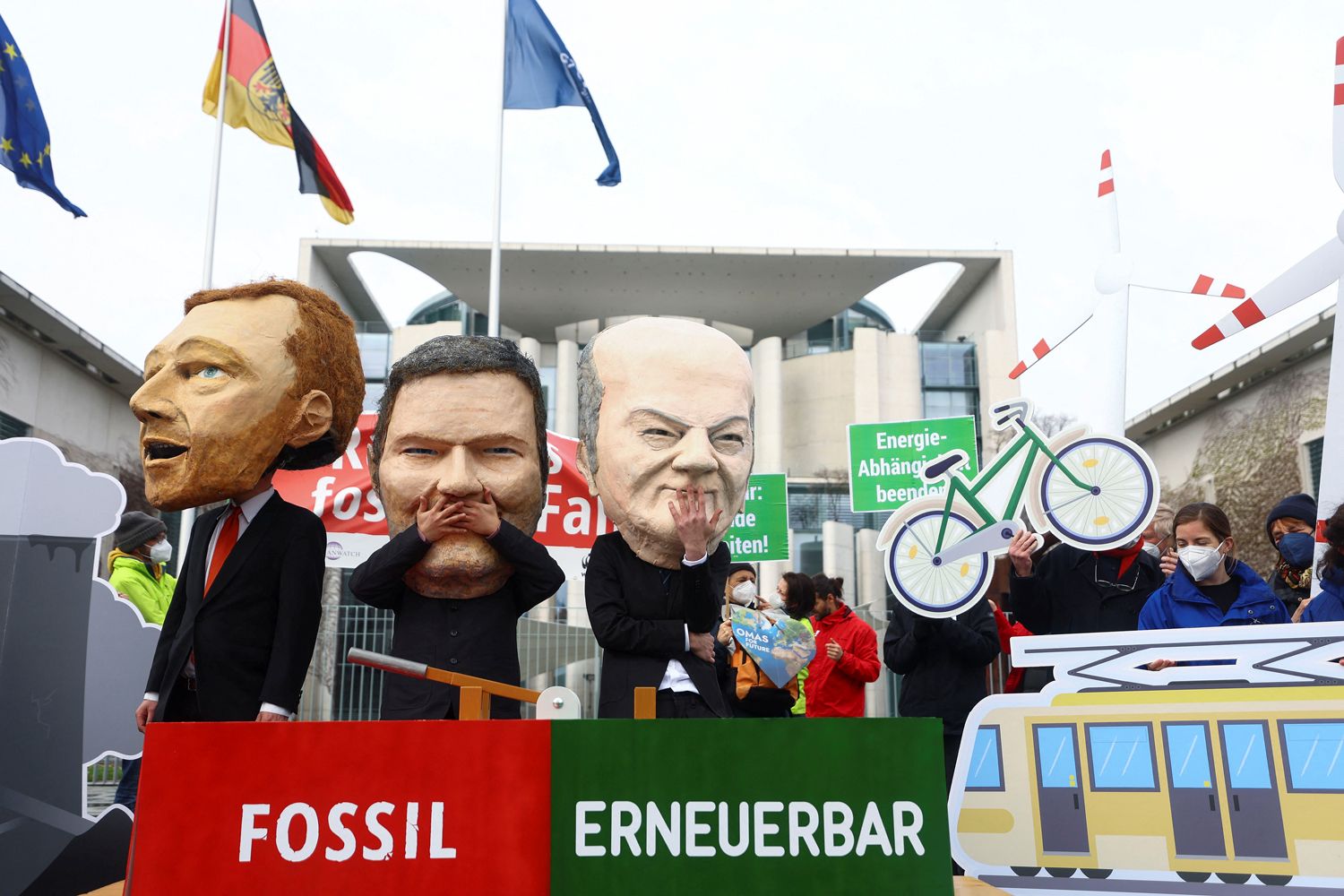
Germany tried to deprive Russia of the latest military technologies and at the same time attach it to Europe economically. It did not help
The decision to maintain economic cooperation with Russia, but to stop another (in particular, military - namely, it was terminated in connection with the sanctions) there was a certain logic. Now it is difficult to imagine, but the Russian army actively introduced Western technologies until 2014.
“The sanctions introduced since 2014 nevertheless significantly reduced the combat effectiveness of the Russian army. If not they, we would now see a more combat -ready and more modern Russian army, which, perhaps, would achieve more success in the war. Imagine that now Russia has modern drones purchased from France Mistrall , means of communication, navigation, night vision devices, electronics for artillery and aviation. All this was not imported into Russia, ”Berlin political analyst Dmitry Stratievsky recalls Medusa.
The weakening of the combat effectiveness of the Russian army was decided to compensate (it was assumed that the mutual) economic dependence of Germany and Russia-this is, for example, the official position of the last Minister of Foreign Affairs under Merkel Social Democrat Haiko Masa. He was afraid that the “breakdown of bridges” would lead to the rapprochement of Russia and China. And until recently, the new Chancellor Olaf Scholts believed that the Northern Stream 2 would force Russia to behave more carefully in foreign policy so as not to lose billionth investments (construction, according to various estimates, cost 9-11 billion euros) and billions of revenue. German politicians, accustomed to strict control by the opposition, society and the media simply could not have thought that you can engage in a huge infrastructure project for years, and then throw it out like a new toy, without even pulling it out of the package (to count on the fact that it will work during the war, would be incredible naivety).
However, if Putin surprised (even shocked) Germany, having unleashed the war and thereby throwing a ultra -high joint project into the garbage bucket, then we can say the opposite: all the signs say that the Kremlin did not expect such strict sanctions from the European Union. This is possibly associated with the position that the European Union and, in particular, Germany took in 2014. In words, Berlin harshly condemned the violation of the territorial integrity of Ukraine, however, in practice (to the disappointment of the Ukrainian side) he looked at things much more ambiguously and was not ready to inflict a truly serious blow to Russia.
“The West unanimously condemned the annexation [Crimea]. But to understand the processes in German politics, it should be noted that this happened almost bloodless. There was no mass bloodshed that would affect society, and it would press politicians. As for the Donbass, here, I think, a cruel joke was played, many German politicians did not talk about this openly, but this was traced in various details - they perceived the events in the Donbass as a civil war. “Yes,” they said, “it is clear that Russia helps with technology, but you see that there are Ukrainians on both sides,” Dmitry Stratiev’s distinction of the current situation of 2014 explains.
Russia was considered a kind of, but a rational player whose behavior can be calculated - and who is aware of the advantages, if not European values, then at least European markets.
“It seemed that even these conflicts [Crimea and the Donbass] could not be shaken by the German picture of the world, in which, one way or another, a rational system of relations based on economic growth and distribution of goods will still win. It seemed that even if there is a deterioration now, then Russia would then still come to consciousness and return to those principles and ideals on which, from a German point of view, the communication of civilized states was built. Crimea and Donbass “swallowed” with the illusion that now they would have to take a step back, but then there will be two steps forward, ”says Berlin political scientist Alexei Yusupov.
One of the most difficult questions that the German authorities are forced to answer was that the soft attack of Crimea and the Donbass provoked a new attack? Did Putin take softness as a weakness that convinced him of the impunity of aggression? Dmitry Stratievsky believes that there was no encouragement of aggression by Germany:
“There is an aggressor, there is a victim of aggression and there are those who, one way or another, have not seen this aggression or considered its probability a small one. The third is just about the Germans. Of course, the whole “Russland-politician” has suffered complete bankruptcy. And this applies to politics not only in relation to Russia, but also to Ukraine and all Central and Eastern Europe. But I would not say that Germany contributed to aggression. Even if Germany acted more tough, this was unlikely to affect Putin, who clearly makes decisions in isolation from the political situation in the world. Moreover, we will not hide, Putin has always seen the United States as his own counterpart and consistently refused Germany and Europe as a whole in subjectivity. ”
Sergey Medvedev does not agree with this: “Germany is simply used to behaving like this: we have a pacifist policy, we don’t answer for anything, we are in NATO, we are in the European Union and collectively solve everything in Brussels, but we get the benefits of trade with authoritarian regimes to the maximum.”
Medvedev recalls that Germany has not yet abandoned the goods produced by Uyghurs in China, presumably in conditions close to camp . And among the largest importers of German weapons, countries such as Egypt, Saudi Arabia and Qatar.
“I hope now, in this terrible situation, Germany will understand that we cannot afford cheap gas and oil, because we are rich at the expense of other states that Russia destabilized,” Medvedev says. - This process was supposed to begin in 2014, but began only now, and thank God. The main thing is that he continues after Putin’s defeat in Ukraine - otherwise they can repeat again. ”
Dmitry Vacedin