
Translated material
The Kremlin nuclear threat. Verily Alarmism or frightening reality?
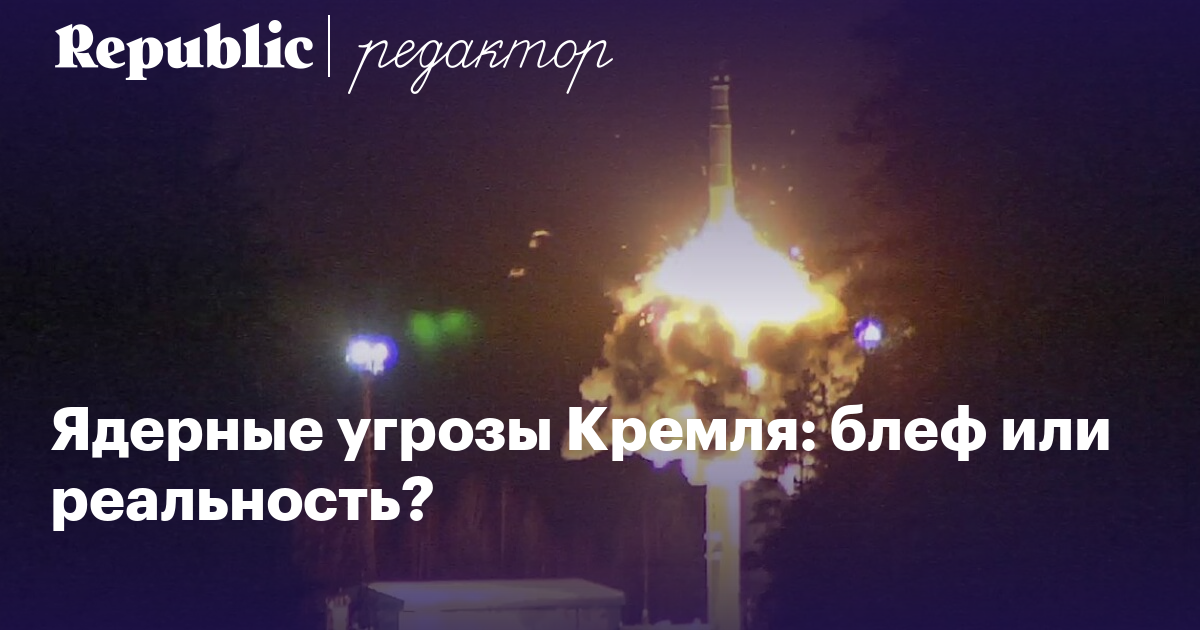
Is the Ukrainian crisis a harbinger of the Third World War or just another territorial conflict? The risk of nuclear war is never equal to zero. But since Russia laid the foundation for the largest military operations from the middle of the last century in Europe, this level of risk has become higher than ever over the past decades. According to the UN Secretary General Antoniu Gaterrish, he is now " within the possible ." Concern about nuclear weapons is understandable when a dictator, whose mental health doubts not only in the Russian opposition environment, but also in the world expert community, begins the war, attacking a country bordering four NATO countries. Under these conditions, a nuclear crisis is no longer impossible.
On February 24, on the day of Russia's invasion of Ukraine, President Vladimir Putin warned : “Whoever tries to prevent us, and even more threats for our country, for our people, should know that Russia's answer will be immediate and will lead you to such consequences that you have never encountered in your history.” This is interpreted as a threat to the use of nuclear weapons. For more convincing three days later, Putin brought nuclear forces to "special combat readiness." And despite the fact that the chances of the escalation of the confrontation leading to the use of nuclear weapons are still low, Moscow does not cease to warn NATO against assisting Ukraine. To emphasize their intentions, on March 13, Russian troops hit the international center of peacekeeping near the border with Poland. The Kremlin refers to the aggressive rhetoric of the West in relation to Russia as an excuse for its nuclear threats.
The agitated many speech, apparently, was aimed at both external and internal audience. If the message was addressed exclusively by NATO, it could be submitted through the Russian chain of command, which Western sources in intelligence and defense would undoubtedly receive immediately. Despite the obvious weakness and inability to fulfill even a small share from his original plan, Vladimir Putin threatens to go v-bank. Moreover, the Russian president deliberately uses ambiguity, and, despite the threatening tone, in this case, his statements do not concern exclusively nuclear weapons. Russian so -called deterrence forces include not only a nuclear arsenal, but also ordinary high -range shock systems.
Subscribe to read the whole
Make a subscription Redefine.media to read Republic
Subscribe [you can pay for a Russian or foreign card. The subscription is extended automatically. You can unsubscribe at any time.]
Where are the money subscribers going