
Translated material
The holy martyr German Kokkel
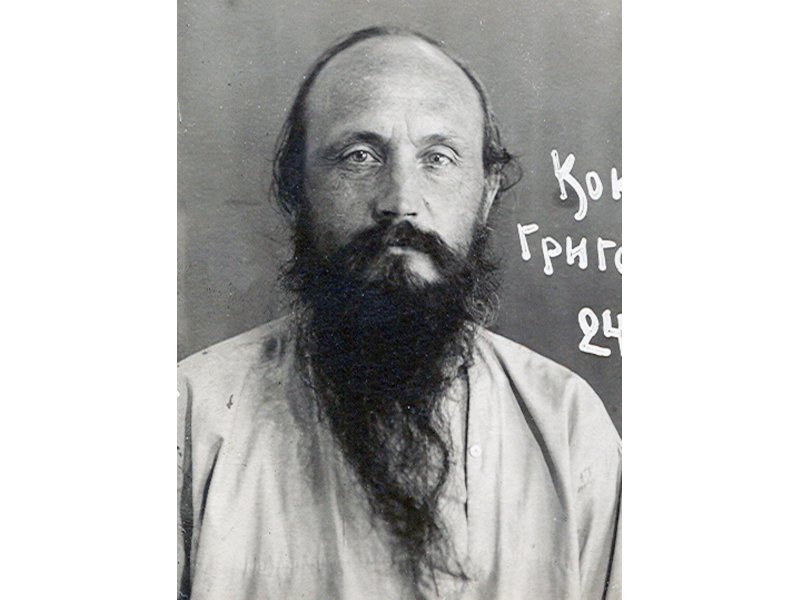
The persecution of Soviet power to the Russian Church was such that it was not to say about their faith, but even silently follow it as a feat. The new martyrs and confessors, glorified in the face of the saints did not come: believed, prayed and meekly went to their Calvarys.
“Polit.ru” recalls those who gave their lives for faith and by whose prayers the Russian Church is alive - even if almost nothing came to us besides the name.
Publications were prepared by Kirill Kharatyan (included by the Russian authorities in the register of foreign agents).
 The holy martyr German Kokkel
Grigory Kokkel is the son of a Chuvash peasant from the village of Tarkhani Buinsky district of the Simbirsk province (now the Batyrevsky district of Chuvashia). The brother of the famous Chuvash artist Alexei Kokel, a student of Ilya Repin. He lost his parents early, studied at a zemstvo school.
He worked as a teacher at a parish school of the village of Batyreva Buinsky district (without a diploma of education), then served as a scribe in the estate of the specific department. March 12, 1901, being 18 years old, was accepted by a novice in the Simbirsk Bishop's House.
On October 4, 1901, he passed an exam for the title of psalmist, on April 21, 1903 he was appointed a psalmist to the Church of the Nativity of Christ Scherauta, on August 2, he was moved to the church of the noble prince Alexander Nevsky village of Batyrev. On December 16, 1903, he passed an exterior exam for a teacher of the Chuvash foreign school in the Kazan teacher's seminary. January 26, 1905 is dedicated to the Steam. On October 9, 1907 he entered Kazan missionary courses.
July 26, 1909, at the end of the courses, was ordained a priest. He served in the Chuvash villages in the southwest of the Buinsky district, while acting as a missionary. He conducted active educational activities among Chuvash, which is affected by Islam and pagan superstitions. He brought Christian books in the Chuvash language from Simbirsk and there was practically not a single family left that did not receive from him the gospel, psalter, canon. He explained the vanity and disastrousness of witchcraft, wrote sermons, propagating them at home on a typewriter, sending them out of parishes. When the people began to understand the essence of the Christian faith, about. Gregory went to another volost, not remaining at the same parish for more than 2-3 years. He translated and published Orthodox books. He discovered in the village of Novi-Chelny Surbeevo Chuvash school of psalmers.
At the end of 1917 he was arrested by the denunciation of the local psalmist and sentenced to death. He was released on the way to the place of execution in the village of Murata (now Komsomolsky of the Chuvash Republic) with the efforts of his wife, who gathered a signature from the villagers under the appeal about innocence of Fr. Gregory and representing them to the authorities.
In the winter of 1918, O. Grigoria died from illness three children, and on July 25, 1920, his wife. Left alone with three young children, about. Gregory arranged them in an orphanage in Petrograd.
Since 1921 he studied at the Theological Institute in Petrograd, which he graduated in 1924. In letters, he mentions that back in 1922 he received an offer from the renovationists of the city of Kazan to become Bishop of Chuvashsky. Having studied the life of the renovationists, he refused. He wrote that they have no grace, hold on deception.
In the fall of 1924, they nominated as a candidate for bishops by a group of Chuvash clergy (priests Vasily Krasnov, Nikolai Maksimov, Jacob Turkhan, Deacon Evgraf Pavlov, etc.). They advocated an independent organization of Chuvash parishes in connection with the seizure of church power in Chuvashia by renovationists.
December 9, 1924, after tonsure in a mantle with the name in honor of St. German Kazan, Hirotonisan at the bishop of Ibresinsky, Vicar of the Ulyanovsk diocese. Hirotony was headed by the Patriarch of Moscow and All Russia Tikhon (Bellavin). The newly aligned bishop was given a blessing to manage the Chuvash parishes, which entered before the formation of the Chuvash Autonomous Region in the composition of both the Simbirsk and Kazan provinces.
On December 17 he arrived in the village of Ibresi. He consistently visited all parishes, exhorting priests to return to the Patriarchal Church. Bishop Herman sent numerous messages in Russian and Chuvash. Vladyka, as he would like, where on a horse, where on foot, went around all the Chuvashia, all the churches, reasoning the fallen priests and returning them to Orthodoxy. At 40-50 km per day, an Orthodox bishop took place on foot from the parish in the parish, and in the rain, and in the slush, and in the blizzard knee-deep in the snow. For several months, most of the Orthodox Chuvashia moved away from the renovationists. The renovation archbishop of Cheboksary Timothy (Zaikov) wrote a denunciation to the GPU at Bishop Herman, in which he called for decisive measures against his “counter -revolutionary activity”. In the village of Khormal (now the Ibressinsky district of Chuvashia), Bishop Herman was beaten by renovationists and barely escaped from death.
Vladyka was very active and energetic: he is both a historian, an ethnographer, a biologist and a musician. He opened the monasteries, was engaged in the enlightenment of the Chuvash people, translated and published books himself. Many letters, reports, appeals to the people, Chuvash songs collected by him in missionary courses have been preserved in the archives.
On April 12, 1925, he signed an act on the transfer of the Higher Church authorities to Metropolitan Krutitsky Peter (Polyansky).
Since the spring of 1925, he was under investigation on charges of "spreading provocative rumors and assigning administrative rights of religious communities." He was forbidden to leave Ibresi and take any part in the affairs of the parishes.
On August 27, with the permission of the GPU of the Chuvash Autonomous Soviet Socialist Republic, Vladyka moved to the city of Alatyr transferred to Chuvashia from the Ulyanovsk province, but on August 28 he was arrested by the representative of the GPU of the Ulyanovsk province and sent to Ulyanovsk. In November 1925, he was transferred to a prison of the city of Cheboksary, released on November 30 on a recognizance not to leave. He lived in Alatyr.
After the transition of Bishop Vissarion (Zornin) to the Grigory split, Metropolitan Sergius (Stragorodsky) entrusted Bishop Herman to the Office of the Ulyanovsk Diocese. He was persecuted and physical attacks by Grigorian. Once, having come to the Convent to perform Sunday service, he was incurred there and was thrown with stones by local nuns, who was learned by a false picked by Vissarion. All bloodied, he sadly left the monastery.
On June 4, 1926, he was sentenced by a special meeting at the OGPU collegium to 3 years of expulsion outside the Chuvash Autonomous Soviet Socialist Republic (according to other sources, sentenced to execution, but then pardoned by Mikhail Kalinin, the sentence was replaced by expulsion). Subsequently, he received appointments to the service in the places of exile: Bishop Bugulminsky, Vicar of the Samara diocese (1926-1927), Bishop of Buguruslan, Vicar of the Orenburg diocese (1927-1928).
As Bishop Bugulminsky, he often took part in disputes on religious topics and always won them. In the city of Bugulm, Bishop Herman was often taken at night for interrogations in the OGPU, conducted searches (from the words of his daughter).
In 1928, he was sent to Tomsk, appointed Bishop of Kuznetsk, Vicar of the Tomsk diocese, temporarily ruled the Tomsk diocese. Some of the "old -church" joined him, but the rest was recognized by the temporary Higher Church Council (VVSS) ("Grigorians").
In 1929, he was approved by Bishop of Tomsk. He served in the Nikolskaya (Christ -Great), the Voskresensky churches of the city of Tomsk. In November 1930, he moved to Omsk, ruled the Omsk diocese. Since July 1931-Bishop of Nikolsko-Ussuriysky, temporarily ruled the Vladivostok and Khabarovsk dioceses. Since September 1931 - Bishop Barnaul, simultaneously ruled the Biysk diocese. On April 1, 1932 he was arrested in Biysk on charges of “anti -Soviet statements” during sermons,
From the indictment: “He was hostile to the renovationists, called them sectarians and called them in his sermons to beware and shrugged them, dismissed priests who shaved their heads and did not wear cassocks [priest Andrei Alekseevich Livanov]. Being a secret agent of the OGPU, he deliberately reserved himself "
On July 27, he was released "for the termination of the case due to the insufficiency of the indictment", expelled from Biysk. On October 2, 1932 he was appointed to the Annunciation Department.
On February 11, 1933 he was arrested in Khabarovsk, delivered to Barnaul, then transferred to Novosibirsk. He passed according to the investigation as one of the leaders of the “counter-revolutionary church-monarchist organization” in Altai.
On December 31, according to the decision of the Special Troika of the Plenipotentiary of the OGPU in the West Siberian Territory, he was sentenced to 10 years in prison.
In January 1934 he was sent to the Bamlag of the Amur Region, worked as an accountant. In the camp, he did not hide faith in God, prayed, fasted, discussed spiritual and church issues with his associates-priests in spirit. The surveillance was installed behind him, the informant was attached.
Based on the denunciations of “counter -revolutionary agitation” on October 17, 1937, the special three UNKVD in the Far Eastern Territory was sentenced to execution.
Shot on November 2, 1937 at 2 hours 30 minutes. In Bamlag.