
Translated material
Cinema in the new reality - the new project "Medusa" on documentary
“The Earth is blue, like an orange” - Irina Tsilyk’s painting about how shooting the film helps to escape from bombs and all -pervasive fear
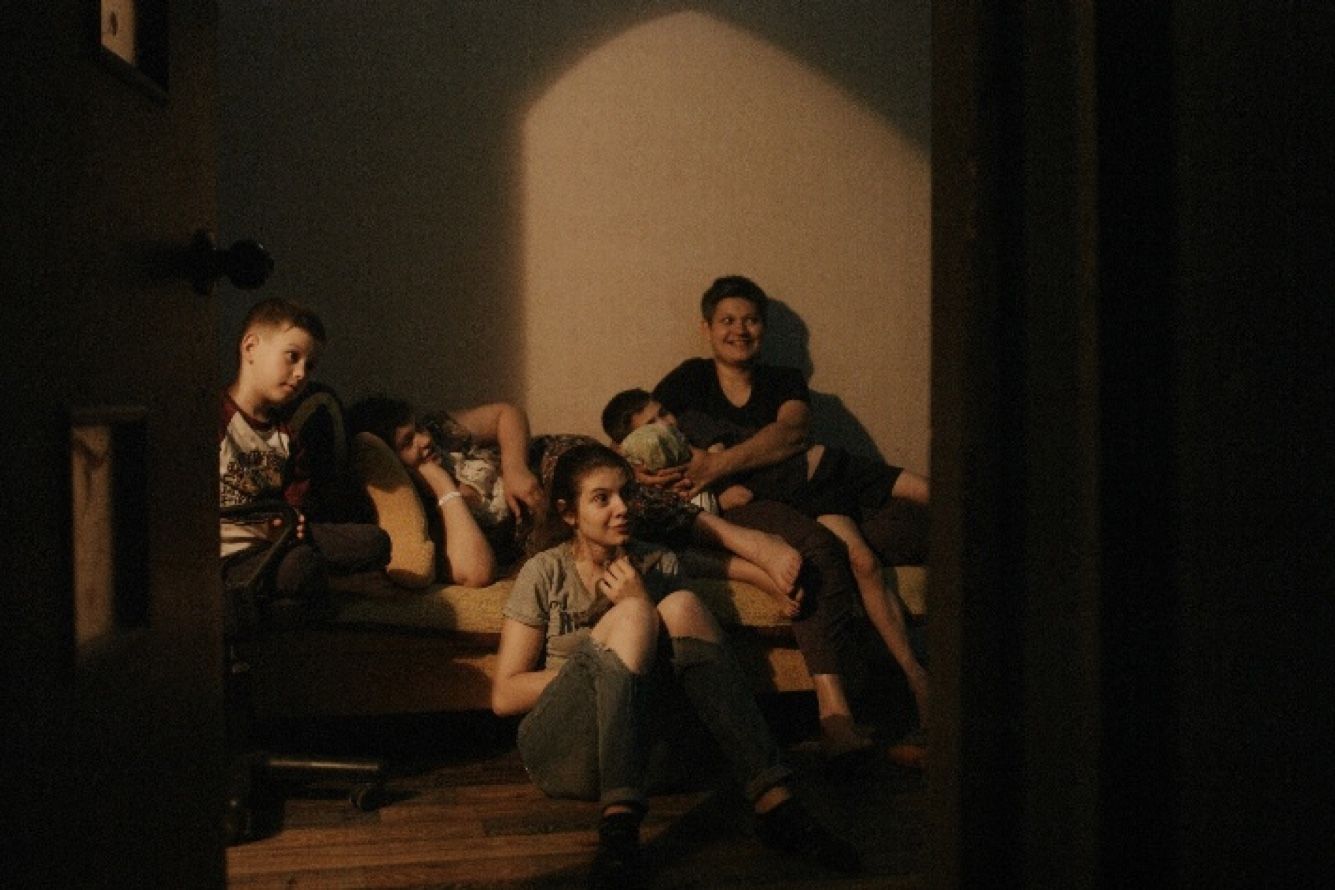
Medusa begins a series of publications on documentaries, which during the Russian military invasion of Ukraine become even more relevant and important. Every Saturday, film critic Anton Dolin will talk about one documentary tape; These will include both new films and released several years ago. We do not plan to limit ourselves to Ukrainian and Russian authors. All these paintings can be viewed online. The first film is “The Earth is blue, like an orange” by Ukrainian director Irina Tsilyk.
You can watch the film “Blue Earth, as if Orange” by this link .
This amazing picture of 2020 solves at once two, it would seem multidirectional tasks. She uncompromisingly and accurately immerses the viewer in the routine of the Donbass war and at the same time explores cinema as a way of escaping bombs, destruction and all -pervasive fear. It unfolds to reality and at the same time protects against it.
In the center is the family of Anna, a cheerful and optimistic single mother living in the border zone of Donbass, from the Ukrainian side. There are practically no men in the frame, except for the episodic soldiers passing by on an armored car and stop precisely in order to get into the frame. Only women and children.
Anna's children are four - two older girls, two younger boys. And an elderly mother. And a few cats. They decided not to leave, although the danger to life is obvious; Even going to the distant and festive big city, where it does not resemble anything about the war, they return home. For example, to celebrate the New Year with a new hope together.
Their common passion helps to live and hope for the family: cinema. They look and argue about him, and shoot, and the eldest daughter of Miroslava, whose graduation evening will also get into the frame, is going to enter the film school for the faculty. But the point is not even in the vital prospects of the girl, but in that look that allows you to see the uncomfortable everyday life of the war through the prism of artificially formed, mounted, and therefore subordinate reality. Humor, optimism, businesslike readiness for any tests make the heroes of the film unsinkable.
“The Earth is blue, like an orange” extremely far from the format of depressive military films: this is a film about cinema as a way of salvation. Tsilyk, for which the picture became a full -length debut, skillfully and unobtrusively explores the active role of art in catastrophic circumstances. “War is emptiness,” Miroslav formulates. The authors of the film, to indistinguishly mixed with his heroes, fill this emptiness literally every frame.
The film Tsilyk received a directorial prize at the American festival "Sandance", and then the special prize "Artdokfest" in Riga with the formulation "For the creative female alternative to war and violence." Perhaps even more interesting is that this film is called critics and filmmakers among the most important Ukrainian cinema for the latest history. This is a vivid evidence of a position that is not in Russia - it is impossible to even imagine here for the documentary to come out of the ghetto appointed to her. Moreover, to imagine the inclusion of a non -game film on the topic of the Donbass war in the Russian Federation in the Russian Federation in any list. Another fundamental moment is what decisive role in modern Ukrainian cinema is played by young women (this is both the heroine and the creator of the film).
The name is a line from the poem by the French surrealist, communist and anti -fascist field of Elyuar. Obviously, it refers to the absurd incompatibility of colors and objects - it seemed, it seemed that war and creativity are incompatible. However, the picture of Tsilyk refutes this thesis. Her film is about how art opens the doors to internal freedom and the basement-bomb shelter in it becomes a portal into a parallel world, where the laws of cinema act.
Anton Dolin