
Translated material
"It is better to sweep the streets than to work in the theater with people who were smeared"
An interview with theater director Nikita Betekhtin. He is in Russia and fights with theaters who hang the symbol Z on their facade
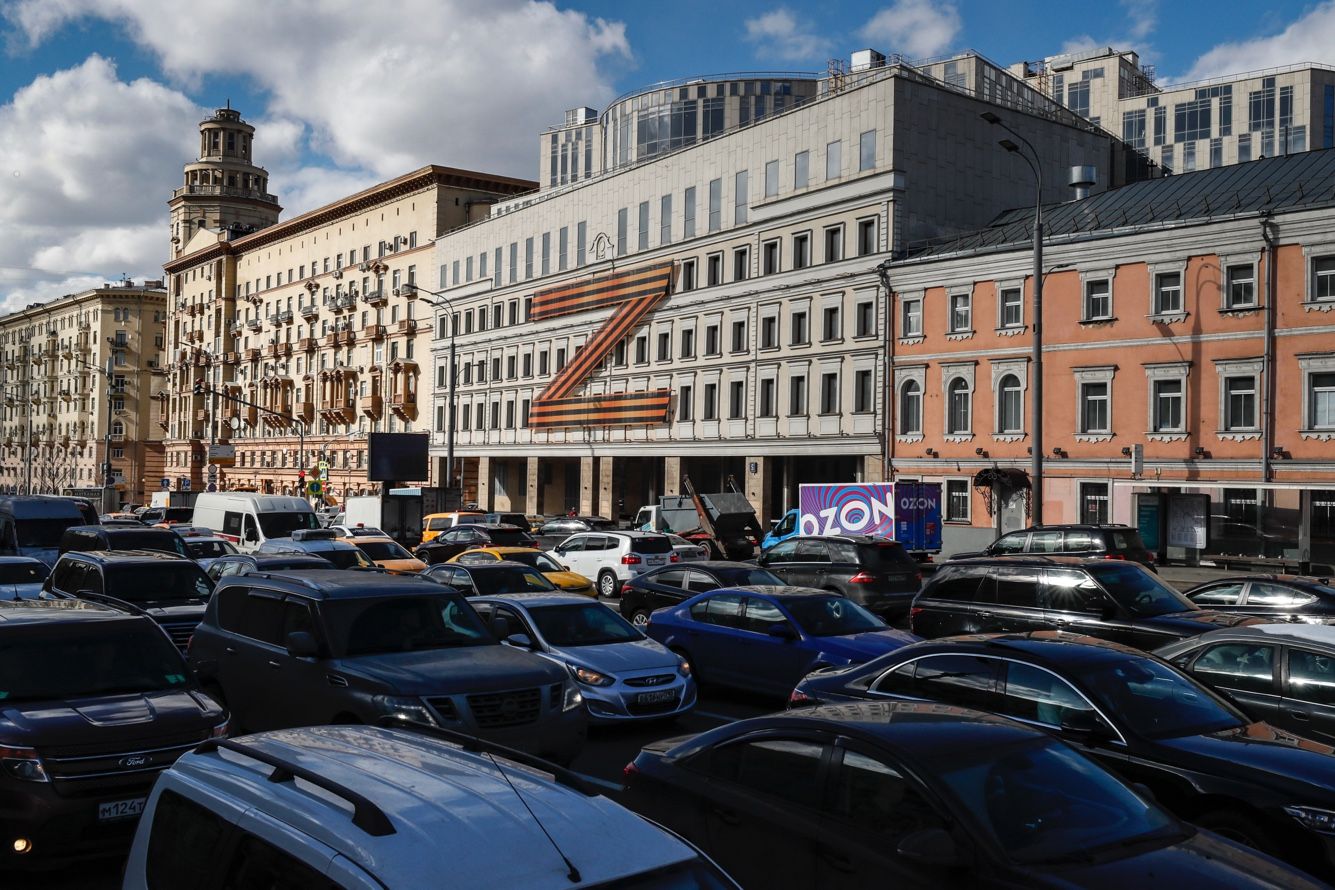
Since March 2022, symbols of support for Russian “special operations” in Ukraine have appeared on the facades and posts of Russian theaters. Symbols Z and V, which the Russian army applies to military equipment, are now “ decorated ” by the Moscow theater Oleg Tabakov and the Bryansk Theater of Drama named after Alexei Tolstoy. The leaders of theaters and members of the troupe express their consent with the war -walking war. Russian theater director Nikita Betekhtin is conducting a list of theaters who supported the war in Ukraine. He openly opposes the ideologization of theaters, refuses to cooperate with theaters who are engaged in propaganda, and calls for colleagues. Medusa learned from the director whether theaters can fight the state order for propaganda as the theater community reacts to the support of the war imposed by the state and why it is necessary to rebel against it.
- How do you cooperate with state theaters?
- For the past 11 years, I have been setting up performances in Russia and in Europe. He always considered himself not only a Russian director, but also part of the world theater community. I was interested in the European theater, but I was always proud of the Russian theater. The vast majority of my works were released in Russian state theaters, I do not see any sedition in this. I also cooperate with private independent institutions . But as a director, I work and are going to work further with state theaters.
- You are collecting a list of state theaters that post the Z and V signs on your facade. You refuse to cooperate with them, other theatrical directors join you. Why?
- We came to the fact that state theaters begin to use as an advertising place. As a representative of the theater community, I am against the theater to be used as an advertising place in order to promote war. Let their posters be on the facades of theaters. That's all. Now about 5% of theaters [hung on the facade the symbol Z]. According to the Ministry of Culture for 2018, in Russia 649 theaters. So far, only 33 theater has made Ziga [on the facade]. The vast majority has not yet done this.
Theater is an integral part of the urban environment. The theater forms trust, the theater is a moral and aesthetic guideline, for all of us it is associated with something highly moral. And if they hang Z, then everything is fine: [war] is a right business.
We do not want to leave our colleagues in this struggle. Many arts are pressed, but many are not offered to many [place the symbol Z on the facade].
- Who is not offered?
“I know several colleagues, but I can’t call names.” They were not offered or offered, because the authorities know: these people simply quit the theater - and there will be a scandal, even louder than the appearance of Z.
- How many theaters in your list that were used as a “advertising place for propaganda ” ?
- There are 33 of them, and the list will be replenished. Unfortunately, by May 9, one can expect the general general use of theaters for such purposes.
- What is the essence of your initiative to fight theaters that were involved in propaganda?
-The initiative is to convince colleagues to cancel cooperation with “zigating” theaters, break contracts with them, and theaters to express their negative attitude to their “ziga-actions”. The theater community needs to include the levers of social management we need, which we, like any community, have. We have the opportunity to use the lever of public censure or public reward.
- How did you come up with the initiative?
- At the end of March, at the facade of the legendary Moscow Tabakov Theater, on the initiative of its artistic director [Vladimir] Mashkov, a symbol of this war was hung. The first, as the theater press center claims . And then the “flash mob” was picked up by regional theaters: the first - the Krasnoyarsk Opera and Ballet Theater. I worked in Krasnoyarsk, I know my colleagues from there. I stated quite hard on my Facebook - the main means of communication of the progressive theater community - that at any stage [work on the performance] I will refuse to cooperate with theaters if they place any of the signs of war with Ukraine. Then I did not know that there would be other examples. Colleagues began to send their examples and photographs of theaters. Many expressed pain and misunderstanding from what was happening. Just a few hours later, I had a list of 12-15 theaters where I was not going to work anymore. I announced that I could not work with these theaters until the leadership is at least changing there. It was my statement. Colleagues joined him, and this turned into an initiative. And Mashkov’s action with the letter Z on the facade has turned into a flash mob , which the regional media now call the “All -Russian action”.
- Why do you think the authorities decided to place banners with the letters Z, V on the facades of theaters?
- In VTIMOM, they decided that the vast majority of Russians support the war. But the theater community is proportional to the contrary. The theater has always been opposition, complex art with subtext, which the authorities were afraid of. You can’t throw words out of the play, and each play in the context sounds differently.
Cultural institutions [from above] make their support in order to kill a weak link - about a quarter of society [based on the results of the VTIME survey], which does not support the war.
- You make a table with theaters that hang out banners with Z. For what?
- The table has several tasks. This list is needed for free artists who are not attached to any institution, but collaborate with state theaters. So that they know who they are dealing with, and understands, it is worth talking about humanism and the “life of the human spirit” in these theaters-the term [Konstantin] Stanislavsky-or it is still worth refrain from work if theaters support the abomination of this war. The second task is to give an instrument to theaters who are faced with pressure. Thirdly, this is just a chronicle. It is interesting how colleagues support the war today, and tomorrow they will put “And the dawns here are quiet ...” by May 9. Most likely, this will work, delete and say: "We did not do this." What will happen when it all ends and we will talk about the value of human life again? There will be evidence. The list is online, colleagues keep it offline. It is no longer destroyed, even if I delete it.
- What arguments can theaters use in a dispute with the regional authorities?
- For example: you are now forcing us to hang a poster. He will hang with us for three days, but this [event] will not bypass the public and the theater community. We value our reputation, critics come to us, we go to festivals, we cooperate with famous directors. [After the support of the “special operation”] no one else will go to us, no one will deal with us. Sorry - we have a premiere. Take the banner and hang like in Ulan-Ude-on a pedestal [statues] of Lenin. There is a place for him.
- As I understand it, not all colleagues support your initiative?
- Most in the [theater] community against the war, many boldly speak out on Facebook. Many talk about their loss, helplessness, depression, emotional experiences, rejection of the profession. And this is understandable, since we were faced with monstrous experience-to be a citizen of the aggressor country. At the same time, we encountered a split. They tell us: “You make shooting lists”, “We are against the culture of cancellation”, “We are against making out of theaters.” And the most important argument: “They are not to blame. These buildings belong to the city, so the municipality and the regional authorities themselves decide what to hang on this building. ” At some point, angry colleagues come. I personally promised me a “meeting at the airport”, showdowns, scammers, threats and wishes “so that you die”. But all these are trifles and dirty tricks. Everything fades in comparison with the scale of the abomination that we see.
- How do you feel about the accusations that you make up a “ shot list ” ?
- This is not a shot list. I can only refuse to cooperate with these institutions as a theater director. I can express my sharply negative attitude, I can refuse to shake my hand and say that these people who [supporting the war] are non -browning people for me. And the state can include punitive measures for my words and posts to me and my colleagues - and apply the same shooting lists.
-Is there any common mechanics of how theaters become involved in propaganda?
- We began to understand how this is happening. First, a certain stage in the negotiations of the authorities and the head of the theater, where, under any pretext, it is proposed to participate in this action. These can be working motives - from improving the financial condition of the theater and grant support to "we helped you, gave money to the children's festival, and you will help us." Thanks to communication with colleagues, we even know the wording. For example: “This is our common cause, now we need to include creative thinking and enter the federal agenda with such a decision.”
Since there is no single style, then the theaters themselves decide what to do. Z, v is an identity, branding. By the fourth education, I am a project manager and I understand that this is part of the PR campaign, propaganda, in order to normalize the war among the townspeople. Especially in the regions. Everyone needs to “earn” and say that everything is in order. And then who is what is it into what - from a small banner stretch to a huge poster or lightboxes , from which burning Z and V are compiled. Each uses its own: either Z, then V, then they together, then the hashtag “we don’t throw our own”. It looks especially funny at abandoned and absolutely forgotten theaters like the Omsk Youth Theater . Now he has an LED large screen and the inscription on the facade: “We don’t throw our own.” But it seems to me that this theater [local authorities] have long been abandoned.
- In one banner, the involvement of theaters in propaganda is not limited?
- Yes, most often it is simply not limited to an advertising place. Further, the head of the theater should give a comment to the media or even a detailed interview. And then the media says that the cultural figures of our city supported the “special operation”. In the materials of the media, which we found, most leaders most often use a generalization : “We, cultural figures of our region”, “We, theatrical figures of our theater”, “The whole country”, “We, actors, and our theater”. There is always a generalization. For example, eight artists of the Novosibirsk Regional Puppet Theater, speaking in support of the war, speak on behalf of the entire theater. And there are 28 people in the troupe.
- Are there theaters whose troupe unanimously supported the invasion?
- There is a theater that really performed unanimously: not only hung “Ziga” on the facade, but also recorded a creative video. This is Minusinsky [dramatic] Theater, they approached creatively.
[On the stage] at the head is an artistic director, he sits in the center, he is surrounded by a troupe. Everyone calls his nationality: “I am Russian, but Tatar blood also flows in me”, “I am Russian, but in me Ukrainian blood.” At some point, they say: "We are Russians, and we must support ours." And they raise handwritten posters: z, v, “for victory”, “power in truth”, “we don’t throw our own.” And then they sing a Russian sincere song.
In words that the theater was forced to do this, there is a counterargument. Well, the theater was forced. But make the task creatively approach? This is the breathtaking initiative of the theater. Therefore, the question of whether the Minusinsk theater supports war is closed. Not only supports, but also spends himself and his creative units to make it creatively.
- What theaters did you personally stop cooperation with?
- I worked in the Voronezh drama and I know many artists. But now the letter Z is hanging at this theater, and [his] Hudruck gave an interview with a large -scale thought: he compared the disagreements [with the war] with Romeo, who wanted to do well, but was to blame for the death of Mercutio. This is the "depth" of directorial thought.
Or with the Arkhangelsk drama [where they also hung the symbol Z on the facade of the building] I planned the project before the war. I am happy that he was canceled in the first weeks of the war for independent reasons. Now I would personally cancel it.
I stated the theaters with whom I have agreements that if they are disclosed by the letters, I will break any contract, I will return advances, I will suffer financial losses, but I will not work with them anymore. The theaters with whom I spoke reacted to this with the absolute understanding and assured that they would not participate in this “All -Russian action”.
- Do you communicate with theaters that act as an “advertising shield for propaganda ” ? What do they say there?
- I communicate, both personally and through colleagues. I have a discussion with the director of Arkhangelsk drama. He says that this [z on the facade of the building] is not his hand: the building does not belong to him. Yes, the building does not belong, but the keys to the advertising boxing on which you hang the posters belong to you. It is foolish to think that the municipality has these keys. The banner was hung by your employees, it was most likely agreed with you.
- What other questions do you ask employees of such theaters?
- If this is not the position of the theater, then why there is no marker by which your viewers can understand that this is not the position of the theater? And if he is, then where? Is there a comment on the theater about the war and the attitude to this? No. Does this mean that you want to hold a large children's festival under the wars of war, which are already known in every school?
- In theaters where banners were posted, there are people who do not support the war. Despite this, they continue to work there. What do they tell you?
- Colleagues from one theater wrote: "We won the facade of the building, but in order we had to hang a poster on the theater." The poster is eight per eight meters, on the roadway. And the director of the theater says that it is necessary to “unite around our supreme leader”, “support our own” and “fight Nazism”. That is, they support the war with the words of propaganda.
- What arguments do these colleagues lead to their defense?
- There are several counterarguments, but they are easily crashed. First: “What can I do? I have no choice. " You can quit. We all have a choice, he has not gone anywhere. For this choice, we are responsible. If you are for, you bear one [responsibility], if against - another. If you are against and express [your position] publicly - the third type of responsibility. The choice is the first argument.
The second: "The building does not belong to us, the building is not the face of the theater." But Ziga hangs where you have a repertoire. Your viewer reads this only as the support of [war] with your team, and not the head of the city or region. The banner hangs in advertising boxing, you have the keys. You have not expressed any position, which means that you said nothing.
The third argument: "At my Ziga Theater, but I have opposition performances that are important, sharp, with a political statement." It is impossible to talk about any statement [in this case], since all this is leveled by the symbol Z. How can you put the play [the playwright of Eugene] Schwartz “Dragon” and speak such a language if you were shaking .
There is an argument that war is a matter of one person [Vladimir Putin], his dreams and sick fantasies. But if the cultural institution had signs of war with which the Russian army marked its tanks and armored vehicles, then it is the same Russian ship that goes on ...
- How many colleagues have already followed your example and refused to work with theaters who placed Z and other symbols of war?
- We are not conducting statistics, but we know about the abolished productions. I personally know from a dozen abolished projects and the names of playwrights who demanded explanations from theaters. I know those who demanded to terminate contracts. Asya Voloshina did it publicly - including because this initiative appeared. Asya saw me on Facebook that the Chelyabinsk Theater , where her play was going on, did everything creatively, illuminated the building with projectors. Asya demanded to take her surname from the poster and stated that all the money [received from the theater] would transfer to help Ukraine. But most colleagues, due to various circumstances, cannot do this publicly.
Colleagues also seek legal assistance. On a public basis, lawyers are ready to support them with consultation, how to correctly break off relations with the theater.
- What you are doing is a manifestation of a civil initiative. Are you not afraid of persecution?
- Afraid.
- And you are in Russia?
- Yes.
- Why then do you continue to do this?
“ I can't do a different way.” I can’t afford to speak in my performances that war is an abomination, as in the play “Cement” according to Hainer Muller , and then pretend that everything is fine. I can’t find the point of closing my eyes and pretending that everything is fine with us when [actually] abnormally. Yes, there are pro -government publics that threaten. But I do not take it seriously. What can they [power] do? Give a fine? I will pay. Я правда считаю, что лучше подметать улицы, чем работать в театре с людьми, которые смалодушничали. Это принесет больше пользы. Я не хочу работать с людьми, которые делали вид, что это нормально, — по причинам алчным, или по причинам личным, или по причинам боязни за свой театр. У меня есть право выбора. Я имею право работать там и с теми, с кем я хочу. Если со мной не захочет работать ни один театр России или даже мира — что ж, я найду чем заняться.
— С какими еще мнениями вы столкнулись после запуска инициативы?
— Критики говорят: «Рефлексируй [войну] в своем творчестве». Я не акционист и не перформер, который работает с быстрыми медиа. Я театральный режиссер, а для театра очень важно время для рефлексии о том, что с нами происходит.
Сейчас есть смысл не в художественной рефлексии, а в простой гражданской — чтобы подумать своей головой. Театральное сообщество — это сообщество интересных, талантливых людей. И свой талант можно направить на маленькие шаги, чтобы отстоять театры как институции. Мой лозунг: «********** [отстаньте] от театров». Это маленький шаг к важной и нужной победе.
— А что делать, если по каким-то причинам ваш коллега не может высказаться против войны так же, как вы, публично и громко?
— Мы можем делать и не громкие заявления. Это могут быть и личные сообщения, и просто комментарии в социальных сетях. Даже самые осторожные комментарии, но выражающие отрицательную позицию. Мы должны включить доступные нам средства, чтобы сказать, что [война] это плохо. Чтобы дать знак, что, во-первых, коллеги не находятся в одиночестве. Во-вторых, что мы не собираемся жрать этот кусок дерьма, который нам предлагается жрать как сообществу. Потому что если съедим это — съедим до конца все, что предложат [потом].
Пусть коллеги подумают, что они могут сделать. Everyone can. Сколько дней войны должно пройти, сколько трупов у нас еще должно быть, чтобы каждый спросил у себя: «Что я могу сделать? В чем может быть мой личный тихий протест?» Даже если мы артикулируем протест шепотом, даже губами — можно протестовать. Толпа людей, которая говорит шепотом, создает ужасный шум для тех, кто шум не любит.
Talked Sasha Sivtsova