
Translated material
Putin came out of the "gray zone". Will the Baltic become an arena of the new war?
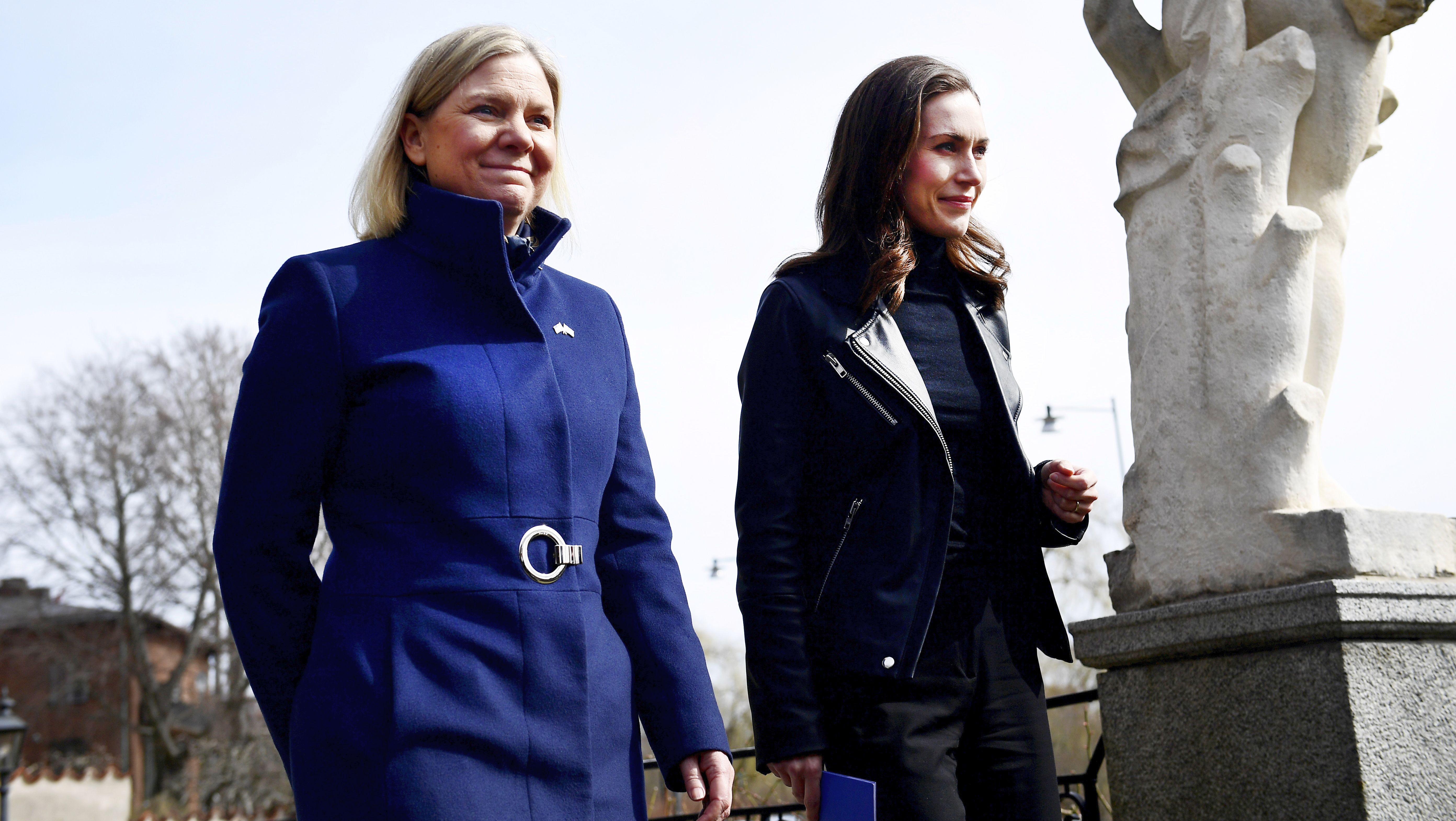
"The difference between a partner and a member of the Union is completely clear. There is no other way to clear security guarantees, except for the guarantees provided within the framework of NATO Article 5 of its Charter."
This statement was made the other day in Stockholm, Prime Minister of Sweden Magdalena Anderson , who accepted his Finnish colleague Sanna Marin. Article 5 is the most famous part of the documents of the North Atlantic Union: it guarantees any country in the case of an attack on it from the outside of all other 29 member of the alliance. It is more likely that in the coming months of these members there will be more. The annexation of Finland and Sweden to NATO becomes an almost resolved thing, although the points over "i" are likely to be placed in June at the NATO summit in Madrid. The reason is clear: the Russian invasion of Ukraine, which is rapidly changing the entire European security system. “Now everything has been divided into what happened before February 24, and what happened after,” says the head of the Swedish government.
Finland is still moving to NATO more quickly and confidently than her Western neighbor. As the Deputy Head of the Committee of the Finnish Parliament on Foreign Policy, ex-Minister of Foreign Affairs of Finland Erkki Tuomioy , said on Thursday, his country will apply for membership in NATO "In the coming weeks". At the same time, Tuomiya himself, before the beginning of Russian aggression, was one of the moderate skeptics, not confident that the entry into the North Atlantic Union will now benefit Finland. On February 24, the opinion of not only Finnish politicians, but also society as a whole began to change: already in mid -March, 62% of Finns spoke in favor of joining NATO, there were only 16% against. According to the latest data, a month later this ratio is 68:12. Before the war in Ukraine, the level of support for joining NATO in Finland stably was about 25%.
Yle Poll Shows Record High 62% Support for #finland Joining Nato https://t.co/nz8pt6tnyn pic.twitter.com/tzxmjlrhd6
- Yle News (@Ylenews) MARCH 14, 2022
The Swedes are somewhat more careful. A special parliamentary commission dealing with the issue of joining NATO is working on its conclusion - but decided to complete this work before May 13, that is, a few weeks earlier than previously expected. Since between Helsinki and Stockholm a long -standing and strong cooperation in the field of security has been established, the likelihood that Sweden will make a different decision on this key issue than Finland, most analysts are evaluated as low. The level of support for NATO membership in Sweden, according to the AFTONBLADET survey conducted by the newspaper, is 57% - the highest indicator in history.
Nevertheless, as noted in an interview with DW, the Swedish defense expert Jacob Westberg , the Swedes have a slightly different perception of military problems than the Finns. It is enough to say that Sweden waged its last war more than 200 years ago, while Finland in 1939 - 1945 experienced two bloody wars with the USSR and a brief lapland war with Germany. “In Sweden, we believe that since Napoleon we had a world because we have always rejected military alliances,” says Jacob Westberg. “But now we must completely assess the security situation. War against Ukraine has become a turning point.”
Now we must completely assess the security situation. The war against Ukraine was a turning point
Russia painfully reacts to rapprochement with NATO of two northern countries (with Finland it has a border of 1300 km long). In mid -April, the movement of Russian military equipment was reported , including missile systems, to the Finnish border. The ex-president of Russia, now the deputy chairman of the Security Council of the Russian Federation Dmitry Medvedev threatened the constant placement of nuclear weapons in the Baltic region.
According to the expert American Enterprise Institute Elizabeth Bron , an international relation and security policy specialist in Northern Europe, tension in the Baltic and in its environs may increase, although the open confrontation between Russia and Western countries in this region still does not seem especially probable. Nevertheless, the war in Ukraine will greatly change the balance of forces in northern Europe, the expert believes. In an interview with Radio, Freedom Elizabeth Bron, the author of two books on the actions of the great powers in the so -called "gray zone" expresses surprise that the Kremlin decided to exacerbate the situation so sharply, having made an invasion of Ukraine, while before that he quite successfully pressed on the rebellious neighboring means.
- "Gray zone" ( Grey Zone )-a term used in the theory of international relations, meaning the space between the war and the world in which states are hosted in military-technical, economic, diplomatic, information and other areas, without turning to an open military clash.
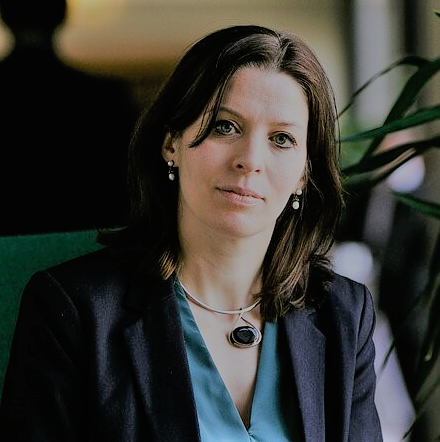
- Is it possible to say that, having made an invasion of Ukraine, Vladimir Putin, who declared the expansion of NATO as a threat to Russia's security, achieved the exact opposite: the North Atlantic Union will probably expand in the near future at the expense of Sweden and Finland?
- Vladimir Putin, of course, has long hates NATO and with fear perceives his presence among the borders of Russia. However, the war against Ukraine has already reached, firstly, the unprecedented internal unity of Ukrainians against Russia, more precisely, the Putin regime, and secondly, the unity of the Swedes and Finns in matters of security-from fears about Russia's aggressiveness. Until February this year, it was impossible to imagine such a sharp shift in Sweden and Finland towards NATO. These two countries should make such a decision together - and now this is happening, and at a huge speed.
- You said - they must decide on joining NATO together. Why, say, is not one Finland with its long border with Russia?
- Sweden and Finland in a geopolitical sense have been brothers for many years, one might even say, twins. The point is not only in their neighborhood, but also in a long -standing political and more and more intensifying military cooperation - primarily due to the awareness of both countries that they are not able to solve the tasks of ensuring their security alone. As a result, it is almost impossible for Sweden to stay outside of NATO if Finland decides to join - also because for a long time the level of support for NATO membership was higher in Sweden than in Finland, although now this is the other way around.
- Will the accession of these two countries noticeably strengthen NATO?
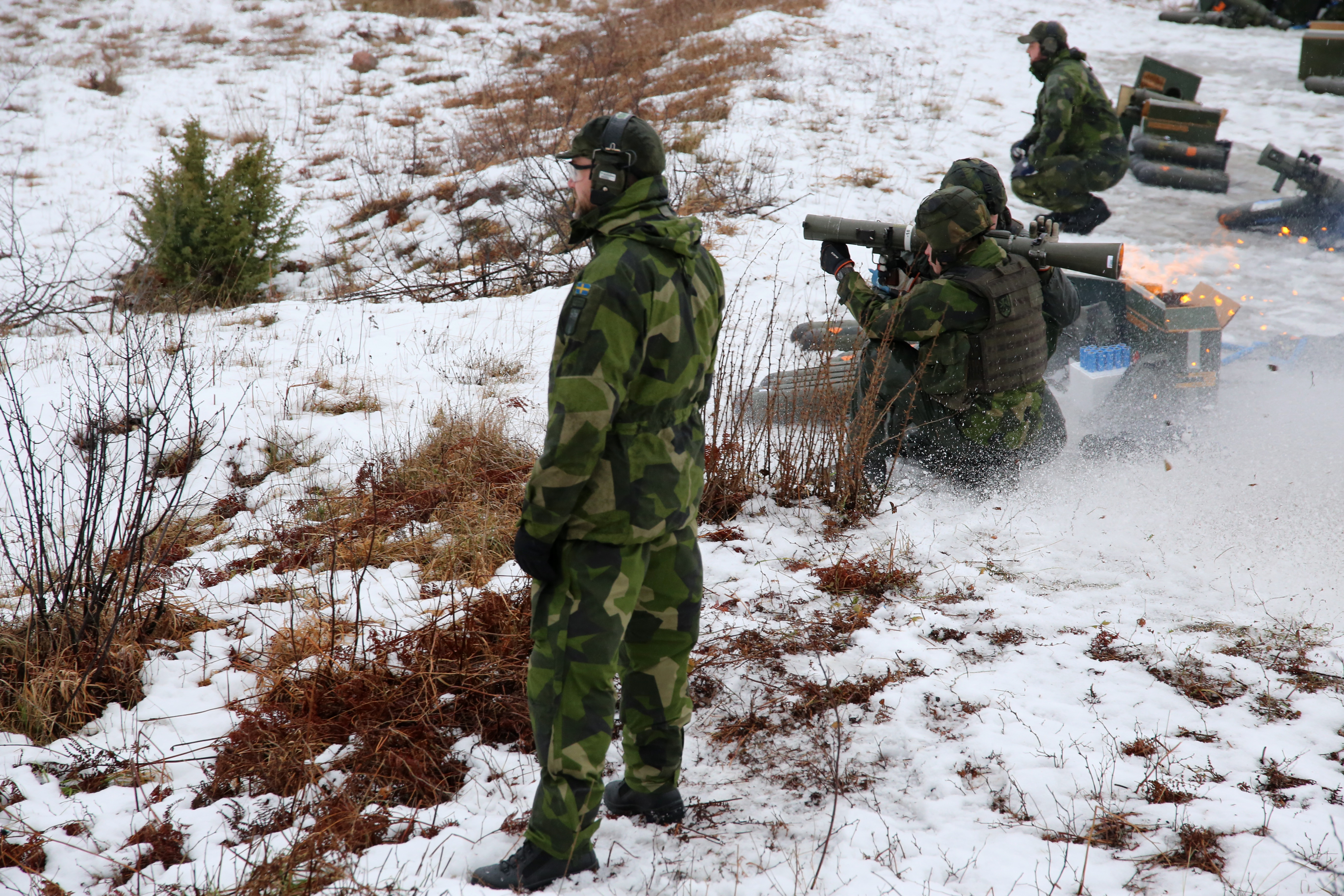
- Both sides will remain in the benefit. Finland, if we take into account its relatively small sizes and a small population, a very large army. (Having a population of 5.5 million people, this country is able to mobilize about 300 thousand troops - RS) . She has excellent Air Force. Sweden, in turn, has a rather solid naval fleet, which is important in the context of the Baltic region. There, most countries have no large Navy - so, Poland and Germany have very compact fleets. The Swedish fleet is designed to protect the very long coast of the country. For NATO, all this is significant acquisitions. It should also be borne in mind that both northern countries have been building their security systems for quite some time, considering the threat from Russia as a priority. This fully fits into the current NATO strategy. Sweden, however, starting in the 90s, has torn the defense costs, but this trend has already changed to the opposite there. Finland, on the other hand, had never been engaged in serious reductions in the military region.
Russia knows how to threaten very well. With the conduct of a real war, she gets somewhat worse
- Dmitry Medvedev recently stated that in the event of the entry of Finland and Sweden to NATO "there is no longer the Baltic’s mandatory status will not be able to talk." Is the threat to the placement of Russian nuclear weapons in the region real? And what will she bring?
- These are rather empty threats. If you have nuclear charges, you can place them on your territory anywhere, this is a matter of logistics, no more. By the way, in 2018, Russia temporarily delivered nuclear warheads to the Kaliningrad region. In this exclus , missiles are constantly placed that can carry nuclear warheads. These warheads themselves can appear there again at any time. There is nothing new in this. It is unlikely that this can intimidate Finland, Sweden or NATO.
-And how great is the significance of the Kaliningrad region itself in the event of any military conflict between Russia and NATO in the Baltic region?
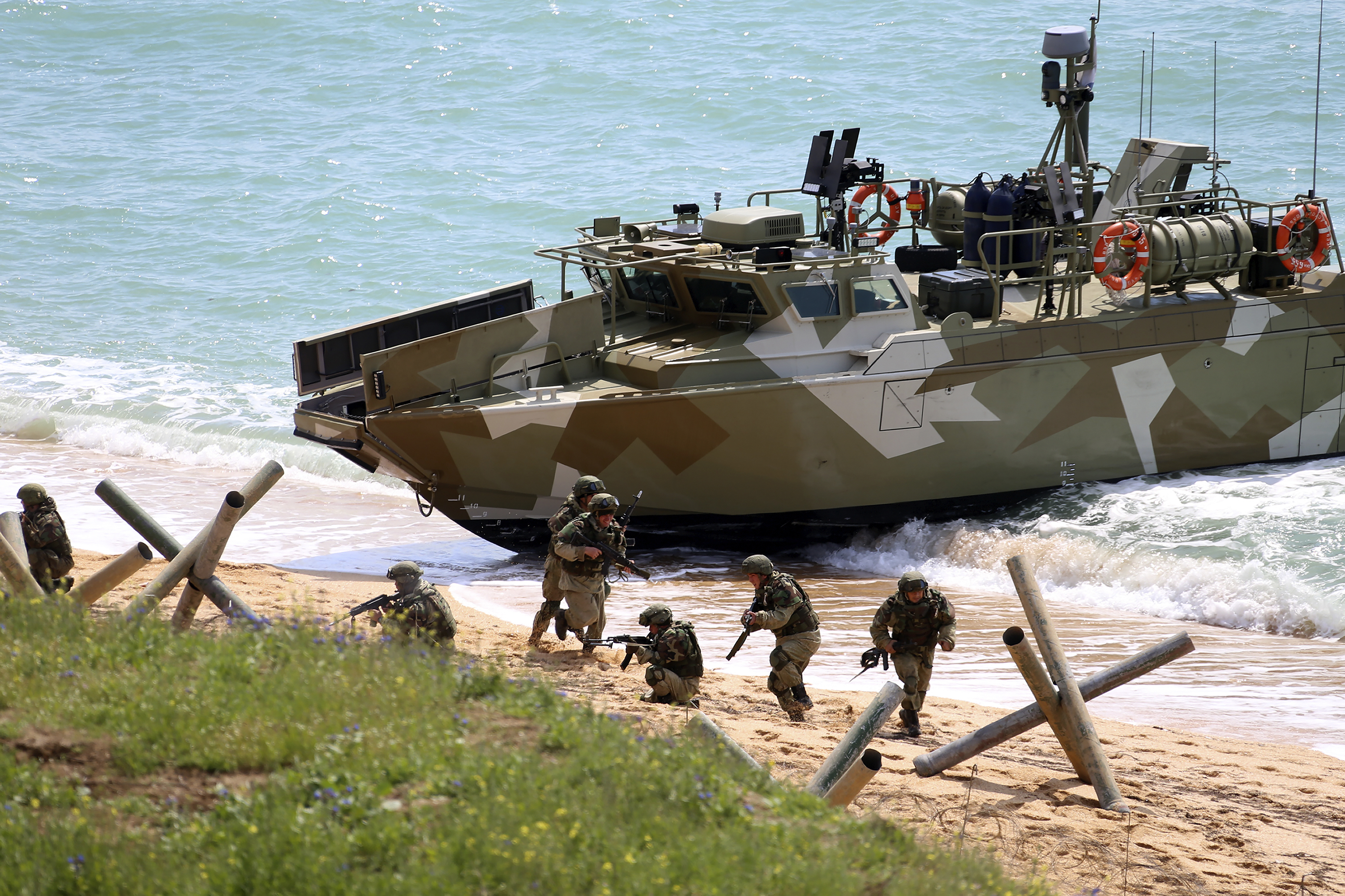
- Kaliningrad is, in fact, the weapons warehouse of Russia. It can quite be used for threatening body movements towards neighbors - the Baltic countries, or the same Finland and Sweden. On the other hand, this territory is vulnerable because it is separated from the rest of Russia. Kaliningrad actually depends on the goodwill of the neighbors with regard to any supplies from the rest of the Russian Federation to this exclav. A particularly advantageous position in this regard is Lithuania.
-But in general, the aggression of Russia in the Baltic region looks like something real, or, watching the course of war in Ukraine, which is not the most successful for the Kremlin, can we say that the Russian Federation is to a certain extent a paper tiger?
- Russia knows how to threaten very well. As we see now in Ukraine, with the conduct of a real war, it turns out somewhat worse. But various kinds of threatening actions can be taken - for example, invasions of Russian combat aircraft into the airspace of the same Sweden and Finland, which has been happening regularly in the past two years. In relation to the Baltic countries, such flights are “on the verge of foul” because the airspace of these countries protect NATO fighters. Russian warships can perform unfriendly actions against civilian courts of neighboring countries, this also happened. All this is annoying, contributes to an increase in tension, but if we talk about something larger, then I doubt: Russia has too deeply bogged down in Ukraine. And we see that, despite all its former glory and a menacing image, the Russian army is not at all as indestructible colossus as it could seem to someone before this war. This, of course, does not mean that we can drop its possibilities from accounts.
- The war in Ukraine seems to be delayed and could last months. Is Europe ready, in your opinion, for a truly long military, strategic, economic confrontation with Russia?
- It seems to me very important that we, Europeans, retain the unity that the EU and NATO countries demonstrate in the early days of the war. Yes, the war is delayed, so the manifested determination and unity can begin to evaporate. But we can only help Ukraine together. We are talking about regular supply of weapons. I am especially worried about Germany’s policy. After the outbreak of war, its political leadership noticeably changed its previously benevolent position in relation to Moscow and restrained - to the help of Ukraine, but now his will began to weaken again. This is a factor that deserves special attention.
- On the question of why Putin needed an invasion, now, probably, half a world is racking his head. What is your opinion as a specialist in the study of operations in the so -called "gray zone" - why did the Kremlin come out of it, although it seems that he had considerable success in this area?
- In the case of Ukraine, Russia was very successful in organizing aggression in the "gray zone". So successful that I believed that Russia's military invasion was not needed. After all, she achieved success without military operations: the concentration of the Russian troops itself near the Ukrainian border worsened the economic situation of this country, including its situation in international financial markets, scared away investors, increased the risk of a sovereign default of Ukraine, etc. Aggressive in relation to Ukraine, the presence of the Russian fleet in the Black Sea also had an economic effect: the cost of insurance of merchant ships and goods grew, and the Ukrainian naval trade and turnover of ports was harmful. Let's not forget about the campaigns of misinformation, attacks in cyberspace and other "delights" of the Russian hybrid war. Russia suffocated its neighbor and could well cause enormous economic damage to Ukraine. Instead, she chose to invade.
Yes, many are now asking the question of what Putin was guided by when making such a decision. It is clear that he miscalculated and did not take into account the power of the resistance of the Ukrainian troops. But why was it necessary to accelerate the course of events so? There are assumptions that Putin is unhealthy and therefore was in a hurry to crown his rule with the conquest of Ukraine, but this is only hypotheses. However, it is clear that in his picture of the world this is a very important task.
- That is, this is an ideological war on the part of Moscow to a greater extent than geopolitical?
- If you weigh the pros and cons of the invasion of Ukraine, then a rationally reasoning aggressor would probably choose the “suffocating” tactics described by me above, which is also much cheaper in all respects, especially in human lives than a full -scale war. Now we are observing the sharply intensified isolation of Russia, the harsh sanctions against it were unprecedented - all these are the costs of the invasion, and it was difficult to not foresee them. From a rational point of view, the choice of the aggressor is unequivocal - in favor of actions in the "gray zone", not war. But from the point of view of ideology with her strong emotional elements, everything can look different. The game may seem worthwhile, since we are talking about a territory that has great symbolic significance for the aggressor.