
Translated material
“Marx himself was not always a Marxist”
Great interview with Boris Kagarlitsky. Part 1
Crisis moments in history always generate a demand for books that explain the structure of the modern world - it is no coincidence that the “Great Recession” that began in 2008 revived interest in Marxism. Since then, the corpus of texts dating back to the works of Marx and Engels has expanded to hundreds of volumes, and the debate about their legacy continues to gain momentum. Boris Kagarlitsky, a specialist in the field of political theory and social history, has been studying Marxism for almost half a century: at the request of “Gorky,” Nikolai Protsenko discussed with him in what order it is best to study the books that make up the Marxist canon, which of the modern followers of Marx and Engels deserves priority attention, and why it is easier to understand the structure of the modern world for those who are not confined within the framework of Marxist theory alone. This is the first part of a long interview; the conversation was recorded in January of this year.
All of us, since February 24, 2022, have found ourselves in the face of advancing barbarity, violence and lies. In this situation, it is extremely important to preserve at least the remnants of culture and support the values of humanism - including for the sake of the future of Russia. Therefore, the editors of Gorky will continue to talk about books, reminding our readers that there is still a place for thought and fiction in the world.
Engels for youth
— I would like to invite you to talk about books that explain the world. For me at one time, this was a very important moment, since the search for a certain point of assembly in the disparate knowledge of economics, politics and culture a decade and a half ago led me to the translation of Immanuel Wallerstein’s “World-System,” which I first learned about from your book “Marxism: Not Recommended for Study.” Of course, since then I have significantly expanded my personal list of such books, but the original motive in my reading circle remains unchanged - an explanation of the world. Therefore, it would be interesting to know which books played a similar role in your life.
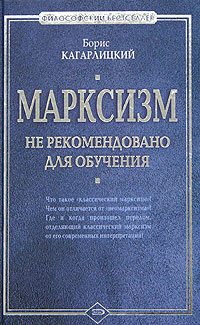
If we talk about specific books, I usually recommend Engels’s “The Origin of the Family, Private Property and the State” to all young people. This is not just a historical and anthropological book, but also a beautifully constructed narrative, as it is now fashionable to say, a narrative about how humanity formed its earliest institutions. By the way, it was written with a sense of humor and lively language. Probably, it was the most important first book for me, and one should begin with it not even with Marxism, but with history and anthropology in general - simply because of the combination of light form with deep content.
By the way, when people say today that Engels is outdated - after all, he actually used the materials of anthropology of the 19th century - this is not entirely true. If you look at the works of modern anthropologists, you can still find references to Engels, even not necessarily from left-wing authors. They admit that modern science views many problems differently, but in general, the interpretation and conceptual vision of social processes proposed by Engels is fully confirmed by modern research.
— You can recall Randall Collins’s book “Four Sociological Traditions,” where in the chapter on Marxism more attention is paid not to Marx, but to Engels, whom Collins considers more sociological, and this work of his.
- Yes, because this is truly an absolutely fundamental thing - it is no coincidence that even Max Weber indirectly refers to it. He almost never directly referred to either Marx or Engels. It seems to me that this is due to certain academic and political circumstances, because he has a lot of indirect references - for example, when it comes to “socialist historians” and so on. True, I do not know all of Weber’s texts, he is far from completely translated into Russian, but one way or another it is clear that Engels influenced him.
—What fiction did you read in your youth?
— As you understand, I belong to the generation for which reading books was the main entertainment available. In the 1970s, there were no TV series in the modern sense or cafes where you could sit as there are now, but reading books and then discussing them was a constant thing. Therefore, we read a lot. At school they exchanged books and discussed them. For example, in childhood and adolescence I read almost the entire pink Soviet multi-volume work of Walter Scott and the collection of Fenimore Cooper, which is now very little read. When you get the flu, you lie at home and read volume after volume. By the way, partly due to the fact that my parents were specialists in English literature, it was the English classics that were most represented and most fully read in our home library. Although, for example, I also read a lot of Schiller. In my opinion, “The History of the Thirty Years' War” is the first history book I read. It was an old Brockhaus publication, very richly illustrated. Then, of course, books began on the history of Ancient Greece and Rome - Titus Livius, Plutarch...
Now this approach to reading has practically become a thing of the past along with multi-volume collected works, and this is very upsetting. Even when some authors are published a lot, in any case, these are no longer those multi-volume books in which there was something hypnotizing, but now all the books are published separately, even in identical bindings. Soviet collected works had another advantage - detailed comments, and end-to-end ones, which made it possible to compare some things, a powerful reference apparatus. Any academic multi-volume publications were made of very high quality, and if we ever have free money in our country for such projects, we should definitely return to multi-volume collections, although it is clear that they will no longer be read as before, volume after volume.
How to read "Capital"
— At what point did you really turn to the social sciences and “unofficial” Marxism?
As for the unorthodox reading of Marxism, the key moment here was 1978, when I went to Berlin as a student exchange student. There I immediately went to the Deutsche Staatsbibliothek, showed my Soviet student card and asked for access to the special storage facility: in Moscow they did not give me this, but in the GDR they immediately let me in.
— And then the curators weren’t told that a certain student asked to go to the special storage facility?
- It's amazing, but no. They just said: come in and read. I asked if they needed some kind of paper, an application. No, nothing is needed. This is how the book “Currents and Tendencies of Neo-Marxism” by Oskar Negt, a German philosopher, a representative of the third generation of the Frankfurt School, came into my hands. This short popular work has not yet been translated into Russian. Among other things, it contains a detailed analysis of the views of Rosa Luxemburg, having become acquainted with which I turned to reading her work “The Accumulation of Capital” - although this very voluminous book itself is boring in places. In a word, Negt significantly expanded my ideas about Marxism, which in the Soviet official presentation repelled and frightened me. By the way, many years later I met him in Germany.
— When reading Western Marxist authors, did you ever wonder why they weren’t published in the Soviet Union? I remember when I read Perry Anderson’s historical works of the 1970s, I couldn’t understand why they were banned in the USSR.
“That was more than understandable.” First, the differences were striking, from the quality of the texts to the specific issues and breadth of views. Secondly, one can remember how even Lenin was read in the USSR: from such and such a page to such and such a page, and no more. Although, if you read in full, for example, “State and Revolution,” very bad questions could arise, since the Soviet state was strikingly different from the one Lenin wrote about. Then another question arose: was it possible and necessary to do as Lenin said? But it was enough to understand that reality fundamentally diverges from theory - in the USSR this was simply glaringly obvious.
— In what order would you recommend reading the books of the Marxist canon to someone who wants to seriously study it? And by the way, how many people do you know who really read Marx fundamentally today?
— Marx is read quite a lot, the only question is who exactly does it and why. Let’s say, philosophers and cultural scientists continue to actively read the “Economic and Philosophical Manuscripts of 1844” - this is the standard path paved by the Western New Left: Marx becomes part of a purely cultural discourse, the well-known concept of alienation and everything that goes back to it are brought to the fore. But they try to keep young economists away from Marx, although those who are smarter and deeper, even if they do not necessarily share leftist views, eventually begin to read Capital. True, according to my observations, they know the second and third volumes quite poorly.
- Try to reach them again...
— I’ll be honest: I myself didn’t read the second and third volumes in a row from beginning to end, but in fragments - unlike the first, which I read several times, like an ordinary book. But in the end it turned out that I know the second and third volumes almost better, since I often turn to them for various reasons. Therefore, I’m not sure that Capital should be read as a novel. Marx himself, when one of his readers wrote to him that Capital was an interesting but very difficult book, advised him to read the first volume backwards.
— I myself just started reading it from the historical chapter on the initial accumulation of capital.
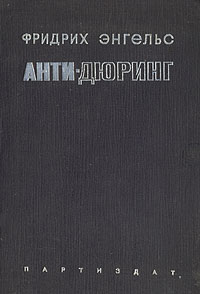
But let's get back to your question. In general, I would advise starting the study of Marxism with Engels’ “Anti-Dühring” - this is the most popular presentation of Marxist teaching, then it is worth reading “The Origin of the Family, Private Property and the State” and his “Letters on Historical Materialism”.
To understand the socialist doctrine of Marxism, you can start with Engels’s “The Development of Socialism from Utopia to Science” and, of course, with the “Manifesto of the Communist Party,” written very easily and journalistically. Actually, because of this, the “Manifesto” cannot be perceived unambiguously as a theoretical text: for example, first we read in it that “the history of all hitherto existing societies has been the history of class struggle,” and then in another place we find a statement according to which it is impossible to talk about established classes in relation to Germany at the beginning of the 18th century. An obvious contradiction? Actually, no, since in the first case we have a journalistic generalization, but if we start to understand the details, it will become clear that the situation is much more complicated. Read his journalism, and you will find that Marx himself was not always a Marxist. Most of his journalistic texts are examples of the mainstream radical bourgeois style: Marx simply understood well how to write for the press.
At the next stage, you should definitely read “The Eighteenth Brumaire of Louis Bonaparte” and “The Civil War in France”, and together, and for advanced users I would also recommend the work “British Raj in India”. It examines a very complex and important philosophical question about the relationship between progress and morality, which are largely opposed to each other. This is an open problem with no clear solution.
Why Marx doesn't need to be re-translated
— As a translator, I can’t help but ask, are you satisfied with the translations of Marx into Russian? Are those that we inherited from Soviet times still relevant, are the new translations of good quality, and is it necessary to continue work in this direction?
— I wouldn’t change Soviet translations. I looked at the new translation of “Capital” by Valery Chekhovsky in the electronic version, and I did not like it. It seemed to me that his quality was significantly lower; the translator tried to make Marx some kind of mediocre political economist. A detailed analysis of this translation was given by my friend Alexander Petrovich Segal - I can address his opinion.
As for classical translations, the point is not whether they are good or bad - in my opinion, they are quite good - but that they have already become part of our culture, political language, and not only for leftists and Marxists, but also for many liberal political scientists and sociologists (often they themselves do not realize that they are using Marxist terms). Of course, there may be questions about old translations, this should be addressed by specialists in Marx, but in general there is no point in new translations, since Marx’s language has gone far beyond the scope of his works. The situation is approximately the same as with the translations of Aristotle: I do not know the ancient Greek language and cannot evaluate how good they are, but even if they are not ideal, is it necessary to make new ones? After all, we use all the basic Aristotelian concepts exactly as they are given in classical translations, and most often we simply do not think about where they came from.
— I can’t completely agree with you. There is a fairly well-founded opinion among translators of fiction that each generation should have its own version of the major classics. For example, some time ago the first volumes of Proust’s “Search for Lost Time” began to be published in Elena Baevskaya’s translation - excellent, for my taste, much more interesting than Lyubimov’s. Thanks to him, I discovered a completely new Proust - a social critic, but with Lyubimov this layer remained somewhere in the background. In general, such work is worth doing at least for purely didactic purposes.
One day, director Anatoly Vasiliev asked me to edit the translation of “The Wishes of Windsor,” also known as “The Merry Wives of Windsor,” and I actually had to translate the play again: the actual translation was very inadequate. And in the process, one more thing became clear: I was surprised at how modern Shakespeare’s language in the prose fragments is. The contrast between the poetic and prose fragments is very interesting, since the poetic ones are written in a high style, while the prose ones are written in a very simple style. For example, have you ever heard the greeting “How now”? I asked Amanda Colvert, an Englishwoman who lived in Moscow, if such a greeting existed in England, and she replied: “Well, it’s clearly American.”
There was also a funny incident when I read “Henry V” in different translations. There is a place where three officers meet, one of whom is Welsh, one is Scottish, and the third is Irish, and each speaks with a different accent. The scene is structured in such a way that they understand each other, but the viewer finds it incredibly funny. How have different translators dealt with this passage? In the edition of Brockhaus and Efron, the solution was fantastically idiotic, but very intelligible: one officer spoke with a Ukrainian accent, another with a Georgian accent, and a third with something else, Belarusian, it seems. And in one Soviet translation the essence of this scene was completely lost, because it was translated into normal Russian. I have always been interested in such translation tasks, since my grandmother was born in Ukraine, then left and spent her youth in Scotland, then lived in London. She returned to Russia in the 1920s, spoke English like a native speaker and adored these accents, loved to show them to me. And since my mother was a translator, I asked her what she would do with this scene - after all, a Scot shouldn’t speak with a Georgian accent? She answered absolutely wonderfully: you have to figure out what a Scottish accent would sound like in Russian.
In general, my short answer is this: translations of literary texts need to be made and remade endlessly, but fundamental theoretical translated texts are part of our culture, and their terminology must be stable. In addition, later translations of theoretical texts very often worsen them.
— I recently translated Mariana Mazzucato’s book “The Value of All Things” and realized that if in familiar terms like surplus value we translate value not as “cost”, but as “value,” then the context becomes broader, including for Marxism. Do you think it’s worth trying to identify new meanings in classical concepts in this way, or is it better to leave everything as it is?
— It seems to me that the concept of value is closer to the original context for Marx than value, although the translation of value with the word “value” really suggests itself. But here there is a danger of going into axiology: value is measurable, but value is rather an ethical category. That is why Bukharin attacked Eugen Böhm-Bawerk so much when he said that he was replacing Marx’s objectivism with subjectivism. It also seems to me that the translation of value with the word “value” provokes subjectivist interpretations. Value primarily has meaning for another: this concept emphasizes how valuable something is to the one who acquires something, and surplus value, on the contrary, is realized by the one who creates it. So let's better leave surplus value as it is.
— Which of the Marxists or neo-Marxists of the current and last centuries would be worth translating into Russian? And in general, how systematically do publishers approach the selection of such books?
— Despite the fact that a lot is being translated now, there are a number of very good classical works that have not yet been published in Russian. They were apparently missed back in the 1990s, when a number of Marxist texts were not translated, because who needed this Marxism then? I have already spoken about the book by Oskar Negt, you can also mention “Plan and Market under Socialism” by the Czech economist Ota Sik - I read these things in my youth and still quote them. There are interesting works by the Polish economist Włodzmierz Brus, as well as an interesting book by Alex Nove, Feasible Socialism (literally, “Achievable Socialism,” but I would translate it as “Socialism that will work”). True, in terms of theory, I have a lot of complaints about it: Nove, although he comes from a family of Russian Mensheviks, is still a perfect British empiricist - but in terms of discussing the real possibilities and problems associated with the socialization of production, his text is very instructive. Of course, all of these are indeed very old texts - good and important, but not the most important. I think almost everything from the central texts of Marxism of the twentieth century has been translated.
If we turn to more modern works, here, of course, everything depends on the initiative of those who want to see this or that book in Russian translation. This is exactly what happened, for example, with Robert Brenner’s book “The Economics of Global Turbulence,” which I brought to Valery Anashvili and convinced him to publish it. Valery is a very conscientious and enthusiastic person; he will definitely publish a book that interests him. And for me it became especially important after the public enthusiastically received Richard Lachman’s book “The Reluctant Capitalists.” Why is everyone so into her? Because they haven't read Brenner's work on the agrarian origins of capitalism in England. In my opinion, Lachman talks more superficially, albeit with a lot of interesting but random empirical material, about what Brenner analyzed systematically and conceptually. But, since it was not translated, they began to actively quote Lachman’s book.
— Do you think it is possible today to form a long-term and systematic publishing program in our disciplines, or are we doomed to some kind of mosaic?
— A large list of untranslated books really needs to be formed, although now publishers have less money for translations. But it’s still not so bad compared to the 1990s, when a huge number of things were not translated at all. Ideally, of course, you need to focus on how the process was set up in the Soviet publishing house Academia. The Soviet state undoubtedly engaged in censorship, but it also created the conditions for academic projects.
By the way, such an attempt at systematicity was made by Valery Anashvili and Alexander Pogorelsky in the “Territory of the Future” series - it would be worth returning to. Moreover, now all the books that need to be translated are not in special storage facilities, and there are a lot of people who know English, so this puzzle needs to be put together little by little. But the problem, again, is that in our book business, as in social movements and politics, everything depends heavily on specific people. For example, Boris Kupriyanov organized the intellectual bookstore “Phalanster”, and then other stores were created using the same model. And Valery Anashvili launched the process of more or less systematic academic publication of translated books, and if there had not been such a person with his hobbies and ambitions, then individual translations, of course, would have appeared, but the institution would not have appeared. Although what there is, of course, is not enough. I think that theoretically there could be at least half a dozen more academic publishing houses in Russia - there is a place for them in the market. Another thing is, are there capitalists like the pre-revolutionary Brockhaus and Efron today?