
Translated material
"We gave birth to three air anxiety"
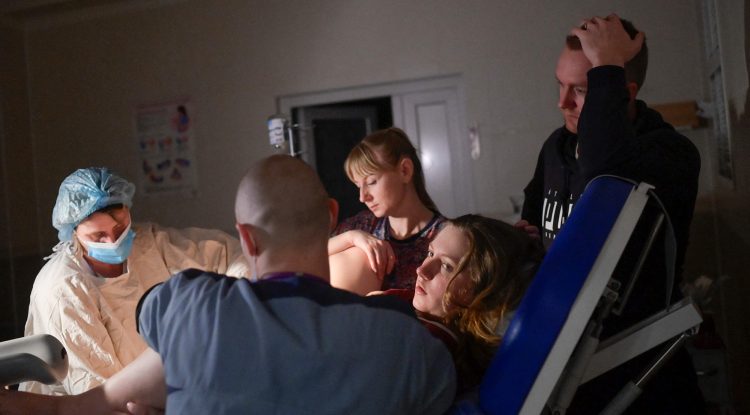
Doula from the Dnieper helps pregnant women during the war in Ukraine. Here is her story
According to the Ministry of Justice of Ukraine as of April 13, during the war, more than 26 thousand children were born in the country. Often women are forced to give birth in the subway, in bomb shelters, at home without the help of doctors. Many doules who accompanied pregnancy and childbirth in peacetime continue to do this now. Among them is Svetlana Kririn , Doula with fourteen years of experience from the Dnieper, the co -owner of the Family Advisory Center "AIST" and the mother of three children. “Cold” talked with her about how she accompanies women during childbirth during bombing, what they do in maternity hospitals and how to help the woman in labor online.

“ Women are very difficult now. And it does not get easier yet "
On February 24, I woke up at 5:15 from an incomprehensible sound-I thought that the cat threw off some boxes in the corridor. On that day, they walked in almost all cities of missile shelling. It was relatively quiet in our Dnieper, but I realized that the war had begun.
I have a psyche so arranged that in stressful situations I begin to work very quickly. At first I found recommendations on what to do so as not to panic, and sent them to all work chats. Then, in the chat of the Ukrainian Dawl Association, we began to discuss what to do because pregnant women began to panic. We had to become a lighthouse, a voice of calm. I suggested at least once every two hours to make straight broadcasts on Instagram, do breathing exercises, come to life. The first weeks of the war, we did this every day, starting from 10 in the morning - it was a kind of incision, during which we gave people different techniques, how to maintain peace of mind, how to calm children, how to take place in a bomb shelter.
Chats of assistance began to be organized very quickly, including by evacuation, and on Facebook someone asked the question: “Are there any chats for pregnant women?” Five minutes later I made such a chat. We did not know how all this would work. You just do something, and people pull themselves up. I began to invite different specialists to this chat-obstetrician-gynecologists, lactologists, psychologists, pediatricians who gave advice in their fields.
The first week I lived with a phone in my hands day and night. At first, appeals concerned psychological problems - there were a lot of panic attacks, hysteria. We taught women how to recognize a panic attack and what to do if you were just nervous, how to teach a partner to reassure a woman, how to talk to the baby.
Requests are a lot of 24x7. Others are replaced by other issues. For example, when women began to be evacuated, a stream of questions about how to give birth in another country went. Many who come to Poland, Germany, Moldova do not understand how the parental system works there.
Many women do not go abroad, but remain in Western Ukraine, for example, in Lviv. There we faced a different difficulty - the maternity hospital is reluctant to accept partners. Yes, doctors are also people, I understand everything, but it is difficult for a pregnant woman to be very alone, especially in another city. It is important that someone is with her.
Women are very difficult now. And it does not get easier yet.
" We created instructions for childbirth in the field "
On the second day of the war, during air alarm, the first child was born in the subway - the girl Mia. On the one hand, it was a great joy, on the other hand, after that, pregnant women had a fear of giving birth in the field - in the basement, bomb shelter or on the road during evacuation. Then the second shaft of appeals went. We created instructions for childbirth in the field and conducted air on this topic. And he just took off, about 10 thousand people looked at him.
Before coronavirus and war, in our Air Center there was a large team - 18 people. We closed all the niches: preparation for childbirth, and conducting in childbirth, and postpartum accompaniment. We are now accompanying women at all stages, but the team decreased to eight people - during Covid, some employees decided to go to other activities, the couple Douul went on maternity leave.
Three or four days after the start of the war, we and the volunteer specialists began to help maternity buildings make bomb shelters: generators, air purifiers, electric appliances, bed lingerie, and diapers took out. I called one local hospital and asked what help they needed. Then she wrote a post on Facebook, and we launched the collection. Closed him in two days. I myself did not expect that everything would happen so quickly. Then another week they called me and offered different help: dry closets are not a question, generators are not a question. I did not even have time to cry from the realization that it could be so.
At first we took up all the tasks, but then I began to find more narrowly focused chats for specific types of assistance and redirected women into them. Later it became clear that some doules, including with young children, are evacuated from Ukraine. Many of them lived in those cities where there were very strong shelling. Then I began to collect the Dowl base, who moves around Ukraine and beyond the limits of the country in order to redirect pregnant women to them, who are also evacuated.
I myself did not leave the Dnieper, only my daughters sent to a safe place. I have the opportunity, but I do not understand how you can leave in such a situation. Even my son once said to me: "Mom, I do not understand who is more expensive for you."
" The maternity hospitals of our city went down to the lower floors "
It should be borne in mind that in our city it is relatively calm. Yes, rockets arrive, a lot of air anxiety during the day, but nevertheless.
To save time on moving in bomb shelters during air alarm, the maternity hospitals of our city went down to the lower floors, all the windows are sealed in them. If there is no air anxiety and the city in relative safety, childbirth occurs in maternity rooms on the lower floors. If air anxiety begins, everyone descends into the bomb shelter-they are more or less equipped in our city.
It is clear that these are rooms without windows where there are no individual conditions. But, as a rule, they are at least zoned: a separate room for women in the first phase of childbirth, a separate room for mothers with newborn children, a separate room where the temporary operating room is made, and if the conditions allow, that is, a separate zone for partners and a dowl. But such opportunities are, of course, not all maternity hospitals. Some bomb shelters are not provided at all, and then the staff creates them on their own.
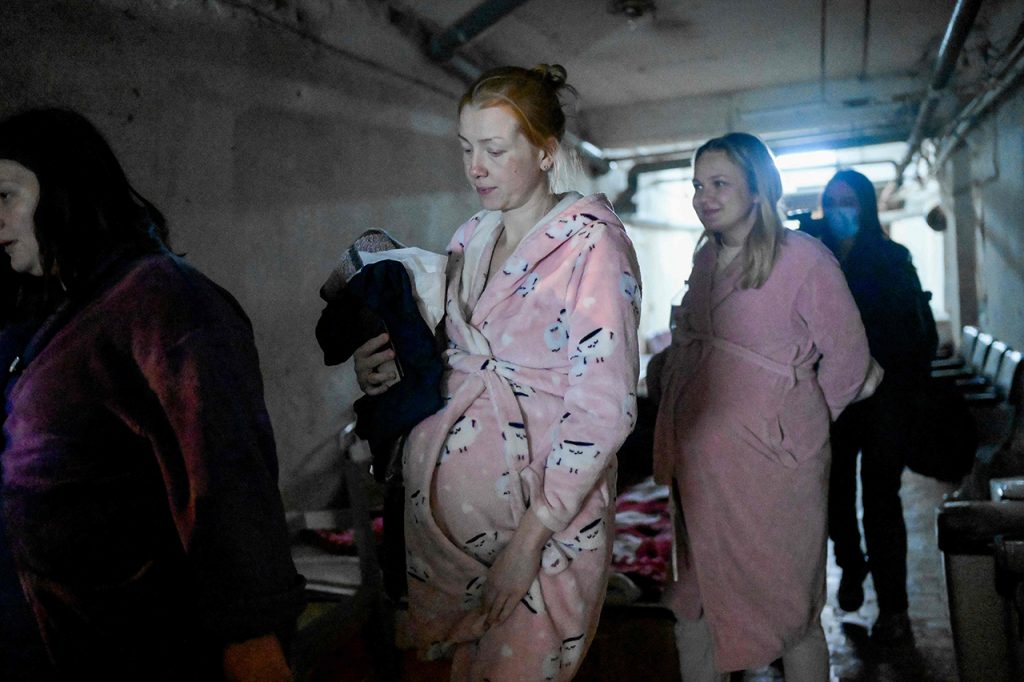
Some maternity hospitals even ask women to come with partners. Yes, on the one hand, there is not much space and air in the bomb shelter, but on the other, these are extra hands, which during the evacuation will help the woman convey the baby.
There is another problem - a commandant hour, when only those who have a pass are allowed to move. Because of this, I could not get to the birth to one girl. We arrived with her at the hospital until the commandant, but already in place of the fight seemed to stop. The woman let me go home and went to bed. The doctor also assured us that it was unlikely that something would happen until morning. I arrived home, and two hours later she had a birth when a curfew was already operating in the city. The woman gave birth five minutes before the end of the commandant.
With one girl we gave birth to three air anxiety. They went down to the bomb shelter twice, but on the third they did not have time - she had a cesarean section in an ordinary operating room, then she was lowered on a gurney in a bomb shelter, I was with the baby.
With another girl, they managed to give birth to a commandant hour. These were a natural birth, and we only once went down to the bomb shelter. All these descents, of course, affect the flow of childbirth. Women are worried, a lot of fear and panic, therefore, in my opinion, the percentage of natural birth can now be much less than before.
" Just give birth to dead children "
About five escorts I had online - with women whom I did not know. They are from other regions - Buchi, Irpen, Kharkov, Chernivtsi. With someone we breathed, I explained to someone at what stage of childbirth they are. It was important with some women to just be silent so that they realized that not alone in this process.
When you accompany a woman in childbirth online, it is important that there is someone from her relatives next to her. All the time to be in touch with the woman herself means constantly pulling her out of the process of childbirth. It is most effective to communicate with those who are next to her. So that a woman could plunge into the process of childbirth, and her relatives said how she, what they do, what is happening. For example, in Buch, I kept contact with a relative of a woman giving birth. She asked what they saw how a woman was breathing. When the period began, they turned off the phone, but after an hour and a half they called back and said that the birth went well. The woman gave birth without doctors, because the territory was already occupied. Doctors could not go to them because of the shelling.
We simply lost two pregnant women in Irpen. I learned about them through volunteer chats, they were hysterical. I managed to find people who were ready to evacuate these women from the city. But at the last moment the connection disappeared. I still do not know where they are.
I also accompanied the orphan girl. We lived for five nights in telephone - with panic attacks, nausea, vomiting. She had a difficult situation. She thought to sit on the evacuation train and go to Poland, but in the end she could not, and the neighbors refused to take her to their bomb shelter. I thought to take the girl to her, but she had some health nuances, because of which she needed medical care. At home, I could not help her. Then we agreed with one maternity hospital, who eventually took this girl to live. She then wrote to me: “God, I’m here like a resort, I have my own souls, my conditions. Nobody matures me, does not expel me. ” In short, to tears.
In addition to accompanying pregnant women as a dowl, I still work as a volunteer. I have a transit house, so I can take at one or two nights evacuating people who need to spend the night and go further. One day, a woman from Svyatogorsk stopped, before the war, she led the center for the support of women who suffered from domestic violence. When the war began, it was engaged in the evacuation of people from raisins - it is a small city that is in the occupation. There people live in basements, they give birth there without any help - there is no connection, nothing. Many pregnant women simply give birth to dead children. This is probably the most difficult to realize - after the shelling of the hospital in Mariupol.
I want, after the end of the war, every woman who gave birth to wartime be awarded too! Because childbirth in wartime is a real feat.