
Translated material
"Marx himself was not always a Marxist"
A big interview with Boris Kagarlitsky. Part 1
The crisis moments of history always give rise to a request for books that explain the structure of the modern world - it is no coincidence that the “great recession”, which began in 2008, revived interest in Marxism. Since then, the body of texts dating back to the works of Marx and Engels has replenished with hundreds of volumes, and the discussion about their legacy continues to gain momentum. Boris Kagarlitsky, a specialist in the field of political theory and social history, is engaged in Marxism for almost half a century: at the request of Gorky, Nikolai Protsenko discussed with him in what sequence to study the books that make up the Marxist canon, which of the modern followers of Marx and Engels deserves priority attention and why understand the structure of the modern world is easier for those who are not close to the framework of only one Marxist theory. This is the first part of a large interview; The conversation was recorded in January of this year.Starting from February 24, 2022, we were all in the face of the advancing barbarism, violence and lies. In this situation, it is extremely important to preserve at least the remnants of culture and support the values of humanism - including for the sake of the future of Russia. Therefore, the editorial office of Gorky will continue to talk about books, reminding our readers that the world remains in the world and fiction.
Engels for youth
“I would like to invite you to talk about books that explain the world.” For me, at one time it was a very important point, since the search for a certain assembly point in disparate knowledge about the economy, politics and culture a half decades ago led me to the translation of the “world system” Immanuel Wallerstein, which I first learned from your book “Marxism: not recommended for training”. Of course, since then I have significantly expanded the personal list of such books, but the initial motive in my reading circle remains unchanged - the explanation of the world. Therefore, it would be interesting to know what books have played a similar role in your life.
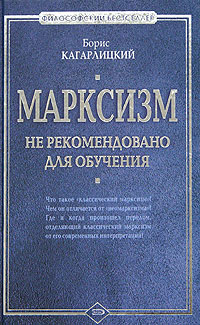 -I think it would be wrong to talk about some book or even several books, since the role was more played by reading as such. Of course, I was very lucky with my parents: my father, Julius Iosifovich Kagarlitsky, was a translator and a well -known specialist in the history of culture, by the way, who knew well the history as a whole and social sciences. Therefore, he immediately gave me some significant and interesting things to read.
If we talk about specific books, then all young people I usually recommend “the origin of the family, private property and the state” of Engels. This is not just a historical and anthropological book, but also a well-built narrative, as it is now fashionable to say, the narrative of how humanity formed its earliest institutions. It was written, by the way, with a sense of humor and a living language. Probably, it was she who was the most important first book for me, and it is necessary to start acquaintance not even with Marxism, but with history and anthropology in general - just because of a combination of a slight form with deep content.
By the way, when they say today that Engels is outdated - he really used the materials of the XIX century anthropology - this is not entirely true. If you look at the work of modern anthropologists, then they can still find links to Engels, not even necessarily with the left authors. They admit that modern science considers many problems differently, but in general, the interpretation and conceptual vision of social processes proposed by Engels are also quite confirmed by modern research.
- You can recall the book of Randall Collins “Four Sociological Traditions”, where in the chapter about Marxism, more attention is paid not to Marx, but by Engels, whom Collins considers more sociologically, and this work of his.
- Yes, because it is really an absolutely fundamental thing - it is no coincidence that even Max Weber indirectly refers to it. He almost never referred directly to Marx or Engels. It seems to me that this is due to some academic and political circumstances, because he has a lot of indirect references - for example, when it comes to “socialist historians” and so on. True, I do not know all the texts of Weber, he is far from completely translated into Russian, but one way or another it can be seen that Engels influenced him.
- And what did you read from fiction in your youth?
- As you understand, I belong to the generation for which the reading of books was the main of the available entertainment. In the 1970s, there were no series in the modern sense or such a cafe where you can sit, as it is now, but to read books and then discuss them-this was constantly. Therefore, they read a lot. The school exchanged books, discussed them. For example, in my childhood and youth, I read almost the entire pink Soviet multi -volume Valter Scott and the collection of Fenimor Cooper, who is now very little read. How you get the flu - you lie at home and read Tom after Tom. By the way, partly due to the fact that parents were specialists in English literature, it was the English classic in our home library that was most represented and most fully read. Although I, for example, read a lot of Schiller. In my opinion, the “History of the Thirty Years War” is the first historical book that I read. It was an old Brockhaus publication, very richly illustrated. Then, of course, books on the history of ancient Greece and Rome began - Tit Liby, Plutarch ...
Now this approach to reading has practically gone the past along with multi -volume collections of essays, and this is very upset. Even when there are a lot of authors, in any case, these are not the multi-volumes in which there was something hypnotizing, and now all the books are released separately, even in the same bindings. Soviet collected works had another advantage-detailed comments, and through, which allowed some things to compare, a powerful reference apparatus. Any academic multi-volume publications were made very high quality, and if in our country there will someday free money for such projects, it is necessary to return to multi-volume collections, although it is clear that they will no longer be read as before, tom after Tom.
How to read "Capital"
-At what point did you really turn to the social sciences and “unofficial” Marxism?
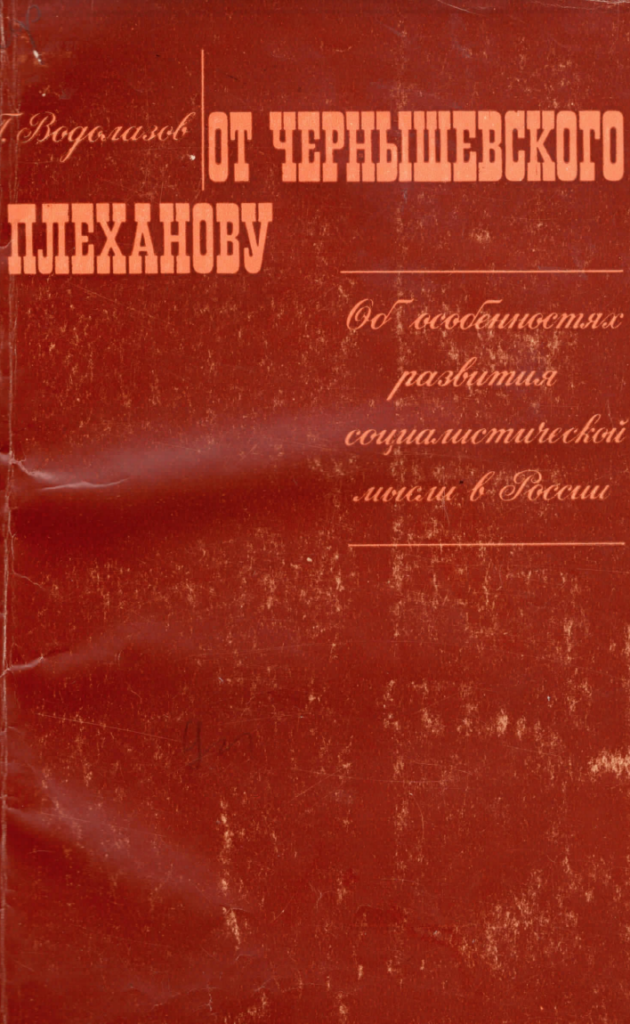 -Here I have to say many thanks to the sociologist and historian Pavel Mikhailovich Kudyukin, who was friends with me in his student years and prompted some books-for example, gave me to read the work of Ilyenkov “About idols and ideals” and the now forgotten book of Grigory “From Chernyshevsky to Plekhanov”, which was based on the dissertation of 1968. This book is rather not even about the history of socialist ideas in Russia, but about what is a policy examined through the triangle “Responsibility - Tactics - Strategy”. Back in my student years, I was affected by the article by Leonid Batkin about Machiavelli, and I read the book “Sovereign” later, and she made a lesser impression on me. Machiavelli has many things that are not very relevant for a modern reader-for example, how to organize an army in the XVI century, how to properly hold a city, etc. So sometimes it is better to read something about a well-known book, and only then take it up for it.
As for the unorthodox reading of Marxism, here the key point was 1978, when I went to Berlin by student exchange. There I immediately went to Deutsche Staatsbibliothek, showed a Soviet student ID and asked for access to special security: in Moscow they did not give it to me, and they were immediately allowed in the GDR.
- And then the curators were not informed that a certain student asked for special security?
- Amazing, but no. They just said: come in, read. I asked if the paper was needed, a statement. No, nothing is needed. That is how the book “The Streams and Trends of Negroxism” of Oscar Neigt, a German philosopher, a third -generation of the third generation of the Frankfurt school fell into my hands. This short popular work has not yet been translated into Russian. In it, among other things, there is a detailed analysis of the views of the Luxembourg rose, having become acquainted with which I turned to the reading of her work “Capital accumulation” - although this very voluminous book itself is boring in places. In a word, NEGT significantly pushed my ideas about Marxism, who repelled and scared away in the Soviet official presentation. By the way, many years later I met him in Germany.
- You did not arise then when reading the Western Marxist authors of the issue of why they are not published in the Soviet Union? I remember when I read the historical works of Perry Anderson of the 1970s, it did not fit in my head why they were banned in the USSR.
- It was more than clear. Firstly, the differences were striking, starting from the quality of texts and ending with specific problems and the breadth of views. Secondly, we can recall how even Lenin was read in the USSR: with such and such a page, and no more. Although, if we read completely, for example, the “state and the revolution”, very bad questions could arise, since the Soviet state was very different from the one that Lenin wrote about. Following another question arose: was it possible and it was necessary to do as Lenin said? But there was enough understanding that reality is fundamentally diverging with the theory - in the USSR it was simply flashingly striking.
- In what order would you advise to read the books of the Marxist canon to the one who wants to seriously study it? And by the way, how many people who today are really fundamentally read by Marx?
- Marx read quite a lot, the only question is who exactly does this and why. For example, philosophers and culturalists continue to actively read the “Economic and Philosophical manuscripts of 1844”-this is a standard path laid by Western new left: Marx becomes part of a purely cultural discourse, a well-known concept of alienation is put forward and everything that rises to it. But young economists are trying to keep from Marx away, although those who are smarter and deeper, who do not even necessarily share their left -wing looks, ultimately begin to read “Capital”. True, according to my observations, they know the second and third volumes quite poorly.
- Try to get to them yet ...
- I will honestly say: I myself read the second and third volumes not in a row from beginning to end, but with fragments - unlike the first, which I read several times, like an ordinary book. But in the end, it turned out that it was the second and third volumes that I know almost better, because I often turn to them for various reasons. I’m not sure that “Capital” should be read as a novel. Marx himself, when one of the readers wrote to him that “Capital” is an interesting but very difficult book, advised to read the first volume backwards.
- I myself just began to read from the historical chapter about the initial accumulation of capital.
 - I also did this experiment: first I read the first volume in one direction, then in the other, and it turned out that the book was revealed from a completely different side.
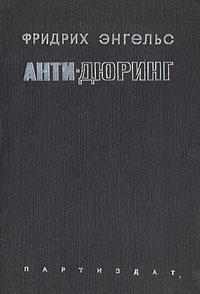
But back to your question. In general, I would advise the study of Marxism from the “anti-During” Engels-this is the most popular presentation of Marxist teaching, then it is worth reading “the origin of the family, private property and the state” and his “Letters on Historical Materials”.
To understand the socialist doctrine of Marxism, one can start with the Engels “development of socialism from utopia to science” and, of course, with the “manifesto of the Communist Party”, very easily and journalistic written. Actually, because of this, the “manifesto” cannot be perceived unambiguously as a theoretical text: for example, at first we read in it that “the history of all existing societies was the history of classes”, and then we find a statement in another place according to which it is impossible to talk about the prevailing classes in relation to Germany at the beginning of the XVIII century. An obvious contradiction? In fact, not, because in the first case, we have a journalistic generalization, but if you start to understand the details, it will become clear that the situation is much more difficult. Read its journalism, and you will find that in it Marx himself was far from always. Most of his journalistic texts are samples of the mainstream radical-bourgeois style: just Marx well understood how to write for the press.
At the next stage, it is necessary to read the “eighteenth Brumer Louis Bonaparte” and “Civil War in France”, and it was together, and advanced users I would advise “British dominion in India”. It considers a very complex and important philosophical question about the ratio of progress and morality, which largely confront each other. This is an open problem, she does not have an unambiguous solution.
Why Marx does not need to be translated again
- As a translator, I can not help but ask if the translations of Marx into Russian are arranged? Are those that we inherited from the Soviet era are still relevant, are new translations of high-quality and is it necessary to continue working in this direction?
- I would not change Soviet translations. I looked through the new translation of Valery Chekhovsky in the electronic version, and I did not like it. It seemed to me that its quality is significantly lower, the translator tried to make some ordinary political union out of Marx. A detailed analysis of this translation was given by my friend Alexander Petrovich Segal - I can address his opinion.
As for classic translations, the point is not even that they are good or bad - in my opinion, they are quite good - but that they have already become part of our culture, political language, and not only for left -wing and Marxists, but also for many liberal political scientists and sociologists (often they themselves do not realize that they use Marxist terms). Of course, there may be questions to the old translations, this should be dealt with by Marx specialists, but in general there is no point in new translations, since the Marx language went far beyond his work. The situation is about the same as with Aristotle's translations: I do not know the ancient Greek language and I can’t evaluate how good they are, but even if they are not perfect, do you need to make new ones? After all, we use all the basic Aristotelian concepts precisely in the form that they are given in classical translations, and most often we just don’t think where they came from.
- I can’t completely agree with you. Among the translators of fiction there is a fairly reasonable opinion according to which each generation should have its own version of the largest classical works. For example, some time ago, the first volumes of the “searches of the lost time” of Proust translated by Elena Baevskaya - magnificent, to my taste, are much more interesting than Lyubimovsky. Thanks to him, I discovered a completely new Proust-social criticism, while Lyubimov, this layer remained somewhere in the background. In general, such a work should be done at least for purely didactic purposes.
 -There is a fundamental difference: the characters of artistic texts, for example, can discuss topics among themselves, incomprehensible to us, therefore, with a change in cultural and historical context, literary masterpieces should probably be translated again. But there are also questions. Take Shakespeare: I read it in several translations, but I read something in the original, but the most powerful impression on me was made not by Pasternak and not Lozinsky, but by translations in the publication of Brockhaus and Efron. Of course, they were outdated and rather condo already in the days of my childhood, but they gave a much more accurate idea of the English original.
Once, director Anatoly Vasiliev asked me to edit the translation of the “Windsor Kumushki”, they are also “Windsor mockery”, and I actually had to translate the play again: the cash was very inadequate. And in the process it turned out another thing: I was surprised at how modern Shakespeare's language is in prosaic fragments. The contrast between poetic and prosaic fragments is very interesting, since the poetic is written in high style, and the prosaic ones are very simple. For example, have you ever heard the greeting of “How Now”? I asked Amanda Carelver, the Englishwoman who lived in Moscow, whether there was such a greeting in England, and she replied: "Well, this is a clear Americanism."
There was also a funny case when I read in different translations of Henry V. There is a place where there are three officers, one of whom is a Welsh, the other is a Scot, and the third is the Irishman, and everyone speaks with his accent. The scene is built in such a way that they understand each other, but the viewer is insanely ridiculous. How did different translators dealt with this fragment? In the publication of Brockhaus and Efron, the decision was fantastically idiotic, but very intelligible: one officer spoke with the Ukrainian accent, the other with Georgian, and the third-with some other, with the Belarusian, it seems. And in one Soviet translation, the essence of this scene disappeared, because it was translated in a normal Russian language. Such translation tasks were always interested in me, since my grandmother was born in Ukraine, then she left and spent her youth in Scotland, then lived in London. She returned to Russia in the 1920s, owned English as relatives and adored these accents, loved to demonstrate them to me. And since my mother was a translator, I asked her what she would do with this scene - shouldn't the Scot to speak with the Georgian accent? Она ответила совершенно замечательно: ты должен придумать, как звучал бы по-русски шотландский акцент.
В общем, мой короткий ответ такой: переводы художественных текстов нужно делать и переделывать бесконечно, но фундаментальные теоретические переводные тексты — часть нашей культуры, и их терминология должна быть устойчивой. К тому же более поздние переводы теоретических текстов очень часто их ухудшают.
— Недавно я переводил книгу Марианы Маццукато «Ценность всех вещей» и понял, что если в привычных терминах вроде прибавочной стоимости переводить value не как «стоимость», а как «ценность», то контекст становится более широким, в том числе и для марксизма. Как вы думаете, стоит ли пытаться выявлять таким образом новые смыслы в классических понятиях или лучше тоже оставлять все как есть?
— Мне кажется, что понятие стоимости ближе к исходному для Маркса контексту, чем ценность, хотя перевод value словом «ценность» действительно сам собой напрашивается. Но здесь есть опасность уйти в аксиологию: стоимость измерима, а ценность — это скорее этическая категория. Именно поэтому Бухарин так атаковал Ойгена Бём-Баверка, когда говорил, что он объективизм Маркса заменяет субъективизмом. Мне тоже кажется, что перевод value словом «ценность» провоцирует субъективистские интерпретации. Ценность прежде всего имеет смысл для другого: это понятие подчеркивает, насколько нечто ценно для того, кто что-то приобретает, а прибавочная стоимость, наоборот, реализуется тем, кто ее создает. Так что давайте лучше оставим прибавочную стоимость такой, какая она есть.
— Кого из марксистов или неомарксистов текущего и прошлого столетия стоило бы перевести на русский? И вообще, насколько системно издатели подходят к выбору подобных книг?
— При том, что переводят сейчас много, есть ряд очень хороших классических работ, до сих пор не вышедших на русском. Их, видимо, пропустили еще в 1990-е годы, когда ряд марксистских текстов не стали переводить, потому что кому тогда нужен был этот марксизм? О книге Оскара Негта я уже говорил, можно также упомянуть «План и рынок при социализме» чешского экономиста Ота Шика — эти вещи я прочел в молодости и до сих пор цитирую. Есть любопытные работы польского экономиста Влодзмежа Бруса, а также интересная книжка Алекса Ноува Feasible Socialism (буквально — «Достижимый социализм», но я бы перевел как «Социализм, который будет работать»). Правда, в плане теории у меня к ней масса претензий: Ноув хоть и происходит из семьи русских меньшевиков, он все же совершенный британский эмпирик — но в плане обсуждения реальных возможностей и проблем, связанных с обобществлением производства, его текст весьма поучителен. Конечно, все это действительно уже очень старые тексты — хорошие и важные, но не самые главные. Из центральных текстов марксизма ХХ века, думаю, переведено практически все.
Если обратиться к более современным работам, то здесь, конечно, все зависит от инициативы тех, кто хочет видеть ту или иную книгу в русском переводе. Именно так произошло, например, с книгой Роберта Бреннера «Экономика глобальной турбулентности», которую я принес Валерию Анашвили и убедил ее издать. Валерий — человек очень добросовестный и увлекающийся, он обязательно издаст книгу, которая его заинтересовала. А для меня она стала особенно важной после того, как публика с восторгом приняла книгу Ричарда Лахмана «Капиталисты поневоле». Почему на нее все так запали? Потому что не читали работу Бреннера об аграрном происхождении капитализма в Англии. На мой взгляд, Лахман более поверхностно, пусть и с большим количеством интересного, но случайного эмпирического материала, рассказывает о том, что систематически и концептуально проанализировал Бреннер. Но, поскольку он не переведен, стали активно цитировать книгу Лахмана.
— Как вы думаете, возможно сегодня сформировать долгосрочную и системную издательскую программу по нашим дисциплинам или же мы обречены на некую мозаичность?
— Большой список непереведенных книг действительно нужно формировать, хотя сейчас денег на переводы у издателей стало меньше. Но все равно не так все плохо в сравнении с 1990-ми, когда огромное количество вещей не было переведено в принципе. В идеале, конечно, нужно ориентироваться на то, как был поставлен процесс в советском издательстве Academia. Советское государство, несомненно, занималось цензурой, но оно же создавало условия для академических проектов.
Такую попытку систематичности, кстати, предприняли Валерий Анашвили с Александром Погорельским в серии «Территория будущего» — к ней стоило бы вернуться. Тем более, что сейчас все книги, которые надо переводить, в спецхранах не лежат, а людей, знающих английский, немало, так что пазл этот надо понемногу собирать. Но проблема опять же в том, что у нас в книжном деле, как и в социальных движениях, и в политике, все сильно зависит от конкретных людей. Вот, к примеру, Борис Куприянов организовал интеллектуальный книжный магазин «Фаланстер», а потом по той же модели создавались другие магазины. А Валерий Анашвили запустил процесс более или менее систематической академической публикации переводных книг, и если бы не было такого человека с его увлечениями и амбициями, то отдельные переводы, конечно, появлялись бы, но не появилась бы институция. Хотя того, что есть, конечно, мало. Думаю, что теоретически в России может существовать еще как минимум полдюжины академических издательств — для них найдется место на рынке. Другое дело, найдутся ли в наши дни такие капиталисты, как дореволюционные Брокгауз и Ефрон?