
Translated material
I don't want to live like that
Why are elderly people decide to commit suicide
The cause of every hundredth death in the world is suicide: there is more people who die from HIV, malaria, breast cancer or as a result of military operations and murders. In 2019, according to WHO, Russia took ninth place in the world in the number of suicides per capita. Most suicides fall on adolescents and elderly people, but if teenage suicides in society often talk about, then the elderly are usually silent about suicide. The special corner of the “cold” Olesya Ostapchuk spoke with loved ones who committed suicide, as well as gerontologists, psychologists and psychiatrists to figure out why older people decide to take their own life.
Terribly energetic
On November 9, 2020, 81-year-old Antonina Sharova fed cats, turned off the electrical appliances and took her remaining remaining things from the cottage. Antonina Petrovna no longer returned to the house, after which she periodically looked after about 20 years.
A two -story wooden country house with cats, a apple garden and beds under the windows was in the village of Kukushkino, Vladimir Region and belonged to the Pugachev family. They did not have a ball relatives, but they were like her relatives - Antonina Petrovna was Anna’s friend, the Pugachev’s grandmother. Their children went to the same school and were friends. Then the children grew up, Antonina and Anna grew up, and in 2001 Anna died. Her children and grandchildren were yearning for her grandmother, and Antonina Sharova, who recently lost her son, did not know where to direct her care. As a result, she replaced her grandmother's girl Alla, growing up in the Pugachev family.
The parents of Antonina Petrovna died when she was a child. After that, she was brought up in an orphanage in Yeysk, then, having received secondary education, she got a job as an operator of lithium machines, getting on the distribution of technical and plastic products in Kosverevo to the plant. Having moved there, Antonina got married, but the marriage was unsuccessful: her husband beat her, they divorced soon, and she began to educate her son alone.
Antonina's son died at the age of 50 - he fell drunk from the stairs and broke his head. “She perceived all the blows of fate as some kind of rock,” says 32-year-old Alla Pugacheva. According to her, relatives never saw Antonin crying, even at the funeral. “From her, everyone was charged with cheerfulness, energy, health,” Alla continues.
Antonina was sociable: she had friends with whom she regularly went to the bathhouse, she went to drink tea to the Pugachevs, called them - but at the same time, according to Alla, she was quite secretive. “The sincere conversation in the spirit“ oh, girls, something so sickening to me, I remember, the life of a fig, ”Alla recalls,” Alla recalls. - She did not share her problems. It seems that the person is constantly near you, but you do not know what is in his soul. Probably there were deep wounds. ”
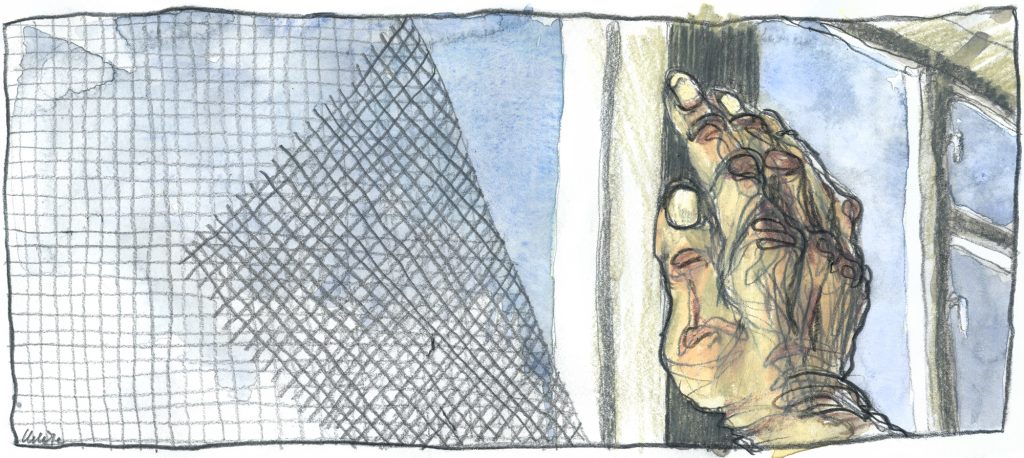
Elderly people actually often suffer from depressive disorders than middle -aged people, says psychiatrist Elena Vrono. “However, the elderly people in Russia usually do not treat depression and often do not know about it,” she adds. People of the Soviet military and post -war generation are not used to taking care of mental health, they rarely turn to psychologists and psychiatrists. But even if they turn to specialists, it is difficult to eliminate the cause of depression in the elderly.
“In the case of a teenager in depression, you can stop the bullying, help therapy with unhappy love, establish things to study - cope with the reasons that loaded it into a depressive state,” says Olga Tkacheva. - And how to solve the problems of an elderly person? The son threw it, does not communicate. There is an incurable disease or loss of mobility. This cannot be fixed, you can only work with the soul and, if necessary, treat depression with medicines. ”
The fact that Antonina Petrovna could have depression did not think her relatives. She was "terribly energetic", at the age of 80 men still got married.
“She constantly had some things, the energy beat with a key, they say about such people in her ass,” Alla recalls. - She came to our house and immediately: “So, let's scatter this bed, make pasta, now, collect the currant ...”. I reassured her: “Aunt Ton, at this age you can’t work like that, you have to take care of yourself.” After that, she could lie down for 20 minutes, and then she got up and said: “How is it, I'm lying? And never complained. You will ask her how she feels, and she: “The pressure was yesterday, but today everything is fine, I already sweep the track, I clean it from snow”. ”
Antonina did not understand how others could sit in front of the TV all day. “She said:“ It is necessary to do something, otherwise I will get out, ”Alla recalls. “I perceived this as her character, but now I think that perhaps it was an attempt to drown out some kind of inner pain, to get away from reality.”
Get a pension and all
The idea to commit suicide in the elderly, like people of a different age, often does not appear out of literal desire to bring death, but because of other feelings, writes psychologist Julia Padun. For example, because it is unpleasant for a person to feel like a burden, he is lonely or tired of experiencing painful emotions - such as shame, wine, aversion to himself.
People who want to commit suicide do this because of physical or emotional pain, explains the teacher-practitioner of the Department of Psychiatry of the Medical Department of the University of Tulein in New Orleans (USA), Professor Marilyn Mendoza. “If they could press the button and stop pain, they would not kill themselves. But they have no hope, and this leads to suicide, ”she says.
Antonina Petrovna did not complain about the pain, as she did not complain about anything else, but she had a serious illness. About five years ago, she was diagnosed with breast cancer. There were no chemotherapy, as it was the early stage of the disease, but it was removed one breast. After the operation, Antonina lay in the hospital for a month, and then, as Alla Pugacheva says, "cheerfully returned to the beds."
“Doctors said that for about a month the hand cannot be disturbed from the operated side, because there may be unpleasant consequences in the form of lymphostasis. At first she followed the instructions of the doctor, and then scored for it, ”says Pugacheva. “She was still joking that since she was an orphanage, a man of the street, everything heals on her like a cat.” Now close Antonins think that perhaps she had a relapse of oncological disease and this led her to suicidal thoughts - Antonina often said that "she would not want to be a vegetable and a burden for her loved ones."
At the same time, until the last days of her life, Antonina rode a bicycle, as Alla says, “was constantly in motion,” looked after the Pugachev’s house: several years ago they moved to Moscow, and Antonina lived in their house for most of the year, leaving it only for the winter. She winter in her fire apartment.
On the day when Antonina took her things from the cottage, Alla and Father Yuri went on business. “I called the phone. I picked up the phone because dad was driving. Aunt Tonya said: “Alla, hello, I came to your bicycle now, because my dad asked me to turn off some electrical appliances. I fed cats, everything is fine,” Alla recalls. - Then she asked how I was doing, then she and dad talked, she clarified when he arrived. He said that he was going to November 10. It was our last conversation. ”
On the same day in the evening, Alla’s mother called Antonina and, as Alla passes the story of her mother, she said: “I got a pension and reached you for a second time by taxi with chic, once again fed cats.” Alla's mother tried to talk with Antonina, to find out how it was, but she cut off: “Oh, everything, I am busy, for now,” and hung up.
In recent years, Antonina has attached special importance to pensions, says Alla Pugacheva, and was very waiting for the 80th anniversary due to an increase in pension, although it was not in poverty. “She had a ritual directly, every month she went to the post office early in the morning, received her, paid all the bills. She never had any debts, ”Alla explains. “Even if we gave her money, she didn’t take a lot, and if she took it, she gave us these unfortunate several thousand rubles from a pension - it was important for her to pay everyone.”
According to Alla, the godson Sharova-50-year-old Vladimir, who lives with his family in another city 20 kilometers from Kosverevo, told her that recently Antonina often said: "Rather, to receive a pension, and everything is probably, probably." What she had in mind, it was incomprehensible to loved ones. Antonina seemed cheerful and pleased, called Pugachev, the godson, was interested in their affairs, gave gifts.
Look for me in the barn
According to the National Institute of Mental Health in the United States, adolescents are more likely to admit that they think about suicide, but older people often commit it. In two studies conducted in the 1990s, American psychologists found that 200 teenagers trying to commit suicide have one deceased, and in the case of elderly, four attempts-one deceased. Such a difference, the researchers explain, is often due to the fact that it is easier for adults to gain access to weapons and pharmaceutical drugs.
However, not all experts agree with such assessments. The psychiatrist Elena Vrono believes that this is not the growth of suicides among the elderly, but a proportional ratio associated with the growth of life expectancy around the world. There are more elderly in the population, respectively, there are more suicides in this age group. “The expectation of life is increasing even in our unfortunate and poor country. Now she is more than 70 years, which has not been a few years ago ( the expectant life expectancy in the CIS countries crossed the border for 70 years in 2010. - Approx. "Cold" ). Now, when we say “old man”, we are already thinking about a person 80, not 70 years old, ”she says.
According to the National Center for the Submissions of the United States, the most often suicidal thoughts occur in the elderly after 85 years. Among the elderly people, suicides are more often committed by men than women, and the number of double suicides - when the spouses together commit suicide - is above all among the elderly.
Psychologists say that relatives should pay attention to the behavior of an elderly person, if he loses interest in his favorite classes, begins to communicate less often with people, neglects the departure of himself, does not observe the instructions of doctors, begins to give things out, put things in order, make changes to the will, or says phrases in the spirit: “You see me for the last time.”
The chief geriat of the Ministry of Health of Russia, Doctor of Medical Sciences, expert of the Old Age in Joy charity foundation, Olga Tkacheva, believes that many elderly people are afraid to speak heart to heart with loved ones, because they do not give their feelings great importance: they will pay attention to the closed gloomy teenager, for example, they will pay attention to the elderly person who behaves like that, “Well, he is just an old man,” he is just an old man. Considering the depressive state just a line of old age.
***
On the evening of November 10, 2020, Alla's father Yuri arrived in Kosverevo and drove for groceries to the store opposite the house of Antonina. He noticed that the light was not on in her windows, and called Antonina, but she did not pick up the phone. As he later told Alla, he thought: “Well, maybe it was already going to bed,” and went home.
On the morning of November 11, he again called Antonin, and she again did not pick up the phone. Then, as Alla reports his story, he waited for three hours and went to her home, thinking: “Still 81 years old, you never know.”
Antonina lived in a two -story apartment building, opposite which there were sheds of tenants, where they kept bicycles, vegetables and all utensils. Nobody opened the door to the apartment, so Yuri began to call the godson Antonina Vladimir, who had a key. After some time, he arrived with his wife, and the three of them went up to the apartment. “With shaking hands, they open this door, expecting to see that she died-and what else can there be thoughts, after all, an elderly person,” says Alla, recreating a picture from the stories of her father. But, having entered the apartment, they found that there was no one there.
On the table, as Alla reports the story of her father, notes were carefully laid out. At random, opening one of them, Yuri read: "Look for me in the barn." Without reading the rest of the notes, close Antonins ran to the barn. He was ajar. Looking there, they saw the body of Antonina and realized that she committed suicide ( Roskomnadzor prohibits indicating the method of suicide, so we do not do this. - Approx. “Cold” ).
“I saw this picture, closed the barn and went out with the thought:“ Well, no, this cannot be. ” We just stood the three of them and could not believe it, looked at this terrible picture, ”Yuri told his daughter Alla.
Returning to the Antonins apartment, relatives realized that she clearly thought out a suicide plan and was preparing for this ahead of time. For example, on a wall calendar with a plastic tape, in which the window moves to different dates, the date of death was marked, as well as nine and forty days after it. “She chose the day of death so that it was after a pension and that the few loved ones - I, my mother, dad, her two gods - were able to do funeral, as the funeral falls on the weekend,” says Alla.
Antonina also recognized in advance the prices for ritual services in Kosverevo and left close contacts to those funeral agencies where the services, in her opinion, were worth adequate money. She gathered “wrappers with a dressing gown, shoes in which it needs to be put in a coffin, towels” says Alla, and in the note indicated that the money for the funeral was lying behind the board - relatives understood what it was about. The money for the wake was also collected, in addition, Antonina wrote who to invite to the commemoration, who would more likely agree, and who refused, collected gifts to relatives, made a testament, paid for utilities for several months in advance, indicated who could take her photographs and which family should offer old furniture before throwing it away.
“When we came to our country house after that, I began to look around. There have always been a lot of her things: some robes, slippers, boots, a mug. None of her things are left. All this time she slowly carried her things out, but no one noticed this. Her goal, probably, was to make no traces remain, bright reminders, ”says Alla.
Antonin wrote one of the notes for the police and attached a pin to the wall near the place of suicide:
"Statement.
In my death, I ask you not to blame anyone.
Sharova ".
Below it was added: “I lose my mind, mobility too. I don't want to live like that. Who offended, please forgive me. I planned to leave my life myself. I am performing the year 11.11.2020. 6 o’clock in the morning. "
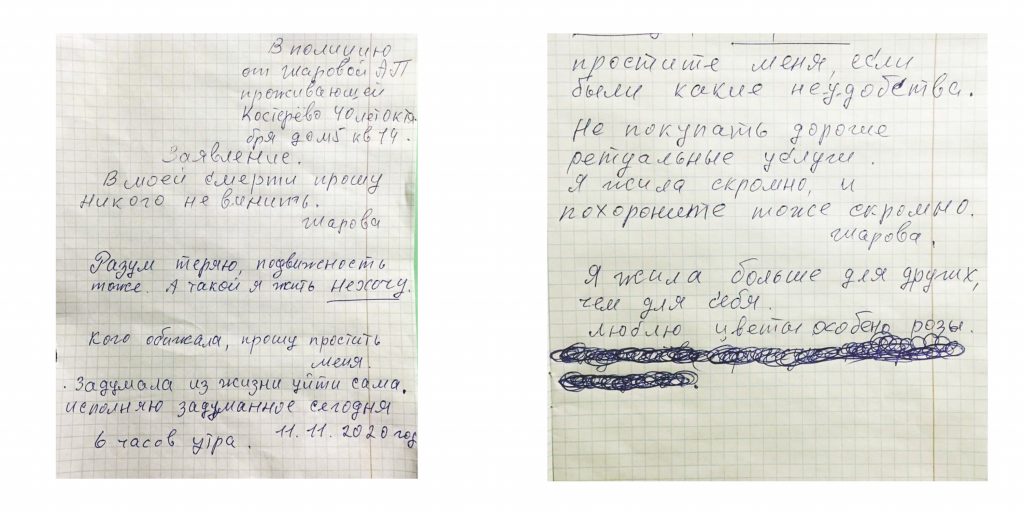
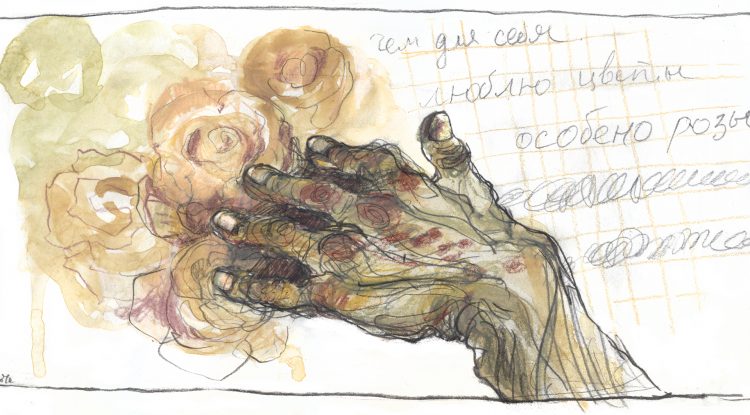
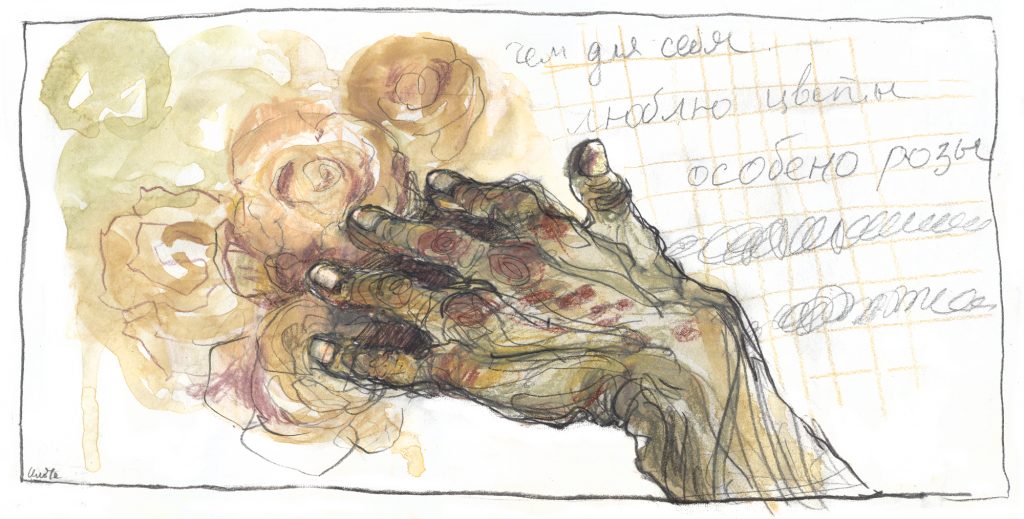
In another note, Antonina turned to loved ones: “Forgive me if there were any inconvenience. Do not buy expensive ritual services. I lived modestly, and bury also modestly. Sharova ". Below it was added: “I lived more for others than for myself. I love flowers, especially roses. "
She lived alone
In June 2020, the doctor of historical sciences, the 70-year-old orientalist Nikolai Abaev, who lived in Ulan-Ude, sent a letter to his friend: “My isolation here ( in connection with the coronavirus.-Approx.“ Cold ” ), on Karl Marx Boulevard, turned into imprisonment, without free food. I am dying of exhaustion, diabetes, anemia. "
After that, the colleagues of the scientist at the Tuvan State University (TSU) and the Buryat State University (BSU) began to collect money for him on social networks. The scientist was collected 60 thousand rubles, transferred to the card, but the bank wrote off everything, and Abaev did not get the money: it turned out that he had an outstanding loan, for which the bank automatically wrote off all the money received on the card. The salary from TSU and BSU and Abaev’s pension were also written off automatically.
Pupils announced a re -raising fund to pay off these debts of Abaev, as well as his debt for the rented apartment. But it was not possible to collect enough, and after a while Abaev ended up in the hostel - he was evicted from the apartment, and things had to be left, because they had nowhere to take them out.
The acquaintance of Abaev, Ilya Mukashov, found him another housing - as he said to the publication "Siberia. Reals", "the apartment was killed", but cheap. Abaev was also offered to move to the state boarding school for the elderly or the university hostel, but he refused. In October 2020, shortly after his 71st birthday, Abaev committed suicide.
The suicide of the elderly is a problem that is relevant to the whole world. But Russia has a specificity associated with a low level of income: “People have a meager pension that creates their feeling that you have worked all your life, and as a result is a beggar and forced to ask for benefits from the state. In addition, elderly people often become victims of scammers, and this is a huge shock for someone who cores every penny and saved for a long time to accumulate, ”says Olga Tkacheva, chief geriatrician of the Russian Ministry of Health.
The psychiatrist Elena Vrono agrees with this, adding that people aged at the same time have a lot of expenses - after all, in old age, people get sick more. К тому же, добавляет Вроно, среди пожилых людей в России немало пьющих, и половину самоубийств люди совершают в нетрезвом виде — это также усугубляет проблему с суицидами пожилых.
***
28 июня 2021 года Марина (имя изменено по просьбе героини) сидела в морге Самары в очереди за справкой о смерти. «Мы с другими ожидающими разговорились. Странная картина: представьте себе, человек восемь, которые по очереди произносят монологи о смерти близких», — вспоминает она.
Один из таких монологов задел Марину за живое — женщина в очереди рассказывала про самоубийство своей 96-летней мамы. Та — в прошлом математик, инженер по специальности — последние годы не вставала с постели. Причиной этого был перелом шейки бедра. Ее постель была оборудована таким образом, чтобы она могла справить нужду и позвать кого-то из близких или сиделку, дернув за веревку с колокольчиком.
Последние три года мама рассказчицы постоянно говорила, что хочет уйти из жизни, потому что чувствует себя обузой. А в июне 2021 года смогла покончить с собой ( мы не описываем способ самоубийства, так как это запрещено Роскомнадзором. — Прим. «Холода» ). Тщательная подготовка к самоубийству, описанная собеседницей, и то, что женщина чувствовала себя обузой, задели Марину — все это напомнило ей о самоубийстве ее бабушки.
Баба Нина (имя изменено по просьбе Марины) всю жизнь прожила в спальном районе Самары. До выхода на пенсию она работала парикмахером, и ей очень нравилась эта работа, но у нее была астма, и с возрастом переносить запах лака и краски для волос становилось для нее все тяжелее.
Марина говорит, что после выхода на пенсию бабушка постоянно жаловалась на жизнь. Когда Нине Петровне было 65 лет, у нее умер муж, с которым они были вместе с 20 лет. Постепенно она перестала слушать радио, которое они всегда слушали раньше. Затем умер ее кот, и ей стало совсем не о ком заботиться. Она жила одна. Родственники предлагали ей завести другое животное, но она не хотела. Марина говорит, что все это выглядело, как будто она вообще потеряла интерес к жизни и «старательно формировала образ больной глубоко пожилой женщины, будто ей не 65, а 85 лет».
«Одни родственники не воспринимали это всерьез, другие воспринимали, но что тут можно сделать? Ты же не отправишь бабушку к психиатру насильно — а она не хочет к нему идти и даже в пансионат ехать не хочет. Она дееспособна юридически, и ты ничего с этим не сделаешь. Можно только смириться», — говорит Марина.
С родными отношения у Нины Петровны были прохладные. «У нее была позиция: если вы меня не спросите, я об этом не скажу. А потом она обижалась на нас, что не спросили. Например, скажет: „У меня болит нога, почему ты не поможешь?“. А как я узнаю об этом? „А ты должна была спросить!“. Такая претензия к миру — один из факторов, которые отягощали наши отношения», — говорит Марина.
Нина Петровна общалась не только с близкими, но и с подругами, соседками. Но этого общения ей, видимо, не хватало, потому что она часто жаловалась на то, что чувствует себя одинокой, брошенной. «Мы какое-то время часто виделись, но потом у нас сильно испортились отношения — у бабушки был невыносимый характер, у меня стало все меньше желания видеться, и я не стала себя насиловать этим общением, — рассказывает Марина. — У нее были соцработники, контакты с соседями налажены. А все мои попытки наладить отношения позже бабушка саботировала».
Зимой 2021 года 60-летняя соседка Нины Петровны по лестничной клетке покончила с собой. «Бабушку очень вдохновлял пример соседки, — говорит Марина. — Она рассказывала про нее с восхищением: вот, мол, Лена просто покончила с собой, и все проблемы закончились». Бабушка говорила, что хочет умереть, откладывала на похороны, жаловалась на жизнь, но родственники по-прежнему не понимали, что с этим делать.
Весной у Нины Петровны началось, по словам Марины, «что-то ипохондрическое» — она захотела лечь в больницу. «Не было никаких поводов ее держать в больнице. Но я уговорила врачей, потому что она очень хотела полежать в больнице и всем говорила, что ей очень плохо. Ей все проверили. У нее были хронические заболевания, конечно, но ничего серьезного», — говорит Марина. Четыре дня бабушка провела в больнице, после этого врачи завершили «лечение». «После этого у нее начался какой-то психический регресс, потому что она стала отказываться ходить, еле-еле ее заставляли», — вспоминает Марина.
Психолог Екатерина Толстолес говорит, что пожилые люди в России часто обращаются к врачам не столько потому, что у них что-то болит, сколько из-за того, что им недостает внимания и общения.
«К сожалению, у нас так сложилось, что люди старшего поколения не знают, что им может помочь адаптироваться к новой жизненной ситуации психолог или социальный работник. И поэтому самым приемлемым занятием для них является поход в поликлинику. В большинстве случаев врачи ищут у них какие-то заболевания, а человеку, может быть, просто нужно побеседовать. У него начинают гореть глаза, он вспоминает свое прошлое, заслуги, с гордостью рассказывает про достижения детей, про то, какие у него замечательные внуки. Пожилым людям зачастую просто нужно, чтобы их слушали. Человеку хочется быть важным, нужным, транслировать свой опыт, слышать, что он замечательный, ценный, — это возрождает к жизни любого человека», — объясняет она.
Около восьми утра 25 июня 2021 Нина Петровна покончила с собой. Ее тело возле подъезда обнаружила соседка. А позже социальный работник, который шел навестить Нину Петровну, сообщил о ее смерти родственникам. «Я понимаю ее. Мне кажется, это честный уход из жизни, — говорит Марина. — Мы предполагали, что когда-нибудь она покончит с собой, но все равно в тот день это нас поразило, стало неожиданностью».
Не привыкли жить для себя
Пожилой человек может чувствовать себя одиноко, даже если он живет не один. «С возрастом у человека меняются способности и интерес к контактам и коммуникациям. У пожилого человека часто попросту нет душевных сил поддерживать отношения. Он невольно сам загоняет себя в тупик: страдает оттого, что будто бы всеми брошен, но в то же время сам он неспособен или не хочет прилагать усилия к тому, чтобы поддерживать отношения», — говорит психиатр Елена Вроно.
Поскольку одной из причин депрессии и суицида у пожилых является одиночество, общество нередко осуждает детей и внуков, которые уезжают от своих пожилых родственников или меньше общаются с ними. Однако главный гериатр Минздрава России Ольга Ткачева считает, что общество не может требовать от родственников пожилого человека и выросших детей, чтобы они полностью отказались от своей жизни, планов, мечтаний, самореализации и просто оставались рядом с пожилыми родителями.
«В чем я вижу выход? Создавать структуру помощи людям, которые остаются одни в пожилом возрасте. К примеру, по статистике, в Великобритании среди людей старше 70 лет 70% — одинокие ( по данным Национальной статистической службы Великобритании, в 2010 году 51% британцев старше 75 лет жили одни. — Прим. „Холода“ ). Но там работают службы, сервисы, контролирующие организации, которые им помогают», — говорит она.
Такие учреждения и службы обычно стараются чем-то занять пожилых людей после выхода на пенсию. Психолог Екатерина Толстолес добавляет к этому, что пожилые люди будут чувствовать себя нужными, если им будет кому передавать свой опыт — ведь отчасти потеря интереса к жизни в старости связана и с тем, что, отмечает Толстолес, люди в России не привыкли жить для себя.
«Люди заканчивают трудовую деятельность, которая, возможно, им не нравилась, но на которой они были лет 20, а то и больше, только ради заработка. И теперь они теряются и не знают, что им дальше делать. Проблема не в том, что с выходом на пенсию прекращается работа, а в том, что до этого человек не научился жить для себя, пополнять свои ресурсы», — говорит Толстолес. Нередко с этим сталкиваются трудоголики, для которых карьера была важнее общения с близкими, подтверждает директор гостевого дома для пожилых «Как дома», геронтопсихолог Яна Гребнева.
В частных домах престарелых в США, Израиле и других странах у пожилых людей зачастую есть и работа, и досуг. Например, они могут работать в парикмахерских при этих учреждениях или шить лоскутные одеяла и продавать их на аукционах.
Автор курса социально-психологической реабилитации пожилых людей посредством творчества, работающий в израильских домах для престарелых, создатель Музея искусства пожилых людей Саша Галицкий считает, что избежать депрессии после выхода на пенсию человеку могла бы помочь психологическая гибкость.
«Один из моих подопечных, директор музея, прошел путь из Варшавского гетто и партизан до директора музея, а сейчас на пенсии ему интересно делать деревянные таблички. Он придумал себе такое занятие и очень увлечен, — рассказывает Галицкий. — Он снизил требования к себе с учетом реальности и не испытывает фрустрации из-за того, что занимается чем-то менее значимым, чем его предыдущая деятельность. Делать деревянные таблички сейчас для него так же важно, как когда-то было управлять музеем».