
Translated material
From ribbon to swastika
Writer Sergei Medvedev - about how the Z virus infected Russia

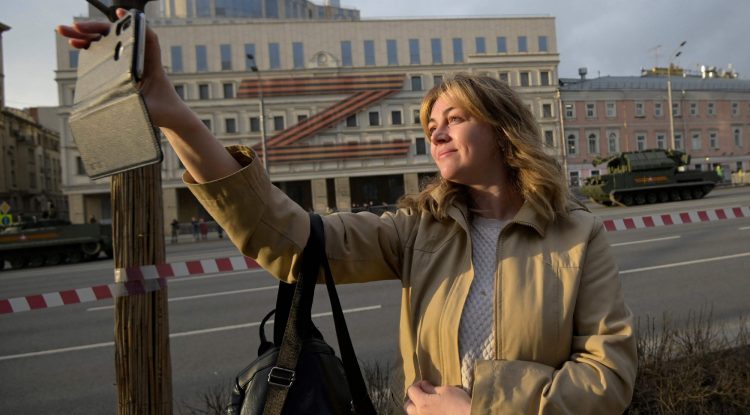
Like a covid bat, she burst into our life, into our dreams, into our fears. Spreading, as a virus, with its sharp corners, like claws, tearing the fabric of being, leaving their deadly marks everywhere. The letter Z, which instantly became a symbol of the war of Russia against Ukraine, but what is to be modest there - against the whole world. On the eve of May 9, it captures the visual space of cities, facades of buildings, shop windows, sides of buses and glass of cars, but most often - the rear doors of cargo Gazelle, where this letter is drawn with a finger in the mud.
By the letter Z, prisoners in the prison yard and kids in kindergarten are built, books on shelves in libraries are laid out with the letter Z and the windows of administrative buildings are highlighted, and in Kemerovo, Governor Tsivilev orders to rename his region to Kuzbass in official documents. (Interestingly, he himself is now also called Herr Zivilev in the German manner?) Russia was seized by Z.
What does this symbol mean? We will leave aside amateur speculations that the letters V and Z are black marks to Vladimir Zelensky, we will leave clumsily, like everything from the Ministry of Defense, propaganda slogans “Za Victory” and “Zakaki Wars”, as well as the whole complex military symbols with the signs of the Eastern, Western, Crimean groups, units Special forces-no matter what this letter means in the labeling of military equipment, its instant promotion, the appearance of thousands of billboards and high-quality filming of the Z-rans from drones, administrative zeal when it was placed on the facades of state-owned buildings-all this indicates a wide propaganda action, conceived even before the war and, apparently approved by the Kremlin.
But why, nevertheless, Latin Z, why for the symbols of the Russian world, for the return of Ukraine to the bosom of the Slavic peoples, to combat the western infection of “Nazism”, foreign prickly letters Z and V were chosen?
After all, Russia had its own homegrown symbol for a long time, almost twenty years: the St. George ribbon, which, as a marker of identity, sometimes replaced the Russian flag. From a purely image point of view, it was a successful find - the tape connected the heroic past (grandfathers fought) and revenge present (Russia, rising from the knees), united generations and classes of society, torn by distrust and social inequality, was a bandage imprisoned on the wound of an infringed national pride. She performed exactly the same function that the red lace on the fascia, a Roman license bundle (an ax surrounded by Rozog), which was chosen by a symbol and gave a name to Italian fascism. Fascism in the very primary sense is the binding of society together, the policy of the bond, the principle of collegiality. “Coateness” in general can be an adequate translation of the term “fascism”.
It was such fascism of the Mediterranean type, with a paternalistic state, with subordinate oligarchs, with the cult of the past and the propaganda of war, was built in Russia over the past decades - the same corporate fascism that was built in the lines on the “Putings” in support of the annexation of Crimea, marched in columns with template portraits on the promotions of “immortal The regiment ”, killed Baburin and Markelov, Politkovskaya and Nemtsov, and then sent his attack aircraft to smash the Nemtsov memorial on the Moskvoretsky bridge, shot a patriotic movie and forbade theatrical productions and exhibitions of“ degenerative art ”.
The society was tied with a St. George ribbon, like goods on the festive window of the store - especially sensitive protested against St. George bows on bottles of vodka, but who said that vodka is not a substrate of patriotism?
But on February 24, the tape cut the sharp sign Z. He did not bring the world, but the sword and marked a radical gap with the past. Actually, this is the main meaning of the war in Ukraine is a radical gesture of denial, Russia's falling out of the stream of history and logic of international relations, the act of destruction of conventions.
This is exactly what the Kremlin had long achieved - the abolition of the rules and a radical revision of the world order, which he considered unfair for Russia. For this purpose, an unprecedented ground military operation was undertaken, unprecedented from the time of the Second World War, and its symbol was a sign that marks a break with tradition, even with the Russian alphabet itself. And it is no accident that Z is the last letter of the Latin alphabet, which follows the void, the end, the PPC, how it is customary to reduce.
Observers rightly note its resemblance to Nazi symbols: the runic sign “Wolfsangel”, which was a tactical sign of the 4th SS division, who fought near Luga, Pskov and Leningrad, and the 133rd Festings of the Wehrmacht. It is difficult to assume that this is exactly what Russian political strategists meant, developing a visual image of the operation on “denacing”, but according to the devilish irony, the Russian symbol of the war was unmistakably identified as Nazi.
Z denotes the transition from the fast fascism of the last decade to the chemically pure Nazism, the idea of the superiority of the Russian race over the Ukrainian ethnic group, which, according to Putin's pseudo -historical articles and manifests such as the odious pamphlet, Timofey Sergey, does not have its own subjectivity, the right to nationality, statehood, culture, language and independent existence. Ukrainians in the new Russian ideology took the place of Jews in the Nazi, and the goal of the war is essentially the “final solution to the Ukrainian issue”, which, apparently, became the idea of the fix of the Russian president.
But unexpectedly, the unfinished Swastika Z captured the imagination of the Russians and went for a walk around the country, putting her stamp everywhere, like Zorro, who painted Rapira on the skin of her victims. From the propaganda meme, it turned into a national idea - the ideology of destruction, denial, zeroing.
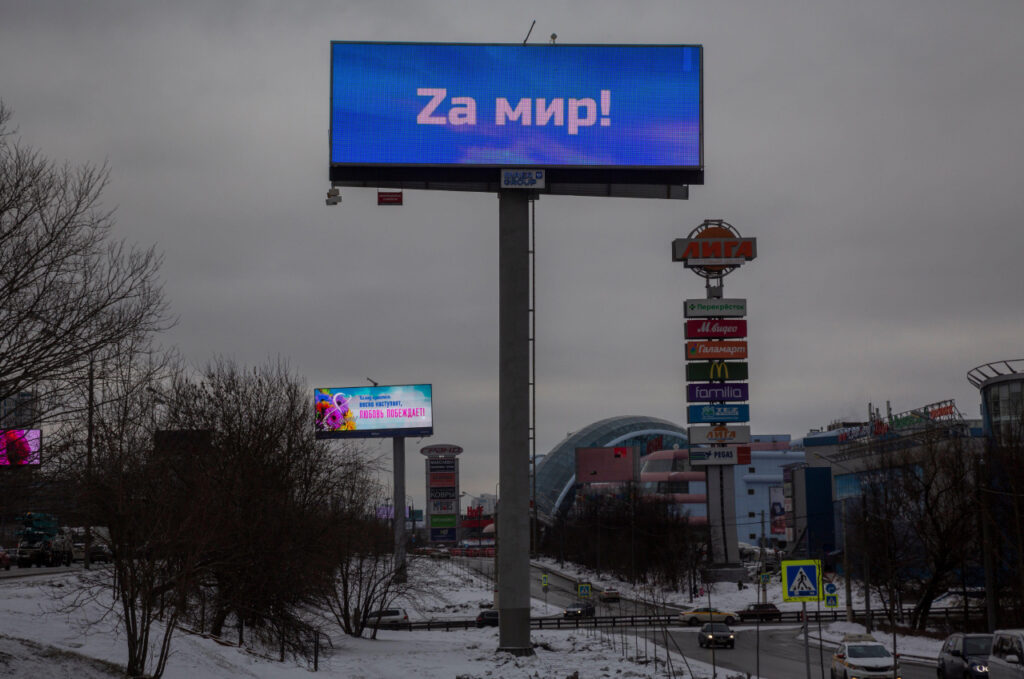
The letter Z is sculpted on the main Russian symbols - on church dome, for Easter cakes (the patriarchy even had to speak with a special explanation, urging the believers not to do this), on the Red Star and the same St. George ribbon. The parade on May 9, most likely, will also pass under the ZZ sign and will be zeroled, depreciated-the winners of the Nazism in 1945 will be held under the Nazi symbols of 2022.
The enemies of the Reich is a sign of Z, drawing it on their doors - as happened with the film critic Anton Dolin, theatrical critic Marina Davydova, Pussy Riot Pussy Rita Flores and other public personalities who dared to disagree with the war; The zo Z left the pogroms (security forces) in the office of Moscow Memoril, finally closed and liquidated in the first weeks of the war.
In fact, a bold, with fluxes of paint and blood, a sign Z, crossed out the whole life that originated in this space over the past thirty years - a market economy, civil society, relations with the outside world, and hopes for the future. Russia with a bang tears with its own past, with a culture of everyday life, with global civilization, and in this picture of voluntary self-destruction there really is something infernal. This is best described by one of Dostoevsky’s favorite words “caught up”: Russia lit up in this sadomasochist reinforcement by war - without panties, but in a T -shirt with the inscription “I'm not ashamed”.
Speaking of sadomasochism. Those political technologists who came up with the Z symbol were clearly people with humor, well remembering the “criminal fiction” of Tarantino and the pervert of Zeda in the skin and latex on the Harley with a keyboard in the form of Z. One of the best episodes of the film (although is there any worst?) - the final dialogue of the boot of Kullidge, with his own, with his own, with his own. girl Fabian:
Fabian: Whose motorcycle is this?
Buch: This is a chopper, baby.
Fabian: Whose Chopper is it?
Buch: Zeda.
Fabian: Who is the ZED?
Buch: Zed is dead, baby. Zed is dead.
It seems to me that there is no better answer to the question, what does the symbol Z mean: “Zed, dead, baby. Zed is dead. "
The author’s opinion may not coincide with the opinion of the editorial office .
The author is a professor of a free university (Moscow), the host of the programs of Radio "Freedom", the writer, author of the books "Park of the Crimean period" and "Runner Man"