
Translated material
Thanks for the country, Stanislav Stanislavovich!
The first leader of the independent Belarus, Stanislav Shushkevich, died
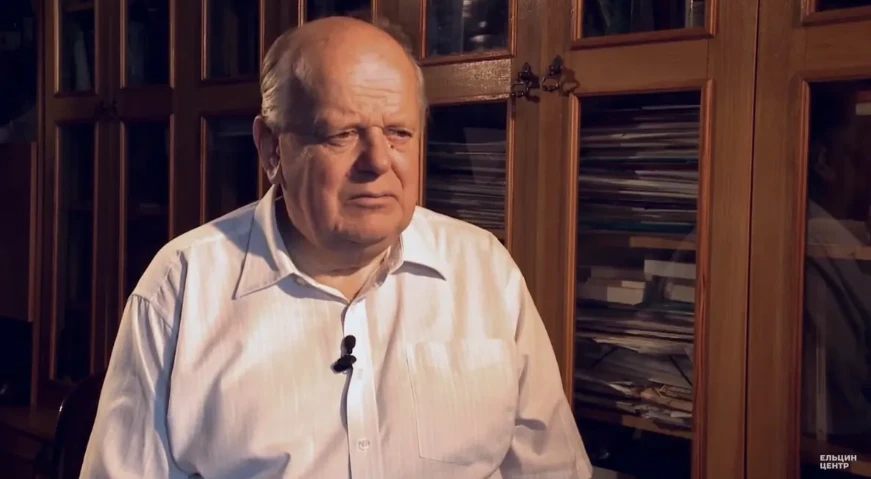
It seemed to me that Shushkevich would live forever. Such people simply cannot die: an endless interest in life and contempt for little things like age will not allow. 87 years, they say around, such a long and rich life, and in general this luck is so much to live. But not for Shushkevich. He never visited the old.
He, however, did not visit the young. It was as if it were always a textbook, eccentric professor without an age, who could be given forty and eighty years at the same time. Always in baggy costumes and a slightly wrapped cloak - yes, a typical representative of the Soviet department of nuclear physics.
He got into the head of state by chance. After the August putsch and the ban on the CPSU throughout the last month of the USSR, who lives the last month of the Supreme Council of the BSSR, Nikolai Dementhei, a representative of the old party -to -Claim, was shifted at an extraordinary session. And the deputies voted for Shushkevich. Already under his leadership, the same session adopted the law "On the presentation of the constitutional status of a declaration of state sovereignty of the Belarusian SSR." And then there was December, and a meeting in whiskers, and Bialowieza agreements.
“We did not want a divorce,” Stanislav Shushkevich told me many years later. - We, on the contrary, wanted to maintain existing connections, unity, community as much as possible - and for a long time searched for a suitable form.
The union had already died by that time, it remained only to fix it. The confederation was also impossible. And the Commonwealth turned out to be the only possible form of preserving previous ties and relations - with open borders for people, for joint projects, for information. At first, we wanted to call the new form “SSG” - the Commonwealth of Sovereign States. But Boris Yeltsin said: “Enough of this“ SS ”, and we renamed the sovereign states into independent ones. It was his amendment. By the way, several years ago, the Swedish Foreign Ministry declassified the diplomatic correspondence of 1989-1991. So, in this correspondence the CIS was called a masterpiece of diplomacy. "
Shushkevich became the first head of independent Belarus. It was then that the Belarusian language received the status of the only state, teaching and office work were transferred to the Belarusian, the same white-red-white, for which they are now planted for many years, and the coat of arms became a historical “pursuit”. It was then that US President Bill Clinton came to Belarus on an official visit, and Stanislav Shushkevich visited Washington. There were no more official Belarusian visits: in the United States, Alexander Lukashenko had never accepted (there are no trips to the Oon Assembly with state visits). It was then that the Belarusians realized that they live in a small European country, and not in a large empire. After the visit, I remember, Shushkevich said: “Many officials did not understand where our country was located. They asked: Belarus is where? And I had a plastic bag with me, on it - a map of Belarus with neighboring countries. I show them a bag: here we are, here is Russia, here is Poland, and here Ukraine and Lithuania. And they to me: what are you, right? Yes, your location is just gold, you can live perfectly in one transit! ”
When Lukashenko came to power in 1994, he first began the struggle with what Shushkevich did. He returned the Russian language and Soviet symbols, destroyed the parliamentary power, and went on the attack that it appeared in independent Belarus: entrepreneurship, free press, civil society. And Stanislav Shushkevich got a personal pension size of 1 dollar.
But Shushkevich did not become a pensioner. He traveled around the world with lectures, was friends with Lech Valensa, wrote articles for leading world publications. Marking the 80th anniversary, I went to America, rented a car and drove the whole country from New York to California. When I was released from prison, one of the first to visit was Stanislav Stanislavovich. Without a call, without warning - he just burst noisily and fun, and immediately it became clear that we could all survive. If only because, unlike our executioners, they read books.
And it is unfortunate that, becoming a key figure in the destruction of the Soviet dictatorship, Stanislav Shushkevich did not survive today's collective farm dictatorship.
But how great it is that Shushkevich we had.
Belarus Shushkevich - it was a young happy country. There, not riot police, but people went to rallies. There was a free Belarusian -language television, there were open disputes, there the word “opposition” was the name of the parliamentary group, not a curse. There, in passports with the “pursuit” on the cover there were very few pages, because everyone thought that very soon the Belarusians would travel around the world without visas, like their European neighbors. Short, but full of hopes for the future story. We remember that Belarus. We are fighting for her. We believe that she will return. Thank you, Stanislav Stanislavovich.