
Translated material
The Russian army cannot be defeated in the battle for the Donbass without mobilization?
It seems yes. But not the fact that she will help
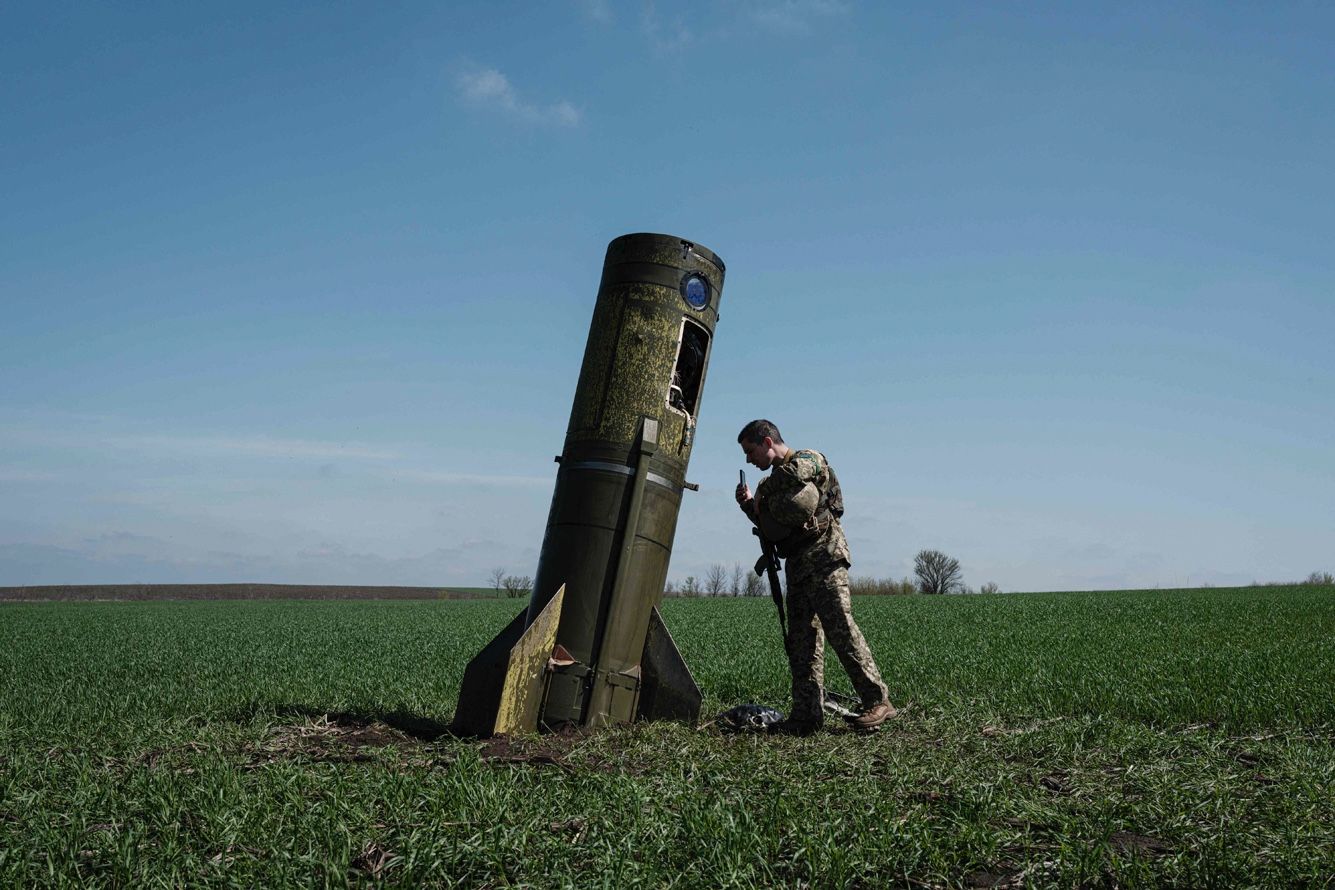
Western intelligence “admit ” that on May 9 (or on some other day in the near future) Vladimir Putin will announce mobilization in Russia. The Kremlin stubbornly denies this. It is not known whether the reconnaissance has real data on Putin’s intentions, but the topic of mobilization itself has been relevant for a long time: Russia clearly lacks troops to continue the attack in Ukraine. In early April, the Russian command reduced the front line almost half to surround and defeat most of the Ukrainian army in the Donbass. In a month, neither the environment nor a breakthrough occurred. Perhaps the Russian authorities will try to change this precisely by mobilization.
In this text, the editorial office is trying to evaluate the combat situation in Ukraine on the basis of available data. "Medusa" opposes the war and for the speedy return of Russian troops home.
What is happening at the front? And why do you need even more Russian soldiers?
The main battles in April and early May went along the River of the Seversky Donets , which is a significant obstacle to technology. Every day there are fewer stationary bridges on the river: both sides explode and bomb them and bomb them.
Mainly the Russian and Ukrainian armies occupy the territory on the "their" banks of the river. That is, the Russians on the coast closest to the border, and Ukrainians are on the opposite, towards the center of the country. However, the Ukrainian army has three bridgeheads on the left, closest to Russia, the shore. The Russian army also has a bridgehead on the right bank - in the area south of Izuma (except for the old positions around Donetsk and Lugansk, where a trench warfare has long been there without great successes of one of the parties). Around these bridgeheads, the main forces of the parties are concentrated. And they continue to transfer reserves there.
Now more
- Over the past two weeks, Russian troops managed to advance in one of the destinations by several tens of kilometers. The purpose of the offensive is to eliminate the Ukrainian bridgehead in the Liman area (former Red Liman). If successful, the troops will reach the main Ukrainian fortified area in the area of Slavyansk and Kramatorsk not only from the north (from the Izyum region), but also from the east. A blow on this side will allow you to cover one of the flanks of its offensive from the Izyumsky bridgehead - it would be too dangerous to advance with two open flanks. However, the bridge near the estuary is destroyed by Russian troops (to make it difficult to deliver reinforcements by the Ukrainian army), and even if successful they will have to establish a crossing.
- In April, Russian troops met poor resistance in this direction, but as it approached the Seversky Donets, it intensified. Now the battles are going around the estuary (held by Ukrainian troops), Yampol (occupied by the Russian army about a week ago) and on the outskirts of Svyatogorsk, where the famous Svyatogorsk Lavra is located. The area in the area of the offensive is wooded, which makes it difficult to conduct hostilities to Russian troops, which have an advantage in aviation and artillery.
- Through the river, in the Izyum direction, there are stubborn battles for the same villages as in early April. Probably here at the front from Balaklia to Svyatogorsk the main forces of both sides are involved. The north of Balakli, Ukrainian troops are trying to advance from their bridgehead to the rear of the Russian troops near Izyum. To do this, they made a crossing through the Seversky Donets in the area of Protopopovka, but on May 4 or 5 it was destroyed (this is evident in satellite pictures).
- All more fierce shootings are on the entire front on the Seversky Donets. Judging by the FIRMS fire map from NASA, in recent days, forests are burning in a large territory from Protopopovka to Yampol. Fires are also noted in areas that have long been occupied by Russian troops. Perhaps this is due to the fact that, as reported, Ukrainian batteries armed with Western long -range artillery guns (including those who have some high -precision shells with laser navigation) arrived at this part of the front. In conjunction with Ukrainian drones, these few guns are still a serious threat to Russian troops. However, there is no reliable information about the use of Western artillery in the Donbass yet.
- On the eastern flank of the battle near the estuary, the forces of the self -proclaimed LPR continue to advance. After many weeks of battles, they managed to completely occupy the industrial city of Rubezhnoye. However, the city is only part of a large agglomeration (together with Severodonetsk and Lisichansky), which is located on both banks of the Seversky Donets. If the situation does not change in other sections of the front (that is, there will be no environment for the entire Donbass group), here more fights will be coming here.
- To the north of Protopopovka and up to the border with Russia, on the contrary, Ukrainian troops are advancing. Under Kharkov (just 30 kilometers from him), the Ukrainian army even occupied the old Saltov, who had recently been in the deep rear of the Russian troops. It seems that the Russian army left only a weak barrier from Kharkov (the presence of even mobilized from Donetsk was noted in the area), that is, the personnel problems of the Russian army are obvious. However, the offensive of the Ukrainian army in this area is already interfering with the Seversky Donets repeatedly mentioned by us.
- In the Chuguev area, the Ukrainian army has another bridgehead on the left bank of the river, from where they threaten to enter the rear of the entire Russian group in the future. This vague threat itself forces the Russian command to spray forces and does not allow all the troops under the raisins.
- In the south - in the Zaporizhzhya region - from where, it is believed that Russian troops should step towards the Izyum group, the front line has not changed after the first Russian attacks two weeks ago. Ukrainian troops defend themselves in four fortified areas - in Kamensky (south of Zaporozhye), Orekhov, Gulyaipol and the Great Novoselka (on the border with the Donetsk region). It seems that this is another area where the Russian army does not have enough soldiers for an ambitious offensive.
What does the Ukrainian army do?
The Ukrainian command is trying to “fly up the holes”, transferring the troops between different sections of the Donbass Front. So, under the Great Novoselka, where a threatening position for the local theroborne had developed a week ago, troops appeared previously seen near the estuary. In turn, parts that previously fought north of Donetsk approached the estuary. The new brigades on the Donbass Front from the Western and Central Regions, it seems, is not transferred. But there are resources for this: for example, the sending to the Donbass Brigades of Teroborne from Western Ukraine is discussed .
We do not know how successfully the offensive of the Ukrainian troops near Kharkov will continue, whether it is temporary success due to the weakness of the Russian defense in that area, or it will result in something more.
How do we know this?
From the video and photos that eyewitnesses of battles publish on social networks. This makes it possible to objectively record at least part of the events of any modern conflict. We applied a significant part of the main “documentary evidence” of the war on the map.
So the Russian army finally stuck?
It is difficult to judge this, because we do not know how many reserves are available to the Russian army. Maybe the resources for a large offensive have not yet been exhausted. Now it is not known the location of a significant part (up to a third) of the formations that Russia had before the war (including used to attack Kyiv in February and March and Mariupol in April).
What are the options?
- Perhaps the motorized rifle and tank battalions of units from these formations suffered such great losses at the first stage of the war that they are now not combat -ready.
- Another option - they will be replenished with personnel and equipment to return to the front later.
- It is also likely that part of these forces is in reserve and will be used to develop a breakthrough if the resistance of the Ukrainian army is weakened in some direction.
- But most likely, all three options are true: part of the troops absent at the front is lost, some are replenished, and part is in reserve.
However, even the possible presence of large reserves does not increase the chances of the success of the entire operation. It can be assumed that Russian troops will occupy the estuary - there the Ukrainian troops already have no actually crossing the Seversky Donets to organize the supply of troops. It is quite possible a new - more successful - an offensive from the Izyumsky bridgehead (if the Russian command can solve the problem of an open flank of Balaklia and Protopopovka). It is less likely, but still a major offensive in Zaporozhye is possible - but for it it will be necessary to transfer significant additional forces to this area.
But it is difficult to believe in the success of the entire operation through the environment of the Ukrainian group in the Donbass - even using all possible reserves. The length of the front from Old Saltov near Kharkov to Kamensky near Zaporozhye is about 600 kilometers. If the Russian troops manage to surround the Ukrainian troops (and they need to go with battles about 120 kilometers for this), two encirclement fronts will be added to this - internal and external - with a total length of more than 200 kilometers.
According to the theory, which is taught in Russian military schools, a strip of occurrence of a motorized rifle battalion should be no more than two kilometers (provided that there is a direct connection with the neighbors on the flanks). Consequently, for the success of such a grandiose operation, at least 400 battalions will be required. And each Russian battalion tactical group (battalion and its part of support - communication, electronic warfare, artillery) consists of 700–900 military personnel. That is, only in the Donbass, for a successful offensive, the Russian army should have a group of at least 300 thousand people.
Now, according to experts , no more than 70–80 battalion tactical groups, or not more than 60 thousand military personnel are operating throughout Ukraine. And in early March, the group totaled no more than 100 thousand people (in combat units) - however, without taking into account the forces of the LPR, the DPR and the Russian Guard.
An attempt was made to compensate for the lack of personnel through the concentration (and more efficient work) of artillery, but, as can be seen from the fighting operations of the last weeks, it was unsuccessful.
It is not possible to replace the missing soldiers and the wider use of aviation-it still acts little. That is, without emergency replenishment of cash (and here we are returning to mobilization), the grand offset of Russian troops in the Donbass does not look possible.
If Putin announces mobilization, will Russian troops win the battle for the Donbass?
Absolutely optional. The influx of fresh Russian forces Ukraine will compensate for by its own mobilization and supplies of weapons (and, probably, intelligence ) from the West. So in this case, the Russian operation may even end with a general retreat from most of the Donbass.
In addition, Russia and Ukraine may be in an endless war of exhaustion, where the only advantage of the Russian army will be potential numerical superiority (due to the largest population and, accordingly, conscripts).
However, the capabilities of Russia in terms of mobilization are also limited .
- Firstly, it is dangerous from a political point of view, since the inevitable big losses among mobilized will certainly reduce the support of power and war.
- Secondly, most of the experienced officers and contractors are already in Ukraine, which means that they cannot train mobilized in Russia. That is, in addition to obvious problems with the motivation of “fresh forces”, it can also be well -prepared enough.
Another version of mobilization (for which there is already a legislative framework) is to urgently fill out the combat army reserve ( BARS ), created by Putin’s decree in early 2021. It was proposed to accept at least 100 thousand Russians who have already served in the army (however, judging by the very rare reports of the future fate of this project, this goal could not be achieved). Barc reservists had to train several months a year, and in wartime to serve on an ongoing basis. At the same time, even in months without fees and training they were paid a benefit: to officers of five thousand rubles, and to soldiers and sergeants - up to three and a half thousand rubles. The question is whether it will be possible to replenish the leopard in wartime (with a significant risk to die in battle), if this could not be done in a more peaceful period.
Department "Parsing"