
Translated material
"A constant feeling of horror." 90-year-old Greta Baum about time and his family
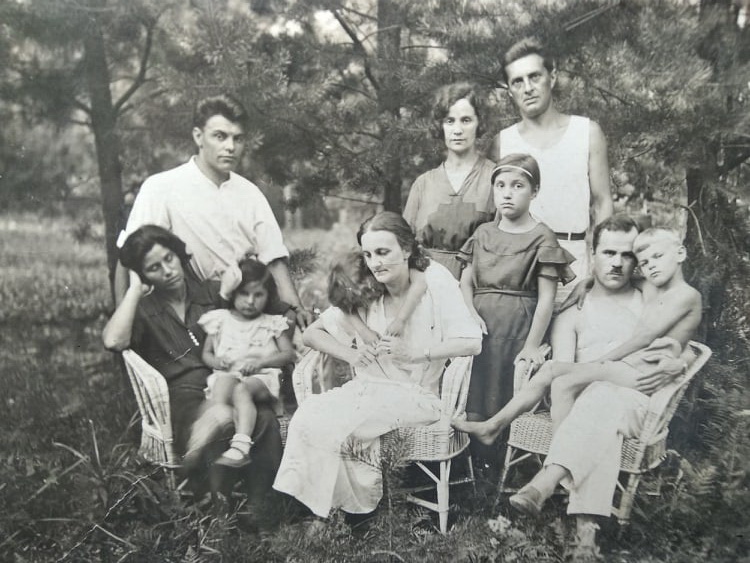
The family of 90-year-old Greta Baum from St. Petersburg was destroyed by war and Stalinist repressions. Her father, the chief engineer of the Russian Diesel plant, received 10 years of camps for German roots. And Uncle Sergey Dyakonov - one of the first directors of the Gorky Automobile Plant - was shot in 1938. Greta herself for a lifetime remembered how she stood next to Anna Akhmatova at the Crosses prison in an endless queue for 300 hours. There can be nothing worse than war, and no one who survived it can support the war in Ukraine, she is sure.
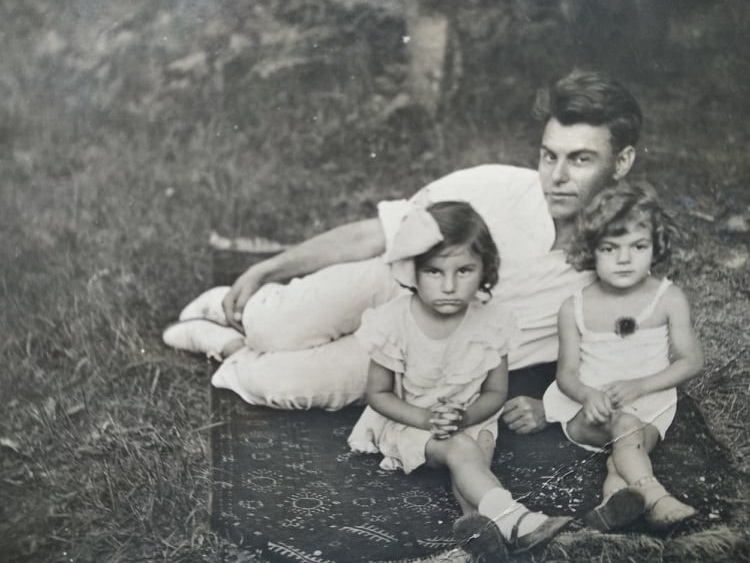
Greta Baum was born in Leningrad in 1932. A large family - mom, dad, grandmother, two mother's sisters and their children - lived in a five -room apartment in Petrogradka. The Russian Diesel plant , on which Father Evald Gustavovich Baum worked, was literally a few hundred steps from the house, through the park of Karl Marx. In the same apartment, the “Uncle Seryozha”, director of the Gorky Automobile Plant Sergey Dyakonov, also stopped in the “Leningrad” period of his biography. At his directorship near Gorky (now Nizhny Novgorod) a year before the tragic end of his career, the Baum family rested with little Greta.
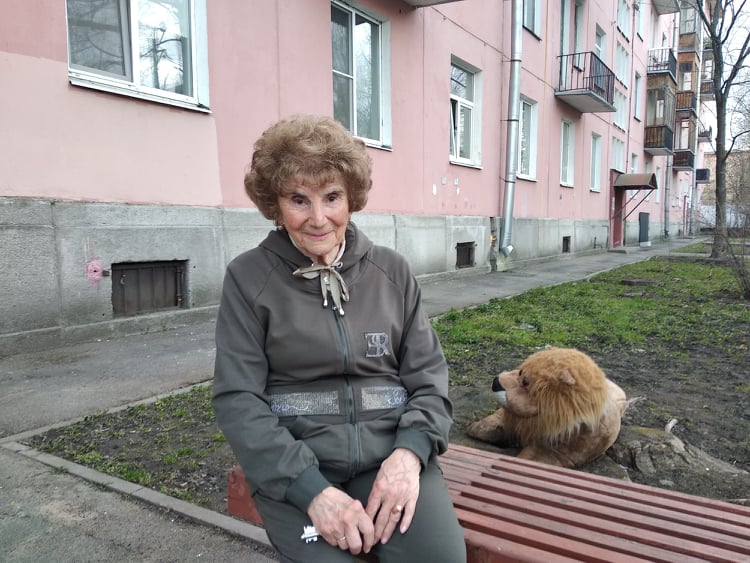
“We had a wonderful life,” recalls Greta Evaldovna Baum . - Going to work, dad looked into the children's room, where I and my cousins and sisters lived, and asked us "Vi Gates?" ( Wie ght's - German. "How are you?" - Wed ). He knew German perfectly. I remember that we, small, played the war. After all, the children are playing the war. And then the war really began. Father generally almost stopped spending the night at home. He worked at the factory for a day and only came to relax for several hours. And his mother told me to listen to a knock that came from the factory, and if he stopped knocking, so that he would immediately wake him up. And my mother woke up when the knock stopped, he got up and left again. Mom worked there, at the "Russian diesel" in the department of the senior technologist.
To the owner of the cottage, where Little Grete, his mother’s brother Sergei Dyakonov, favored the People's Commissar of heavy engineering Sergo Ordzhonikidze. Under the leadership of Dyakonov, by the end of the 1930s, the Gorky Automobile Plant became the largest automobile production in the country and produced 450 thousand cars.
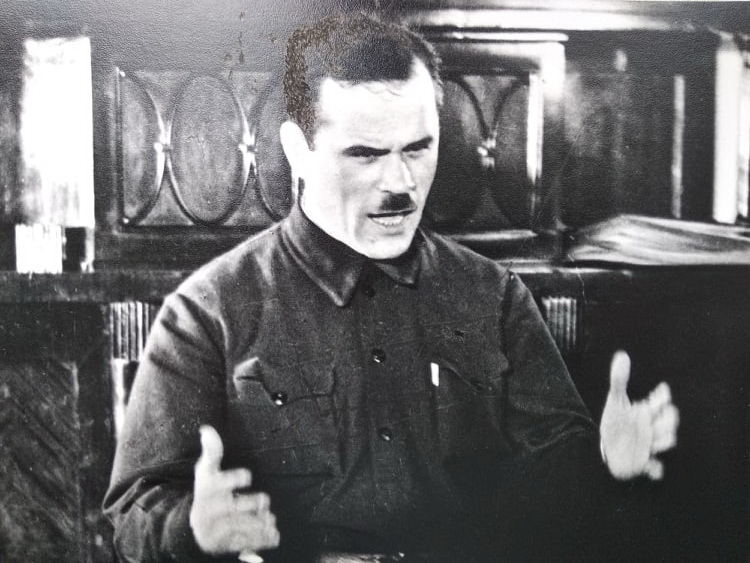
But in 1937, the arrests of the workers were in full swing: the director did not have time to sign orders for their dismissal. And then they removed him himself, accusing the enterprise of bad management. In July 1938, he was accused of wrecking, espionage and counter -revolutionary activity and shot a month and a half after a month and a half.
A month after the start of the war, the Greta family went into evacuation. And it was in Gorky, where until recently they spent the summer together “Uncle Seryozha”, which was now dangerous to even remember. Part of the equipment from the factory’s workshops went to Gorky, and when the family arrived, my mother immediately began to work. Evald Baum remained in Leningrad at his post. And then he was relieved of his post, and he fell into the general stream of deportation of the Germans who lived in the city.
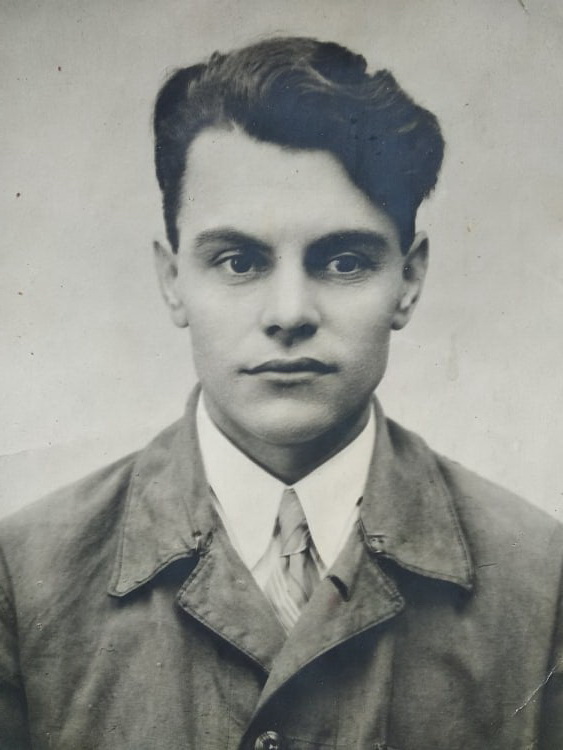
“Then all the Leningrad Germans were gathered and expelled from the city,” says Greta Baum. - They wanted to send my father to Kazakhstan. The composition on which he rode passed through Gorky and stopped there for some time. Dad asked the head of the train and came to us. Mom invited all the workers of the plant who were in evacuation in Gorky, and everyone listened to what he was talking about Leningrad. Naturally, we lived in a communal apartment, the people were like herring in a barrel. Probably someone came to this meeting, because when he came a second time, he was arrested. The fact that Uncle Seryozha, who had already been shot by that time was our relative, was probably known in the NKVD. Most likely, it played a role. Then we learned that his father was given ten years. I was still small then, and they told me this: here you are now 10 years old, and dad will return when it will be 20.
After arresting the apartment where the Evald Baum family lived, they came again to search. They took his diary - a small notebook, where, among other things, there was a record about how starving in the blockade Leningrad to survive, cut off pieces from the dead and ate them. Greta Baum recalls that the mother herself persistently handed the recording book to the Chekists who came: look, read what a wonderful person he is. Nobody could assume that the truth about the blockade would only exacerbate. The former chief engineer of the “Russian diesel” was condemned by the infamous “fifty -eighth”, inviting him to propaganda and agitation against the Soviet regime, and sent to the Kirov region.
When the war ended, Natalya Baum, along with her daughter Greta and the rest of his relatives, returned to Leningrad. But their apartment was completely busy. Of the five rooms, only two were freed for them, and Soviet communal life began. A few years after the return, the family found out that Evalda Baum from the Kirov region was transferred to sit down for Leningrad. In these last years, several dates took place, for which the prisoners were brought to the "Crosses". There, relatives built in huge queues in order to make a program. In one of these lines, Greta Baum was next to Anna Akhmatova. At that time, the son of the poetess Lev Gumilev was repeatedly arrested and waited for the sending with a stage. Later Akhmatova will write in his poem the “Requiem” about this endless expectation under the walls of the prison:
"... where did I stand for three hundred hours
And where the bolt was not opened for me. "
The young student of the medical institute recognized the poetess immediately.
“She stood right in front of me, but we, of course, did not talk about anything,” recalls Greta Baum. - In this line no one spoke, everyone was waiting in silence. Long queue, I do not know how many people were there. And only one window, to which we never reached that day, could not pass our parcels, although we waited until late at night. We were still far from the window when it closed.
Evald Baum was released, as the older Gret once predicted: she was 20, and she was already studying in the third year of the medical institute. The door of the apartment opened when they sat with a friend and prepared for exams. “And this is my dad,” Greta said to her classmate. I did not dare to explain anything else. On the threshold stood a noticeably aged man. He was forbidden to be in Leningrad for more than 24 hours: Article 58 set a five -year defeat in rights after liberation. A man who returned home after 10 years in prison and separation from his relatives had to see them and disappear again.
- He spent the night, and left in the morning. It was possible to go 24 kilometers for Leningrad, there was a special village near Vyborg for those who were freed and could not live in the city. But all the convicts knew that if you go there, you would probably get a second time, and not 10 years, but 25. Therefore, the father sat on the train and went where they looked. And at each station they said: "It is impossible here, here we have a lot of such. Go further!" So he drove to Novosibirsk. And then I couldn’t, the money just ended. We gave him with us how much we could-we lived not richly.
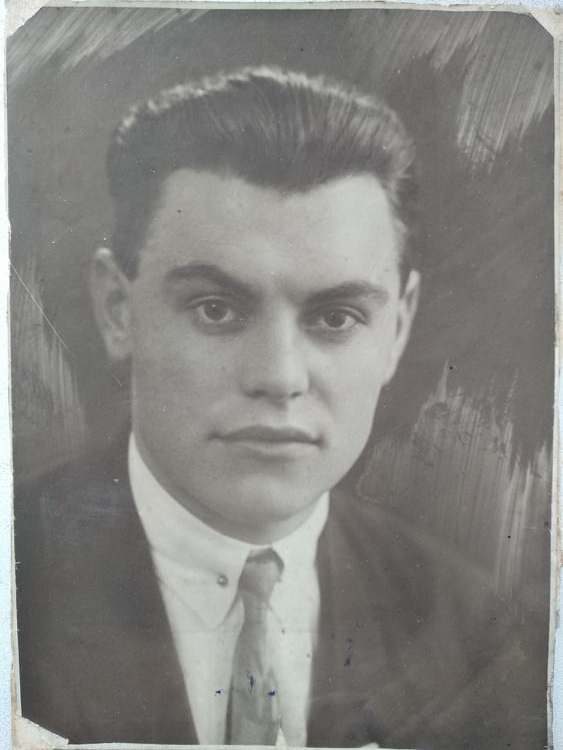
From Novosibirsk, Evald Baum wrote a letter, called a family to his place. But in Leningrad, life only settled. Mother and her sisters worked, matured children studied at universities. And the grandmother practically did not go. The family did not dare to a new move to the unknown. Soon after, the father of Greta Baum married another woman, and then came to arrange a divorce from his mother. Remembering the distant years today, Greta Evaldovna does not condemn the pope: "He also had a whole life of broken. It was necessary to somehow settle down."
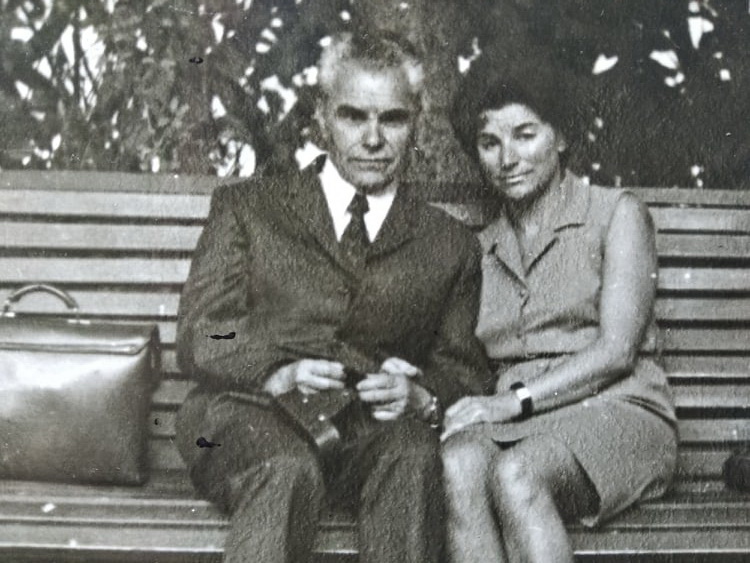
The war did not kill any of the heroes of this story, but the Stalinist repressions distorted their fate without any bombs. Father Greta Baum, the chief engineer of the Russian diesel plant, Evald Baum, was lucky to survive in a meat grinder of Stalinist repressions and wait for his own rehabilitation, already under Khrushchev. The brother of his wife Sergei Dyakonov, the director of the gas, in which the legendary Emki began to release, rehabilitated in 1956 at the factory. In the evil irony of fate, during the arrest in Moscow, Dyakonov was taken away at the same Emke.
Greta Baum is perplexed as Russians living in the 21st century can admire Stalin, who destroyed and broke so many lives.
- After all, a lot of people sat. A huge amount. It was in almost every family, on my course at the university of a girl, a father also sat. True, we did not particularly talk about it. And then, when the "case of doctors" began, we took away teachers right during the lectures, from a crowded audience, in front of everyone. Then they figured out that our dear and beloved Joseph Vissarionovich was so amused. We were afraid to say the word careless. After all, if someone wanted to get your apartment or room, they could easily drunk, and they immediately arrested a person’s denunciation. We all saw well what was happening, and were full of throat.
The surviving Grand Dwear Greta Baum does not approve of today's war with Ukraine and tries not to watch the news.
- It was the worst time in the life of our generation. You won’t erase this from memory, ”she says. - Destroyed cities, bombing, people left without home. When every day could become the last for you, for someone from your family or neighbors. A constant feeling of horror and the expectation of the fact that now the alarm will buzz, and then the shells will fly from above. You look at a person, and you don’t know if you will see him tomorrow or not. You can’t want this to anyone. And then the post -war years, also difficult, restored the country again from the ruins. Therefore, when someone talks about the war on TV as if it was about some entertainment, you think: what are they talking about at all?!