
Translated material
Fullness complex: Books of the Week
What to ask in book
Dangerous mystery, German legendary and quadruple serenity: again Friday - and again the talkative editors of Gorky tell about the book innovations that they attract.Tsuyoshi Hasegava. Race for the enemy. Stalin, Truman and the surrender of Japan. Boston / St. Petersburg: Academic Studies Press / Bibliors, 2022. Translation from English Ilya Nakhmanson. Content
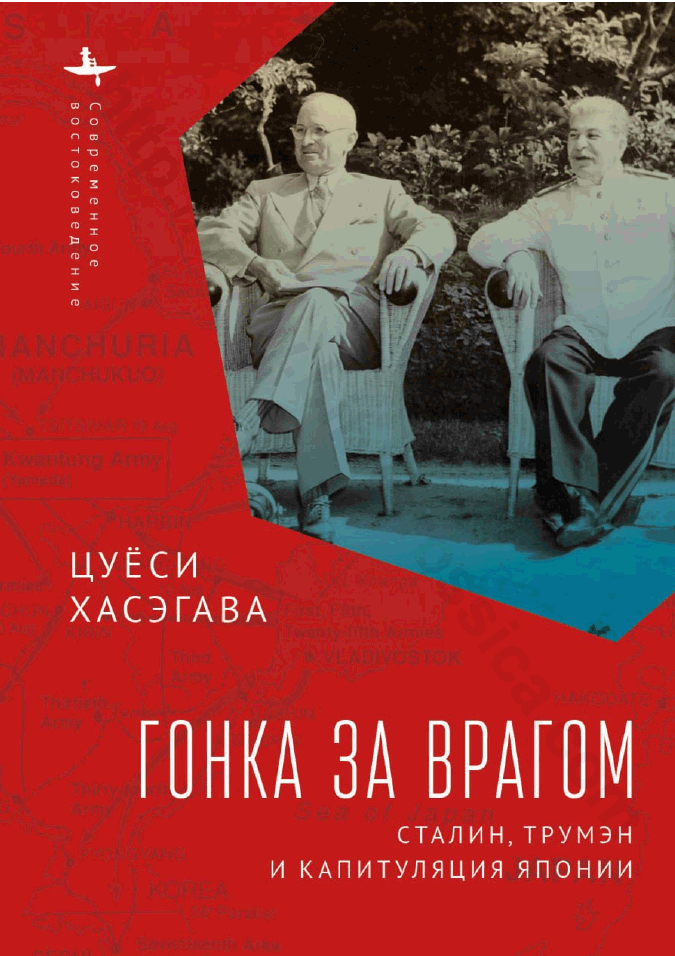 Breakthrough labor on the history of the Pacific War, or rather, about its final episode-the events between April 1945, when American troops landed on Okinawa, and on September 5 of the same year when Soviet troops ended the military operation in the smokers.
The idea of Khasegawa, destructive for common ideas, is that if you go beyond the limits of national historical traditions and look at the final of the war with the eyes of God, it will become obvious that the role of the Soviet Union in the unconditional surrender of the Japanese army was much higher than it was considered. Among other things, the historian insists that not a nuclear bombing at all played a decisive role, but the USSR entered the war and the fears of the political consequences of the Soviet occupation of Japan caused by this entry. And the Americans, according to Hasegawa, gave the go -ahead to take up Enola Gay in order to achieve a decisive victory before the USSR has time to capture the maximum possible in the Far East. Finally, from the book it becomes clear what role at the end of the Second World War was played by the confrontation between the parties in the world and the war within the Japanese government and the concept of national identity Kokutai .
Thanks to this entertaining reading, one can understand not only why people become historians, but also why the despots are fond of foreign policy.
“Truman wrote in his memoirs:“ The guns fell silent. The war was over. ” However, the guns were not silent and the war was not over. It was Hirochito’s consent with the terms of the Potsdam Declaration that became a signal for Stalin to expand the military campaign against Japan. ”
Edith Humpfrey. Up and deep into it. Christian conversations with K. S. Lewis. M.: Nikaya, 2022. Translation from the English deacon Peter (Longan). Content
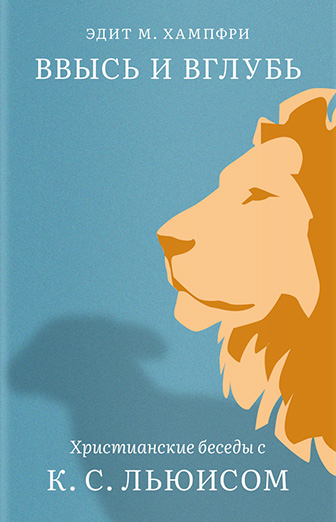 Klave Steaples Lewis is known as an academic researcher of medieval literature, a friend of Tolkien and the author of books for adults and children, the most famous of which is the Chronicles of Narnia. “Chronicles”, like his other works, are excitingly read, even if you do not give up a report that Lewis is a zealous apologet of Christianity. The writer of the Extraordinary is popular among Orthodox readers around the world - and in Russia, thanks to the translations of Natalia Traubberg and Nikolai Apple , although Lewis himself was not Orthodox.
“Come on and deeper” is the first writer’s work guide in Russian, written by an Orthodox researcher (which is important, there were without frank spoilers). Unlike the books of Lewis himself, the work of an American researcher should read, having at least a minimal acquaintance with biblical texts, and understand, for example, what the term “theodicle” means. Well, or at least not mind to find out more about it.
“It is the mystery that impregnes the whole inner life of Gniili that is so dangerous. When there is no clarity, there is no responsibility of a narrow circle to the recruits, and therefore, the latter remain defenseless. ”
John Sellars. Philosophy of serenity: Tetrafarmacos Epicurus. M.: Alpina Non-Fikshn, 2022. Translation from English Tatyana Lisitsyna. Content . Fragment
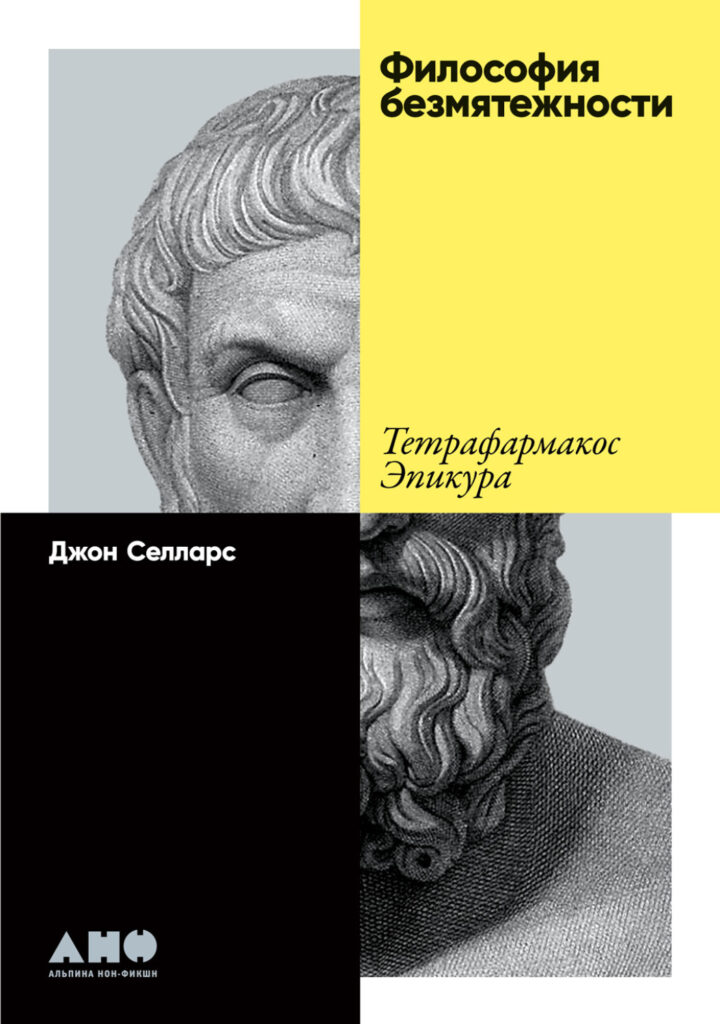 A small but extremely informative book of the historian of the philosophy and teacher of London University John Selars is devoted to Epicurus and his teaching. Sellaars is debunking common myths, which have been preventing two thousand years from understanding the great Greek thinker.
In everyday speech, we mean by the epicurestism a manic craving for pleasure. This is the exact opposite of what the philosopher actually taught. Epicurus is considered to be one of the first atheists. This does not correspond to the truth at all: he did not deny the existence of the gods, but he convincingly proved why they did not interfere in the life of mortals.
The semantic center of the book is concentrated in the tetrafarmakos, the “fourth -assembly”, so formulated by Epicurus:
God does not inspire fear
Death does not inspire fears
Fortunately easily achievable,
Evil is easily undergoing.
Sellarus is as detailed as the popular book of small volume allows, each of these points that lurk the fundamental problems of philosophy, which have come down to us through the abyss of times. “The philosophy of serenity” is an excellent reading for those who seek to change their lives and attitude to the world for the better, but with fair suspicion belong to all kinds of self-gelpu.
“The main idea of this teaching is that many of our fears and concerns grow from incomplete or false ideas about how the world works. Studying nature, you understand that everything that happens in the Universe is the result of ordinary physical processes. There are no tragedies, no misfortunes, no punishments; There is only the movement of impassive matter, which in itself represents nothing terrible. The only real evil is suffering, for the fight against which Epicurus had his own funds. "
German folk legends. M.: Libra, 2022. Translation of Julia Poleshchuk. Content . Fragment
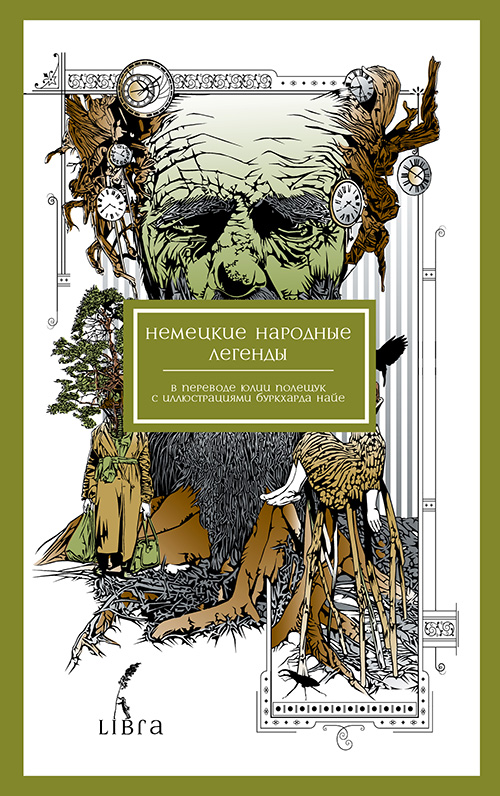 Romantics taught us to love folk tales and legends - and, probably, they taught us to love German fairy tales and legends more than others. Moreover, we even somehow seriously treat them and do not consider only children's reading (we remember, apparently, as Hoffmann, Gauf and Ludwig Tick treated the tales). It is not surprising, therefore, that “German folk legends”, released by Libra with vivid illustrations of the contemporary artist Burkhard Naye, are not at all like a book for primary school age.
The origin of the texts included in the book is not quite clear: it is only known that this is a “retelling” to a certain O. Gaponenko, that not all of them are “folk” and far from all “legends”, and also that there are not so many from the original “retelling” in the Russian publication - the original was creatively finalized and significantly improved, therefore we recommend this publication with a clear conscience.
Widely known stories like the story about the Gamelnsky Krysolov in the book is a little; Texts similar to toponymic legends are interspersed with texts similar to fairy tales, but all this does not matter much, because there is no excess here: only gnomes from enchanted caves, abandoned dams with water and river virgins, hunchbacks on the Wittle Shabash, treasures, pogosts and devilish, in general, everything is loved.
“ All together they galloped to the forest in a drizzling rain. On the way, the king noticed a hunchbacked old woman in the ragged clothes on the road, which was collecting brushwood. The poor woman was startled to the king. Her gaze was angry with Watzmann; For a moment he hesitated, thinking whether to spare the unhappy, but then he still turned the horse and galloped to her. The horse soared on the hives over the old woman, and the king began to whip her with a whip. The old woman wheezed, erupted the curse after the curse, and when she tried to call for help in desperation, Watzmann jumped off the horse and scored her to death. His hunting boots turned red from blood. ”
Andrey Ranchin. What and why they eat from Gogol, who and why knit from Tolstoy. Selected articles on the history of Russian literature. M.: Common Place, 2022. Content .Fragment
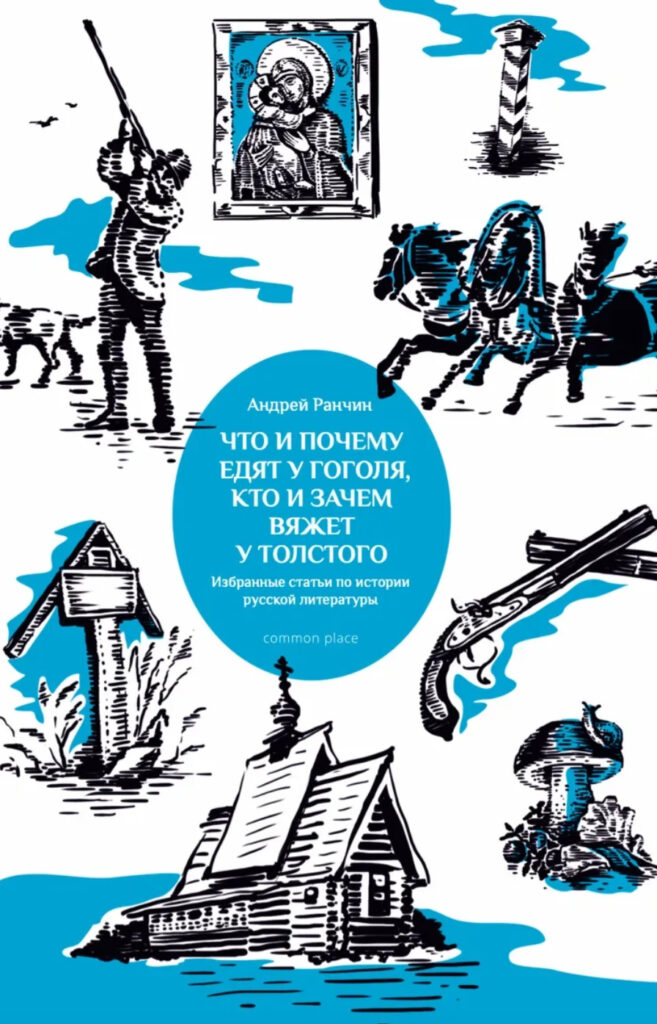 What is the attitude of Mikhail Bulgakov towards Woland and his retinue and why do the master and Margarita are notifying at the end of the novel not “Sveta”, but “peace”? Is Lermontovsky Pechorin so deep and outstanding, how are we used to thinking? What makes fun of Leskov in the “Left” - the Uvarov “official nation”, Slavophilism, the darkness of the Russian people or all this together? The new book of philologist Andrei Ranchin was compiled by articles of different years that are dedicated to Russian classics-from Tynyanov's Griboedov’s “Wit” to the “death of Vazier-Mukhtar”; Extremely traditional in form and method, they offer the reader the interpretation of both whole works and individual problems. Many of these texts have questions like listed above, and therefore they can be of interest to a fairly wide audience, although even simple at first glance problems are versed in a purely scientific manner and without any discounts (for example, in an article about whether Chatsky is stupid according to the copyright, about fifty pages of a dense text). In general, the desire to find out using contextual analysis what the author of one or another work wanted to say-one of the most pretty features of the book: French critics taught us how to get to the literature bypass ways, which is now a well-beaten direct path to it bribes the reader with his meaningfulness and heurism.
“True, the plot of“ left-handed people ”seems to prove that even without arithmetic, miraculous survey can be shown-to pin the outlandish“ nymphosoria ”. However, since in reality it is impossible to do this without a “petty -scope”, it must be admitted that the motive for “overwhelming” by the Russians of the British is endowed with brutal irony in the story. Not over Russian masters, but over national complacency and swagger, the manifestation of which the author searches in the popular consciousness (partly with the left -hander, even more with the narrator), and in national mythology constructed by the authorities (Uvarov's theory), and thinkers, and public figures (Slavophilism). The sense of its own superiority, the “complex of fullness” is dangerous, warns Leskov, completing his “tale” with a reminder of “Confusion”, which ended the Crimean war. ”