
Translated material
Human rights activist Igor Blazhevich - On the strategy of anti -war campaigns
Interview of Maria Seredas with Croatian-Bosnian activist, founder of the organization "Man in Beda"
The text is prepared by the "greenhouse of social technologies"
Sometimes it seems to me that the time of calm reasoning about the strategy of public campaigns has passed. Against the backdrop of photos from Buchi and Gostel, talk about strategies seem to be a cowardly attempt to introduce this nightmare, cover it with terms, move away and depersonalize. But this is not true.
The more people in Russia receives fines and terms for anti -war shares, the more desperate propaganda, the higher the percentage of supporters of the “special military operation”, the more important it is for activists to ask strategic questions: what do we want to achieve anti -war statements? How to understand if they affect something? Is this the influence of the risks associated with it? And most importantly - what is the meaning of all this if the warship was going on and goes? And first of all, it is worth setting them to people who have already encountered such challenges.
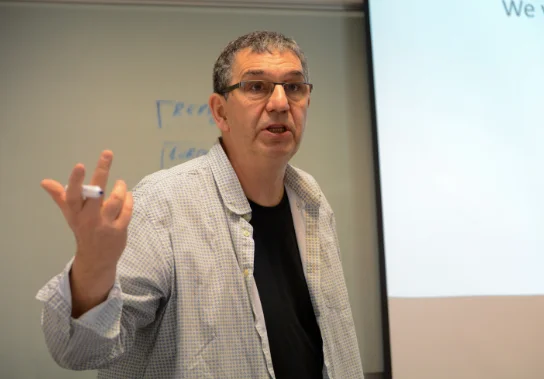
Igor Blazhevich , Croatian-Bosnian activist, literary critic and philosopher by education. In 1992, at the time of the beginning of the Bosnian war, he lived in Prague. His parents and sister were in the besieged Sarajevo, and Igor had no connection with them for six months. Igor found like -minded people and began the collection and delivery of humanitarian aid from the Czech Republic to Bosnia. From this initiative, the largest charity organization “ Man in trouble ” in Europe was subsequently originated. After that, Igor organized humanitarian missions to Chechnya, Burma, Cambodia and East Timor, participated in the shooting of a number of documentaries about humanitarian problems at different points in the world, founded the International Human Rights Festival “ One World ”.
But not only because of a huge activist experience, I wanted to talk to him. Igor is one of the best analysts and strategists with whom I had to work. He has a special talent to look at the crisis situation from a certain distance, without losing the connection with reality and the most sincere empathy.
By the end of our conversation with Igor, it became a little easier for me to breathe. I did not have reasons to hope that the darkness that has gripped us will soon retreat. But in this dark, an internal geography began to appear, the outlines of objects and phenomena, the beginnings of time and space began to appear. And where there is time and space, you can already plan something. And then act.
After deciphering the conversation, I edited it a little and divided it into logical parts for the ease of reading. Igor read the final version and confirmed that everything was in order with her.
Igor Blazhevich:
I must clarify that it was never an anti -war activist. During the war in Bosnia, I was in Prague, and there were not so many Bosnians there. Therefore, my task, as I saw her, was extremely simple and clear: on the one hand, to convey as much help from Europe as possible to Bosnia, and on the other hand, transfer as many evidence of the war from Bosnia to the outside itself, abroad. It was a simple “helping” role, and someone definitely had to do this.
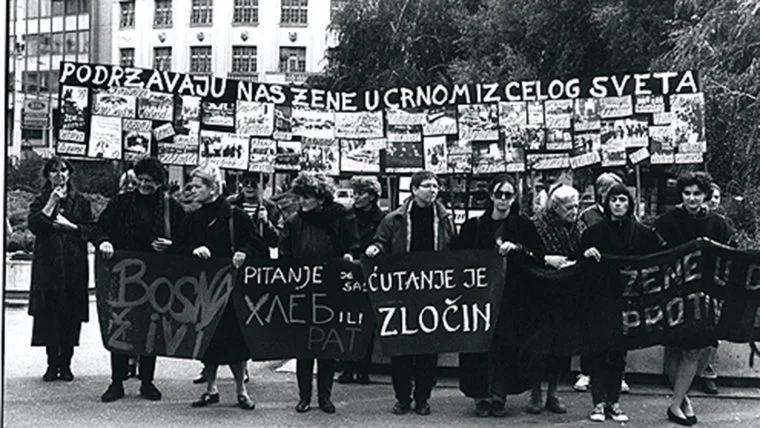
But you ask me about something else: that civil society can do in addition to "helping" functions. In order for your questions to answer your questions, I went through all the anti -war campaigns in my memory, which I followed at one time: in Croatia and Serbia during the Bosnian war, in Russia during the First Chechen War and the United States during the Vietnam War. So everything that I will talk about is based on the analysis of these movements.
By the way, I went to the network to google other anti -war movements, and I was sure that I would find dozens. But I found almost nothing! I don’t understand why: there are so many wars in the world and so few anti -war movements. Maybe just English -speaking sources do not reach these topics.
Stop war is not a goal
Anti -war campaigns do not end wars. None of the wars that I spoke about was over due to the anti -war movement. The wars end for other reasons: this is either a significant military defeat of the aggressor country, or too many victims among personnel. Or, if the forces of opponents are comparable, the war may enter into a path position, which will last for years until both sides exhaust their resources. This is how wars end.
But if so, what is the role of anti -war movement? It seems intuitively that since the movement is anti -war, then its task should be to stop the war. And if it is not able to do this, then it is pointless. But no. And I think it is very important for you now to think about the real role of anti -war movement, so as not to encounter cruel disappointment, when it becomes clear that you are not able to stop the war.
Step one: Lonely voices
The first thing that anti -war movement can achieve is to create a space to express an alternative point of view. The space in which people who do not applaud the war could think, speak and act.
At the beginning of any war, the vast majority of the population screams the war of "Hurray." Therefore, the first thing you can do is to show that not everyone agrees with such a position.
Just show that another position exists, and that’s it.
This may seem perfect, but this is a very important step. Because these lonely voices of people who do not agree with the war create the opportunity to change social mood in the future. When the moods of people change, they will be ready to join the anti -war movement. But if there is no movement and everyone is silent, then they will have no one to join them.
It is important to understand that this first stage of “lonely voices” can last years. So it was in the case of Serbia and Croatia: for several years, loners opposed the Bosnian war, and the majority of the population despised them. The authorities did not even need to somehow repress the anti-war movement, the yellow media coped with this task perfectly. So at this first step, you should not expect that anti -war actions will be able to change the mood of the majority. This will become possible later. Now it is important to simply throw anti -war statements into a public space. Simply to be there.
Step two: small communities
The second step in the development of movement is the formation of small communities of people who do not agree with the war. And this second step is possible only if anti -war statements are present in public space. Therefore, if they are not, people with anti -war beliefs do not recognize each other among the majority applauding war.
These communities can be very small, sometimes it is literally a group of mutual assistance in which people support each other. This support is very important. Therefore, everyone who experiences the war as a tragedy feels in perfect isolation, lonely and powerless. And in this state it is very important to find your own. It is important to feel: “Okay, I'm in the minority, but I am not one! I have not gone crazy. There are people who think the same way as me. ” This is very important. Because while a person does not cope with the injury of war and an insulation injury, he is not able to act.
Step Three: Public opinion shift
After that, there is an opportunity for the third step. And in order to understand this step, you need to look at how the public opinion is structured in relation to the war. There are always several groups inside society.
The first group is the "active supporters" of the war. Most of them. At the beginning of the war, they actively support it with words and actions. Many of them also willingly mobilize others, convincing them that war is good. For the regime, such mobilization is very important, its power carefully stimulates propaganda. Because it is impossible to wage a war for a long time, without securing the support of citizens. And at the very beginning of the war, this support is always enormous, up to 90% of the population shouting to the war of Hurray.
Then there is a second group of the population, also quite numerous - these are “passive supporters”. These are people who do not really like the war, they are somehow embarrassed to scream “Hurray”. But they lack the clarity of thinking, civic determination and simply human courage to form a negative attitude towards war. Therefore, they support the war, but passively. If you need to wave the flags on the demonstration, they will wave. But at home, in the kitchen, they will say "somehow I feel uneasy, something is wrong here."
The third group is the "passive opponents" of the war. They quietly avoid participating in active actions in support of the war. If someone demands that they go to the promoted rally and wave with flags, they will come up with some excuse so as not to walk. Some members of this group can express their anti -war position openly, but only in relatively risk -free situations. If you can somehow safely, for example, sign a petition, they will do it.
Well, the last, fourth, group is the “active opponents” of war. These are people who confidently opposed, despite the indignation of the majority and the risk of falling under repression. Sometimes they do this through peaceful protest promotions, and sometimes through sabotage, for example, pouring sand into the gas tanks of tanks.
People usually change their minds to “neighboring”, that is, from active supporters of war, they can turn only into passive supporters, and only after that - into passive opponents. Therefore, you can think about changing opinions as communicating vessels: if we convince some significant part of the people to move from the first group to the second, this will create the movement of people from the second group to the third. Similarly, the more fully the third group is made, the more people from it will go to the fourth. True, this movement is difficult when a change of attitude to war is associated with risks: the threat of repression or the threat of condemnation by the majority. But this does not mean that the transition of people from the second category to the third is impossible. This only means that in order to “fill” the third vessel, we must first “fill” the second very well.
So, what is the task of anti -war movement at this third stage? I think that people from the first, most numerous, group of “active supporters” are translated into a third group of passive resistance.
Because you cannot make of all citizens desperate and bold anti -war activists, this is unrealistic.
But if you manage to take people away from the position of active support of the war, this will significantly weaken the ability of the regime to fight for a long time.
In principle, you can set another task: to translate people from the “passive resistance” group to the “active resistance” group. But it must be borne in mind that both the third and fourth groups that I spoke about is a minority. If now in this minority of “active resistance” 1000 people, and you will be able to increase it to 10,000, this is of course great. But in a country with a population of 145 million, this is still very little. But if you manage to sow doubts among the majority applauding the war, this will be a significant change. And this is a completely realistic task, we have repeatedly seen how it was possible to do in other countries.
These changes in public opinion will occur to some extent by themselves. The damage from the war will be felt more and more, and propaganda will lose efficiency, and the support of the war will gradually fall. But an active anti -war campaign can significantly accelerate this process.
Accept responsibility and create a space for the future
Anti -war movement has another important task. This is a task for a distant future, but it is closely connected with what is happening right now. When the war ends, in many areas of public life, people who have opposed war from the very beginning will be needed. People who will have a moral right to say “this nightmare ended. Now we need to accept responsibility for what happened. And with this responsibility to build a new country and new relations with neighbors. ”
People like Konrad Adenauer , who in the ruins of fascist Germany laid the foundation for a new democratic state, with a population who had not yet been shouting a “hurray” war and Hitler. People like Willy Brandt , who during the war actively fought against Nazism, being exiled, and then committed a "kneeling in Warsaw."
That is, the anti -war movement actually creates a pool of people who once can take the country into the future.
And this is actually important. Now in Serbia and Croatia every public figure is asked this question: “What did you do when the war was going on? Do you have hands in blood or not? " This issue will remain important for many years, and not only for politicians. In all institutions and areas of life, in culture, in the media, education, people will need people who have moral right to say: “Let's take responsibility for what happened and begin to build a new state where criminals will not stand in power.”
Voices of an anti -war campaign
In each anti -war movement there are at least two types of votes. Firstly, there is a voice of people who can be called a moral elite, intelligentsia. These are people from civil society, from the world of alternative art and music. Their voices usually become heard in the first place, because these people are able to take responsibility for what is happening. But the degree of influence of these people on society is always quite small.
Therefore, the turning point in the development of anti -war movement occurs when the voices of the second type join it: the voices of people whom the war directly affected. These are veterans who returned from the war, these are the mothers and wives of those who did not return from the war or returned crippled. These people are also a minority. But when they join the anti -war movement, their voice is very difficult to ignore.
A punk musician who sang an anti-war song is easy to discredit, saying that he was paid, or he is a coward and a traitor. But if a veteran in a wheelchair opposes the war, it is simply impossible not to listen to his words. The intelligentsia, which stands at the origins of the anti -war movement, is very important to take this into account. At the first opportunity, it is necessary to involve the people in the anti -war movement of the people, and help them be heard. This will give an anti -war campaign a completely different dynamics.
Talking about skin interests
In order for the anti -war movement to have a chance for success, you need to choose the right arguments with which you are addressing society. As a rule, people who move the moral indignation and a sense of responsibility for crimes committed on their behalf begin to oppose the war. The first anti -war statements are usually about this.
But the conversation about responsibility, fault and shame is not the best way to enlist public support. In order for the population to support you, you need to talk about the personal interests of people. People do not want their children to die in the war. They do not want a destroyed economy. They do not want a nuclear bomb to fall on them. Awareness of all this can decide in them the desire to continue the war. Now the cost of the war is hidden from people, and the people who applaud it do not really understand what exactly it costs them. If you want to get their support, make the cost of the war obvious.
Talking about war crimes and taking responsibility for damage caused by the aggressor country is also very important. But this is a separate task. In Serbia, this was done very competently: several human rights organizations were engaged in documenting what they called "crimes committed by our side." They stubbornly repeated: “No, we will not say what the enemy did. This is their business, their human rights defenders say this. We are part of this society, so we will investigate crimes committed by our side. ” And they did an amazing and extremely important work on documenting crimes committed by the Serbs. But this did not bring them popularity in Serbia. And their activity also did not contribute to the growth of anti -war sentiments. If the task is to ensure that people stop applauding the war, you do not need to lay moral responsibility on them, they are now beyond their power.
So, I think, a civil society in Russia should also have a division of activities into two directions. The first is the documentation of crimes and the adoption of liability for damage caused to Ukraine. And the second direction is a change of mood within Russia itself. And it is clear that human rights activists and journalists who are engaged in the first direction will never be popular in Russia. And those who are engaged in the second direction and repeats about how this war weakens Russia, destroys Russian families, leads to the impoverishment of the population, will never receive the support of Ukrainians and Europeans. Because both Ukraine and Europe, of course, expect that you will talk about guilt and responsibility. But then you will never move the majority mood from the active support of the war to passive resistance.
Relations will recover
I am a fairly calm person. And kind. But after the Bosnian war for a long time, I did not want to have anything in common with the Serbs. Even with those Serbs who have long fought with the Milosevich regime. I just wanted the Serbs not to be present in my life for some time. And this despite the fact that the war personally touched me much less than those who experienced it while in Sarajevo. I almost received no psychological injury. Therefore, you can imagine that the attitude of the rest of the Bosnians towards the Serbs was much more radical.
So, I think, you, too, will just have to leave the Ukrainians alone for some time. Just stop being a factor in their life. Those Russians who opposed the regime and against war can now expect some understanding from Ukrainians. But now is not the time to demand an understanding. I think that the most normal after the war for both sides will leave each other alone for several years, to allow time to do their job. And then the connections will begin to recover. I now have many friends in Serbia, and I am happy to spend all kinds of events there.