
Translated material
"Will my biography suit you?" Alexander Ugrimov: expelled and deported back
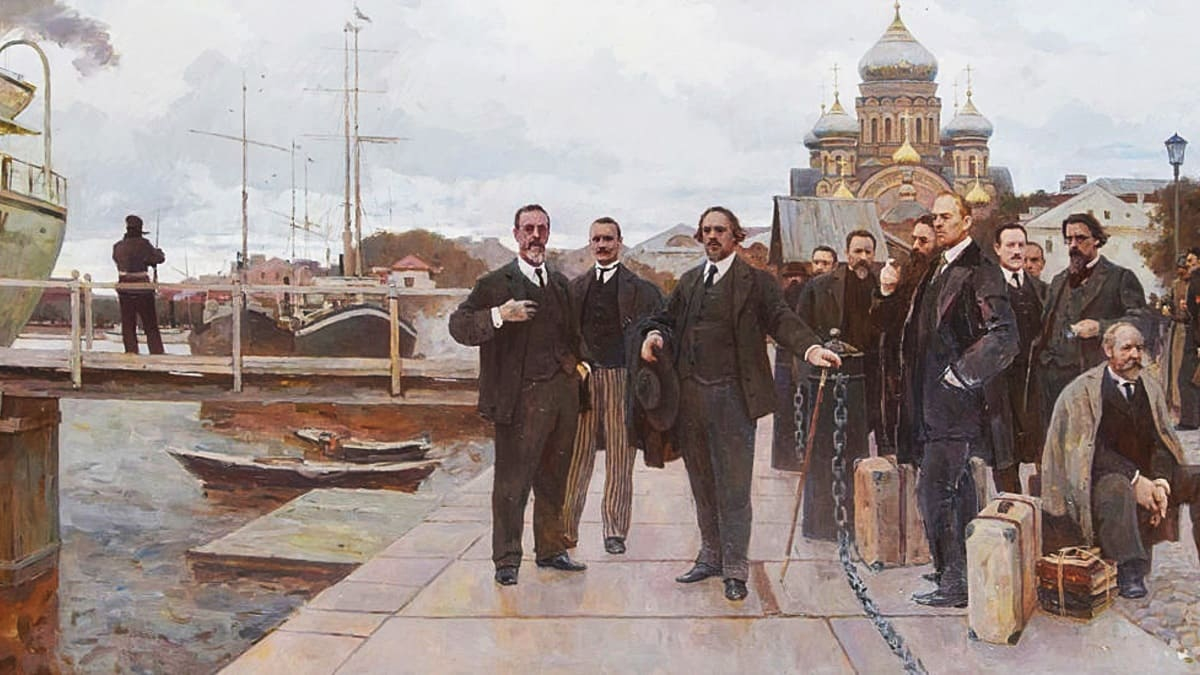
In 1990, two issues of Literaturnaya Gazeta published an article by the famous mathematician, philosopher and theologian Sergei Khoruzhy, dedicated to the expulsion from Soviet Russia of opposition representatives of the intellectual elite, famous philosophers, writers, publicists and scientists. It was then that the phrase “philosophical ship” arose, which became a symbol of the first reprisal against the free-thinking Russian intelligentsia. North.Realities continue to tell about the fate of the passengers of the “philosophical ship” expelled from the USSR in 1922.
Alexander Ugrimov was deported twice: first from the Soviet Union to Germany, and a quarter of a century later - from France to the USSR. During World War II, he participated in the Resistance movement, then went through the Vorkuta camps, became friends and fell out with Alexander Solzhenitsyn, and most importantly, managed to leave memories in which he described the steep route of his life.
Departure
A small sliver separated from the giant, set off and floated away.
A small steamer was carrying several dozen passengers away from the vast country.
The sliver went to Shchetin, a Prussian port city where the future Empress Catherine II, patroness of the Russian nobility, arts and sciences, was once born. Almost everything that was left of this, by order of Lenin, was now sent back, with a “one way ticket.”
The ship's engines worked smoothly. It was getting dark, the weather was excellent, and nothing prevented the huge lunar disk from carefully contemplating the passengers walking along the deck. They stood alone and in pairs, sometimes gathered in small groups - and passionately discussed the future and past of Russia. But the moon, of course, found it funny. She knew very well that the future and the past are always the same: grow, grow old, disappear, be reborn.
Famous philosophers and scientists sailed on the ship. There was even a famous astronomer there. But none of them, who deserved fame, honor and the curse of exile, could understand this magical formula of the lunar disk. Human life is too short for repetition, it barely lasts halfway, from birth to death.
And then the moon chose one, the most unknown and youngest, to give him a second fate, a second homeland and a second exile.
Scouts, fly agaric shooting and electric plow
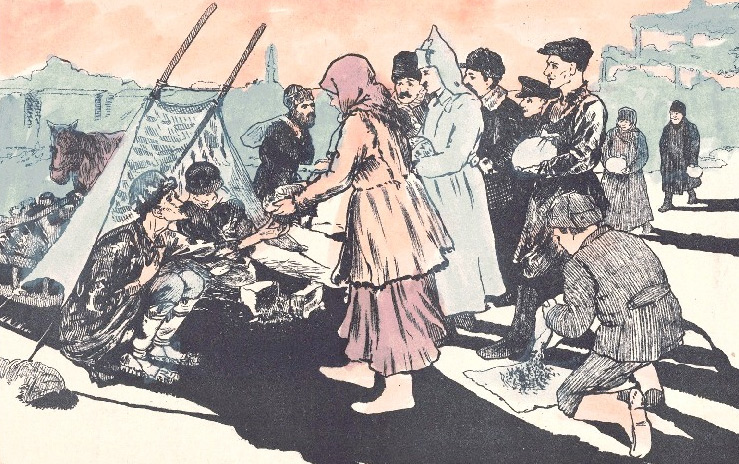
16-year-old Sasha Ugrimov, the son of the famous Russian agronomist, president of the Moscow Agricultural Society Alexander Ugrimov, was going to a foreign land that day with his father, whom the Soviet authorities deported for participating in the Committee to Relief the Starving Volga Region (POMGOL). This, of course, was the logic of the Soviet authorities: to get rid of agronomists during a bad harvest. However, from POMGOL, which became a “bone in the throat” for the Soviets, no one was spared - and it’s fortunate that they were not shot. But parting with Russia was stunning for both the son and the father.
Until recently, the life of this impoverished noble family was almost successful - adjusted for the winds of change. After the revolution, my father continued to do what he loved, he not only developed new varieties of wheat, but even participated in the development of the GOERLO (All-Union Electrification) plan for the agriculture of the USSR, and Lenin himself, who had some kind of painful revolutionary passion for everything electrical, once contemplated with admiration the electric plow that Ugrimov demonstrated to the leader of the revolution.
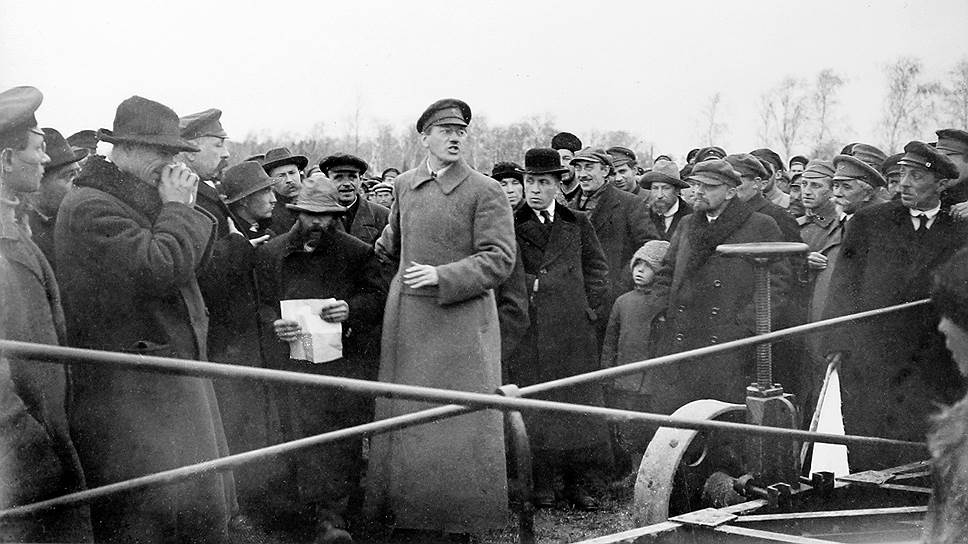
It was a short period when the new government and the old technical intelligentsia somehow tolerated each other - for lack of anything better. But both sides were cunning in their own way. The Ugrimovs, so that their house would not be “densified” with workers and cooks, settled friends and acquaintances - professors and teachers - in the free rooms. Among others, the famous pianist Igumnov and the author of an explanatory dictionary, the linguist Ushakov, lived there, so that something like a “professor’s commune” formed in the house. In the hungry summer of 1918, in order to feed her, her father organized a small artel near Moscow, where professors and their children worked diligently in the field, growing and harvesting crops. But a year later, the “commune” ended: Ugrimov was appointed head of the Moscow Union of Artists in Khlebnikov, near Moscow, and was sent away from the capital.
Sasha was barely 13 years old at the time, but the degree of his independence by today's standards looks almost fantastic. A “greenhouse” child from a noble family, raised by an English governess and studying in one of the best private Moscow gymnasiums, he was completely transformed when he joined a scout troop in 1918.
This was perhaps the most important moment in his biography, so here it is necessary to say in more detail about the scouting movement in Russia. Literally a few years after its founder, the Englishman Robert Baden-Powell , who trained young reservists for the army, published the book “Young Scout” and began to form the first scout troops in Britain, a translation of the book was published in St. Petersburg. Of course, today, a hundred years later, this book and its ideas look a little archaic. In the same America, where scouts are still “in fashion,” who doesn’t laugh at them and their romance (guitars, tents, playing trackers and looking at moss on trees). But at the beginning of the last century, the scout movement was not yet overgrown with moss.
Crime continued to rampant in Russia, and “patrolls” of teenagers on bicycles were on duty in the evenings on especially troubled city streets
And even the opposite. From 1909 until the revolution, it rapidly gained strength in Russia (as well as in Europe and America), and by the beginning of the 20s more than 50 thousand people took part in it. Mostly, children from wealthy families ended up there, to whom detachments and tent camps could give what gymnasiums and home education did not provide: physical training, skills of independence and resourcefulness, the desire and habit of doing good deeds and, most importantly, noble ideals of perseverance, mutual assistance, the ability to appreciate comrades and feel on the same team with them. The Soviet government later tried to appropriate all this, destroying the scouts and turning their movement into a formal “pioneer” movement, filling it with ideology and dyeing the ties from orange to red. But this happened only in 1922, and in the first years after the revolution, scouts were a completely permitted organization, which the Bolsheviks simply did not get their hands on...
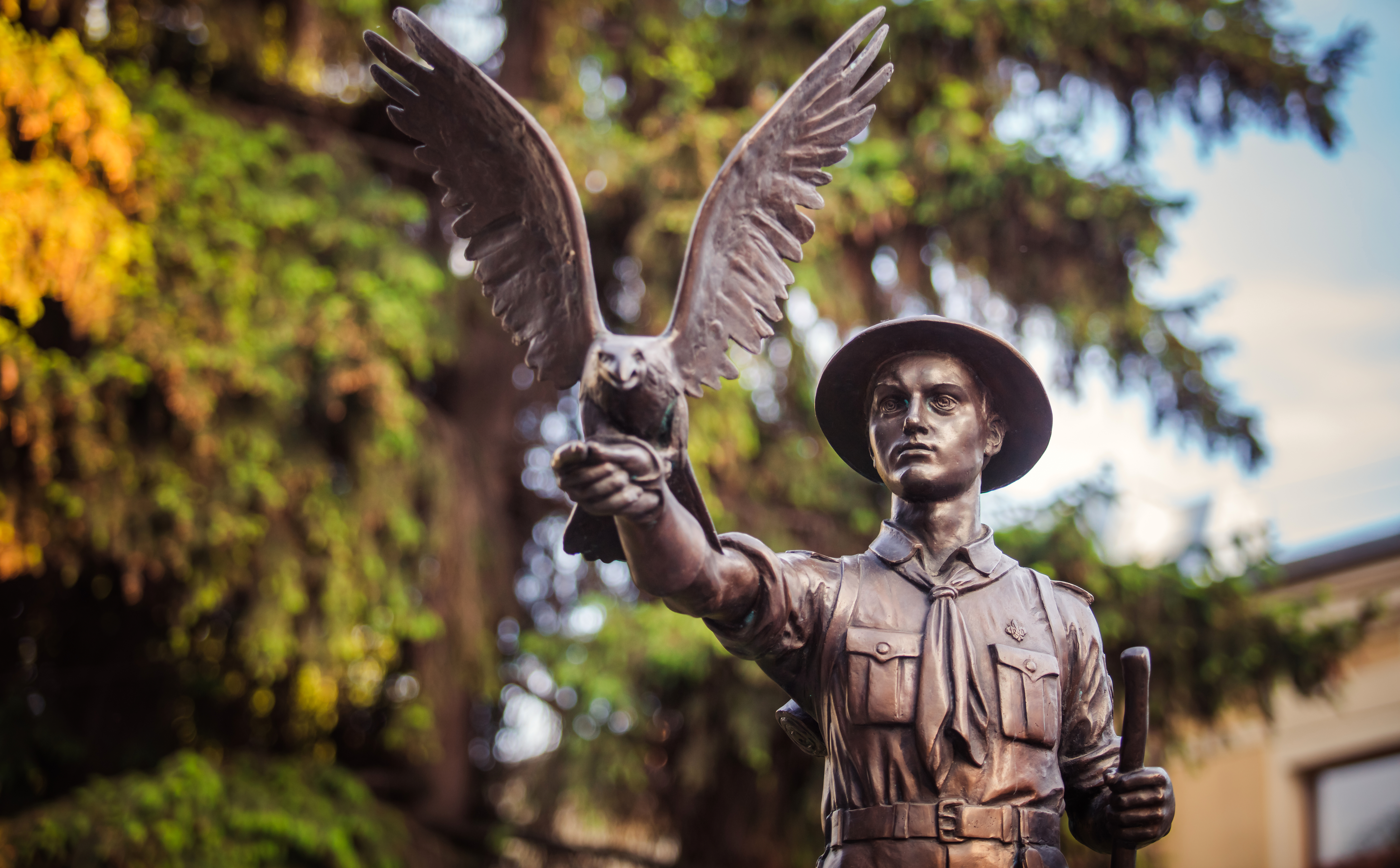
So, 1918, scouts, Moscow Lynx detachment. One of his units (“patrols”), which included 13-year-old Sasha, at his call, almost in full force, worked all summer in the fields and in the gardens of the Ugrimov artel near Pushkino, and... decided not to leave. The guys stayed at the estate until late autumn. They lived without any adult supervision in an old, dilapidated house, cooked their own food, lit the stoves, and little by little repaired everything that was broken. They put potatoes into bags and took them to Moscow, feeding not only their parents and their guests, but also other starving families. Then there was another scout commune in the city, and another one in the Moscow region... In 1919, when Sasha turned 14, scouts (the older ones) almost officially began to be issued weapons - inferior pistols and rifles. Crime continued to rampant in Russia, and “patrolls” of teenagers on bicycles (“scooters,” as they were called) were on duty in the evenings on particularly troubled city streets. And in their free time from duty, they entrusted their weapons to their younger comrades, so Sasha learned to shoot quite well. However, in those days many people had weapons, even quite intelligent professors, and agronomist Ugrimov also secretly kept a couple of revolvers in the attic of his house in Khlebnikov (not the quietest place), plus an almost harmless, but still menacing-looking family weapon - ancient dueling pistols. Already in the summer of 1922, shortly before the deportation, anticipating searches and arrest, Sasha’s father asked Sasha to quietly take it all out and hide it somewhere far away. He, of course, took the pistols to his scout colony, where they caused complete delight. “Gunpowder could be bought at the market, and sometimes in the forest we would launch a cannonade against fly agarics and toadstools. I’m still amazed how we got away with all this with impunity,” he later recalled.
In two years, combining scout life with studies at the gymnasium, Sasha was completely transformed. He matured, learned to ride a horse, create and find hiding places (which came in handy more than once later), and, most importantly, his character, already straightforward, acquired features of uncompromising honesty and determination.
This is exactly how the Soviet government wanted to see its subjects - brave, dexterous, straightforward, with accurate shooting skills. But here’s the problem: young Alexander Ugrimov, like his father, treated Soviet power with disgust.
He, of course, saw the revolution at a very tender age, but he grew up with its consequences and believed that the Bolsheviks were pushing the country into the abyss. What outraged him most was that the thinking people among whom he lived remained passive observers when, in his opinion, it was necessary to go to the barricades...
Well what can I say? Perhaps, with such a character and understanding of the situation, it was possible to live in Soviet Russia for a very short time in the early 20s. Two or three years, no more. And perhaps the expulsion of the family turned out to be the first lucky ticket for Sasha that caring fate offered.
You can’t punch a German in the face on a ship on the high seas...
Everything happened quickly and somehow almost everyday. In August, arrests began and rumors began to circulate about the expulsion abroad of everyone associated with POMGOL. My father was supposed to be arrested on August 18, but his older brother, deputy chairman of the GOERLO commission, stood up for him, and everything was limited to a visit to the GPU, where Alexander Ivanovich was surprised to learn that he, as an “undesirable element,” was included in the list to be sent to Germany. He was not even fired from any of his positions, but was simply offered to pack his things and buy train tickets for himself and his family to Petrograd, from where the ship departed for Shchetin at the end of September. They went there without any security, like ordinary travelers.
“The cold Baltic Sea was beautiful under the autumn sun... I remember in the bar Mikhail Andreevich Osorgin, with a wry smile, entering a new cycle of exile, after already a solid experience of political struggle for the “happy future” of Russia, which in no way followed the bright path prepared for it by the all-knowing intelligentsia,” Alexander Alexandrovich recalled with sad irony the day of parting with Russia. Berdyaev with his wife and sister-in-law were walking around on the deck; Ilyin, the blond Mephistopheles, just as Nesterov portrayed him; the thoughtful Frank, as his children were called, and all the others... One of the young people who knew German started talking to the captain. But then he jumped out from him, as if scalded. It turned out that the captain asked whether he was glad to leave this country. sheep (Schafenland)? By this he insulted all of us - Russians! Our national consciousness was deeply hurt. But you can’t “punch” a German on the open sea! So we immediately realized that we had left our homeland and were already in Germany.”
Unlike many other exiles, Sasha's father easily found his place soon after arriving in Germany. For the USSR, the “undesirable element” that ended up in Berlin suddenly became very desirable, even necessary, because most of the agricultural equipment for the Soviet Union was purchased from the Germans. An experienced agricultural scientist was a real gift of fate here, and soon Alexander Ivanovich was invited to work in the Berlin branch of the Centrosoyuz. They tried not to remember his deportation, and to this day many encyclopedias indicate that in 1922 he “was sent on a business trip to Germany.” But still, this “business trip” had a small nuance - the threat of execution in case of unauthorized return...
The family settled in a suburb of Berlin, where Alexander was frankly bored. Germany itself, the Germans, and the Russian emigrant environment made a depressing impression on him. For a year he yearned for Russia, eagerly awaited letters from his homeland, learned German, “caught up” with his peers at the gymnasium... But gradually new friends appeared, with whom they “began to explore Berlin and learned that side of it, which was so magnificently and completely differently described, on the one hand, by Nabokov, and on the other, by Remarque (in his best book “Three Comrades”).” In 1925, Alexander finally passed his matriculation exam and enrolled in courses at the School of Agriculture and Brewing in a small town near Munich. The place was much more boring than Berlin, but it seemed romantic to Sasha in its own way: the residents spoke a rough Bavarian dialect, the school was located in the building of the monastery, and the windows of its attic looked directly onto the cathedral tower. Still, it was not easy to survive there for three years - but the diploma of an agronomist, which crowned this patient sacrifice in 1929, opened the way to independent life, to independence from parents. And this road unexpectedly led to Paris.
Young Russians, Goering and the GPU
Ugrimov came to Paris for the first time almost by accident, going there for his friend’s wedding. Already at the station, he felt that after Germany he was on another planet: not a trace of German stiffness, a truly living city! After spending several days there, Sasha already felt that France was the only country (after Russia) where he wanted to live.
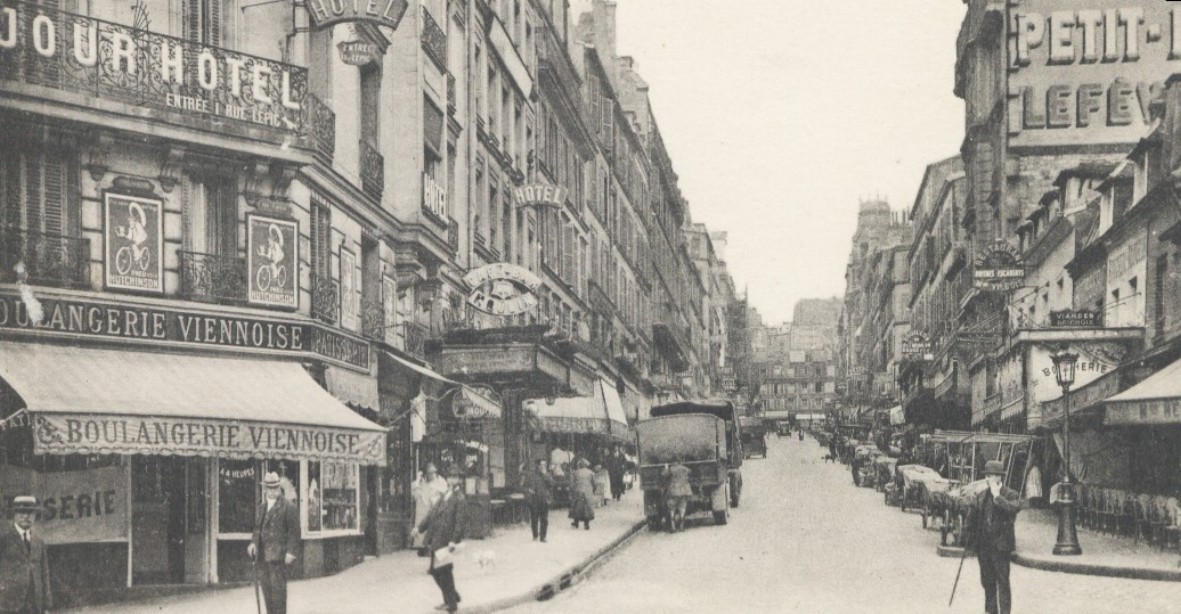
“Arriving in Paris was a turning point. I immediately realized that my place was now in France, and the thought of returning to Germany and there, on a foreign, unloved land (namely, land, in the literal sense of the word) to apply my agronomic profession, became deeply disgusting to me. But in France itself, working as an agronomist at that time was out of the question...” However, he was ready to work even in any French colony in North Africa, just to connect his life with France - but he did not have to make such sacrifices. Letters of recommendation from German professors with whom Sasha studied near Munich helped, and soon he got a job as a laboratory assistant at the Paris Institute of Flour and Grain Industries. Working with flour and mills suddenly captivated him and seemed meaningful and worthy. “This profession, which I fell in love with, inseparably bonded me with France, with its natural ancient wealth - with flour and bread - the noblest substances of human life,” he later wrote.
But most importantly, now he lived in the capital of France - and earned his own living!
Here, in Paris, the connection with everything that was happening in Russia was felt much more intensely than in Germany, and the emigrant environment was literally seething, giving birth in its depths to circles, societies, disputes and scandals, producing various ideas and projects in unimaginable quantities. One of these projects that attracted Alexander’s attention was the “Young Russians” movement. This, in fact, was a social-monarchist party that supported Grand Duke Kirill as a contender for the Russian throne, but at the same time sympathized with both fascism and the Soviet system, offering some complex but ideal cocktail for combining them into a single whole. "The Tsar and the Soviets!" - such was the somewhat crazy slogan of the Young Russians, to whom, in addition to several Cossack circles, for some reason they were affiliated with the Youth Sports Union and the Association of Russian Assyrians. But for all its madness, this movement in its atmosphere (blue uniform shirts, oaths of allegiance, ritual greetings) vividly reminded Alexander of scout troops, and he not only enthusiastically joined its ranks, but even headed one of the Parisian units.
Boris immediately revealed all his cards - and admitted that he works for the GPU
In politics, the Young Russians were a rare, endangered species - there were barely a few thousand of them in all of Europe, but they were all the more valuable to Soviet intelligence officers. Of course! After all, this was the type of emigrants who remained patriots of Russia regardless of who now held power in the country, and did not shy away from the “Soviet” ones, but, on the contrary, were very willing to make contact with them. Therefore, soon a charming, intelligent and frank interlocutor appeared in the life of Alexander and his party friends - Boris from the Soviet trade mission, with whom it was especially pleasant to sit in the bistro in the evenings.
In response to Alexander’s warning that he was not going to betray the interests of the French Republic, Boris immediately revealed all his cards - and admitted that he was working for the GPU, but was not going to recruit anyone, but simply wanted to find out how and how Russian people lived abroad, what they thought about Europe, the USSR and Nazi Germany. Soon these conversations became regular, and they clearly brought considerable pleasure to both parties. After all, while remaining the same staunch opponent of communism, Alexander, like many emigrants, continued to be keenly interested in everything that was happening in his homeland - and Boris fully satisfied his curiosity, without even avoiding such sensitive topics as Stalin’s repressions. In the end, he also needed an interlocutor who would certainly not betray him - and in Ugrimov, immediately sensing his character, he saw just such a person. Thus, a close friendship began between them, in which everyone could not fear anything. “After all,” Alexander thought, “what secrets can he learn from a flour milling specialist?”
True, many years later, already in the mid-70s, when, after a long separation as very old men, they met again in Moscow for a drink, Boris admitted to his old friend that he had managed to obtain some important information. It turns out that one of Sasha’s friends, the Young Russians, worked at an aircraft factory in those years, and through him Boris received a design for a retractable landing gear for fighter aircraft, which greatly helped Soviet aircraft designers.
But that was all later...
In the meantime, life went on as usual. In 1932, Alexander married actress Irina Muravyova, and in 1934 their daughter Tatyana was born. In Germany, fascism was raising its head, and coming there time after time on business trips and to visit his father, Sasha saw rapid changes. Now, as he put it, he felt in Germany “like in an enemy camp.” But curiosity pushed him to see with his own eyes what and why was happening to an entire nation - and so one day he found himself at a public speech by Goebbels:
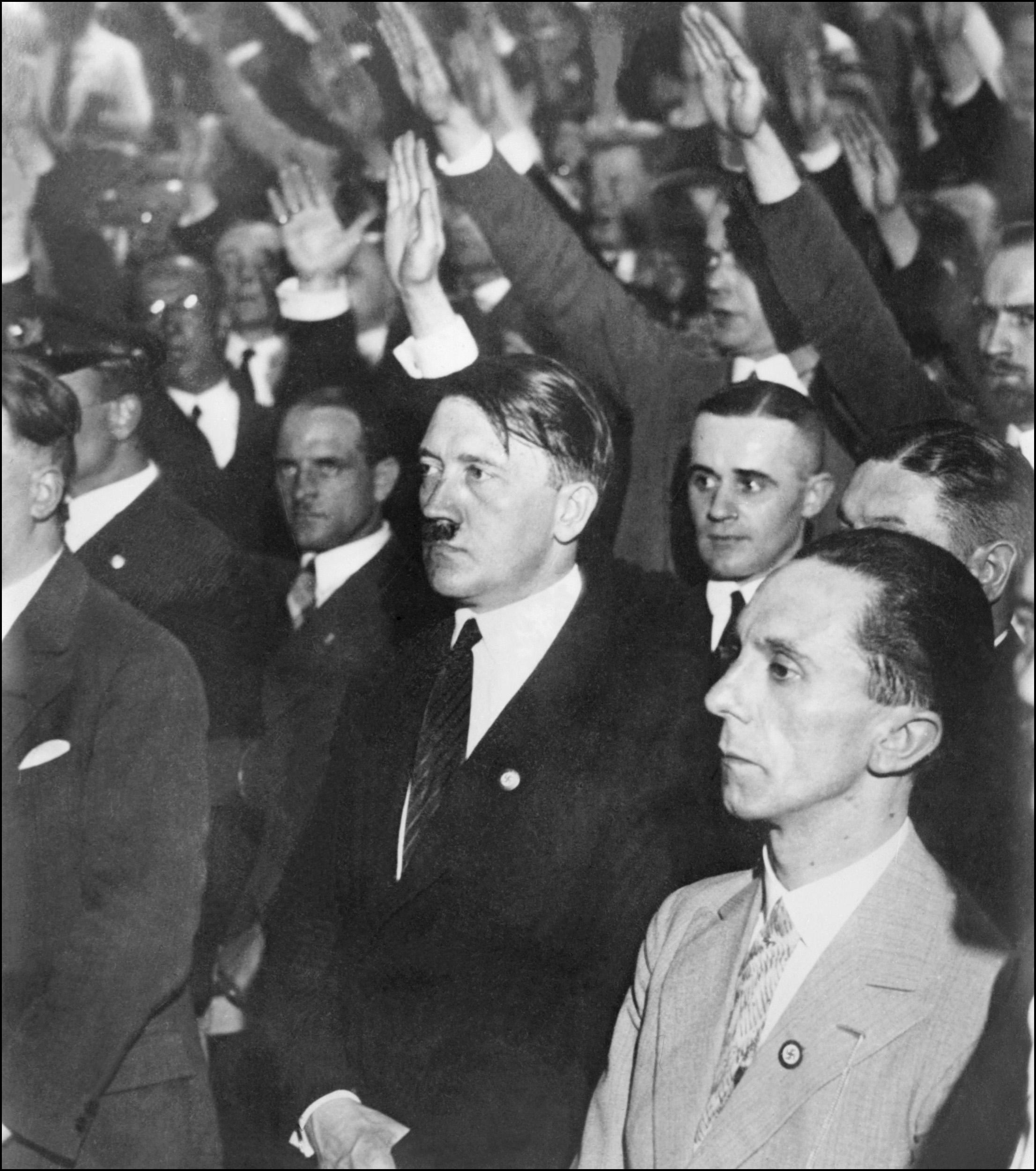
“...Finally, the puny, nimble Goebbels appeared, limping, and the whole crowd howled: “Heil! Sieg!" It seems they were also singing something. Goebbels signaled to sit down and began to speak. It was a lengthy performance of the most vulgar order, with anecdotes and jokes, with the use of the rudest expressions and gestures to the taste of the audience, which noisily expressed its approval... The Germans were intoxicated with the feeling of their power, and their inferiority complex turned into ferocious cruelty and immense arrogance, into bestial chauvinism. The crowd loudly applauded the smart and cunning monkey. Yes, it was a good tune for the German brains.”
The fact that war was inevitable was now absolutely obvious to him, but careless complacency continued to reign in France. Feeling safe under the protection of “the best army in Europe,” the French only laughed at the Germans. They were much more concerned about their daily affairs.
Alexander also had them. By 1938, he had already made a serious scientific career, receiving the title of associate professor at the Higher Flour Milling School, and scientific activity took up a lot of time. In addition, it was necessary to take care of the family, and when in the summer of the same year my father was deported from Nazi Germany to France, he had to be hired as a teacher at a flour-grinding school. The Young Russians “fell to nothing”, and towards the end of the 30s Boris also disappeared from the horizon.
In one of their last meetings, discussing the war in Spain, he posed a point-blank question to his French friends: which side would they be on if the Soviet Union were drawn into the war?
– If France fights with us, directly or indirectly, then what will you do, patriots?
Angry, Alexander tore out a page from the notebook and wrote on it:
“We are against communism and the dictatorship of the All-Union Communist Party (Bolsheviks) in Russia. But if war happens, then I and my friends will fight on the side of the Soviet government against the enemies of Russia and will try, wherever we are, to do everything possible for victory.”
- Here, take it and pass it where you see fit.
– Aren’t you afraid to give me such a piece of paper?
- No, I'm not afraid. Do whatever you want with her.
Planes from De Gaulle and weapons at the mill
In mid-May 1940, German troops quickly invaded France, and on June 22 capitulation was signed, after which two-thirds of the country was occupied by the Germans. Only the south of the country remained relatively free (under the rule of the Vichy government, which collaborated with the invaders), including the town of Chabri in the Loire Valley, where the elder Ugrimovs soon moved. Alexander wanted to stay in Paris, but the occupation authorities demanded his dismissal from the institute, and he and his family had to look for a new refuge. They found him at a cooperative mill in the town of Dourdan near Paris, where Sasha temporarily found a job as production manager.
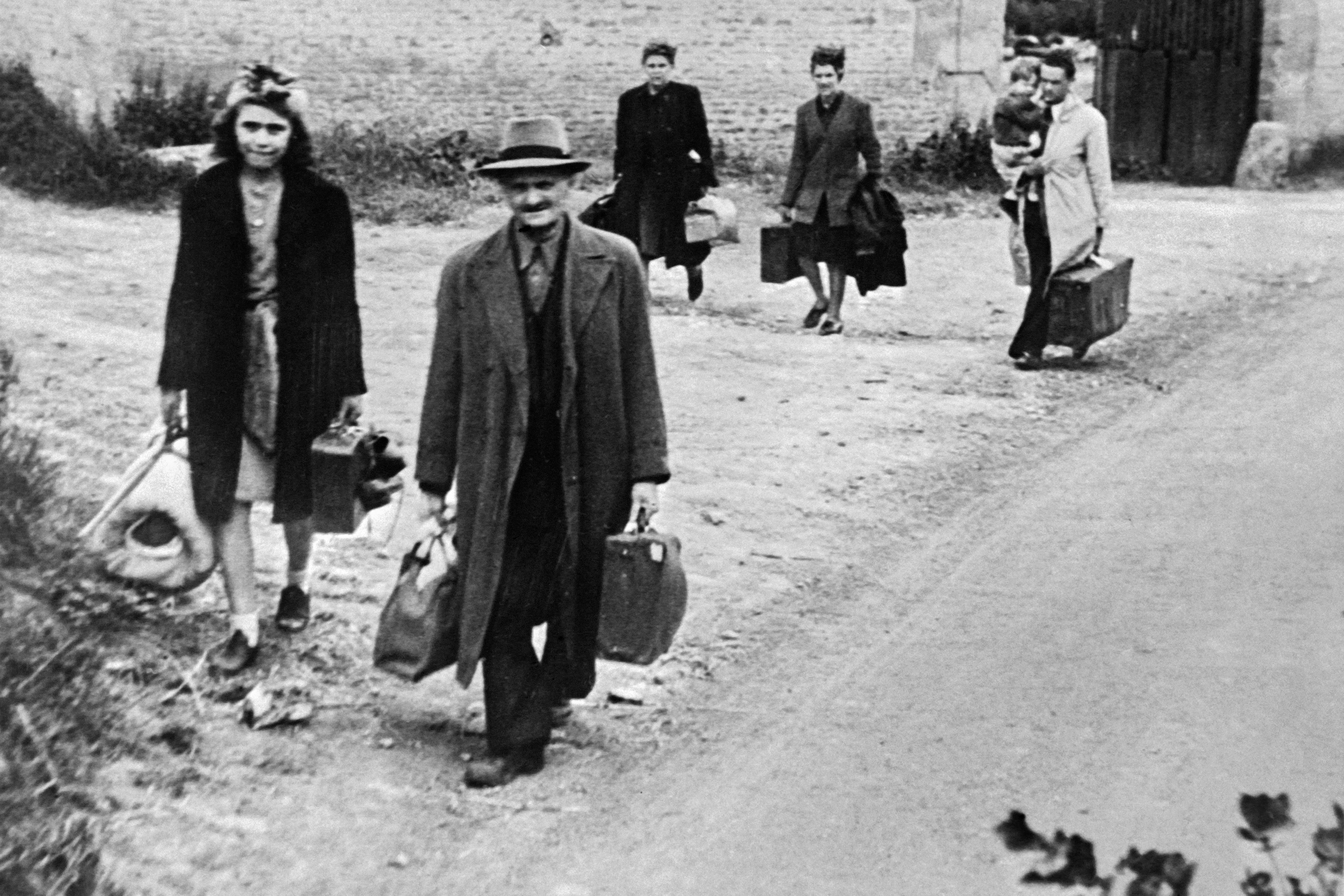
The remnants of the defeated and scattered French units were still leaving along the roads, throwing away their weapons. Alexander picked up rifles and revolvers, which he hid in mill cellars. He wanted to fight the occupiers - and this determination was strengthened in him many times after the German attack on the USSR. And not only him. After June 22, 1941, many Russian emigrants in France felt the same.
The mill turned out to be an excellent “cover” for creating a base of underground fighters here: in the old flour cellars it was possible to reliably hide not only weapons, but also people, and the flow of visitors and supplies did not arouse any suspicion among the Germans (and, of course, the scouting skills that Sasha acquired in his youth were now very useful). Already in 1941, a small, about 20 people, group of friends and acquaintances, Russians and French, rallied around the Ugrimovs, ready to fight the occupiers. They transported prisoners of war and downed English pilots who escaped from camps to the mill, made false documents for Parisians who evaded being sent to work in Germany, replenished stocks of weapons and ammunition... Sasha’s wife Irina, and even their little daughter Tanya, who knew how to keep secrets more reliably than many adults, actively participated in this risky work.
In 1943, after many unsuccessful attempts, it was finally possible to contact a “Resistance” cell located in a local auto repair shop, and then partisan activity acquired a new scope. The Allied landing in Normandy was being prepared, and General De Gaulle was counting on a French uprising throughout the occupied territory, so secret deliveries of weapons began from London, which the Dourdan Group was supposed to regularly receive.
Every evening, code phrases were heard on English radio, each of which corresponded to one of the squares where boxes with weapons were supposed to be dropped by parachute. Having heard the agreed words and waited until dusk, the group in several cars (trucks for transporting flour - other Resistance groups used ambulances and even fire engines) went to the place, most often to one of the suburbs of Paris, where literally under the noses of the Germans they lit signal fires and waited for the arrival of planes. However, serious secrecy was often out of the question: sometimes the message about the delivery of the next shipment arrived literally an hour or two before the arrival of the goods, and everything had to be done in a hurry. Therefore, the losses of the group members were quite military: many were captured by German patrols, many died in shootouts, were shot or found their death in concentration camps.
By this time, Alexander Ugrimov was already the full-fledged leader of the "Dourdan cell", which entered the FFC (French Combat Units) network under the command of De Gaulle. However, in agreeing to fight under the French flag, he and the other Russian members of the group made an important clarification - in the spirit of the note he gave to Boris two years before the occupation:
"As Russians, we join the FFC to fight together under French command against Hitler's Germany - up to the point where we can establish direct communication with the command of the Soviet armed forces so as not to be involved in actions that are not in accordance with the policies of our country."
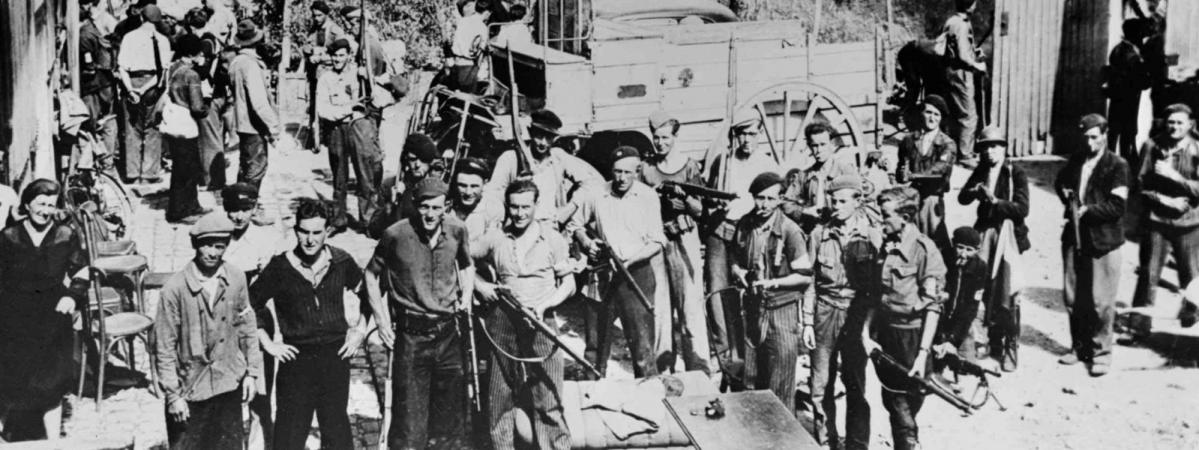
When in the summer of 1944 the advanced units of the Americans began an offensive towards Paris, the underground began to take active action. The main task was to collect intelligence and transfer it to the advancing Allied units.
The feeling of approaching victory was intoxicating - and made the scouts forget about all caution. But, however, the Germans now had no time for them. This is how Ugrimov himself recalls such reconnaissance:
“In the morning, a German unit, about fifty people, has been resting at the mill. (During the day, allied aviation does not allow them to move). The soldiers scattered around the park near the river. We are sitting right there, putting on tracing paper all the information that our people bring from the city and the surrounding area. Then the tracing paper is put in a sock, and the next messenger is sent to look for the Americans. This helps them get through the German defense without losses... In the evening, after the Germans leave, we pull them out from under bins of ammunition and drag them from the mill into the forest to Bluto, where the Durdan FFC gathered: the French, escaped Soviet prisoners of war, Russian emigrants - about thirty people in total..."
Ugrimov and his friends entered the suburbs of Paris on August 20 literally on the armor of American tanks, covering them from the Germans hiding in ditches with “Faust cartridges.”
And then there was a holiday, together with the families of the “resisters” - stormy and cheerful, with wine and songs. And best of all, as Ugrimov recalls, it sounded “Black wings do not dare to fly over their homeland.”
France was free. And they were free. Free to choose.
Awarded the highest award of France, the Military Cross, the founder of the legendary "Dourdan" group of the "Resistance", which was later included in all encyclopedias, Alexander now dreamed of one thing: to return to Soviet Russia - the country that defeated fascism simply could not, in his opinion, remain the same, totalitarian. She was supposed to be transformed as a result of this victory!
Many emigrants thought so then. Branches of the Union of Soviet Patriots arose throughout France, where they issued Soviet passports, and Ugrimov himself soon headed one of them. It seems that you just stretch out your hand and you’re home. What can interfere?
But disagreement in the family got in the way. Irina, who left the USSR later than Alexander, in 1925, and had had enough time to see enough of Soviet power, flatly refused to return. No persuasion had any effect on her.
- I am the most unfortunate person! - said Alexander Ugrimov. – The opportunity to return to my homeland is so close, but I cannot return. But maybe everything will work out on its own?
And everything worked out.
History repeats itself
On the evening of November 25, 1947, when he finished walking around the mill, a car suddenly drove up to the house, and three people in civilian clothes got out. One showed a detective badge and said that Ugrimov had been detained. After a quick search, during which, fortunately, no one noticed the weapons stored in the house since the days of the “Resistance,” they allowed a hasty goodbye to their daughter - and dragged him into the car. At the last second, Alexander managed to whisper to her: “As soon as we leave, carefully take the revolver and rifle out of the house. The revolver is in the springs of the couch, the rifle is in the wardrobe. They can come back again.”
History repeated itself almost literally. Directly from home he was sent for deportation, first to Germany, to the French occupation zone, and then to the Soviet sector. This was done to everyone who was related to the Union of Soviet Patriots: the Cold War was gaining momentum, and the French government ordered the expulsion of “unreliable elements” from the country, despite their past merits.
Alexander did not yet know that the same fate befell his father, whom they would meet very soon, halfway, in Potsdam. But on that day, he was apparently filled with conflicting feelings: after all, he and his friends from the “Union...”, whom he soon saw in the transit cell, were returning to their homeland. However, the path there was a long one. A few weeks later, the French handed them over to the Americans, and they handed them over to the Russians, to Brandenburg, where finally, after long interrogations, the prisoners were given relative freedom. And yet no one was in a hurry to take them to the USSR.
For three months they were in Germany, at the location of Soviet military units, where they wandered like some restless shadows among the ruins of Potsdam and Brandenburg. We corresponded with families, persuaded, dissuaded, hoped. Tanya was eager to follow her father to Russia, Irina continued to hesitate. Finally, unexpectedly, at the end of February 1948, a train with frozen “tevushki” arrived, which, without haste, carried Soviet patriots to the east. At the distribution point, where they had to spend several more weeks, the two Alexanders, father and son Ugrimov, suddenly seemed to have a “lucky ticket” - they were sent “home” to Moscow. No one remembered that the eldest would face execution for returning without permission. However, what kind of “unauthorized” is that...
Saratov prison, Lubyanka, Lefortovo - everything happened approximately as Alexander imagined it
They reached the capital in early April - and just on the way, Sasha learned that his wife and daughter had finally decided to follow him to Russia. So, we need to find housing and work... In Moscow, at the Grain Institute? No, but they gave me a placement in Saratov, as the director of a large flour mill.
He went there immediately, found an apartment, tried to get into all the intricacies of the new work - and did not suspect that the papers for his arrest were already ready and delivered to their destination.
They "came into force" on June 15, 1948.
“I woke up from the blanket being pulled off me. “Get up, get dressed.” Above me stood a short older man, with the indifferent face of an official, and further away were two young men: one hefty red-haired one (in case of resistance), the other a gray one, whom I didn’t remember. I didn’t feel any particular shock - the subconscious was prepared.”
Saratov prison, Lubyanka, Lefortovo - everything happened approximately as Alexander imagined. More surprising were the interrogations, during which he tried to understand what exactly the investigator wanted from him, why was he asking about the emigrant writer Vadim Andreev, who was close to the Union of Patriots, whom he barely knew, and some of his brother, Daniil Andreev? But gradually the picture became clearer.
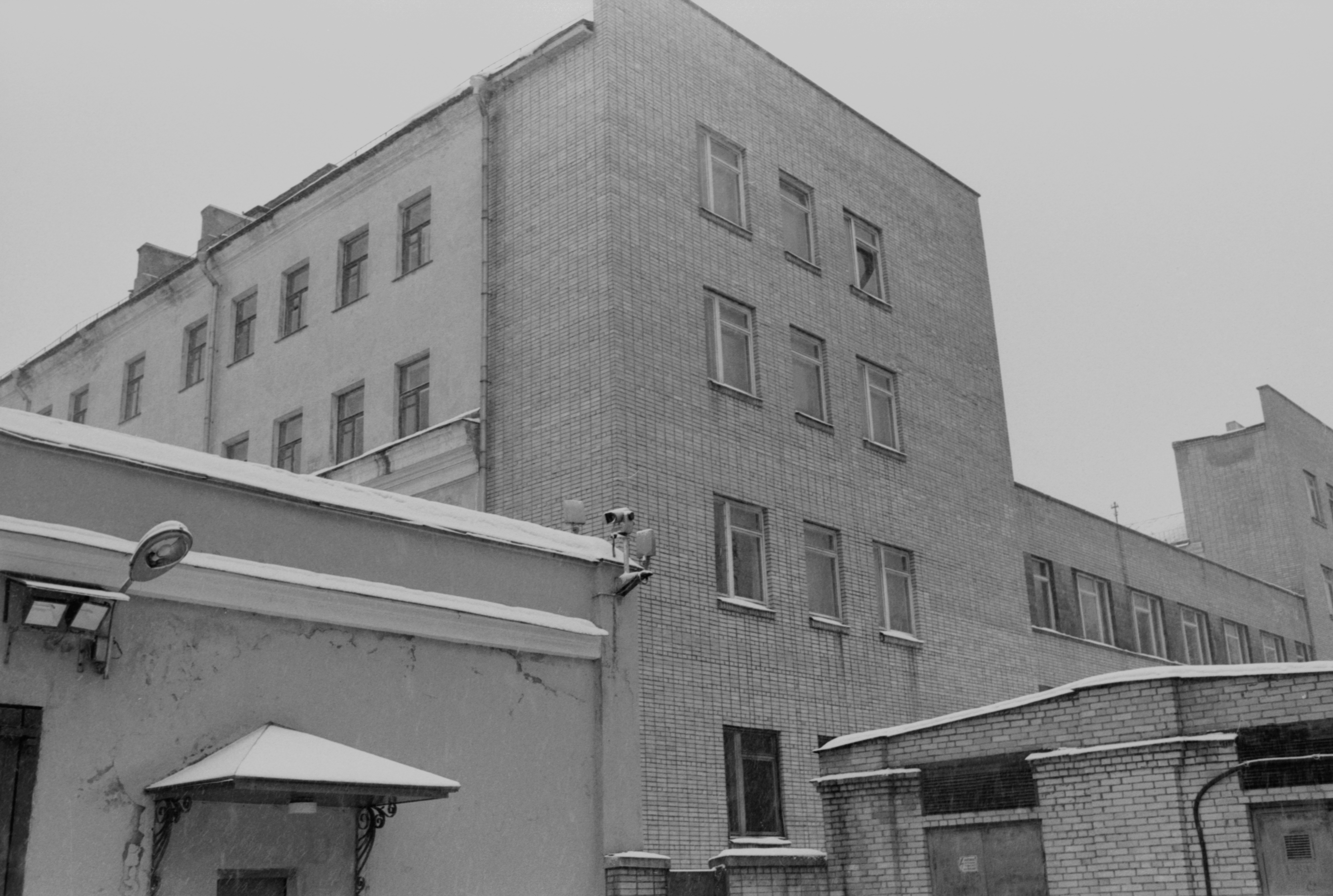
“In a nutshell, it boiled down to the following: Daniil Andreev here is a major terrorist; Vadim Andreev there is a major agent of American and British intelligence; and I, also an agent, came to establish a connection between them, and for this purpose I was sent to the USSR under the guise of deportation.”
By that time, Daniil Andreev had already been there for a year, in the Lefortovo prison, where the first images of “The Rose of the World”, one of the most mysterious books in the history of Russian literature, began to appear to him in visions. But, of course, Alexander knew nothing about him and, despite the pressure from the investigators, stood his ground. “What was, was, and what was not, was not.” The interrogations, interspersed with beatings, continued day after day, week after week. Ugrimov knew that his wife should have already reached Moscow, and tried to find out about her fate - to which, chuckling, the investigator replied “she’s still free, but if necessary, we’ll take her too.” In fact, Irina had been in a cell for a long time, on another floor of the prison, and she was interrogated in the same offices.
They met only a few months later, in the Stolypin carriage, when, having received their sentences, they went to the camp.
"... There I accidentally noticed an acquaintance. When the boarding was over, we began to ask each other when and how who was sent in the “funnels” from prison. It turned out that he had left on the previous flight and that there were two women with him.
– One was tall, in a blue coat and yellow foreign boots. I noticed the foreign shoes and even wondered if it was your wife. And you know, they are in our own carriage, in the front women's compartment.
Then I clearly and loudly said: “Irene! Tu es la?” (Irina, are you here?) - and listened intently. She answered."
He managed, while walking under escort to the toilet, to linger for a moment at the door, catch her eye and exchange a few words in French:
- Sasha, how much did they give you?
- Ten years. What about you?
- Eight.
That's all they had time to say to each other for many years to come, until the next chance meeting.
To hell with coal, we want freedom!
Polar Vorkuta met Alexander, like millions of other prisoners, without regard to the past. During the prison and prison time, he already understood: there is simply no past here, each prisoner is, as it were, born anew, past merits, titles and crimes do not count. People in the camp are judged only by their behavior - here and now. But all the same, everyone’s life depended only on the whim of their superiors, on chance - and the ability to take advantage of this chance.
Therefore, when, for a small bribe (he had to give up an old, worn French suit), he was offered not to go to work in a coal mine, but to get a job in a warehouse, as an assistant storekeeper, he gladly agreed. For several months he gave frozen potatoes to the cooks and the authorities, got to know other prisoners, and thus successfully survived the first, most difficult, winter.
The mine where coal was mined was served by a “special camp” - a camp in which there were mainly “political” prisoners and captured Germans, so many interesting acquaintances happened, but people appeared and disappeared - someone died in the mine, from hunger and cold, someone was transferred to other camp departments. During the first year, Alexander had the opportunity to visit both a punishment cell and a medical unit, go through fights, and learn to hide a blade in a lining. A lot of camp work also changed - from the repair team to “greening the territory,” which he, as a former agronomist, at some point persuaded the authorities to do. He was well over forty, but again, for what time, his scouting experience helped - the ability to hide, survive, build relationships with people, joining the “team”. And all the same, like most prisoners, the coal mine was waiting for Ugrimov - the “nurse”, as the prisoners ironically called it.
In 1951, he was sent down underground and assigned to reject coal - not the hardest work, but quite dangerous. Every day in a rusty cage I had to go deep underground and spend many hours there, so after work I barely had time to recover and sleep. There was no news about Irina - all that was known was that she was at Inta and, it seems, managed to get a job as an artist for the cultural brigade. But letters began to arrive from Moscow, and he knew that everything was fine with his daughter, she was with distant relatives, and his father was sent to Ulyanovsk and he worked there at a livestock station.
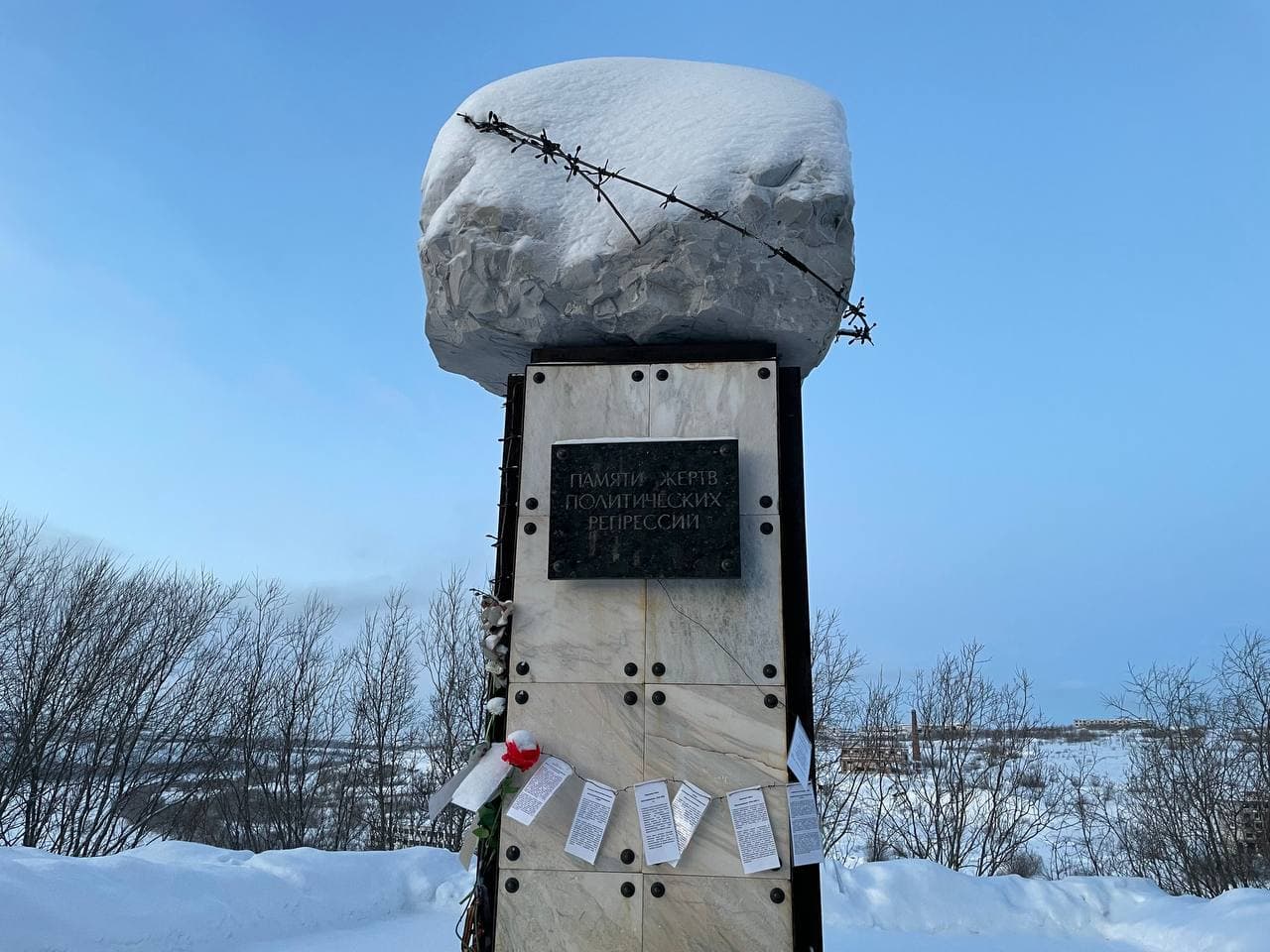
So they went month after month, year after year. But in 1953, when Stalin died, something began to change - first imperceptibly, and then with the speed of an explosion. The first harbinger of “camp changes” was the famous Vorkuta strike . A group of 400 people from Karaganda who came to the “special camp” refused to go to work in the mine and demanded the arrival of a Central Committee commission to review the cases - and release. A few days later the entire camp was practically captured by prisoners, the authorities disappeared somewhere... Work stopped. “The elevator wheels did not spin. For some time, trolleys with coal passed us on the railway, but by the end of the day they became three-quarters empty. Inside each car, in chalk in Russian letters, it was written: “To hell with coal, we want freedom!” recalled one of the Vorkutlag prisoners, John Noble .
“ It was hot sunny days, the camp had a festive look, completely unusual. The miners with particular pleasure lay naked on the grass and sunbathed in the sun. Some played volleyball, others read while lying down, others walked in groups, talking animatedly. A red flag fluttered over the bathhouse again, which the guards were tired of climbing to remove - this flag especially stung the eyes of the authorities. They say that the whole of Vorkuta is on strike, we are not alone... ” - Ugrimov recalled.
But this freedom did not last long. The commission arrived from Moscow - but not at all what was expected. After short negotiations, troops appeared in the camp. The instigators of the strike were captured and sent to a punishment cell, and at the 29th mine, where they tried to catch them from the crowd, a tragedy occurred. “They said that when they were taking us out of the gate, like ours, the thread on which everything was hanging for us broke: someone shouted something, someone rushed, bricks were thrown at the convoy, they opened fire... and it went on and on.” The soldiers shot about 300 people, the uprising was suppressed.
And yet, after a few months, the cases were reviewed, visits were allowed, and finally releases began. In July 1954, a father and daughter came to see Ugrimov at the camp, and literally a day after their departure, when he was underground, the mine was told by telephone that he was required to appear before the authorities.
- Ugrimov, get out, you have a roundabout to be released!
Of course, the journey to Moscow was again a long one: first Vorkuta, and then by train from Inta, towards the capital. In Inta, already without an escort, he had to fill out documents, but it seemed to Alexander that all the people were now smiling at him, everyone was participating in his fate:
- Hey, fellow countryman, freed, or what? If you have nowhere to go, come to me!
- No, thank you!..
I walk cheerfully and cheerfully and look around. And suddenly - I’ve stopped being surprised - I see: on the other side of the street, on the right, in the same direction, slightly ahead of me, Irisha is walking. I run to the other side - I’m getting closer, there is no doubt: it’s her! I can already hear her voice, I see part of her face when I turn my head. Then I come close and say: “Irina!” She stops dead in her tracks, but also without much visible shock: “Lord, how are you here?” And so everything was simple, natural, and at the same time like the ending of a fairy tale..."
A month later they were in Moscow.
Biography in a nutshell
At the NKVD department (branch of the “Big House” on Kuznetsky), where Alexander and Irina came to get their passports, they were asked to sign a document stating that they had no complaints against the security officers regarding the confiscated items. Of course, all the things have long since disappeared - but they will pay compensation for them, how could it be otherwise! However, what should you pay for? The list contained some kind of nonsense: instead of gold rings - “rings of yellow metal”, instead of precious stones - glass. There were also such pearls as “molten trousers” and “used porcelain dog”.
But they had no time for arguing - just to quickly get away from this place, from these faces. We received the documents, received Moscow registration through our relatives, and all that remained was to find a job. Someone advised me to go to the Research Institute of Textile Machines; they needed translators from French. Indeed, Alexander, a professional “techie” and agronomist, was greeted with delight in the HR department. This is exactly the kind of specialist you need!
But, of course, there was one problem.
"Is my biography suitable for you?
“What,” they became alarmed, “is it complicated?”
– Yes, but it can be said in a few words.
“Well, how about two,” they are surprised, “after all, you’ve lived a long life?”
– Nevertheless: I lived abroad all my life, and the rest of the time in prison.
“N-yes-ah,” both comrades went limp and hung their heads completely hopelessly.
“But maybe I can still help you?” - and I smile, looking at them.
“Well, how can you help,” they say inconsolably, even offended at my smile.
- Here is a recommendation from Gleb Maximilianovich Krzhizhanovsky (a member of the Central Committee, an old friend of my father, with whom they were still working on GOELRO) - I take out a piece of paper, prepared in advance, because from experience I knew that without a magic wand I would not get through anything.
Like puppets, they went from saggy to lively.
- Well, that's it then. Let's go to the director."
Thus began another job - translations - which I had to do for the rest of my life. But not only her.
Solzhenitsyn immediately felt a reliable person in Ugrimov
Ten years later, in 1966, when the daughter had grown up and life in Moscow had finally improved, another meeting happened that turned everything in a new direction and once again made Alexander remember his scouting youth. This was an acquaintance with Alexander Solzhenitsyn, which, as often happened with Ugrimov, quickly grew into a close friendship. They had a lot in common: both went through camps and war, both were sincere patriots and hated the power of communist apparatchiks.
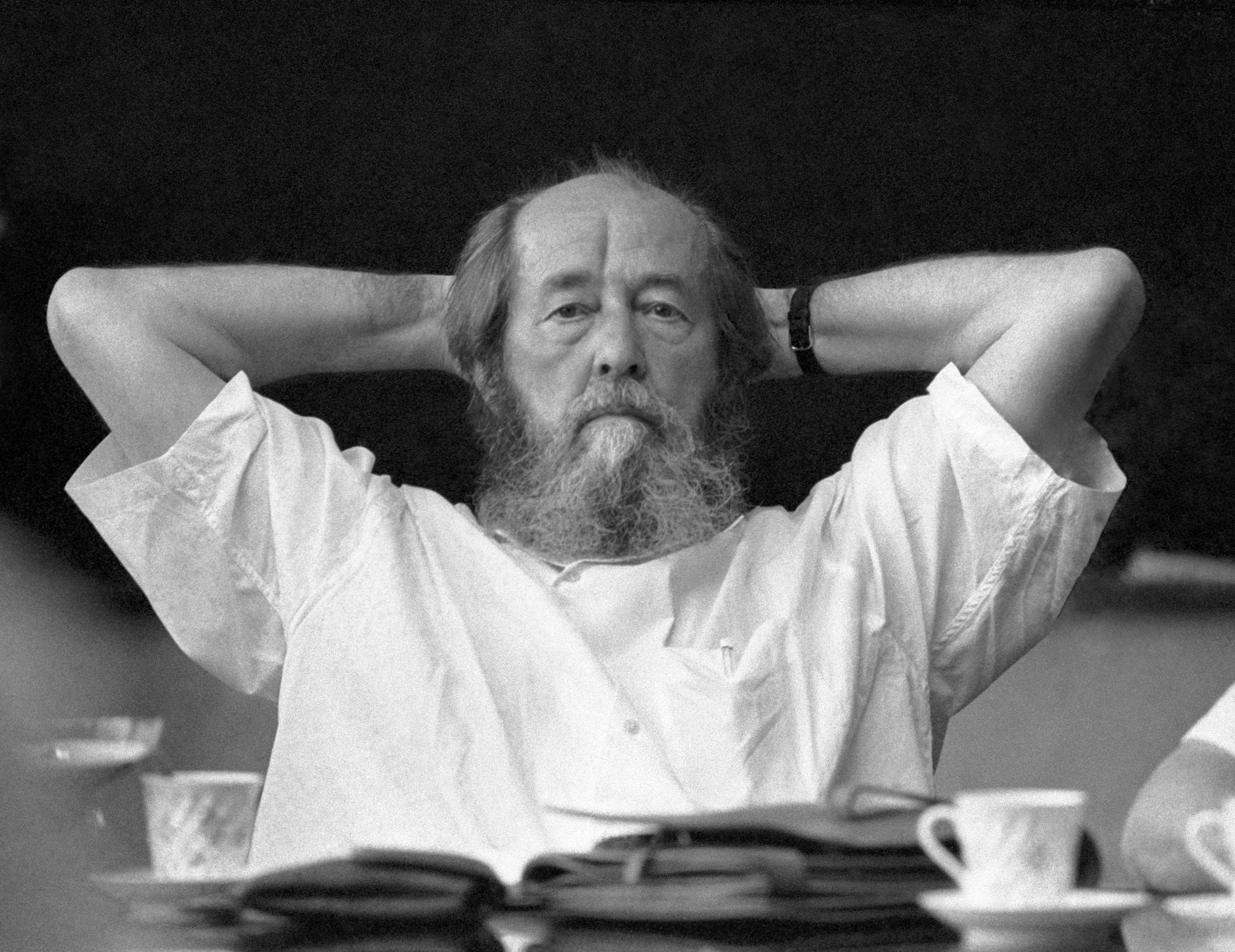
Solzhenitsyn immediately felt a reliable person in Ugrimov, and soon he became responsible for the storage of manuscripts, which he kept with secret “moles” (Solzhenitsyn himself, due to the conditions of secrecy, was not familiar with them). This is how a whole network appeared that hid the pages of the Gulag Archipelago from KGB searches. Duplicated in several copies, they were hidden in vegetable gardens and in city hiding places, which no one knew how to invent better than Ugrimov. In 1968, he took part in the production of microfilm and helped transport the Archipelago to the west.
In addition, he had a car - an old Moskvich - and in it Alexander from time to time brought the necessary people to Solzhenitsyn, delivered manuscripts, and in 1971 he even went with the writer on a long journey to the south, towards Novocherkassk, where he hoped to collect materials about the famous " Novocherkassk execution ". About this trip, which turned out quite dramatically (in the middle of the road, Solzhenitsyn suddenly felt ill, perhaps due to an attempted poisoning), Ugrimov’s large essay “The History of One Trip,” written “hot on the heels” of the events, in the mid-70s, has been preserved. And when Solzhenitsyn became a Nobel laureate, it was Ugrimov who turned out to be the first reader and critic of the versions of his “ Nobel speech ”, compiling detailed reviews and comments on them (with which Solzhenitsyn, however, almost never agreed): “I consider the least successful tone to be preachy and edifying. Perhaps one should not fall into it, it causes irritation. Reproaching, teaching and instructing is a very Russian property, little appreciated in the West."
In 1974, after Solzhenitsyn was expelled, they parted forever, without ending their disputes, and in December Ugrimov was summoned to the KGB reception room.
– Tell us about your friendship with Solzhenitsyn! What? Was there nothing? What about your joint trip to the south?
- Yes, it didn’t happen at all! I just took him to the station then.
Indeed, the investigators could not prove otherwise - the former scout perfectly observed secrecy, and the essay about that trip, as well as Ugrimov’s other “forbidden” papers, were kept in safe hiding places, which only he, his wife and daughter knew about.
Afterword
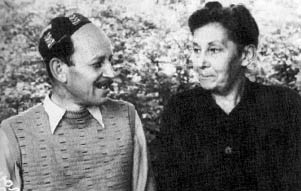
These archives were once again hidden by Tatyana after his death in 1981, and in 2004 they finally waited in the wings, when in Moscow she managed to publish a book of his memoirs, “From Moscow to Moscow via Paris and Vorkuta,” a full-length volume on which Alexander Ugrimov worked for the last decade of his life.
One more, last attempt to express biography. But for those who go beyond the title page, this (not at all philosophical) book certainly contains a hint of the future and past of the country of Russia, and a formula of fate for many who felt and feel an inextricable connection with it: grow, grow old, disappear, be reborn.