
Translated material
Channel hole
What does Rutube want to lure YouTube users? We sent our correspondent to study domestic video hosting instead of you
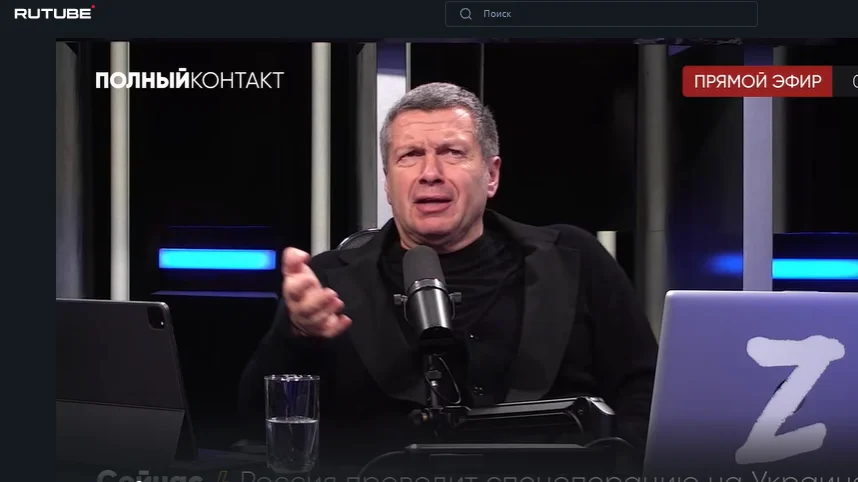
The long -term struggle of the Russian authorities with YouTube, sharply aggravated with the outbreak of war and the introduction of military censorship, can result in blocking video hosting in Russia. According to the latest forecast of the Metaculus project, which is engaged in the prediction of events by aggregation of user forecasts, YouTube will be blocked in Russia with a probability of 50% - for comparison, a similar forecast for 2021 has never risen above 30%. Since February 24, the Russian authorities have more than once threatened to block video hosting for refusing to remove “extremist materials” (primarily related to the war) - YouTube, in turn, blocked the channels associated with the Russian media funded by the state. After the video hosting was blocked on April 9, the State Duma of Duma TV, the official representative of the Russian Foreign Ministry Maria Zakharova said that YouTube “signed a sentence” and called on users to transfer content to Russian platforms as quickly as possible. It was apparently, first of all, it was about the domestic video hosting Rutube, the existence of which many Russian users learned only in connection with the news about the possible blocking of his senior fellow.
“New newspaper. Europe ”understood how Rutube differs from YouTube and the TV, who publishes content there and who watches it, what is the past of the Russian video hosting - and whether he has a future.
To understand what Rutube is now, I decided to sit there.
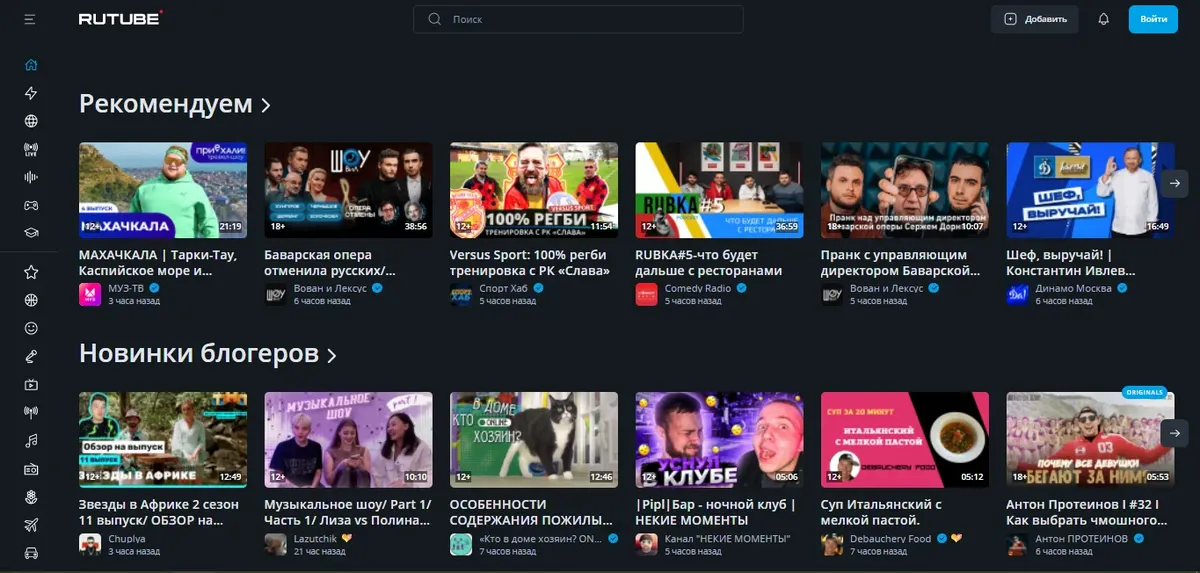
At first glance, a visually “Russian YouTube” from the senior fellow is distinguished by a little - in fact, this is YouTube, only with a dark theme of the site (if you choose such a topic on YouTube, it will be completely similar). On the left on Rutube-the same buttons “History of Views” and “Watch Later”, there are “Translation” buttons, leading to straight broadcasts (when I monitored Rutube, there were only 5-6 straight airs on the platform), “Video games”, “Sports”, “Films”-all on YouTube. Unless there are more such buttons on Rutube (there are, for example, the “Travel”, “Interview” “Lifehaki”, “Food”, “Auto”, “Training” buttons) - but they give little, except for the wider possibilities of sorting content.
To create a channel and upload a video on it, it is enough to register on the platform by phone number or e -mail - apparently, public services have not yet been connected. The site says that "usually the procedure takes up to 20 minutes, but moderators can increase the check time to 24 hours." As hi-tech mail.ru rightly noted , this causes problems to the authors of the content, because "even during such a time the video may lose relevance." However, state institutions, a legal entity with documents confirming copyright to content, and “public personalities” (no matter what it means), can be verified by filling out passport data and registration address, and publish a video without a queue and prolonged moderation. So, Alexei Pivovarov, either verify the account, or wait until the moderator watches all reviews on the plush Hagi Vagi for unwanted ideas and will reach your urgent issue of the “editorial office”.
By the way, about undesirable ideas. As stated in the Rutube User Agreement, the platform is prohibited by the publication of “materials containing a clear disrespect for society, the state, the official state symbols of the Russian Federation, the Constitution of the Russian Federation or the bodies exercising state power in the Russian Federation”, “materials containing obscene abuse, rude and insulting expressions”. It is also prohibited “public distribution under the guise of reliable messages of deliberately false information containing data on the use of the Armed Forces of the Russian Federation” and, apparently, for the incomprehensible - at the end a separate point is written about the ban “Use unreliable information and data received from official Russian sources, in the preparation of materials and publications regarding the situation in the Luhansk People’s Republic and Donetsk People's Republic. "
In general, if the form of Rutube resembles YouTube, then in content it is more likely another tool for propaganda than video hosting. I will explain.
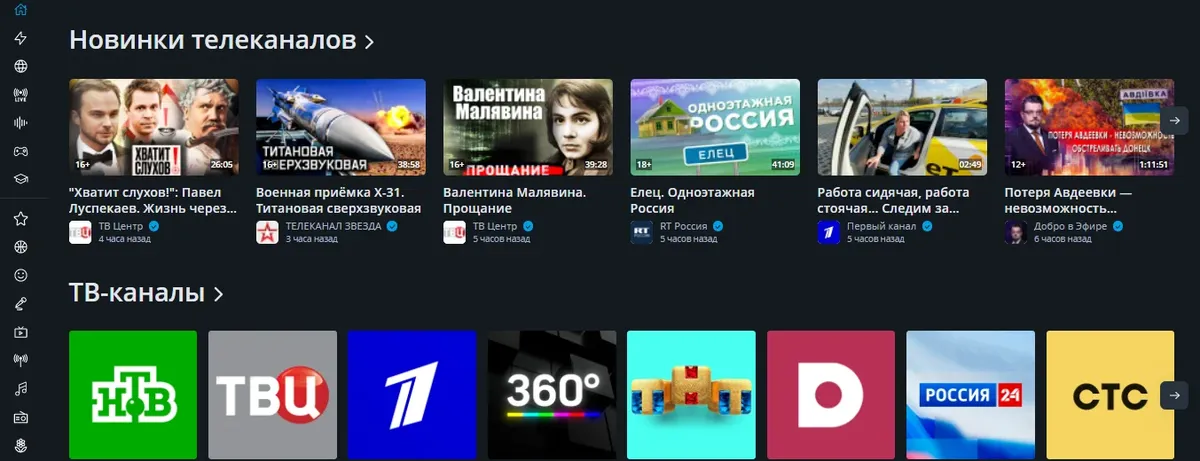
If youtube bloggers and the media have long christened the “new TV” - in the sense that the picture there is already on the TV, but we can say what they won’t say on the TV, then RUTUBE is an old TV. The TV that pursues you. Here, at the top of the main page of the site, there are tiles with television content, which Russian television channels are placed on video hosting-you wove one, a sketch will come up from Comedy Club, you will go to the other-you will get to the “ax” series, you poke the third-the Murusya melodrama from Russia-1 will open. You scroll down the page down, hoping to run away from the “ax”, and there is a section of news from the news aggregator Rutube.news, another Rutybov project - and the news there again from NTV and from the Rossiy newspaper. Only under them does user content begin - it seems like the main thing has already been shown to you, then you can look at the reviews on chocolate bars.
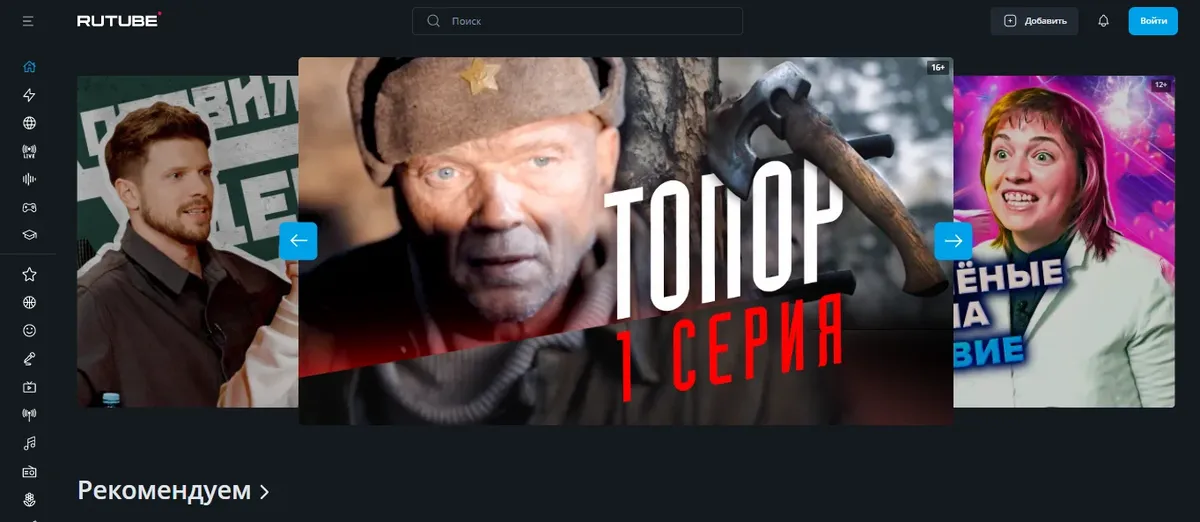
But it wasn’t there.
Under the sections “recommend”, “new products from bloggers” and “in the top” (there is an entertaining content everywhere - reviews for games, cats, how much to get and work a little, football, mixed martial arts) - again the TV. At first - the section “New Television channels”, then just tiles of Russian television channels (apparently, for those users who devotedly watch only a specific TV channel), the section “News and events” below (here, right on the main page of the site, all: from the harmless plot “How do men behave after parting?” The production of “fifth channel” to the “special military events of the main military events” RT, whose YouTube channel Google blocked on March 1). The whole section on the main page of Rutube is dedicated to the series with the poetry name “Conventional cop” from the “Fifth Channel”-there are 36 episodes, leafing through to the right, you can choose any, I personally decided to start with the 21st series called “Cinema 18+”, but, unfortunately, what I expected did not see.
Under the “conditional cop”, the “TV show” section can be seen, for example, “time will tell” if you miss on TV.
Under all this television mess - again sections with user content. There is a musical section, but there is a selection as at a disco for Russian tourists in a Turkish resort about 15 years ago - neither Billy Ailish, nor Kanye West, only Oleg Gazmanov, Mark Tishman, DJ Smash and Reflex group. In general, Rutube is rather a TV on the Internet with the possibility of publishing user content.
But, apparently, a TV for the young. According to Similarweb, 31.4% of all RUTUBE visitors in April are users from 25 to 34 years old, 18.44%-users 35-44 years old, 15.65%-youth from 18 to 24. In total, in April, Rutube visited 63.6 million times, 81.14% of visits were made from Russia. True, the percentage of failures is when the user watched only one page, for example, to understand where he got and left the site - amounted to as much as 45.83%. At the same time, the average duration of the visit was only 5 minutes 9 seconds - in YouTube, for example, the average duration of the visit around the world in April was 21 minutes 45 seconds.
Now about user content. In principle, there is, in principle, there are no content from the vast majority of popular Russian YouTube bloggers: they are in no hurry to go to Rutube. It is not here, and, apparently, there will be no “editorial office” by Alexei Pivovarov (3.16 million subscribers), there is no idol of all Russian children, the Belarusian blogger Vlad A4 (39.7 million subscribers on YouTube), about bloggers from Europe and the United States, I generally am silent. The Russian YouTube blogger Wylsacom (10.1 million subscribers on YouTube), for example, said that today "you can upload videos on Yandex.Disk with the same success as on RUTUBE." Although, of course, the Russian authorities will allow the “parallel import” - and RUTUBE employees will download content from YouTube, and then put it on their platform.
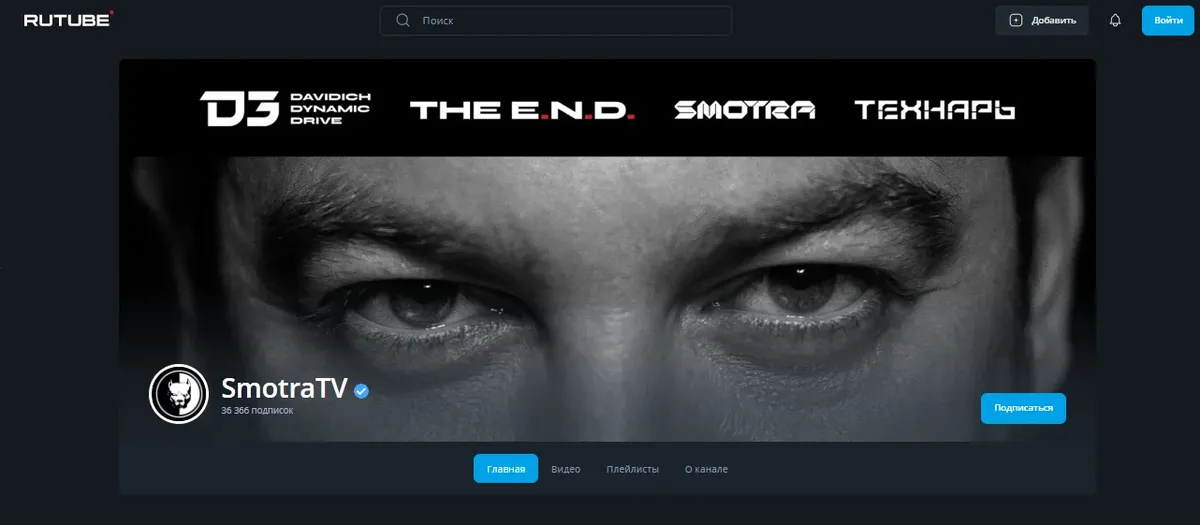
RUTUBE still managed to lure some red-millioneore bloggers from YouTube. For example, the auto-block Eric Davidych (his Smotratv channel on YouTube has 4.36 million subscribers)-on April 10, he posted a video on his YouTube channel, in which he said that all his videos would now appear on Rutube and attached a link to the channel on Russian video hosting. This did not make this happy, the most popular comment under the video - “Yes, Eric, we are watching you almost from the moment the channel was founded, but we can continue to watch you only here. Alas".
Only 36 thousand people have been signed onto the Rutube channel on Rutube, and the autoblogger continues to upload its videos on YouTube too.
So far, on the main page of Russian video hosting is mainly content from novice bloggers, some of which are not even 15 years old. They look at the absurd moments from the wedding talk show “Let's get married!”, Play “Guess the Melody”, tell how to return the former girl, in general they do everything that their idols on YouTube. On the channels of such RUTUBE bloggers from 16 to 500 subscribers-it is obvious that the people, if they enter RUTUBE, are more likely behind the “conditional cop” or Vladimir Solovyov (the channel of “Live Nightingale” on Rutube 251 thousand subscribers). It is not clear how many people are generally watching the content at Rutube and how they react to it - there are no views of the views under the videos, the video cannot be like or diesel, they cannot be commented.
Under the rollers there is only the “TOP” button - apparently, the videos under which they pressed it many times on it fall into the “Top” section on the main page of RUTUBE. At the same time, it is not clear how the “recommend” section on the main page is formed - in theory, the system should form a recommendation tape based on the preferences of the user. But after I watched the videos about street food and ecotourism in the Caucasus, nothing changed in the “recommend” section - Rutube recommended that I watch the same videos as before watching: video about films that change consciousness, sketch from KVN, football content, new clip of Polina Gagarina. But it would be better so. When I looked at the video about Kim Kardashian, the platform on the right gave me a list of videos that Rutube defined how I looked like that I looked. Among the similar videos was the plot of “Ren TV” “The weapon is in the hands of the neo -Nazis” and the plot of the 360 TV channel “The Victory Day is celebrated in the liberated Melitopol”.
* * *
Now I believe it with difficulty, but in fact, at first, the Russian “YouTubotor” was very good. Rutube appeared in 2006, next year after the launch of YouTube. The Russian analogue of the American video hosting was launched by Oryol developers Oleg Volobuev and Mikhail Paulkin. The start of Rutube was good-for example, in the spring of 2007, according to the Business Mountain, the Monthly audience RUTUBE was 1-2 million people, and already in December 2008, according to the TNS research group, 4.1 million unique viewers watched RUTUBE.
Probably, at that time, the Rutube audience even exceeded the domestic YouTube audience, the Russian version of which was launched only at the end of 2007.
In November 2008, the control package of shares of a promising Russian video hosting bought Gazprom-Media media holding, which at that time already owned, for example, NTV and TNT television channels. As Kommersant reported with reference to the unnamed former RUTUBE producer, Gazprom-Media bought a resource just to use it "as a promotion for its television channels." According to the publication, the holding estimated 100% of the company in an amount of about $ 15 million and pledged to invest several million dollars in the development of RUTUBE.
In principle, this is the bright page of the history of the “Russian YouTube” and ended. Compared to the present YouTube, the Russian analogue was inconvenient for users: as the director of the development of RUTUBE in 2008-2010 Vladimir Barabanov noted , the video portal was “almost on the knee collected technical part”, so the service “acquired the glory of video hosting, which is very difficult to watch the video”.

In the spring of 2011, the video hosting servers at the initiative of the RUTUBE general producer Yuri Degtyarev consecrated the Orthodox priest, but this did not help, rather, it even caught a harm - the platform lost popularity. As “important stories” noted ( recognized as an undesirable organization in the territory of the Russian Federation - ed. ) And “Agency” in a joint investigation about Rutube, if in December 2010 the service reported 16 million users per month, then in May 2015 its audience amounted to only 5.5 million people.
The first half of the tenths just fell on my school years, and I remember that my classmates were forced to RUTUBE: TNT television channel did not lay out its burning content like new issues of the Dancing show on YouTube - the issues appeared only on Rutube. Apparently, Gazprom-Media tried to attract an audience in his project in this way. As Vladimir Barabanov noted, “By 2015, no one had made betting on him, but they could not completely close [the service] - otherwise why was it to spend so many money and resources?”
The YouTube audience in Russia, meanwhile, grew - for example, in June 2016, according to TNS, YouTube went around the audience of 12–44 years in the cities of Russia with a population of more than 700 thousand people “Channel One”. And with her, Russian authorities have grown up to video hosting, on which, for example, Alexei Navalny posted its investigations, and the Independent Rain television channel conducted many hours of direct broadcasts from protest promotions in Moscow. The Russian authorities filled up Google, which belongs to YouTube, with the requirements for removing “illegal content” (most often it was connected with the fact that the authorities considered the threat of national security) and the fines for refusing to filter the search results-from 2011 to 2021, Russian government agencies demanded from Google to delete content 123606 times-this The rest of the countries, taken together, and most of the requests concerned the content placed on YouTube. And Roskomnadzor repeatedly threatened to block video hosting in case of disobedience.
YouTube, in turn, deleted the Prochrevsky channels, and Google even unsuccessfully tried to sue Roskomnadzor. But basically, the IT company was subordinated to his requirements.
At the same time, Rutube lived his quiet invisible life, until the Russian authorities were needed. As the unnamed official of the Presidential Administration in a joint investigation of “important stories” and “agencies” noted, this happened at the turn of 2020-21, when conversations were activated among the Russian authorities that “it would be good if an alternative video hosting appeared in Russia”. These conversations coincided with poisoning, and then by the arrest of Alexei Navalny, winter protests in Moscow and another turn of the confrontation of Russia and the West. According to publications, in 2021, Gazprom-Media deployed a wide campaign to lure bloggers in Rutube and Yappy (social network with short vertical videos, domestic analogue Tiktok). Media was at the disposal of the contracts that the video hosting concluded with novice tickles who wanted to try themselves in a large genre on Rutube. According to these documents, bloggers were offered a monthly salary of 5 to 125 thousand rubles, depending on the number of subscribers on other sites, while the publication of videos containing “jokes and questions on religious and political topics” was prohibited on video hosting, “important stories” and “agency” noted.
In the same 2021, Rutube survived a large -scale update - the developers added the opportunity to watch videos without registration (yeah, and without SMS), load rollers through a built -in studio, create thematic playlists, and completely copied YouTube design. In addition, as the BBC Russian Service wrote , from the beginning of 2022, even before the start of the war, “institutions were transferred to the site, and moderation for wind-state companies” simplified. ” How much this helped the Russian video hosting helped, according to Mediascope, authorized by Roskomnadzor, Runet meter, in September 2021, the RUTUBE audience in Russia was about 151 thousand older than 12 years, while in YouTube this indicator reached 32.9 million.
The war for Rutube was a real springboard. The Russian authorities introduced military censorship, the requirements of which Google actually refused to obey. The YouTube administration was blocked by dozens of channels of the Prochrevsky media, political figures and public organizations - and the threats of the Russian authorities became almost everyday video hosting. Like calls to switch to Rutube. For example, on April 1, the Ministry of Education and Science sent a letter to Russian universities demanding to transfer the entire “audiovisual content” from YouTube to the Russian platforms VK.Video and Rutube. After blocking the YouTube by the Youtube Channel, the State Duma of Duma TV on April 9 to Rutube was called to switch deputies, and comments on the video of the popular YouTube-blogger of the Synduk (7.27 million subscribers) attacked the bots with requests to change the site to a more loyal one.
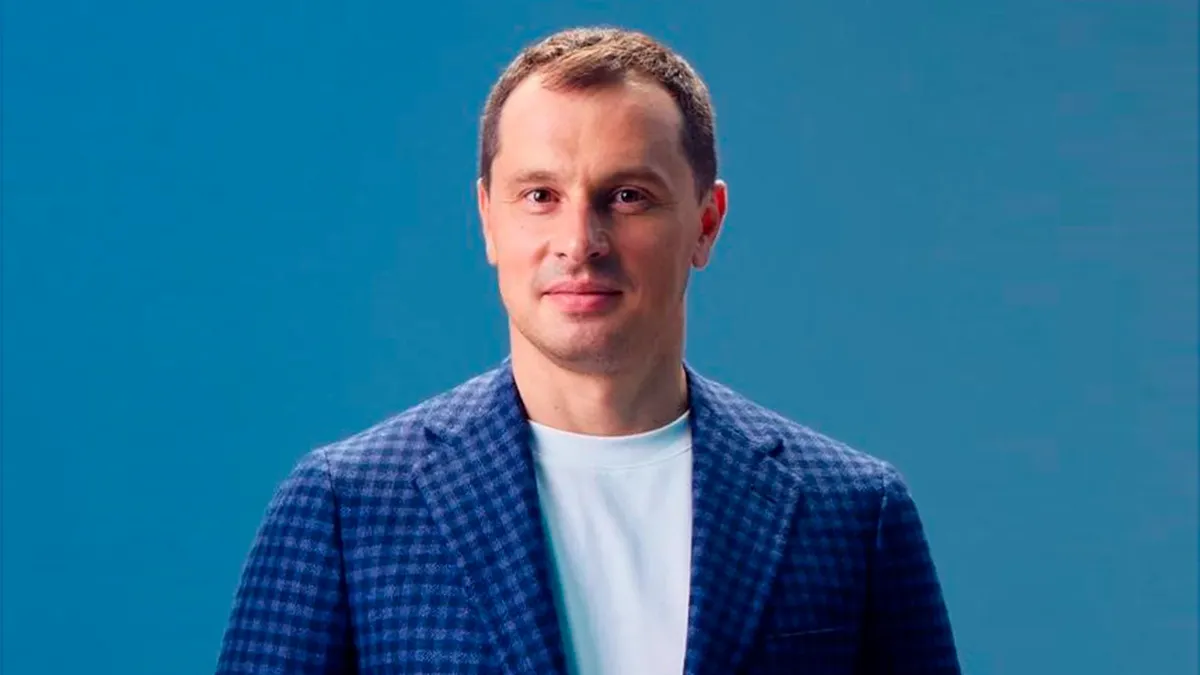
Сам Rutube тем временем отчитывался о росте количества пользователей — как сообщил заместитель генерального директора холдинга «Газпром-медиа» Александр Моисеев, в марте был зафиксирован двукратный рост аудитории на Rutube: «Мы 25 миллионов активных ежемесячных пользователей постепенно переосилили. Мы сегодня четверть аудитории YouTube, грубо говоря, на себя «приземлили»». Чтобы привлечь блогеров на платформу, 11 марта Rutube запустил программу их поддержки: в первые 40 дней после регистрации блогеры будут получать 100% доходов от просмотров рекламы, затем — 50%. Сервис и по-другому помогает облегчить жизнь контентмейкерам: Rutube решил дать возможность размещать видео без длительной модерации. Правда, при условии верификации личностей блогеров через Госуслуги. Депутат Госдумы Антон Горелкин заявил, что «такой порядок…позволит эффективно бороться с размещением фейков и дезинформации».
Дмитрий Песков, в свою очередь, заявил, что у Rutube есть будущее, и «туда пойдут деньги, эти деньги пойдут на развитие». Чьи деньги туда пойдут, Песков не уточнил.
Пока деньги из Rutube, судя по всему, только уходят. 9 мая сервис перестал работать из-за кибератаки, работу видеохостинга восстановили только 11 мая. По сообщениям компании, в результате атаки было поражено более 75% баз и инфраструктуры основной версии сайта и 90% резервных копий и кластеров для восстановления баз данных. Кроме того, в сеть утекла часть корпоративной информации. По сообщениям «Коммерсанта», финансовые убытки из-за простоя могли достигнуть 1 млрд рублей.
Антон Абдуллин , Специально для «Новой газеты. Europe"