
Translated material
"I do not want to believe that 24 years lived among people who sincerely want death to others"
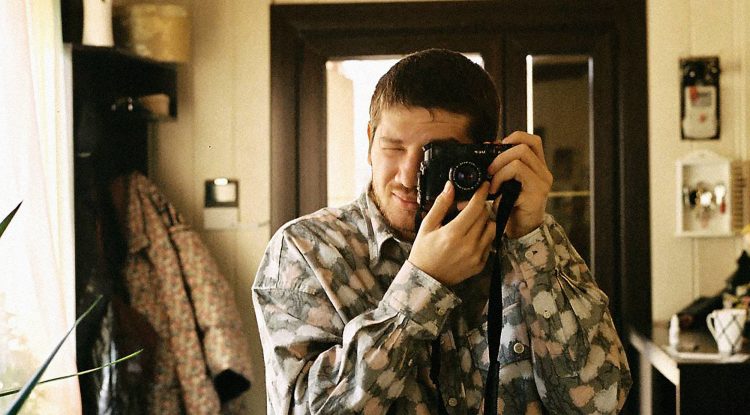
Interview directed by Kantemir Balagov - about the decolonization of Russian culture, the search for identity and responsibility for the war
30-year-old director Kantemir Balagov is the most striking new name in Russian cinema in recent years: his “tightness” and “Dylda” received prizes at the Cannes festival; Balagova was called to shoot the first episode of the series of the American HBO studio based on the popular video game “The Last of US”. After the invasion of Russian troops in Ukraine, Balagov and his affiliate program, director Kira Kovalenko left Russia-first to Turkey, then to Tbilisi, and from there to Los Angeles. Taisiya Bekbulatova talked with Balagova about how his idea of himself, Russia and people after the outbreak of war changed.
Are you shooting something now?
-No, we are looking for some projects through the agent. A lot of meetings. Everything is so slowly arranged here. There are meetings-this is already good, but they [interlocutors] offer their ideas, from which you do not light up-some kind of series about the Caribbean crisis ... This is not mine. And you are trying to enroll them - they are not interested.
We left for the States, because this is the only opportunity for us [with Kira Kovalenko] at least somehow work, earn a living and helping relatives and relatives financially. I'm here on a tourist visa. If we do not find any projects, then you will have to return somewhere in Tbilisi, probably or to Yerevan.
We want to somehow implement the existing script-“Monica”. We and the [producer] Alexander Efimovich [Rodnyansky] literally yesterday we talked about this. We have ideas, you just need to make a few efforts. We and I [screenwriter] Marina Stepnova should call next week and discuss it all.
Tell us about Monica.
- It was a modern story about the father and son in Nalchik, but it is clear that now I can’t shoot in Russia, and I do not want to. As long as this is the government there, I do not want to have anything to do with it. I learned that in New Jersey there is an Adyghe diaspora-by changing some nuances of the script, you can transfer this to New Jersey.
I am now focused on Monica because we spent three years of life on this script. I thought for a long time: my heroes from Monica - do they support war or not?
Is this an open question? You do not fully understand your heroes?
- In the case of heroes, you never know. Even when you write the script, they can go the other way where you did not expect. But I think they would not support.
Sketches for Monica were drawn by a very talented guy from Odessa, Anatoly. We periodically write off him. When it all began, he was more calm. When they began to bomb Odessa - there is already despair, and anger at us, and powerlessness.
Do you have a feeling that you have lost your homeland?
- The longer I am outside Russia, the more the feeling that I am in a foreign land and that I was deprived of my homeland. Probably, in part, I deprived of it myself. But yes, there is no feeling at home yet.
Some are now burning their Russian passports. Are you not ready to put an end to Russia?
- No, I'm not ready. Someone even presented me that I had a tattoo: Georgia, Ukraine and Russia-and a white-blue flag. For me, this [flag], first of all, is a symbol of change. Not that it is necessary to destroy the old Russia and create a new one. To some extent, yes, but not so straightforward, not to human deaths.
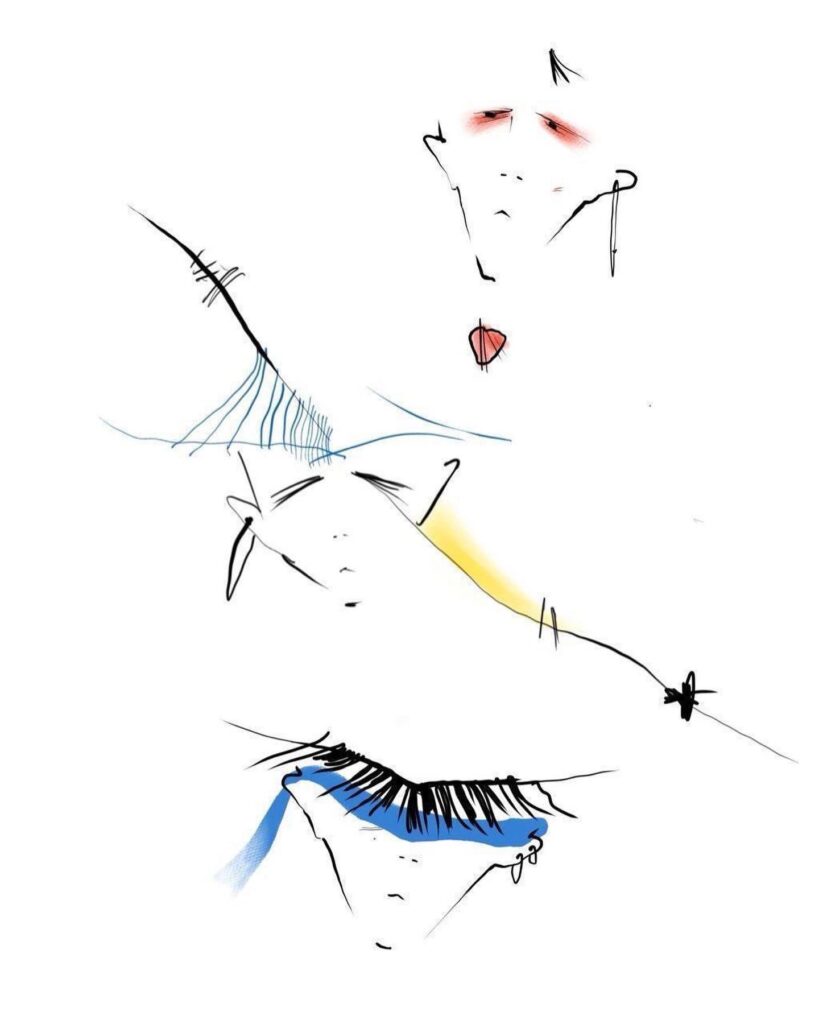
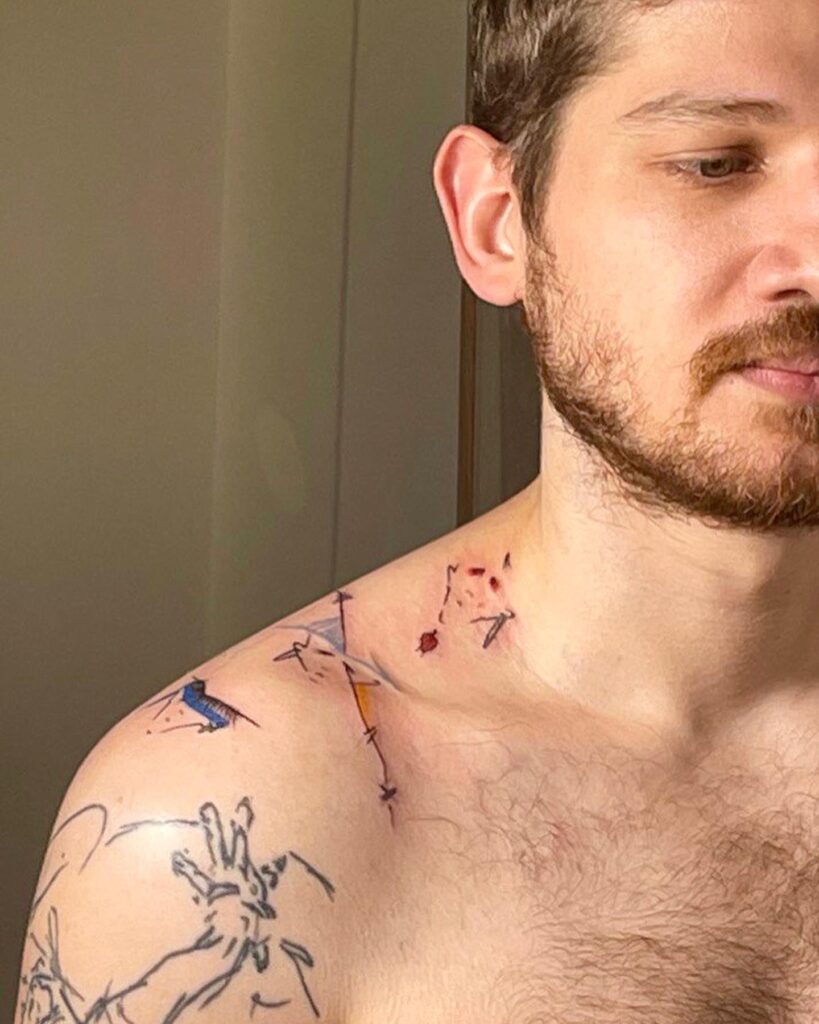
I have no desire to change citizenship. When asked where we are, we are always talking from Russia. I have no abandonment of my identity, I have a rejection of the government.
How do they react when you say that?
- I have never encountered either Tbilisi or in the States with Russophobia. They simply asked the opinion [about what is happening].
What are your sensations from this sudden emigration? Do you feel lost?
- Yes, we are lost. Everything that I will say now is incomparable with what people are experiencing now in Ukraine, all these are trifles. But yes, some kind of disgust. We are trying to understand what to do next and how to live. And how to work, because there is another culture, another mentality, relationships.
Do you want to make a movie about Nalchik, about people in the Caucasus?
- At this stage with the “monik” - yes. And if the situation in Russia does not change, I will be forced to shoot here - if it turns out, of course. I will shoot something about local people.
All this is so complicated, we exist in some incomprehensible gray zone. We will try to concentrate on Monica now, and there, if this nightmare does not end, I don’t know what we will do. We’ll probably go to shoot advertising. But this is better than shooting TV shows, it seems to me.
But what about the series "The Last of US"? In Russia, they were very proud that you were called to shoot the first episode.
- The game “The Last of US” occupies a special place in my heart, so this project was important to me, and this was my first serial experience. Based on it, I understand that now, having a financial need, it will be more quickly and more efficient to remove advertising. It's just that everything is very long - from the moment I was approved, almost six months have passed before the salary.
[Series] Still shooting. They must be released at the beginning of next year.
In terms of creativity, you are not interesting to you?
-If I offer a story that does not fit in the shape of a movie, or something will come to my mind, then, of course, you can [shoot] and TV shows. Both that form and that have pros and cons. It all depends on the story. But the cinema is closer to me.
I am trying to understand and feel the series, but I can’t [watch] beyond the first two or three episodes. Exceptions are “soprano”, still “heirs” began to watch, hooked. And, and the “office” was recently watched. And "Friends". Well, that is, you understand, we are now somewhere in the early 2000s on the serial scale of time.
You said that a person who is one way or another about art should be a citizen. For you to be a citizen now - what is it?
- It's hard to say. For me, to be a citizen is to act now. But I have no right to call for something, because I am in a privileged situation. I had a [financial] pillow, it was possible to take and leave the country along with Kira - and due to this there is an opportunity to speak out. I understand people in Russia, who are now shrouded in fear and do not understand how to continue to live.
You can act differently.
- Yes, you can talk with your loved ones. I have repeatedly encountered the situation in my circle when my parents do not hear children.
Have you had this?
- Thank God, no.
What reaction to what is happening did you meet in your environment in the Caucasus?
- I have the feeling that the majority that supports the war is not bots, but real people. I used to think that it could not be. When the war began, I was sure that it was possible to influence this, that in a few days it would end. But, when I began to see these swastikas ( letters Z-approx. “Cold” ) on the building of Kabardino-Balkarian University, I realized that something terrible was happening, some kind of fracture.
And then people from Nalchik, who are against the war - young students, students - wrote that they were forcibly driven to the square to [perform with the slogan] "we do not throw their own." This is very scary. And I have such a feeling - at least I came across this - that there is still a question of religion in relation to the Caucasus to Ukraine. "What do we care about Christians, when we are Muslims, when the Palestinians are killed." It is better to pay attention to it than the fact that its own country kills innocent people.
Perhaps people in the Caucasus often do not think about it in such categories, do not associate themselves with the Russian state?
- Maybe. But for me it was amazing different. That people who were radically related to Russia as a whole and advocated the disconnection of Kabardino-Balkaria now support this war. It is not clear to me that this is a re -expression in the air. This war will someday end-and I do not understand what will happen to the North Caucasus, will it remain part of Russia?
Do you think that this war can become a certain detonator?
- I think yes. I think this situation will not unite the peoples of the Caucasus, and this will entail some very terrible consequences.
There are already radicals who advocate disconnection from the Russian Federation. It seems to me that this will intensify. Now people will very much feel the consequences of sanctions. People in the regions still feel much: they lived in poverty and will now live. With the help of poverty, you can easily control the country. For some time in the Caucasus it will be relatively quiet, and then people will end with patience.
What is your position?
-Before the war, I believed that if Kabardino-Balkaria disconnected from the Russian Federation, then she would begin to devour herself. But now, when I saw these imperial ambitions and all this Supremacy, which I felt in the Caucasus all the time, that from the Caucasians in relation to the Russians, that from Russians in relation to the Caucasians ... This is racial superiority, nationalism has always been. And now it is so clearly manifested that I have no answer to your question yet. Before the war, I was categorically against, but now I do not know.
There are more intolerance more?
- Yes. The war seemed to show what was hidden. Not that this was not-it was, but in some hidden state. And now it is so obvious!
And what did you mean when you said that the republic would devour itself?
- The republic will drown in corruption, all family ties will be decided even more. A person who was born without connections cannot count on anything. In principle, the same as now - but in a doubled, tripled form. According to my feelings, this will become a Muslim republic. I am comparing my childhood now - now there are a lot of Muslims. This is not bad, not good, it's just a fact.
What do you think, what is it connected with?
- This is partly due to poverty and the fact that young people are simply not busy. There is absolutely no leisure. We came to prepare for Monica, to look for people - there is nothing to do. The cinema has two or three films at the box office and that's it.
Now, somehow slowly, people leave Nalchik. There is no way to realize yourself, earn a living. Salaries in Kabardino-Balkaria are very small: 5 thousand rubles, 7 thousand rubles, 3 thousand rubles.
I myself was in a situation when I almost began to pray. This all comes from this restlessness, loneliness. Someone comes from poverty. You are simply looking for comfort in something. And so it happens that you find him in religion. But there are people who later use this religion against you.
When did it happen to you?
-It was when it happened on October 13 ( the armed attack of militants on power facilities in Nalchik on October 13-14, 2005. 37 security officials and 15 civilians were killed. I told my parents that I want to pray. This was partly due to the fact that my friends prayed, this also influenced me. But my parents were against, and now I am grateful to them. Because I don’t know how my fate turned if I started praying.
Why were they against?
- They were afraid that they would take me into the forest, I would live there and run with a machine gun. They are Kabardins, and mom and dad. Mom is a chemistry teacher, the father has a small shop of building materials in Aleksandrovka. But I don’t know Kabardian, because I spoke little with me in childhood. And this is a heavy tongue to start learning it now.
We [with Kira] had such plans, we wanted to move from Moscow back to Nalchik. In January, we flew there to look for housing, found. In fact, we ended [the script] “Monica” and thought: preparation, shooting, installation-it will take a year and a half. They wanted to move, to be closer to their people. We thought that we would be inspired by other stories and so on.
Then there was a man who wanted to buy a cinema “Victory” and make it a space for youth, where exhibitions, lectures, and movies can take place. There were many plans. And on February 24, all this [collapsed].
Have you always reached the roots?
- It all came over time. Previously, when we lived in Nalchik for 24 years, of course, we wanted to leave and live in St. Petersburg, in Moscow. And when you live in St. Petersburg or in Moscow, you understand that your profession and life do not depend on these cities, and you begin to reach home.
When we came, we were so inspired, there are so beautiful people. But when you see a person who was pleasant to you, and he supports the war, at that moment everything collapses.
Do you blame for this propaganda or something else?
- Of course, I want to believe that this is the result of propaganda, I do not want to believe that a person itself can support such a nightmare. I do not want to believe that 24 years lived among people who so sincerely want death to other people. And because of what-it is absolutely incomprehensible, no one can explain this.
You said that people of art are responsible for social processes. Do you think that in Russia's attack on Ukraine there is a share of responsibility of people of art? If so, what is it?
- This is very individual. For example, the director of the film “T-34” [Alexei Sidorov], who speaks from the stage, receiving a reward that he is very grateful to the weapon that inspired him to this film ... Probably, this inspired someone for something.
When [the war] began, I said that we were all to blame. Now, after all, I don’t think so. But I am most likely to blame that I allowed one person to rule my country for 20 years. I don’t know how to influence it. But I am 30 years old, and before that I was somehow not interested in politics at all. And now I understand that ignoring it is both stupid and dangerous.
You did not go to pickets, rallies?
- We went out in 2019, when a rally was allowed to hold a rally on Sakharov ( I mean a rally on August 10 in support of prisoners in the so -called “Moscow case” - approx. “Cold” ). The experience was strange, I did not understand to the end ... I worried how I could lead myself in a large accumulation of the people. This is such a terrible power, you do not understand where it can bear her and you with her. I paid attention to this. Well, there were people who really worried, and there were people who came to take photos on Instagram.
Why did you worry?
- That sharp detention will begin, and how a large number of people will behave and how you will behave in this cluster is absolutely incomprehensible. Such wild energy. It is for the good, but can also find very dumb shape.
You mentioned Russian imperialism. Have you seen the task of your cinema to the struggle with him?
- Like a super -task if [only]. Art is it ... Now I will say very much, but it is not divided into categories of religion, nationality. This is something universal. I think that the workshop of Sokurov ( Balagov is a graduate of the workshop of Alexander Sokurov at Kabardino-Balkarian University-approx. "Cold" )-this was such a mission to decentralize the film industry, because all the cinema was in Moscow. And the second is the struggle against imperialism. Sokurov taught us so that we were not afraid to shoot about our region, about our people, to show the world what we are. Because no one knew and does not know how we live, in what we are similar, in which we are different. It has settled in us.
When I shot the “Dylda”, I looked at some kind of Kira material and thought-how I want [again] to shoot about people from the Caucasus. I clearly understood that my main task is to shoot about this region and its history.
You remembered how you saw in Nalchik young people wandering idle. It does not seem to you that you yourself could be one of them, if not for luck?
- Absolutely. I was born in the not the most prosperous area of Aleksandrovka, this is such a typical provincial district. I remember what we did. I have not read a single book to the workshop. No, I read one book - this is Paulo Coelo “Veronica decides to die”, it seemed to me that this is a good book ( laughs ).
I am sure that if it weren’t for the workshop, if not for the father who bought me a camera, a video from which I later showed Sokurov, there would have been nothing. Maybe I would even support this war if not for all this.
That is, the ability to filter propaganda is a certain privilege?
- This is a matter of culture. The problems of the Caucasus are related to the lack of culture. With the lack of education, unwillingness to form yourself. This mentality is boy, girlish - “I already know everything” or “I will look on the Internet” - this is from a bad education. I remember myself - I was very poorly educated, I am now poorly educated. But when you just begin to read literature, military literature, you understand that a nightmare is happening now. There can be no human explanation for this.
I saw that you had a parallel between the attack on Ukraine and the Russian-Caucasian war of the XIX century. Do you think whether to update this topic now?
- It seems to me that the problem is that these topics were not spelled to the end frankly and without embellishment. The Chechen War was not talked, the Russian-Caucasian war was not spoke, the Nord-Ost, Beslan, were not spelled. No one understands what happened. There are theories, and one of them is considered true.
Propuring such topics that reduces the chances of what is happening now, on this nightmare. They must be pronounced, especially now. Not with the aim of destroying the Russian Federation, but to reach itself. First of all, this is addressed to people who mourn and honor the memory of the Circassians, [who died in the Russian-Caucasian war], but at the same time support this war. How it knits one with the other, I do not understand.
Many people now began to publicly talk about discrimination and nationalism in Russia in response to statements by the authorities about Nazism in Ukraine. Have you encountered this?
— Если мы говорим на бытовом уровне, — «хач», не «хач», — сталкивался. Но это не было чересчур агрессивно, не нанесло мне травму.
Бытовой национализм есть и со стороны русских, и со стороны кавказцев. Это обоюдно.
Но масштаб разный.
— Конечно, сколько русских живет в России — и сколько кабардинцев, дагестанцев, осетин, балкарцев? The scale is not comparable.
Мне кажется, у вас была амбиция, чтобы вас ценили на Северном Кавказе, а не только в Москве. Она реализована?
— У меня не было такой амбиции никогда. Это, конечно, приятно, когда тебя на родине ценят… С «Теснотой» было много скандалов. Я дал интервью, у меня спросили: «Чувствуете ли вы себя кабардинцем», — и я ответил, что не чувствую. Типа национальность — это не то, чем ты можешь гордиться, это от тебя вообще не зависит. После этого началось такое…
Амбиции такой у меня не было. Это как у Балабанова — «найти своих и успокоиться». Я в поисках своих людей.
Вы не передумали с тех пор насчет кабардинской идентичности?
- Now yes. После того, что произошло, я уже не могу такое сказать. Это было до войны, а сейчас момент такой, что — так, стоп, надо самоопределиться. «Человек мира» — красиво звучит, но это не работает, когда такое происходит.
Теперь вы определяете себя как кабардинец?
- Yes. Я всегда об этом говорил, когда меня спрашивали именно про национальность. Просто я не говорю на кабардинском, не думаю на кабардинском, не читаю на кабардинском. И «чувствовать» — это что-то очень эмоциональное… Сейчас я думаю, что надо в этом копаться, обсуждать это все. Потому что иначе есть «русские» и «нерусские».
В твиттере вы написали , что у России женское лицо. Это был день, когда была акция Марины Овсянниковой. Но это можно трактовать шире?
— Это намного шире! Большое количество дел, направленных против войны, поддержка беженцев, и финансовая, и психологическая, выступления, протесты — все это связано с женщинами сейчас. Видимо, только женщины знают цену жизни. И поэтому у них есть эта храбрость, которой нет у мужчин. Например, то, что делает [петербургская феминистка и активистка] Леля Нордик и Феминистское антивоенное сообщество, — я даже не могу описать, насколько это круто и важно. Я даже не представляю себе, с какими трудностями они сталкиваются. У России женское лицо. У будущей России женское лицо.
Это довольно нетипичное для кавказского мужчины видение мира. Вас так воспитывали, или вы уже во взрослом возрасте стали так мыслить?
— Мне кажется, это связано с тем, что у меня родители разведены и большую часть своей жизни я жил с мамой и сестрой. Поэтому корни оттуда.
Я и с отцом прекрасно общаюсь, просто я жил с матерью, я не мог ее оставить. Эта мягкость, которая есть во мне как в человеке, исходит от матери моей, мне кажется. Это просто как-то откладывается, это что-то бессознательное. I can't explain it. Я просто смотрел на нее, на сестру, видел отношение к ним, несправедливость, с которой они сталкиваются, и это как-то формировало меня.
Но я это понял не в раннем возрасте. [Сыграли свою роль] правильные книги, которые нам давал Сокуров читать. Потому что я помню, как я в первый раз прочел «Госпожу Бовари», и мое мнение было одно, — а спустя время, после учебы, я понял, что это очень трагичный персонаж.
Что вы в ней увидели?
— Сначала я увидел, что женщине стало скучно. Это очень поверхностно, мне даже стыдно про это говорить. А потом я понял, что это история про несчастного человека. И мне это показалось интересным — ты берешь и пытаешься оправдать то, что зритель с первого импульса будет осуждать. Можно показать зрителю, что у этого есть человеческая сторона, не так все просто.
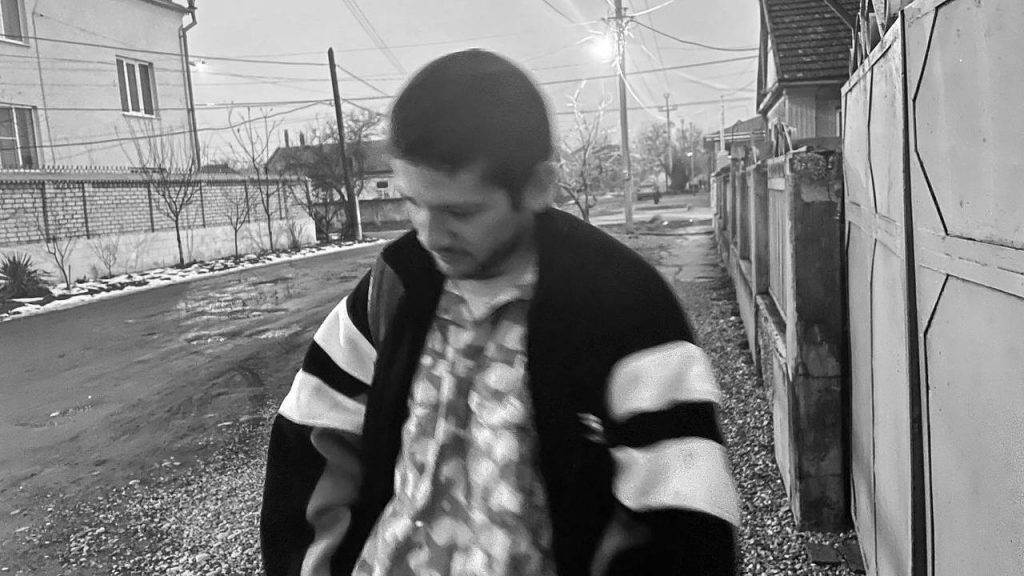
Ваша карьера началась с определения вас как ученика Сокурова. Кого бы вы назвали авторитетом для себя сейчас?
— Сокуров — по-прежнему мой учитель, мы с ним переписываемся. Я очень переживаю за него. Ему предлагали покинуть Россию, я просил его согласиться. Но он отказывается. Сокуров — это мой ориентир в плане мудрости и человечности. Насколько спокойно он держится в таких страшных условиях — это только восхищает.
Еще для меня авторитет — мои родители.
В вашем кино как будто нет абсолютного зла, вы всех пытаетесь показать людьми. Сможете ли вы сохранить этот гуманизм после Бучи?
- Don't know. Сложно найти что-то человеческое в людях, которые совершили эти зверства в Буче. Потому что когда ты рассуждаешь о кино и о книгах, ты всегда говоришь про полутона и оттенки. А на войне как будто есть черное и есть белое. На мой взгляд, россияне, русские потеряли право снимать про Великую Отечественную войну.
То есть вы не стали бы сейчас снимать «Дылду»?
— Да, это опять все индивидуально, но, на мой взгляд, режиссеры с российским гражданством не имеют такого права. У меня была идея снять про историю бегемота во время блокады Ленинграда — как весь Ленинград спасал этого бегемота и как его в итоге спасли. Я загорелся — это такая человеческая история и какой-то новый взгляд на блокаду. Но сейчас я понимаю, что я не имею права это снимать.
Даже учитывая, что вы против?
— От этого образы на экране не станут убедительнее для меня же самого.
Ваше кино изменится из-за войны?
- Maybe. Сложно сейчас сказать. Я считаю, что миру нужен будет неореализм, как это было с фильмами «Похитители велосипедов», «Чудо в Милане». Какое-то чудо нужно.
Вы называли себя очень амбициозным человеком. Так ли это теперь — и в чем ваша амбиция на данный момент?
— Сейчас время не для амбиций. Они ушли на второй и даже на третий план. Сейчас хочется делать кино. Я всегда говорю, что, на мой взгляд, кино не может ни на что повлиять, оно не может ничего изменить. И нынешний опыт показывает, что, правда, сколько бы фильмов про гуманизм, про гуманитарные катастрофы ты не снимал, все равно найдется человек, который это оправдает.
Но сейчас я понимаю — все равно надо делать такое кино, которое может это предотвратить. Иначе для чего это? Such a paradox. Сейчас я уверен, что кино должно засесть в человеке и что-то там внутри покрутить.
Помогает ли вам то, что вы сейчас вдвоем с Кирой?
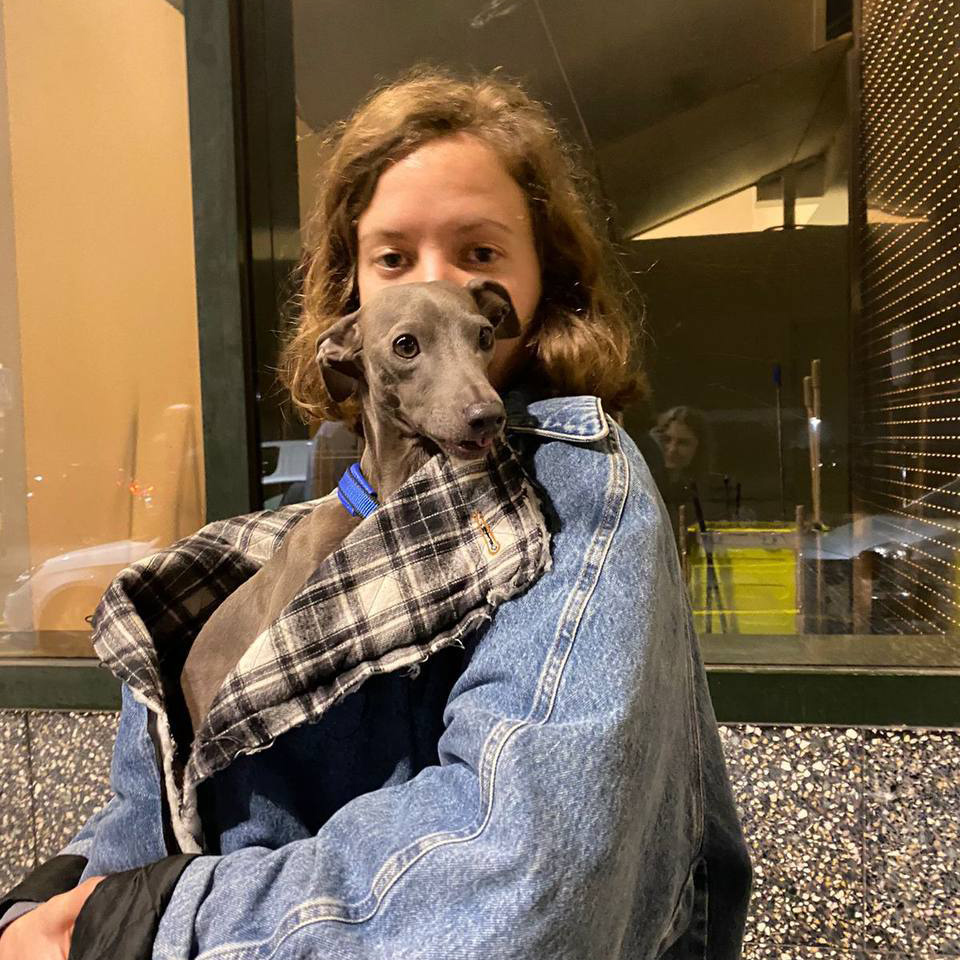
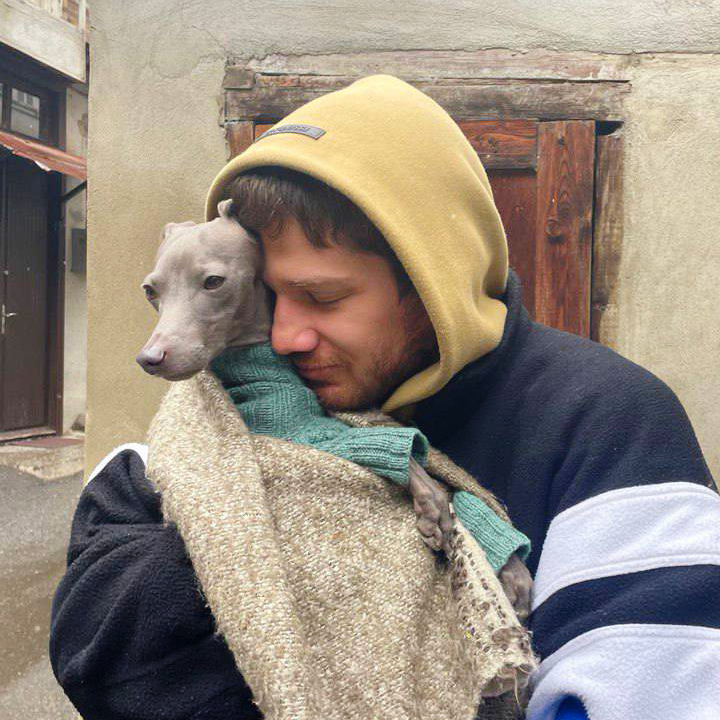
— Да, очень сильно помогает. И то, что сейчас с нами наша собака. Он был с нашей подругой в Италии, потому что ты не можешь из России [в США] привезти собаку, это красная зона по паразитам, что-то такое. Только из Европы. Это такое облегчение, что сейчас собака с нами.
Планируете ли вы возвращаться в Россию?
— Если власть поменяется — и еще непонятно, на кого она поменяется, — то, конечно, мы бы хотели бы вернуться. Но не может же быть такого, что власть поменяется — и все эти люди, которые поддерживали войну, станут думать по-другому.
Многие вспоминают, как после войны проводилась работа с людьми в Германии — включая посещение концлагерей и так далее. Не кажется ли вам, что отчасти это задача и для кино — вернуть людей в реальность?
— Да, абсолютно согласен. Культура должна точно и беспристрастно работать на улучшение человека. Это работа, и это работа долгая. Потому что эти люди как-то появились.
У вас остается в России семья, вы чувствуете себя из-за этого связанным?
— Да, у меня там родители, сестра, брат. Конечно, это накладывает на меня дополнительную ответственность в плане высказываний. Когда это все начиналось, я выкладывал посты, и сестру начальство вызывало на ковер — «лучше бы брату помолчать». Отца предупреждали, что сыну лучше посидеть потише. Нальчик — город маленький, поэтому там все намного проще в плане угроз. Everyone knows each other.
У вас, наверное, странное ощущение — вы международно известный режиссер, а родственникам при этом угрожают мелкие местные шишки?
— Это ожидаемо, потому что я не пользовался особой популярностью у людей, которые в Нальчике занимают высокие посты. Пару раз даже министр культуры вставлял нам палки в колеса, чтобы мы какие-то вещи не снимали. Это абсолютно предсказуемо, вопрос разности менталитетов, поколений.
Молодое поколение менее агрессивное, более открытое к переменам. Оно видит, что сейчас много возможностей открыть себя миру. Но опять-таки, это не обустроено в городе, это больше самообразование — люди через интернет пытаются себя как-то занять. Если бы были какие-то центры досуга с лекциями каких-то выдающихся людей — в культуре, в литературе, в журналистике, это бы очень помогло. Потому что не у всех есть возможность уехать в Москву, в Ставрополь, в Краснодар. Это все большие деньги.
Вы говорили , что творчество растет из травмы.
— Я точно знаю, что после войны украинский кинематограф обретет невероятное количество прекрасных фильмов. Просто невероятное. Они выиграют во всех смыслах — не только в гражданском, но и в культурном.
Конечно, у России тоже будут прекрасные фильмы, но с чем они будут связаны, я пока не могу сказать.
Имеют ли россияне право снимать про войну с Украиной?
- I think yes. May be. Если это будет мостом каким-то между двумя народами, то конечно. Кино обязано быть мостом.
Хотела спросить, можете ли вы назвать источник утешения для себя и своего поколения, но, кажется, у вас его нет.
— Я не знаю, правда. Хочется быть Екатериной Шульман — когда тебя слушают, и [появляется] надежда на прекрасное светлое будущее.
Но когда-то же все заканчивается. Это тоже должно когда-то закончиться.