
Translated material
The cake is holy
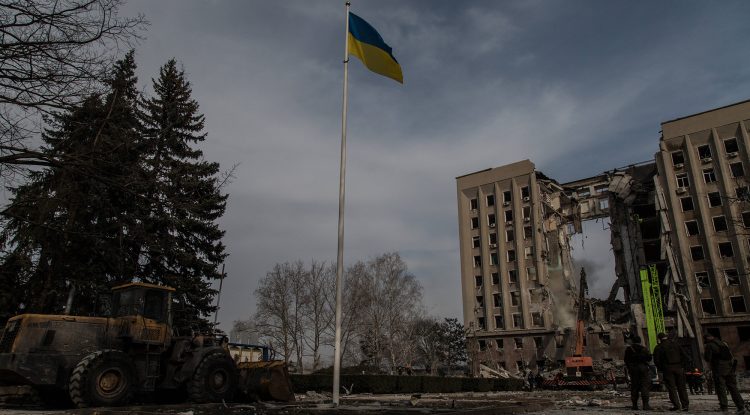
In Nikolaev, there is no water and daily shelling. Here's how its inhabitants survive, earn and celebrate holidays
Nikolaev-a half-millionaire city in southern Ukraine, which is located between the already occupied Kherson and free Odessa-from the beginning of the war in Ukraine are fired and bombed almost daily. Airy anxiety sirens sound here on average twice a day for more than 80 days, and from mid -April, Nikolaev lived without water. Nevertheless, hundreds of thousands of inhabitants remain in the city - they help each other survive, try to continue to work and establish life in a situation where the war can drag on an indefinite period. "Cold" tells how Nikolaev lives now.
"Cold" does not name the names of the heroes of the material for considerations of their safety.
At the end of April, Masha was 18 years old. “For the third year in a row, we cannot normally celebrate her birthday,” says her mother Olga. - In 2020, there was hard quarantine. In 2021, we fell ill with the whole family by Covid. Then I laughed that as the Queen Mother gave her daughter the crown for the holiday. " The age of majority was finally planned to celebrate on a grand scale: to go to Kyiv with the whole family; Olga took a vacation in advance at work for these dates. And then the war began.
Water in Nikolaev was turned off a week before Masha’s birthday. By this time, the city had been fired for a month and a half. For the Russian army, Nikolaev is a strategically important goal: through it lies the road from the occupied Kherson to Odessa. Since February 24, the city is almost daily fired from Grad and Smerchi , rockets regularly arrive in residential areas. The mayor of Nikolaev, Alexander Senkevich, reported that the Russian military is using prohibited cassette bombs (later they confirmed this in Human Rights Watch). At the end of March, the Russians struck a missile blow to the building of the regional administration, 37 people were killed . And on April 12, almost the entire city was left without central water supply - most likely, a Russian shell flew into the pipeline. By the second half of April, according to the city hall, about 40% of the inhabitants left of the half -million Nikolaev. Hundreds of thousands remained.
By the birthday of Olga and her daughter washed her head. “I had a cracked basin, you can’t get water into it,” the woman says. - We seized him from the inside with tape and washed his head over him. The tape for some time delayed water. Then they had already poured out of it into another basin, from which we drain the water into the toilet. Such is our system. "
Masha was upset that without water it would not be possible to bake a festive cake. Olga came up with how to get out. “There are unnecessary rags with which you can wipe the dishes and throw it out. There are wet wipes, paper towels. So you can save water, ”she explains. “The cake is sacred.” As a result, everything turned out: the family kept a tradition and made a cake that Masha always asks for her birthday. Kyiv.
They celebrated calmly. “Not particularly bahah. For us, this means that it was not very scary, ”Olga recalls. Over the day, the airy anxiety siren in Nikolaev worked four times.
Self -sufficient people
During the war, the city continues to live. Supermarkets and small shops opened, almost all the usual grocery diversity has returned. Pharmacies, although not everyone in the city, work. Schools and universities switched to remote format - many students and teachers went to different cities and countries. There are practically no planned treatment in clinics, health workers are primarily engaged in wounded civil and military.
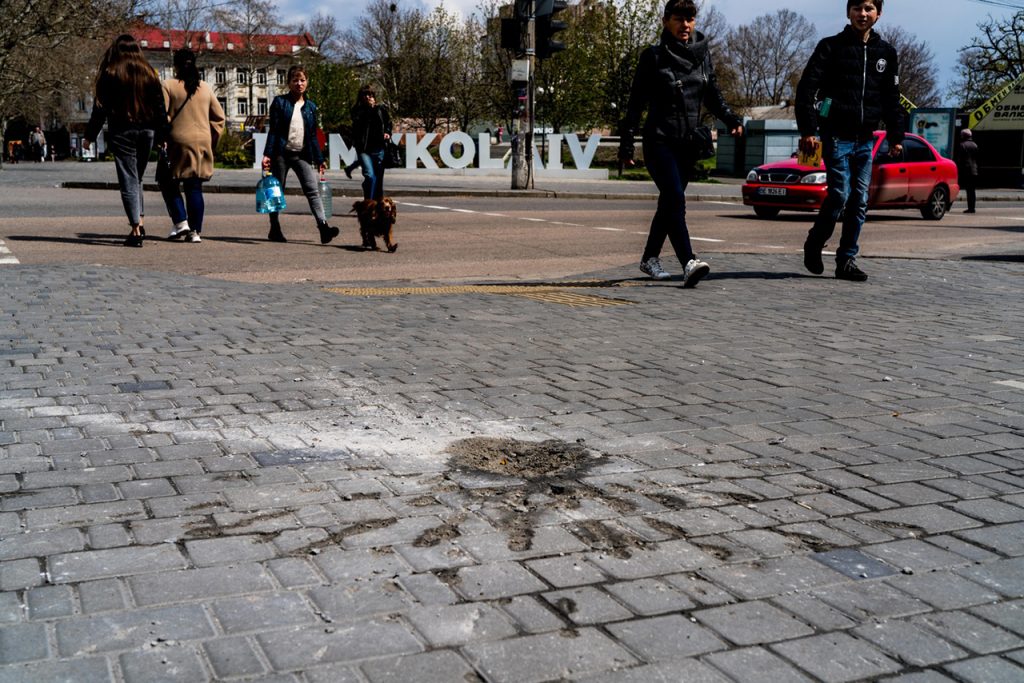
26-year-old Julia worked as a lawyer before the start of the war. But now the courts do not work in Nikolaev - and the girl helps with logistics at the maintenance station (STO), which belongs to her parents. Julia purchases spare parts, oil and other necessary things for the station, rides by mail, where the details are sent. A separate quest is the search for fuel for the car: in early May, there was almost no gasoline in the city, but it was possible to refuel gas, and the girl sometimes spent all day to pour a little at different gas stations.
A hundred of her parents resumed work in early March: cars are being repaired here for money, volunteers and military - for free, and some of the expenses are paid by owners of other working Nikolaev businesses. Julia calls it a "great cycle of help." The Juline's business also works - he owns a small quail farm. However, now there is almost no income from him. “We give a lot of [meat and eggs] in a cafe where they prepare for the military, for refugees,” says the girl. “We take away our kumovyam who have children.” In the absence of earnings, their family now lives on reserves made over the years - the money that they set aside for the purchase of their own real estate.
Julia helped others before the war: she was engaged in human rights volunteering - organized lectures, concerts, gave free legal consultations. After February 24, it became clear that now help would be needed a little different. “In the early days, we sat with my mother and cut down each other gel nails,” the girl says. -Because they wanted to help, do something. They cooked soups, meat, potatoes in large pots and drove our guys to checkpoints. It was cold, we wrapped everything in blankets, rugs to bring food hot. ”
After the first bombing, Julia and her husband and Kot moved to the house of parents five kilometers from the city. Until recently, they spent the night in the cellar, where canned goods are stored. “They slept in warm tracksuits. There were 12-15 degrees. They brought an electric kettle, tea, sugar, coffee, cereals there, ”the girl says. - If an unforeseen situation happens, we have a supply of water, conservation. Just in case, they brought a sapper shovel and a hammer. ”
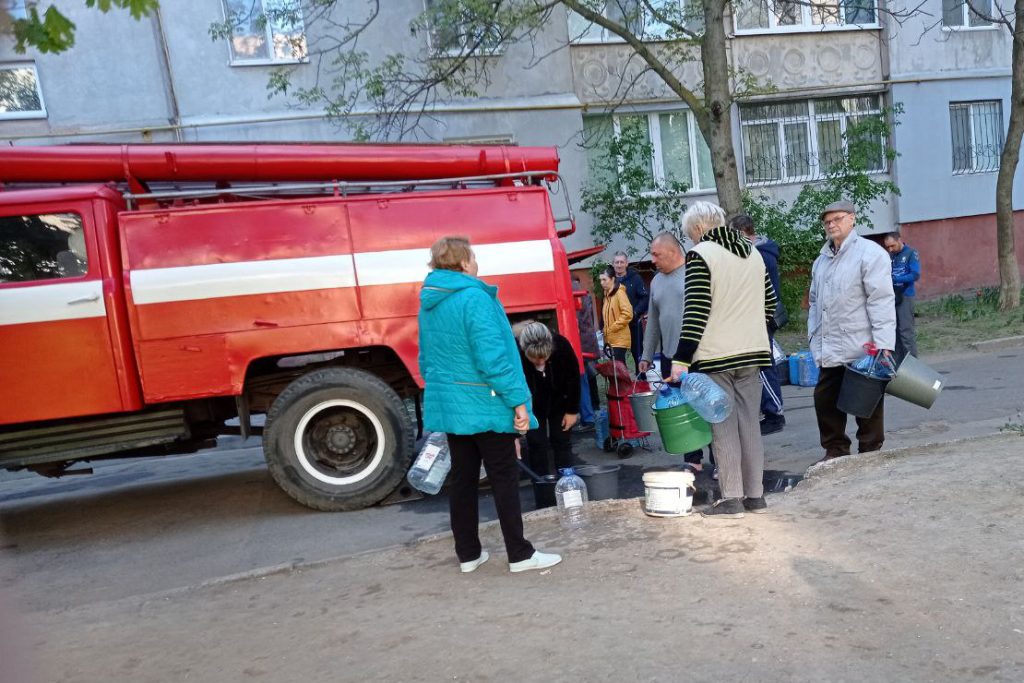
In early May, a lull happened, Julia continues, and then rockets began to fly again. Windows tremble from each explosion in their house. Now the family is again thinking of spending the night in the cellar. But the site has its own well - therefore, there are no problems with water. Since April 12, when central water supply was turned off in the whole city, Julia had a new task to help. Residents of Nikolaev collected rainwater and water from the springs, the authorities urgently drilled new wells near schools and hospitals, transported technical water around the city in fire engines, but in order to get it, it was necessary to stand in line, and then carry heavy bottles and canists to the apartment. “Every day we collect bottles, canists, we bring to my grandmother, aunt, aunt beauty salon - we carry the employees of her salon. My girlfriend went abroad, and in Nikolaev she had a mother, grandmother, aunt. We bring them water and raise them - three women, who will carry them? - says Julia. - We never go to the city empty. We are stuck from all sides to somehow help people. ”
The opportunity to be useful is one of the reasons why the girl and her family remain in the city. “Most people in Ukraine are self -sufficient. I read that about 50% of Ukrainians are entrepreneurs, ”she explains. “For a person with business, work, car, wealth, to come to another city and, roughly speaking, to be a beggar is morally very difficult.” Julia says that he will leave only if Russian troops entered the city.
“We wake up, collect water, deliver it,” she describes her usual day. -An hour and a half is spent on this. Then we go to a hundred, look at the list of tasks where we need to call. So passes all day. In the evening we take the cavity empty, return home, cook and go to bed at nine in the evening. We try to lie down as early as possible, because the sooner you fall asleep, the faster the night will end. Night is the worst. "
City with boarded up windows
Each of those who remain in Nikolaev has their own causes.
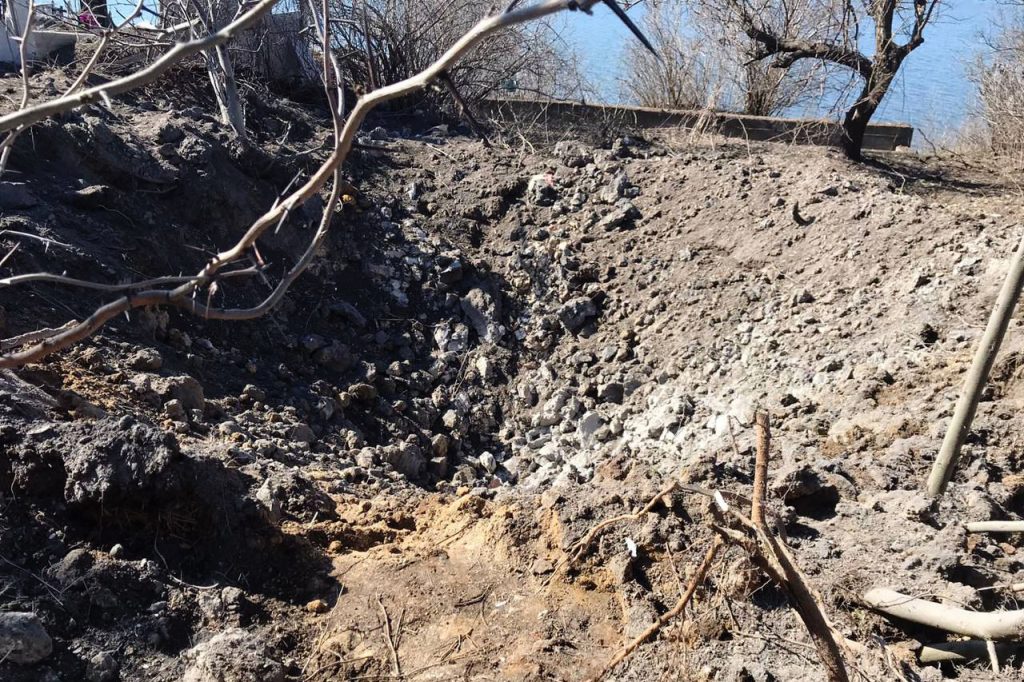
50-year-old Natalya lives in a large private house, divided into two halves, with her husband, two adult children, a German shepherd and four cats-they found three kittens last fall on the street and left. All of them simply will not get into the car - and where to go, Natalya does not know: she does not want to be at all to relatives in Russia, because she fears the Russian police. Despite the fact that the bombs flew literally to the neighboring garden, despite the constant problems with the sleep because of the shelling, despite the fact that they had to collect rain water in the basins, Natalya remains in the city-and is also going to leave only in the event of the occupation of Nikolaev.
25-year-old Irina lives in an apartment together with an 86-year-old grandmother: a girl cannot leave her in the city in martial law, and it is too difficult to leave with such an elderly person. But this is not the only reason. “It infuriates me that because of some goats I have to leave my city, infuriates that they force me to,” Irina explains. “I want to stay in Nikolaev, I like it here.”
Irina was lucky: she is an ITSHNIK and has been working remotely for a year now. The war did not affect the availability of work, but influenced the quality. “It is impossible to be quite productive in such a situation,” the girl explains. - There are very bad days when I cannot force myself, I can not focus on when I re -read the news. But it’s not for me to complain, because not all Ukrainians are so lucky now, many were left without work at all. ”
But Irina's family fully reflected problems with the supply of Nikolaev. Her grandmother has diabetes, she constantly needs pills, and after the start of the Russian invasion, it became difficult to find in pharmacies. In the early days of the war, I had to walk around the city, hoping that you would not fall under fire. “It was terribly not even from the shelling themselves, although from them too,” recalls Irina. “But, when you leave, windows are pounded in stores, there is no one on the street, only Teroboron and a bunch of military are terribly.” Then volunteers helped her to find medicines; Now it is already easier to get in pharmacies - although it does not always work out the first time.
“It’s hard with water,” Irina admits. - This is the good of civilization, which I will now begin to value the most. Cleaning, washing, washing dishes - all this is postponed for later. Such a syndrome of the deferred life. I will soon choke in the dust, because I constantly put off cleaning. ” Go to the nearest point where you can get technical water, ten minutes from her house, and there is almost always a turn. In order not to run there too often, Irina wears 24 liters at a time. “In the war, in principle, the simplest things require double efforts, and when there is no water yet, you cannot somehow distract yourself: you cannot get out or do cooking,” she continues. - [underwear] you get used to washing linen, but I end with pure duveters, pure sheets. I am completely washing about once every three days, the rest of the time I wash partially. To prepare something significant, you need to stain five plates, then it all needs to be washed. Therefore, I buy food in the culinary departments, I eat directly from the plastic plate and throw it away. ” Grandma, according to her, is easier: in childhood, in the 1940s, she had no central water supply, so she did not get used to basics and pots of water.
With the onset of spring, Irina more often goes outside-she was used to some extent to some extent to the city’s atmosphere. “[From the war] the roof is going a little in order to hold it on the spot, you have to return to ordinary things: for example, go out and buy coffee. I try to keep myself in good shape and not forget what a normal life is, ”she says. - The people left here with the children gradually crawl out into the street. A little more fun, everything would have come to life. ”
During shelling, Irina and her grandmother remain in the apartment: with an 86-year-old woman to go to the shelter for too long-and besides, a person gets used to everything. “At night, sometimes I don’t even hear [air] anxiety. We have an application to the phone that warns about air alarm. But I did not get enough sleep because of these notifications, so the application deleted, ”says Irina. When the explosions are too loud, she still wakes her grandmother-and they go to sleep in the corridor together.
This generation is not used to sitting
On the morning of March 29, Elena, as usual, was preparing breakfast for herself and for her husband - their son at that time was with her grandmother. There were no air aircraft signals-just at some point the woman heard a very loud sound of broken glass: "As if thousands of windows flew." “I fell to the floor for the kitchen“ island, ”says Elena. - The husband, by coincidence, was behind the column between the windows. We knocked out windows and some frames. I raise my head, I see my husband, and he says to me: “Quickly in the bathroom.” We thought that there would be more [missile blow]. When I was preparing breakfast before the explosion, I received a message from my girlfriend: “Lena, how are you?” I am already writing to her from the bathroom: "We were figned." I thought it flew to our house. ”
After some time, when Elena and her husband dared to leave the bathroom, they realized that it was not at their house, but to the building of the administration of the Nikolaev region - it is directly opposite. Through the broken windows, the woman saw a cloud of ash, which rose after the explosion; The cars that stood in the parking lot were demolished with a wave to the sidewalks. “It was very oppressed to observe through these broken glasses, as rescuers worked for six days and night, the blockages were disassembled, and the bodies were laid out. It is terrible, like a terrible film, ”recalls Elena. - The night after that I could not sleep. She closed her eyes and it seemed to me that the glow outside the window, that something was exploding. "
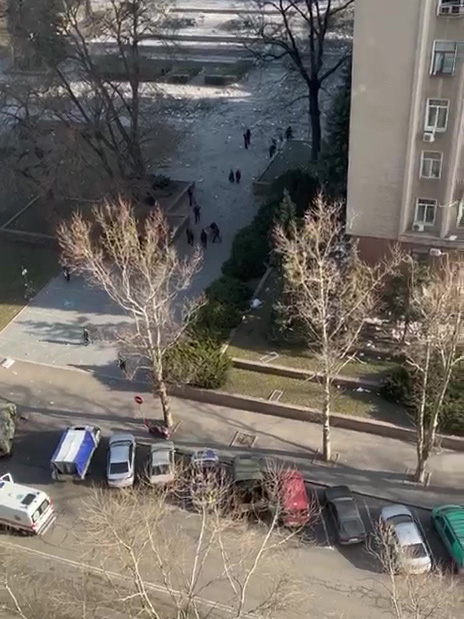
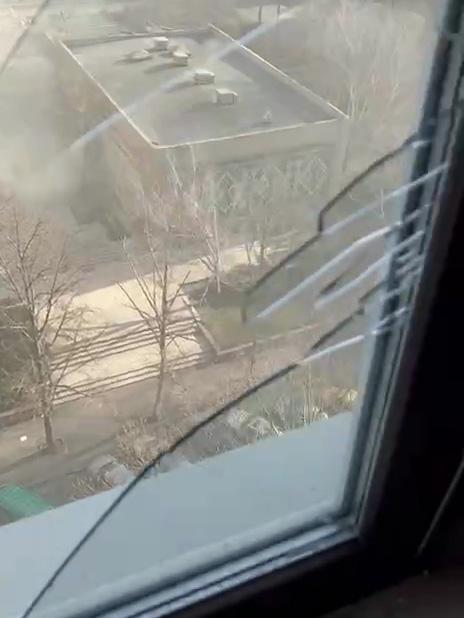
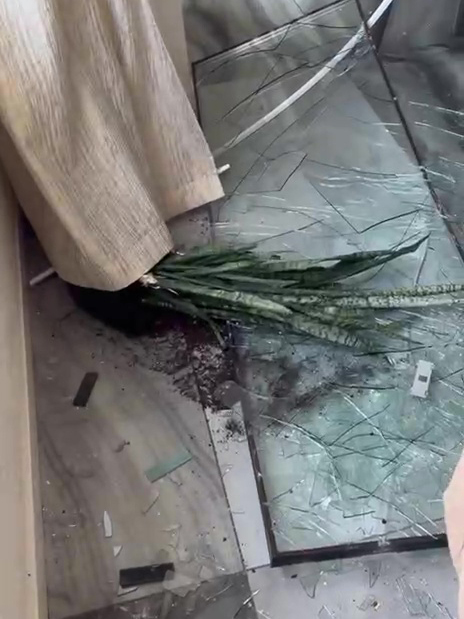
Elena is 39 years old, she knit sweaters and cardigans and sells them through her Instagram and the international site ETSY (including during the war - as soon as the work of mail was restored, Elena began to send orders again). Her son is 18 years old, he has a serious chronic autoimmune intestine. In Nikolaev, there were no drugs necessary for the son before, they had to be ordered from other cities - but with the outbreak of war, mail stopped working. I had to look for at least some analogues in pharmacies, and then-it is long to wait for delivery from Kyiv, where the family’s friend found the right pills. Elena’s mother, who has a pacemaker, was also hard: because of stress, she began to feel much worse, and medicines also had to be removed from other cities.
The rocket, which flew to the neighboring building, at first Elena and her husband did not scare: "We thought that what could happen had already happened." However, the shelling did not stop, and then there was no water yet - and in the end the whole family moved to Odessa. Except for mom. “It is psychologically difficult for her, she is more comfortable to be at home,” Elena explains. -My husband from Odessa or someone from his work in Nikolaev constantly bring water to his mother, but she still walks [for water] with her neighbors. Everyone went and she went too. I scold her very much, because she has a coughing cough against this background, she can not wear anything. But she still walks. Probably, this generation is not used to sitting down and sitting. ”
The unknown is worse than the explosion
After they celebrated cars for 18 years, the daughter asked Olga to cut her hair - it was difficult to wash in a basin long.
Olga is 47 years old, she is a teacher in kindergarten-now only 15 of her employees remain in the city. Masha is studying in the first year of the university in Kyiv, but the war found her in her hometown-because of the coronavirus, classes in winter were remotely. They live in a shipyard, which is closest to the Kherson region, and therefore it is fired especially often . At first, my mother and daughter during air anxiety went to the basement of a neighboring house, but it was dusty, cold, uncomfortable there. As a result, Olga caught a cold in the basement - and they did not go there anymore. “Unfortunately or fortunately, the human psyche is so arranged that you get used to everything,” Olga explains. “I can’t say that we have ceased to be scary.” But then there was a panic, I lived on pills, sobbed, could not calm down. And now we are sitting in our own outlet - in the corridor that corresponds to the rule of two walls, we are waiting ”( the“ rule of two walls ” describes a safe room in the house that separates a person from the street at least two walls. - Approx.“ Cold ” ). At the distance of an outstretched hand, Olga holds sedatives that she drinks when sirens howl or loud explosions are heard.
It was more difficult to get used to the absence of water in the house. For two, mother and daughter every day bring a maximum of 40 liters of water to the house, there is simply no more strength to bring more. They are not enough for all home needs. “In the toilet we wash off the maximum twice a day, do not wash. Just fold dirty things, wash only fine underwear - panties and socks, ”says Olga. -I go in a T-shirt for 2-3 days, I fold it. Pure things will end soon. We eat little, very economically a little of mine. ”
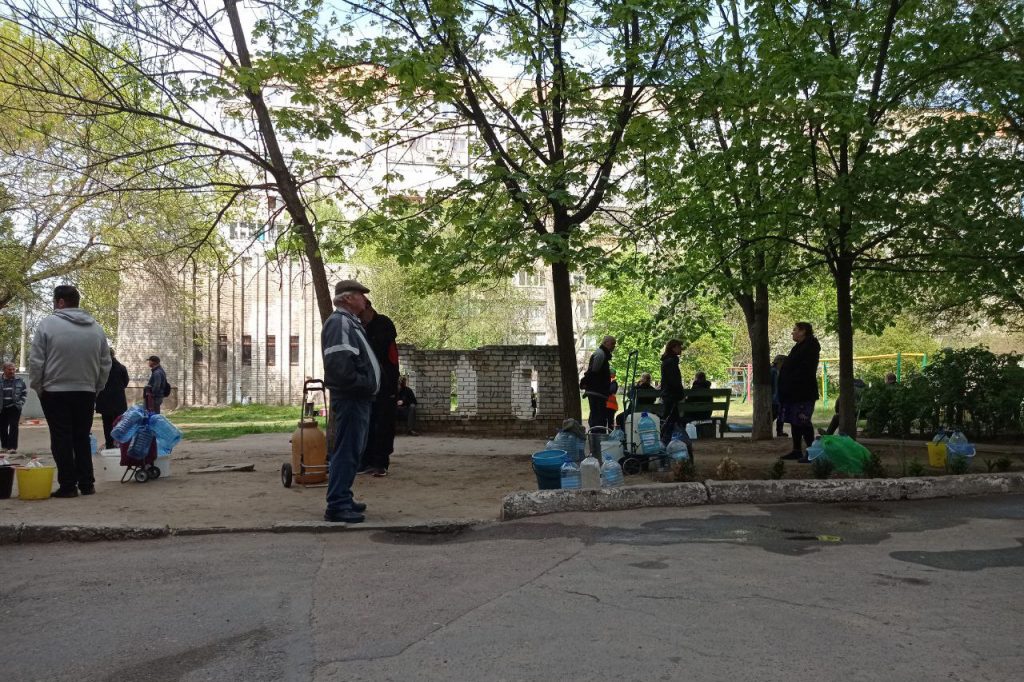
Olga almost does not go outside for no reason: “I used to go to work, shopping, walked with a girlfriend, but now I don’t want to. I move very little, it already affects health: my back hurts, my knees hurt, I feel like an old grandmother. And you also need to feel young. ” But the woman constantly thinks about leaving Nikolaev. At first, she was stopped by thoughts about how hard it was to leave and find housing in a new place. “My house is my fortress. The unknown scared even more, [than explosions], ”she explains. - Then the logistics was lined up, it became clearer where and how to go. But we were a little trained. They collected a bunch of things with my daughter and a backpack nearby just in case. To get together quickly, if we suddenly decide sharply. ”
Однажды Ольга пошла выкидывать мусор прямо во время воздушной тревоги. «Было часов шесть вечера, еще светло. Я подумала: когда отключат тревогу, уже стемнеет. Посидела минут десять и решила пойти. Только собралась — как бахнет! Опять села, еще минут 10 подумала и пошла. Но это единичный случай, а так — пересиживаем и не ходим, — говорит Ольга. — Когда я читаю, что война может продлиться до сентября, до января следующего года, а кто-то говорит, что вообще может длиться несколько лет, — вот тогда тяжело».
14 мая в Николаеве снова появилась техническая вода. Ее включают на несколько часов в сутки.