
Translated material
"Russian elites will learn that in the future they are better not to have a centralized authority." Economist Branco Milanovich - about the causes and consequences of war
Branko Milanovich-professor of the city University of New York and the London School of Economics, one of the main world specialists in global inequality.
Russia, Milanovich noted, is one of the five of the most unequal countries in the world. Milanovich connects such a high level of inequality with the post-communist transit of the 1990s, when many middle-class representatives, including from among the employees of the state-owned enterprise, lost in income. Milanovich pointed out that the strengthening of the middle class position in the country is extremely important for stability in society.
After the start of the “special operation”, Milanovich became one of the closest observers of Russia among world economists - he reads the Russian media and almost daily comments on the situation on Twitter . The Bell talked with Milanovich about the influence of the war on the Russian economy as a whole and on individual groups of people, about the prospects of import substitution and why elites in the future can contribute to the formation of the rule of law in the country.
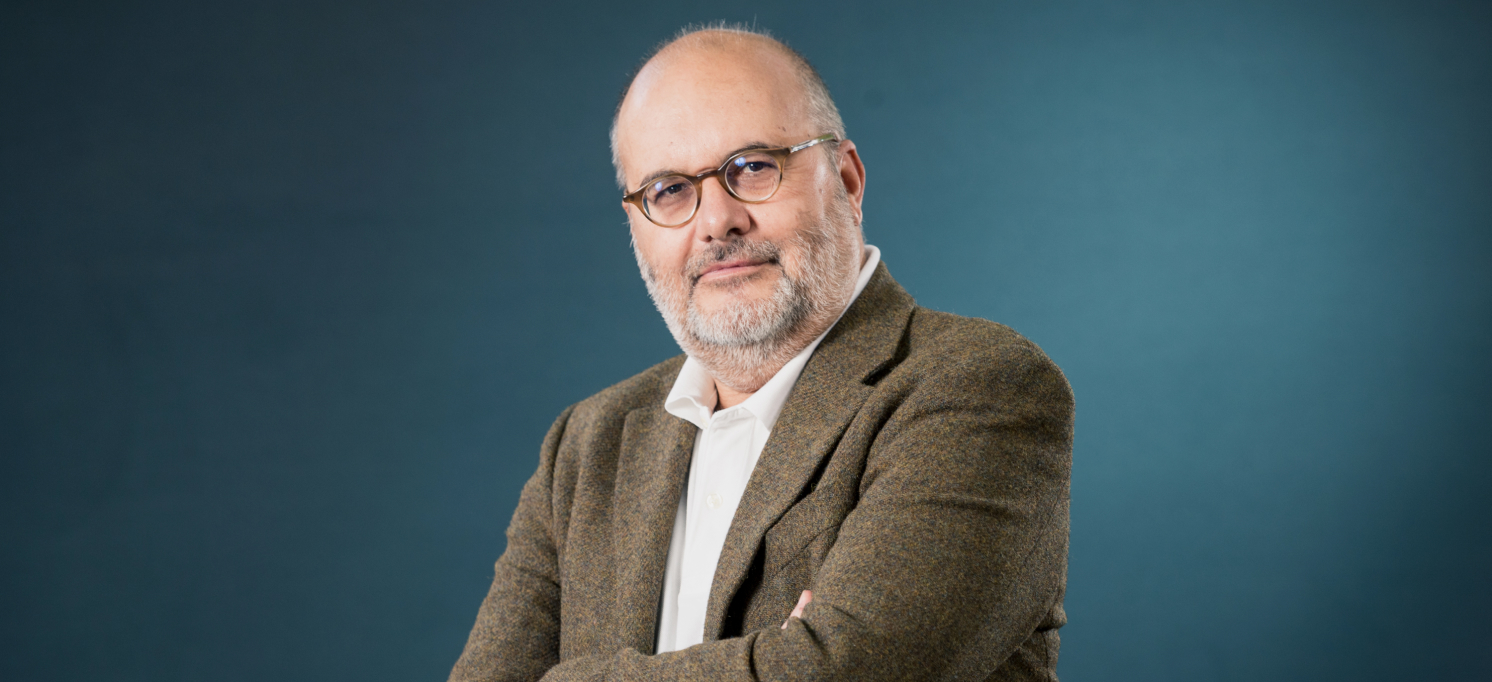
"Many people try to deceive themselves, believing that somehow everything will return to their circles."
- In your book Global Inequality, you recommend Niala Ferguson’s book “The War of War. A new look at the First World War ”, where he tells that the war had economic reasons. Do you see the reasons that have pushed Russia to the war, for example, 10 years of economic stagnation?
- Honestly, I do not see a clear economic reason - this particular case is dictated by politics. The last 10 years in Russia there have been positive growth rate [economics], there were negative, but in general, as you correctly noticed, it was a period of stagnation. In addition, the last two years of the pandemia have been objectively difficult: there was no growth anywhere except China, and Russia was no exception.
- Which group of people will feel the consequences most strongly? And what will be with inequality, which is already a big problem for Russia?
- I see that the government in Russia increases transfers to the poorest part of the population. As part of the Luxembourg Income Study Database project, we had a good interaction with Rosstat. These departments showed that from about 2015 until 2019 (these are the latest accessible figures) in Russia there was an insignificant, but still a decrease in inequality, mainly due to an increase in payments to the poorer strata of society.
At the same time, Russia is now waiting for inflation (according to the May forecast of the Central Bank, inflation in 2022 can be 18–23%. - The Bell). According to statistics, if prices are growing by 10%, then poverty grows by 5 percent points. This means that if now the poverty level in Russia is 12%, then it can grow to 17%.
The middle class will also lose more relatively rich or super -rich, because imported goods will become inaccessible and prices will also increase. In the last group, some types of demonstrative consumption can be reduced simply because people will no longer be able to buy a new Rolls Royce.
Inequality and stability
Milanovich is one of the world's largest inequality specialists. In an article issued in co-authorship with Christoph Lacner in 2013, he showed that during the period of “high globalization” between 1988 and 2008, the largest increase in income occurred among the middle class in developing countries (approximately 50 percentiles in the global distribution of income), as well as 1% of the richest in the world, while the middle class income (80th percent) In fact have not changed. The famous schedule with the dynamics of income growth was called the "Curve of the Elephant." Milanovich pointed out that the strengthening of the middle class position in the country is extremely important for stability in society.
- In your book, you write that the indirect consequence of wars in the historical perspective is a decrease in inequality. Is this achieved only due to the growth of taxes for the rich or are there any other mechanisms?
-Indeed, it is quite common that world wars led to an increase in taxes, because the state needs to somehow pay for the war. You can’t collect more taxes from the poor classes, so they were taken from the rich - this contributed to a decrease in inequality.
However, since I wrote the book, two studies have been published, which convincingly prove that in Germany during the First World War there was not a decrease, but an increase in inequality. Rich classes - junkers or landowners - were quite influential politically so as not to pay taxes. Therefore, the German government had to occupy in international markets, and when the United States entered the war in 1917, Germany could no longer receive money on the New York Exchange, and it became very difficult to finance the war.
So now I am more skeptical about the thesis that the wars generally lead to a decrease in inequality. But they certainly lead to a reduction in income, growth of poverty, destruction of assets. And the effects of inequality really depend on state policy and the type of war.
- Do you think that the Russian government will have to raise taxes for individuals in order to finance the war or its consequences?
- I think, yes, taxes will have to be increased, because the strategy for import substitution will require investment [and Russia has lost a large part of its reserves]. Given $ 300 billion frozen reserves of the Central Bank and private frozen assets, I think we are talking about half of the trillion dollars, which is about ⅓ GDP of Russia. These are huge amounts and the largest confiscation of assets in history.
- The problem of inequality manifested itself during the war. Ordinary military is not the most wealthy class, and this is once again proved by the testimonies of robberies with sending the loot home. Contract, injuries and so on - all these are increased payments. It turns out that the inequality of income also plays a certain role here?
- The fact that more poor people are much more common to serve in the army is not surprising, because they consider military service as a way to increase their income. This is true not only for Russia: for example, the American army [times of war] in Iraq also consisted mainly of poor people.
Probably, [those who went to serve in the Russian army] did not expect [military] conflict and simply went into the army to correct their financial situation. There are many people from the poor regions of the country in the Russian army, as well as from different ethnic groups. The US Army is also a large share of Latin and African Americans.
The burden of war [primarily] is poor, because the cost of their life [in the army] is growing. If different layers of society would be more evenly represented in the army, we could see bursts of discontent among those who have more influence on politics, [than the poor].
So against the war, one can cite an argument about inequality.
“On Twitter, you wrote that the lack of left opposition in Russia is now“ destructive, because only such a non -nationalist opposition can try to stop the war. ”
- A more liberal argument - the lack of prospects and rapid economic growth - is also relatively strong, because he turns to people who really have some political or social power: rich people, citizens, young.
- In Russian society, however, there is no consensus about the “special operation”. There is no reliable sociology now, there is only an assumption that it really is less supported by a more wealthy population in large cities.
- I saw the results of the surveys according to which most youth opposes the special operation, the elderly - “for”. This does not surprise me, because the elderly do not bear any expenses [for a special operation] and are unlikely to fight themselves in the war.
In the 1990s, in Serbia, it was pensioners who advocated the war most of all, because for them it was entertainment-every day they read in the newspapers, what was happening. Young people, as now in Russia, were very unhappy, some left the country.
Probably, the urban, young and more wealthy population is better aware of the consequences of [war] and economic difficulties. Others will notice them if they or their loved ones lose their jobs. I think that many people, as it was always, try to deceive themselves, believing that somehow everything will return to their own circles-we are always inclined to believe, something that will happen in the future may not touch us.
Support The Bell
The war completely changed our life. About its consequences for each of us, we write online from February 24. We never took money for content from readers, believing that we can earn our own. But now our business model, like much more in the economy, has collapsed. Help The Bell continue to work!
"Repetition of industrialization is extremely unlikely"
- From the beginning of the war, you published two texts in your blog, in which you describe the sad prospects of the Russian economy - both short -term and long -term . You proceed from the fact that the sanctions will be valid for 50 years, and import substitution and turn to the east will fail. But what will happen to the economy in the medium term for 5-10 years, if the war is still ending. Is there any hope that after a short-term shock in Russia, a period of quick industrialization can happen like that that was in the 1930s?
- I believe that [regardless of the deadline for the end of the war], the relief of sanctions will take a lot of time: this may take 20, 25, and 50 years, as I indicated earlier, but definitely not 3-6 months. Repetition of industrialization is extremely unlikely. The USSR could count on the transfer of technology, for example, for the construction of aircraft, from the most developed countries: Germany, the USA and others. These technologies were then finalized in the Soviet Union, including with the help of workers moving from rural areas (if in 1926 the share of the urban population was 17.7%, then in 2021 - 74.8% - approx. The Bell). All political figures - Lenin, Stalin, Bukharin, Preobrazhensky or Trotsky - perfectly understood that this was the only opportunity for the USSR to technologically catch up with the West. The problem is that now it will be very difficult to get the best technologies of Russia, and in some cases it is impossible, so now the task is much more complicated.
In addition, in the 1930s, increasing the level of education corresponded to the growth of industrialization. Now in Russia the post -industrial labor force, which is too educated [compared to the current state of technology]. In fact, people will have to do work for which they are too qualified, and if they can’t find it, they will leave, but they will also not pay well abroad.
Thus, a large discrepancy is formed between the level of qualification of labor and economic policy, which will be required to be carried out in the medium term. And this is also a big problem. In addition, many educated people have already left, and this will also make it difficult to fulfill the task of a technological breakthrough.
- And what is the problem with the import of technology, say, from China?
- There are definitely areas in which Chinese technologies catch up with American or Western ones and can replace them, for example, chips production. But in some important areas, Western technologies are really indispensable. For example, technologies that are used in the exploration of gas and oil deposits, mainly German and American, in aircraft construction - Boeing and Airbus technology. Chinese companies will also be careful about working with Russia due to the threat of secondary sanctions.
- In Russia, they again talk a lot about import substitution, but what in reality the Russian authorities should do in order to try to prevent economic stagnation over the next 50 years?
- Now it’s too early to talk about it. I do not think that the government expected that [the war would begin], and it seems that now it is busy with minimizing the short -term effect of sanctions. Import substitution issues are much longer.
It is necessary to make important decisions: where to invest, what will be the role of private and public sectors, where to get the money, whether it is worth developing a certain car factory in a city or another, how to do it, what technologies to use, etc.
You will not start a lot of production in six months. Probably, in a year or two there will be a need for some fundamental decisions regarding the direction of the economy, because it will not be able to continue to develop in the current conditions. It will take some big idea. I think that it will be needed for another 4–5 years to talk about how [import substitution will occur] and how successful.
-How much will the status quo that will develop in Russia under sanctions complicate the opening of post-Putin Russia for the world? After all, if the sanctions will ever be removed, everything that will be created in Russia over the years may be uncompetitive.
- Yes, I agree with this. Many countries, having made political decisions to replace imports in the 1960–70s, eventually built ineffective companies. Even if the period of import substitution is relatively successful, the final result will again be the “discovery crisis”, similar to that Russia survived in the 1990s. Then the “red directors” opposed the opening of the economy, because they knew that, firstly, their enterprises were uncompetitive, and secondly, they wanted to privatize them themselves. So I am sure that at some point there will be those who get great benefits from the import substitution system and will resist the opening of the economy by all means.
Regressive import substitution or "unimaginable experiment"
In the coming decade, Russia has a “unimaginable experiment,” Milanovich believes . The policy of import substitution, known to the economists, was to protect their own economics from the outside and catch up with more developed countries due to tariff barriers, he reasoned: the United States went along this path at the end of the 18th century, the Japan of the period of the Restoration of the 30s, Brazil and Türkiye in the 1960–1980s. But Russian import substitution will have another nature, the economist warns: in the coming decades, the country will try to revive a number of industries based on outdated technologies - engineering, exploration of energy resources, automotive, Aviononic and others. Import substitution in order to roll back in development, no one has tried yet, Milanovich notes. Even if the regressive import substitution is unexpectedly successful, after lifting the sanctions, Russia will be in the same situation as the USSR of the 1980s, because the “new old” created by the country will be less effective than the advanced Western.
- Can the Russian authorities keep qualified personnel or try to replace those who left? In 1917, this could be done by creating social elevators in the form of universal education. Now the state so far only offers benefits for IT specialists.
- Benefits can help, but, I think, for many of these people, contact with the rest of the world, the exchange of information and access to international markets, where you can sell the results of their labor, are crucial. As far as I understand, Russian IT specialists significantly depend on foreign markets, where they sold their knowledge, software and technology.
- Earlier you pointed to the cyclic nature of Russian history, when growth followed the war and the most severe economic crisis, and then a long stagnation. Do you see some kind of causal relationship?
- This is a good question, I'm not 100%sure. Perhaps someone will look at him more carefully and see some more long-term trends, but I see only a correlation.
The economy [of Russia], at least from the end of the 19th century, has really been developing in cycles: it has shown quite high growth rates at the beginning of this period, then before the First World War the decline continued, which became huge because of the war and the subsequent civil war. Then during the NEP there is an improvement - we already see the cycle. Industrialization, of course, takes place with huge human victims, but the Soviet Union has relatively high growth rates in the 1930s.
The Second World War brought a huge number of victims and a huge fall in income, but then again a fairly good recovery period comes, especially after Khrushchev came to power. In the followed period of stagnation, the growth rate was still not equal to zero, small, but there was still growth. The transition period of the 1990s was accompanied by huge economic losses of GDP, the 2000s-extremely high growth rates.
The presence of at least three cycles served as a motive for my original article. Countries are very difficult or even impossible to achieve a stably high income level if such cyclic changes constantly occur in them.
"The elites realized that the extreme centralization of power makes them powerless"
- How many Russia, taking into account frozen reserves, will be able to continue the war and what it depends on: sanctions, oil embargo, a drop in oil prices due to a global recession?
- This is a difficult question, because the answer to it depends on how the situation will develop and what the government decisions will be. Фергюсон в книге «Горечь войны» отмечает, что рост неравенства и неспособность финансировать войну были двумя важными факторами, которые осложнили продолжение войны [Германией]. Но в случае с Германией это произошло только на четвертом году войны: война началась в 1914 году, а трудности проявились только в 1918-м.
— Может ли нежелание населения платить за войну стать решающим фактором в России, где к среднему классу исследователи относят сравнительно небольшую группу — до 10 млн человек?
— Многие считают, что принятие высокоуровневых решений крайне централизованно, и у среднего класса в этой связи нет никакого способа повлиять на эти решения. Но средний класс не совершенно бесправен. Допустим, власть решает развивать IT-индустрию, авиастроение, автомобильную промышленность или что-то еще. И высококвалифицированные инженеры, экономисты или бухгалтеры в какой-то момент не могут что-то сделать просто потому, что импорт стал недоступен. Кто-то рассказывает об этой проблеме кому-то выше, тот передает еще выше, и эта информация начинает циркулировать. Подобные экономические проблемы будут все больше проявляться в повседневной работе.
— Как вам кажется, почему российские элиты ничего не смогли противопоставить войне?
— В 1990-е годы олигархи были очень могущественны, и Ельцин зависел от них. Они значительно влияли на внутреннюю политику, в том числе на ход приватизации. Но затем постепенно они уступили власть политической элите. Многие люди на Западе продолжают верить, что олигархи имеют политическое влияние. Первоначальная идея санкций против них была основана на простой идее — олигархи не захотят терять свои активы, а значит, выступят против войны.
Но, как выяснилось, рассчитывать [на это Западу] было неправильно. Я думаю, что проблема в неправильной оценке политического устройства России — Запад считал, что она не изменилась по сравнению с 1990-ми.
Люди, чьи активы были заморожены, достаточно умны, чтобы понять, что они могут потерять все в случае войны, и, должно быть, они действительно были против нее. Ирония в том, что их активы все равно забирают — просто за то, что они оказались недостаточно могущественными. Мне не очень понятно, чего [Запад] добивается такими [санкциями], ведь ясно, что [олигархи] не способны [ни на что повлиять].
— Допустим, после Путина появится какой-то другой лидер. Элиты усвоят урок о том, что автократичный режим вреден для их благосостояния? Будут ли они теперь способствовать формированию институтов защиты частной собственности, верховенства права и т. д.?
— А вот здесь я настроен довольно оптимистично: думаю, элиты поняли, что крайняя централизация власти делает их бессильными. Несмотря на все богатство, а также попытки самоустраниться от режима и от политики, политика, по иронии судьбы, им отомстила. Они перемещали свои активы в США или Великобританию, надеясь на то, что законы этих стран защитят их, и им было все равно, есть ли верховенство права в России. Но в итоге их активы были конфискованы.
Я думаю, российские элиты усвоят, что в будущем им лучше не иметь централизованной власти. В 1950 годы члены Политбюро поняли, что лучше иметь 7–10 человек, решающих вопросы, чем это будет один человек. Разумной позицией элит было бы выступить за утверждение верховенства права в России, чтобы иметь гарантии против централизации власти. Я верю, что люди умны и смогут усвоить — даже если они не разбогатеют сказочно, как могли бы, в долгосрочной перспективе гораздо безопаснее для них иметь эти гарантии. Это было бы положительным исходом.
— То есть вы думаете, что именно элиты станут источником перемен в России?
Да, исторически так и было. К примеру, во времена Горбачева изменения шли изнутри элиты коммунистической партии. Да, я верю, что элиты будут источником перемен. То, что мы только что обсудили, нетрудно понять умным людям, заработавшим много денег.