
Translated material
The second century Sakharov
Former Chairman of the Council of Liquidized Memorial Alexander Cherkasov - about what made the academician become a human rights activist
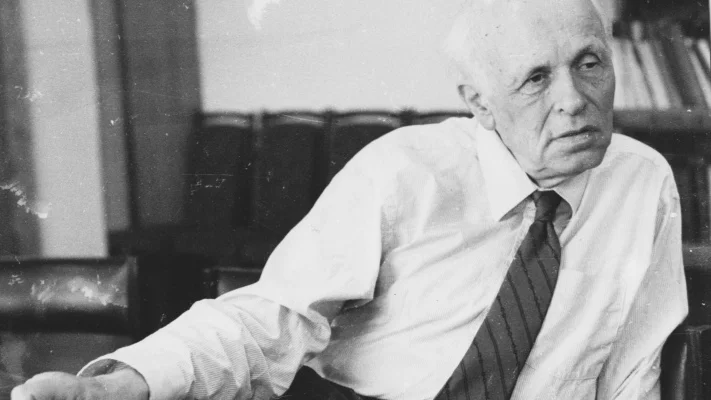
In a strange time, we celebrate the first year of the second century Andrei Dmitrievich Sakharov.
The academician is canonized, in the center of Moscow the avenue bears his name. The “wall of sorrow” standing here is a memorial complex of memory of the victims of Soviet terror, ”Putin opened.
But, go here Andrei Dmitrievich, he starts to say that he was not tired of repeating during his life about human rights, about nuclear disarmament - they would twist in two accounts, drawing up a couple of protocols.
And there is no cognitive or other dissonance: “Well done, the thermonuclear shield of the Motherland forged, but was too carried away by liberal ideas,” the attitude of the current authorities is about this. The death of an academician, and then thirty years and almost three years, have passed since that moment, simplify a lot.
However, this simplification began during his lifetime: "Sakharov will not forgive you for this!" - shouted caricature liberals at Dovlatov. Understanding simple (like!) Texts- starting from “thoughts about progress, peaceful coexistence and intellectual freedom”, which went into the Samo and Tamizdat in 1968- it was easier than accepting motives that moved the author.
***
Sakharov is almost a celestial. The person whose opinion was listened to the Politburo. Rided from the charms of the "Soviet lifestyle" a secret academician. The inhabitants of the villages in the vicinity of the closed city of Arzamas-16 were whispering among themselves, that, they say, there, in three rows of wire fences, “test communism” was built-and they were right in some ways.
Suddenly - refuses privileges and comfort, violates all the prohibitions. He writes and spreads something not from this world. That is, for the world and all that, but it tastes and is clear to the touch-it is made not from the soviet papier-masha.
“Reflections ...” Sakharov, who went to the west through Andrei Amalric and Karel Van Hit Reva in the summer of 1968, surprised the whole world - it turns out that there is a reasonable life behind the “iron curtain”! - And gave rise to new hope. Now this time is hard to imagine. In the midst of Prague Spring. In Paris, they just found a “beach under the paving stones” and “forbidden to prohibit”. In Moscow, the release of the Chronicle of current events began - in Samizdat, of course. Anatoly Marchenko, the first book about the post -Stalin political camps, recently published there. What are the camps in general, if Khrushchev freed everyone? .. Reflection began, rethinking the Soviet present, and the Sakharov “Reflections ...” gave this process volume, dimension, put it in the world context and agenda.
But in August of the same 68th, everything changed.
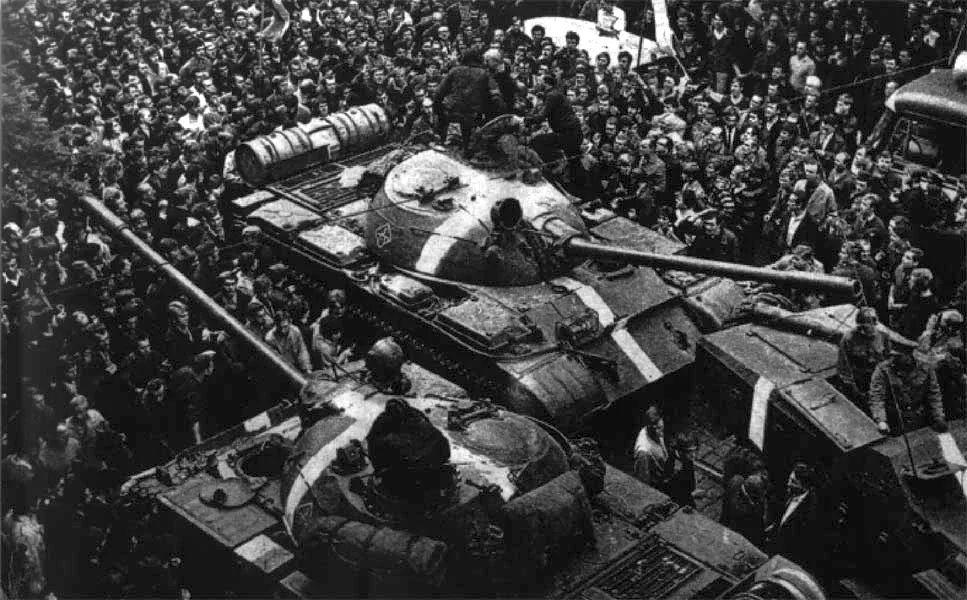
Tanks in Prague: "If it were not for" fraternal help ", there would be NATO troops there!" - Isn't it familiar? Protects - arrested and condemned.
Marchenko was again sent to the camp.
“There is a tide in people's affairs,” and it's time to calm down. But Sakharov does not calm down. He writes new texts, global both problems, and the proposed solutions.
Meanwhile, the discharge of international tension begins, the USSR and the United States conclude agreements on limiting strategic offensive weapons, and on restriction of missile defense systems. In these agreements, the echo of Sakharov’s speeches is heard: he has repeatedly tried to prove that the nuclear war is inconceivable and murderous that more weapons are not more security, and that it seems that defensive weapons can destabilize the situation in the world, pushing it to a nuclear war.
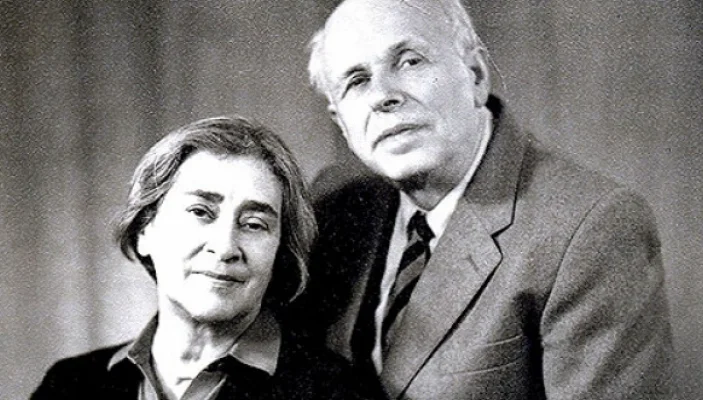
In 1975, Sakharov was awarded the Nobel Prize of the World. At the award ceremony, his wife Elena Georgievna Bonner reads the Nobel lecture “Peace, Progress, Human Rights”. Andrei Dmitrievich at that time - in Vilnius, at the court, where his friend, editor of the Chronicle ... ", scientist Sergei Kovalev is sentenced to ten years of the camp and exile.
In the same 1975, 35 countries sign a final act of a conference on security and cooperation in Europe. On the one hand, this is the victory of the USSR: finally, the European post -war boundaries are recognized, the Soviet zone of influence is legalized. Many perceived this as the surrender of the West. But, on the other hand, the relationship of three directions, three “baskets” is fixed: security, cooperation, human rights. And this could be called the victory of the human rights movement, the victory of Sakharov.
First, in Moscow, at the initiative of the physicist Yuri Orlov, then in the Soviet republics, and in socialist -lines there are Helsinki groups that control the fulfillment of the requirements of the “third basket” of the Helsinki final act.
And again, everything ends with the war, the “international help” of the USSR, now - the people of Afghanistan.
Of course, "if the troops had not been introduced, there would be American missiles tomorrow ..."
Sakharov protests against Soviet aggression. He himself falls into captivity. Starves, subjected to torture of violent feeding.
The dull time of leaf fall: Sakharov in exile in Gorky, Kovalev - on Kolyma, Orlov sits in Perm political camps, Marchenko in Chistopol prison.
And then as in a fairy tale: the truth wins. Gavelovskaya "power of the powerless" crushes lattices and walls. After a hunger strike and death, Anatoly Marchenko in December 1986, Secretary General Mikhail Gorbachev calls Sakharov.
Next is the triumph. The first congress of people's deputies. Speech under the hooting of the "aggressive-listening majority." And - the death of the hero.
***
This can be read about this in trained Dmitrievich trained memories. “Political”, “public”, “human rights” their component is understandable to the reader - in contrast to the component of the scientific one.
Sakharov was not just a scientist - he, like many of the "generation of the bomb", worked widely, from physics of elementary particles to cosmology. The Soviet government and confrontation with the Soviet government deprived him of the possibility of a normal thorough dialogue with his colleagues - and, for example, the Nobel laureate Stephen Hawking was such. They met with Sakharov only twice, in the early 70s and in the late 80s.
People as Sakharov are distinguished not only by encyclopedic knowledge, not only focus on their topic, but also the courage of thought.
The ability to go beyond the usual, to the face of the abyss. The ability to argue with recognized truths and authorities.
The academician calculated the possible consequences of continuing the testing of thermonuclear weapons - the consequences for humanity. I made conclusions. He tried to convey them to Khrushchev, to prevent the tests of Super Bombs. It was not possible to prevent. It turned out to spoil the relationship with Khrushchev. But after all, the agreement on the ban on nuclear tests in three environments - in the atmosphere, in the ocean, in space - was signed in 1963.
Or in 1967, Sakharov was concerned about the destabilizing role of missile defense systems. He wrote a memorable note, sent Pravmin Kosygin. On the cover letter of the litter: “Comrade. Brezhnev L.I. - I got acquainted. " No irony: Brezhnev, who has been supervised from the Politburo since the Politburo, was a specialist in rocket and space topics. The agreement between the USSR and the United States on the restriction of missile defense systems was signed in 1972.
Sakharov recalled the history of the spelling of “Reflections ...” Initially, something similar was addressed to the authorities, in the same 1967 there was an article for a “closed” collection. But it was clear: they would not hear. And then he began to write an article addressed to the world.
Returning to the beginning, the same thing we can say about Sakharov’s anti -war position - it was circumstances and steadily. From the creation of the bomb - to the consequences of the tests, the consequences of the nuclear war, the consequences of destabilization - but also the consequences of the wars of "ordinary", "local". Those that the authorities stubbornly do not call wars - “fraternal assistance”, “international assistance”, and then everywhere.
Alexander Cherkasov , former chairman of the Council of the liquidated human rights center "Memorial"