
Translated material
"We cannot go and take Dima"
Dmitry Kozatsky is a fighter of Azov, whose photographs showed the defenders of Mariupol to the whole world. On May 20, he surrendered. "Medusa" spoke with his sister Daria Yurchenko
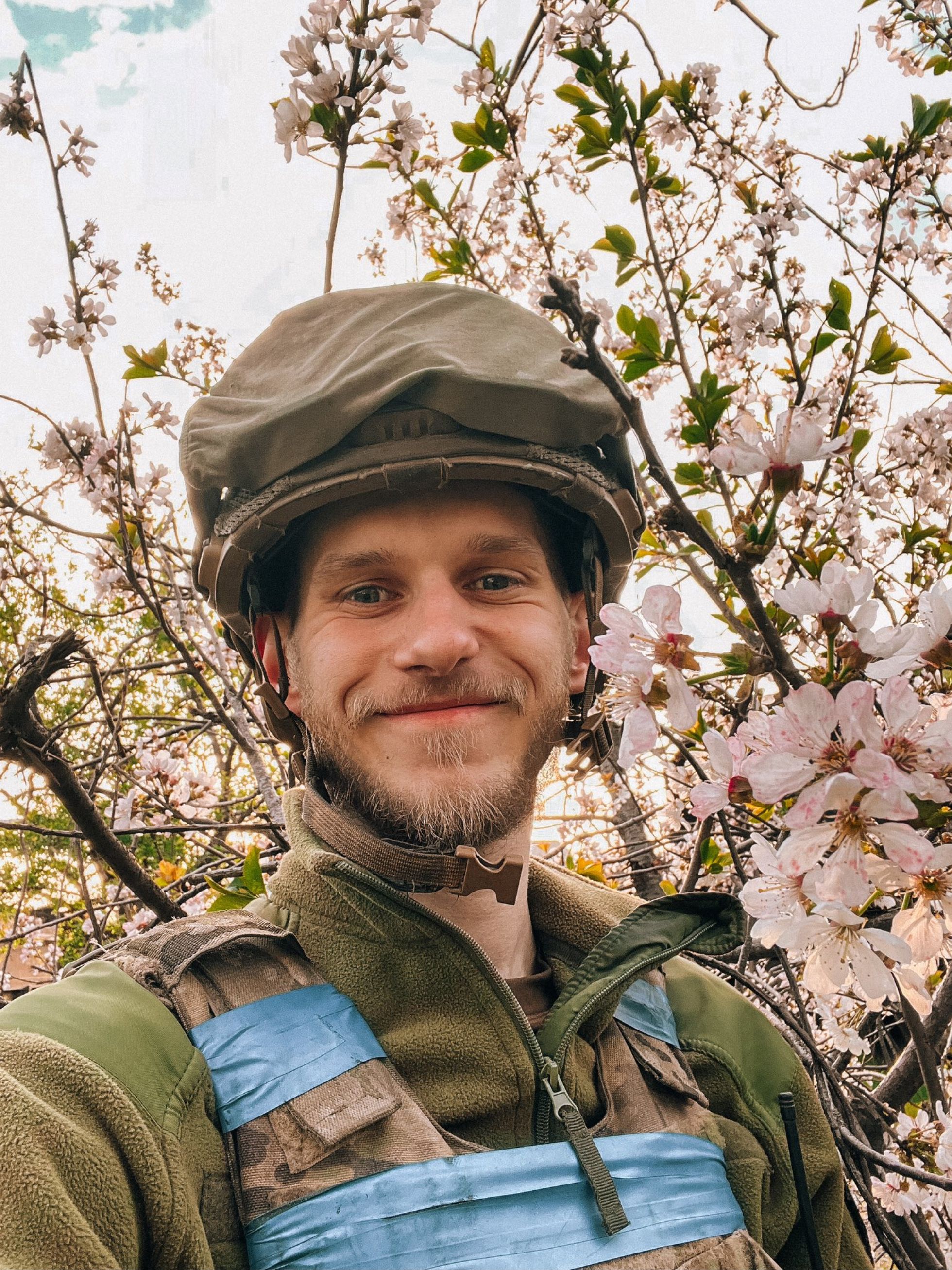
Dmitry (call sign Orest) Kozatsky is a fighter of the Azov battalion and the author of the famous photographs of the defenders of the besieged factory "Azovstal". On May 16, the General Staff of the Armed Forces of the Armed Forces ordered their commanders to "keep the life of personnel." Four days later, May 20, Kozatsky said that he had surrendered. Medusa talked with the soldier Daria Yurchenko about why Dmitry Kozatsky decided to serve in Azov, how he lived during the siege of the plant and that his relatives are experiencing now.

Dima and I grew together. Our family is complete: mom, dad, Dima and me. Mom works as a conductor on a train, dad trucker, used to serve in Afghanistan. When Dima was five or six years old, dad also worked as a conductor. They changed with their mother so that at first there was one at home, then the other.
Dima is a very good brother. When younger brothers or sisters are born, the elders are more cold to them. And Dima was very happy that I was born (we have a difference of eight years with him). Mom told how he came to school and said: “Here, my sister was born!” - I showed my photos.
We lived in the city of Malin , near a paper factory, in a five -story building where many children lived. Eight years of difference, different interests, but Dima always found time for me, invented different games. Our entire yard held on Dima. All my one-time friends say that he has always been positive, active. And now he is on the verge of life and death.
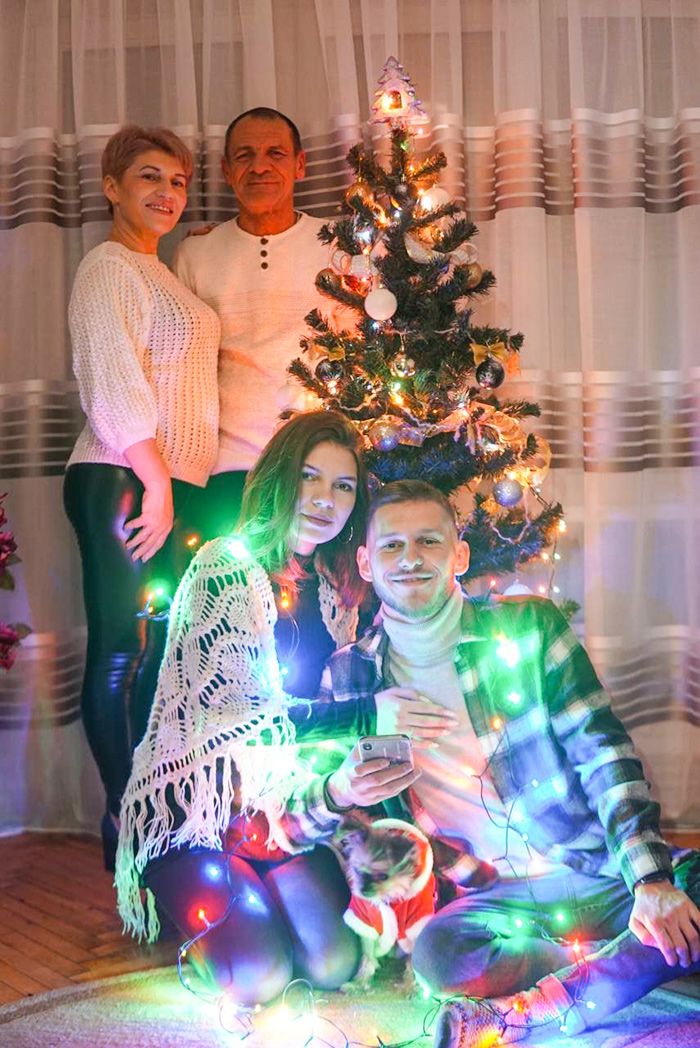
Due to the fact that he was so active, he always wanted to benefit. I do not boast, but in the yard everyone knows how very good children. If a grandmother with very heavy bags goes, we will never pass by, we will always help. This is our family has developed since childhood.
In our family, Dima was the voice of truth. He could say: “Dasha, you are not right. Mom did the right thing ”or“ Mom, you're not right, here I support Dasha. ” When my mother and I quarreled, I called Dima, and he asked: “Well, why? Why quarrel? Well, how [so]? "
Dima has always been very active at school. He did not study perfectly, received not 12–11 [points], but 8-10, but participated in events. I got it from him [also]. He was always the main photographer at school, he went to a photochery. He was provided with a camera - then we did not have the opportunity to [buy it]. He photographed all the events: if the Olympics is somewhere where the guys participate, he takes pictures. He was a very popular photographer. Not in the sense that to earn, but as creativity.
For classes in a photo circle, he was accrued for some points [for study]-it was considered as active activity. He also participated a lot in the Olympiads in computer science, where he took first place. And due to the fact that he won these Olympiads, he entered the [University B] Poland for [specialty] “Supporting software security” for free. I remember the moment when I walked in the yard, and he runs very, very happy, shouts: “Dasha, I entered Poland! Hooray!" I was then 10 years old, I did not understand the whole essence, but I was very sorry that he was leaving. He was a source of all my games, entertainment. I understood: he would leave now, but what should I do?
Then to enter Poland was very popular, prestigious: "Wow, class, Poland, super." It was something foreign.
Arriving in Poland, he began to work on the radio at the Polish station. At the same time, he does not speak at the Polish at the same time, I don’t remember what language he led the programs in. This was not connected with the university, and my mother was very worried: “Why do you need this? We give you money. ” Parents worried so that the work did not interfere with their studies.
Dima said that it was hard to study. Then we had a very close relationship, he didn’t say something to his mother, but he called me. I was then 11-12 years old.
"He wanted to live in Ukraine, in his native country"
Dima did not plan [constantly] to live in Poland. Near his apartment, which they rented in Poland, he hung the flag of Ukraine.
Then the Maidan began, Dima was then in the second year at the university. He really wanted to come to Ukraine and find the Maidan, but his mother said: “Sit in Poland, there is no need to go anywhere. Some kind of game begins, scary. " Of course, he did not obey. I went back to Ukraine by hitchhiking and spent six hryvnias on the entire road. Dima really wanted to back [to Ukraine], even shot a blog about his journey. On the Maidan, he really wanted to be useful, and his parents said: "This is a child, he is 20 years old."
He was told to sit at home - because they did not want to worry. Then the situation occurred: Dima at night asked me to [go] to wash and slapped the door to the toilet. And at this time he opened the front door [and left]. I was small then and did not understand why Dima was doing this. Of course, I helped him - this is my brother. But I did not know where he was going. Then we had a very quiet cat, but that night when Dima left, she began to meow loudly and scratch the door. Before leaving, the brother left a note to his mother. Parents woke up and realized that Dima was not, they began to call him. My dad then said: "If you love mom, you do not want her to be worried, come back."
Dima is very fond of Ukraine, from the very childhood. He is very patriotic. [But in the end] he went to the Maidan when his parents released him - when everything calmed down a little. He became a volunteer there. I also went with him, our whole family was there. He helped with the delivery of firewood, food supply. Dima was very glad that he got there.
Our whole family is patriotic, we took the flag of Ukraine [when we went to the Maidan], so old, battered. [Already after the Maidan], we still hung it on the balcony - like the heart of Ukraine.
Dima definitely did not want to go back to Poland. I wanted to live in Ukraine, my own country, to do everything here. After the Maidan, it became clear that he would not go anywhere, he wanted to go to the army. I thought that he would be sent either to Kyiv or to Kharkov - to peaceful places. But he was sent to Mariupol. In 2015, he ended up in the National Guard, since then he has been living and serving in Mariupol.
He knew in advance about the Azov battalion, he fell into it in 2018. Without hesitation, he decided to join there. I remember his words that there is no such [relationship]: "I am a commander, and you are someone lower." In Azov, all people live like relatives, as a family. If a military man dies there, then every year to him, his family is given honor, is allocated some help. There are all brothers to each other.
Dima still says that he does not regret a drop [about the decision to become a fighter of Azov]. All his thoughts were confirmed: there are very good people. The brother said that these are not those people who want to kill. These are people who give [themselves] to the homeland - Ukraine.
In our family it is made like this: if Dima made such a decision [to go to the Azov], then he is sure of it. Before the war, my mother and I discussed this. We are very glad that he decided so, he knew why he was going there, and we supported him. After a couple of years, we already understood for ourselves: we saw how [fighters] relate to each other, all families communicate there, even parents [military] among themselves.
The army does not always mean fighting. Now Dima is the commander of the press service [battalion]. As he connected his life with the photo, he also connected it in the army. He did not become rude [serving in the army], although there is a myth that the military is rude. Dima - no.
“I know that everything will be fine. That they will come out "
[After the outbreak of the war, Dima said that everything will be fine: "I love you, girls and my boys." And all.
It is very difficult when they come [to your country], your brothers kill and rape the girls. What can I say here? My tears are welling now, it’s difficult for me. I myself lived this moment in the city [in Kyiv], when we were fired. You do not know if you will be alive in a second or not.
[During the blockade of Azovstal, the military] had some kind of Internet. You write him the message: “How are you, Dima? How are you there? " Dumb question. When you ask such a question every day, and his answer: “I am fine, don’t worry” ... Well, what else will the son and brother of the sister say? If he began to tell his mother in detail, she would just go crazy.
He told dad everything. He knew that dad was about the same in Afghanistan, and said [his father about what was happening to him] as a man man. Dad retold Dima’s words, but I tried to keep myself in my hands.
Dad said that a man [Dima] eats once a day-some kind of oatmeal, five spoons. The water in the "Azovstoy" was only technical, but it was almost gone. So distributing water in the 21st century is very strange - by sip.
[Dad] says that they were very bombed, he [Dima] was wounded once. Dima said that this is his second birthday. It is very scary and painful.
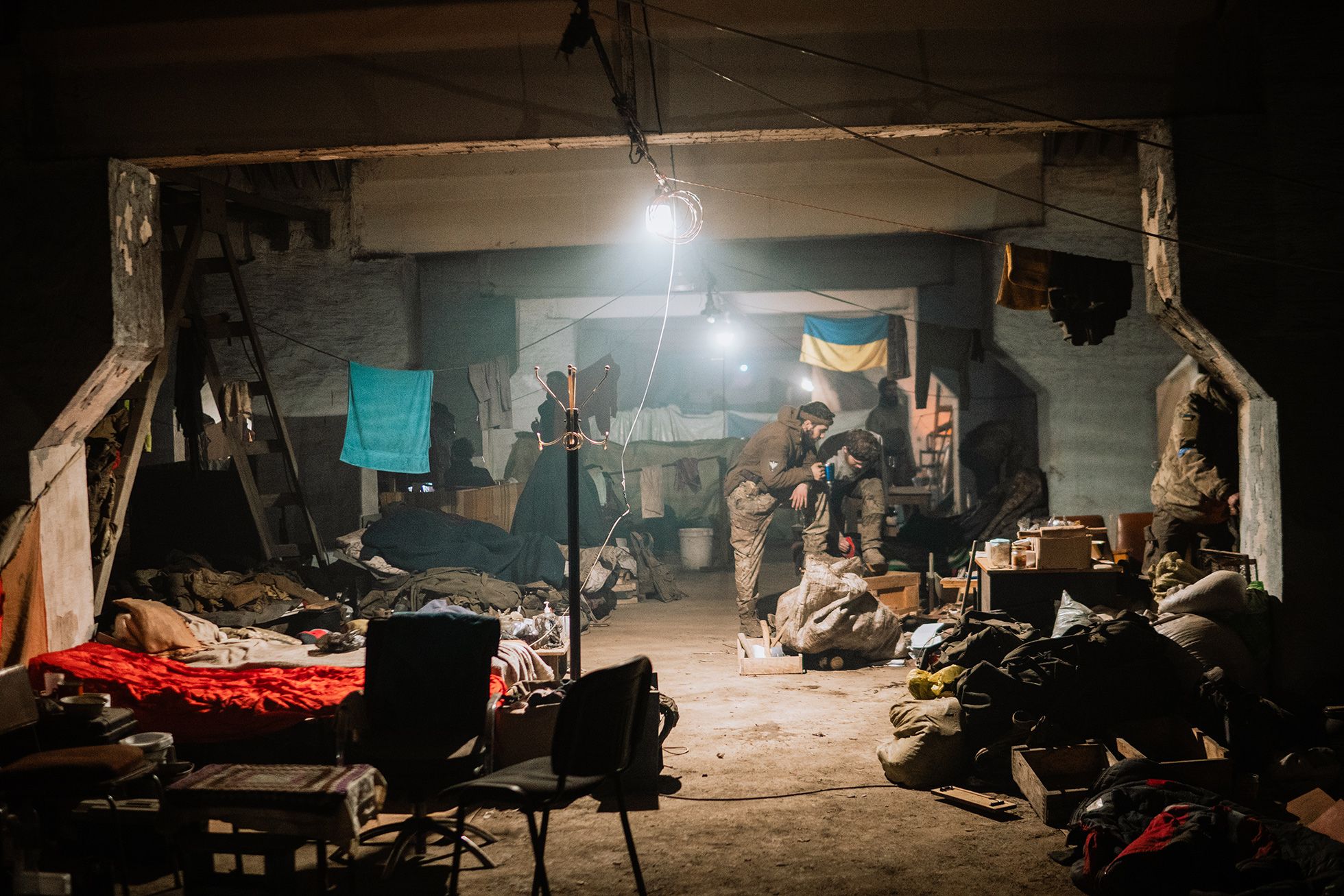
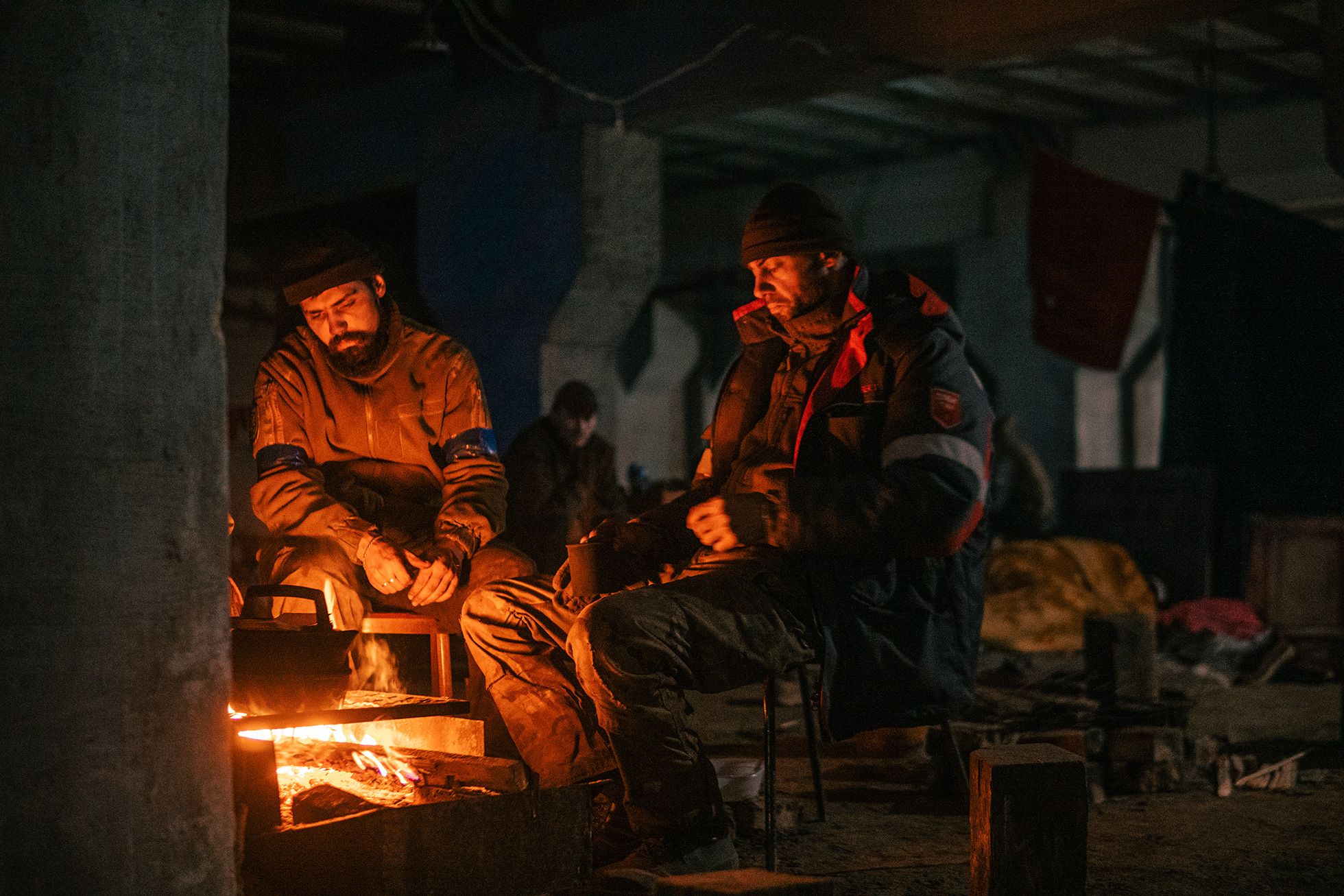
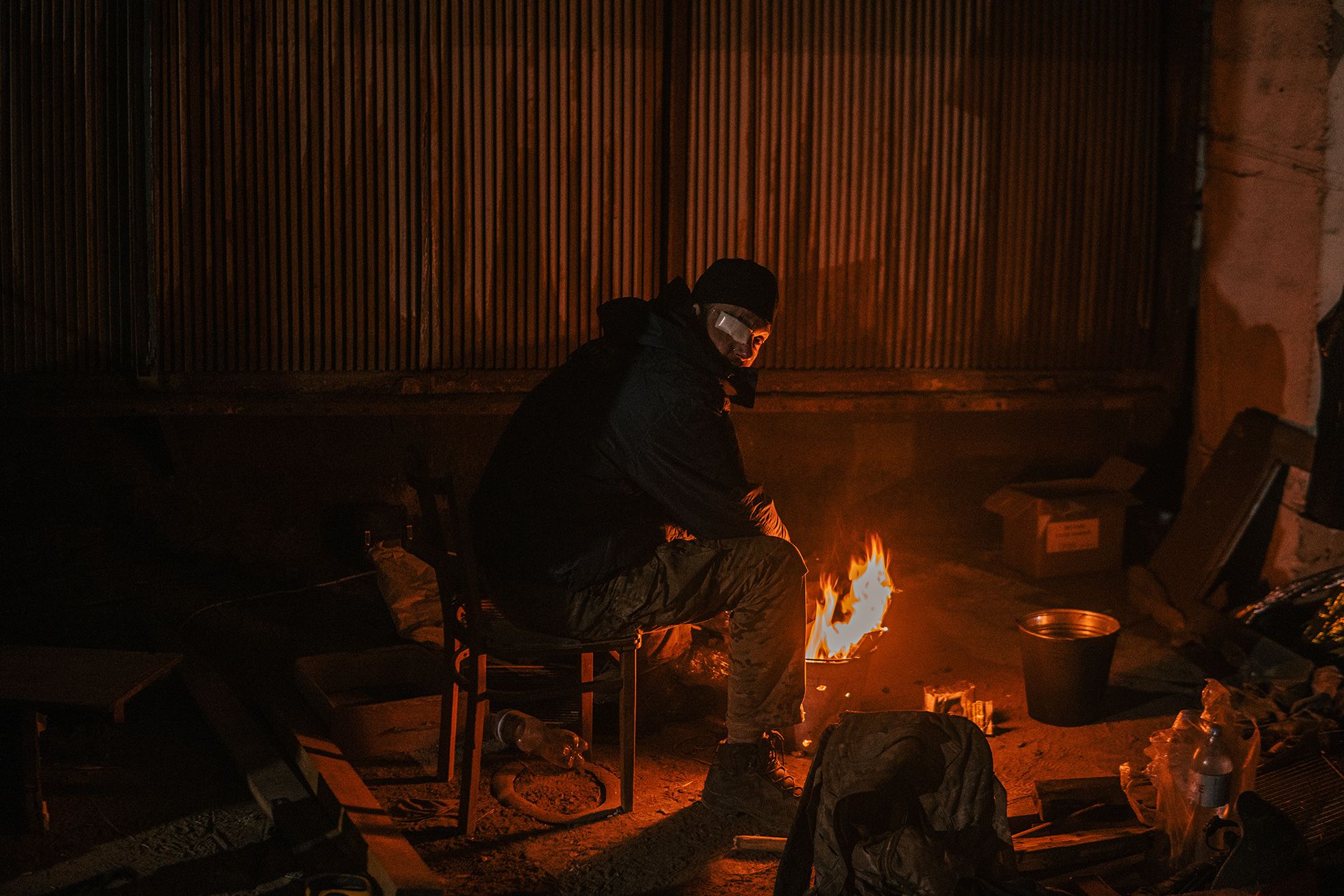
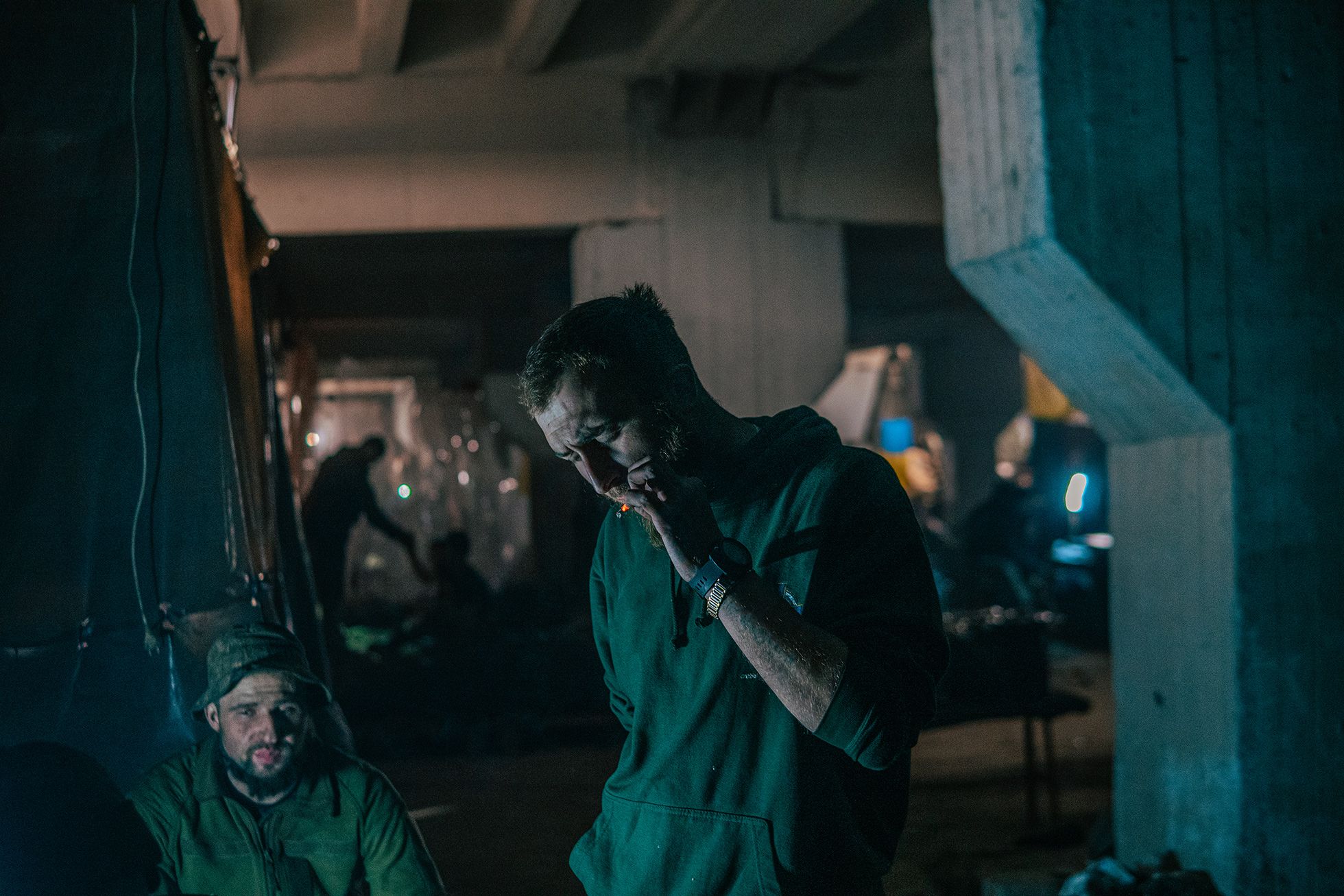
There [on the Azovstal] a lot of his friends died. At the factory there was his [Dima] colleague - she made plans with another fighter, planned a wedding. And he died, he was killed.
When you see every day how people die, your friends, a piece of your heart also dies. I am sure that he wrote so [“Azovstal”-the place of my death and my life] due to the fact that “life” is that he came out of there [in captivity], and death-what he saw there.
He understood that his house, his beloved city [Mariupol] no more. I understand that I can no longer come to him [Dima in Mariupol]. When you understand all this, this [experience] can be called death.
We did not discuss at all [the decision of the fighters to surrender]. The last days we only talked a couple of times on the video chat. We decided that we would not touch this topic [war] for a couple of days. We told him: “Dima, you will come home, and we will discuss it all with you. Can we spend at least some days as if this [war] is gone now? As if you are at home, and we are at home - and just talk. ”
I managed to consult with him: now I’m taking T -shirts with a print - his photograph ( a photograph in which the military in Azovstal stands in the rays of the sun - approx. Medusa ). We chose which is better to use the print, and I immediately thought about this photo. I promised him that when he came out [from captivity], thousands of [people] in these T -shirts would be met. I want to not forget about our heroes and that Dimka would become a super -cummer photographer, as he dreamed of in childhood. And to see how many people were waiting for him. He [Dima] is gaining popularity, I am very happy.
There is always a faith that help will come. Now many say that the government does nothing, but I am not part of our government. I can’t stand in his place and understand how I would do. I am sure that they do everything in their power. But there are situations, like this [on the Azovstali] that it is necessary to do this [surrender]. Dima and everyone who was with him always believed that help would come to them.
But when Dima tells you that he has food left for five days, you no longer know what is better [to surrender or not]. Roughly speaking, you will die from the fact that something will blow up to you, or from hunger. This [Dima’s decision] had to be very cold. This is very difficult - when there is no connection, you don’t know where it is, what and how, whether he ate or not ...
What other reaction is there? We try not to raise this topic once again: it is already difficult for mom, she accepts it very close to heart. It is clear that this is a son. Everyone thinks something for himself, and that’s it. I know that everything will be fine, that they will come out [from captivity]. I'm trying to perceive it colder. It’s so hard for mom, and if I sit down and cry with her, then this will not help.
We support each other, wait for the call, Dima, as soon as possible. I am engaged in these T -shirts when he comes out, he will be very pleased. We are trying to occupy ourselves with third -party thoughts. We cannot do anything about it. We cannot go and take Dima, unfortunately.
Recorded by Andrey Serafimov