
Translated material
They don't argue about Russians
It doesn't matter if you have a good passport, it is important to stop the war
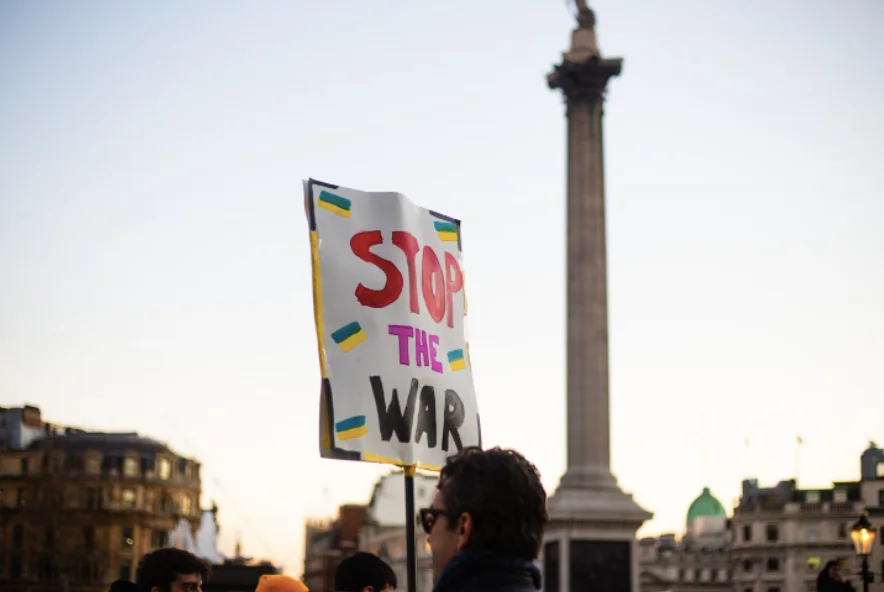
The idea of a “good Russian passport”, formulated at the Free Russia forum in last week, became a meme and caused many critical reviews. As a “passport of good Russian”, shots from the film “Identification of Bourn”, documents of Russian cats and dogs were published, such passports were proposed to be presented posthumously. The main claim of people concerned the alleged illegitimacy of this form of representation: “Free Russia” no one authorized to represent someone’s interests abroad.
The “good Russians” was not lucky again: we do not have a legally elected government in exile, as well as in the Russian parliament, no one represents the interests of citizens of the country who opposed the war.
The “passport” or rather the initial wording in which this idea was stated was quarreled for many. The audience was divided into those who support the rhetoric proposed by the forum, those who are strongly against, and the majority remaining in Russia, who reason like this: we would have such problems. “Free Russia” is held annually, but what was happening on the forum has not caused such a fierce discussion for a long time. Something happens to Russian society and with that part that was in exile. Either the final attempt to unite, or the terminal experience of the catastrophe that befell us.
The concept of a “passport” suggests that a citizen of the Russian Federation, opposing Putin and his war and, obviously, located outside the country, can sign a special anti -war declaration, after which the anti -war committee created by part of the Russian opposition in exile is obligated to represent the interests of such a citizen of the Russian Federation and provide him with assistance in emigrant life: visas, accounts and constant status outside Russia are really useful things for those of those of those We who could not stay in their homeland on February 24, 2022. After the forum, numerous explanations followed that the idea of the anti -war committee was unsuccessfully filed and incorrectly interpreted. It is better to refuse the term “good Russians”, but we can talk about “European Russians”, and even better the “Russians”. Europe here, as it can be assumed, is not an antonym of the Asian, and does not carry such a derogatory colonial meaning, but is a short designation of support for the values of the European Union: peace, the rule of law, human rights as the foundations of any reasonable state policy. The geographical location of the “European Russians” seems to be not indicated in any way, but it is difficult to imagine that residents of the Russian Federation are at risk of massively participating in such a project. The issue of security of personal data transferred to third hands has stood in recent years in opposition Russian politics too sharply: everyone has been drained.
Dmitry Gudkov clarifies the plan proposed by the forum: according to him, it can be the creation of a high -tech digital platform (of course, on the blockchain). For users, she will work according to the model of modern digital banks like Revolut (many of those who left the Russian Federation have happened to it, hence, probably, associations). The user confirms his identity, declares his anti-war position within the framework of the system, is checked by other users and, in the case of a successful Peer-Review, can be considered “European”. According to Gudkov, it is more likely a decentralized and horizontal society of mutual assistance, the political and even more “representative” function of which is minimized.
Gudkov believes that such a platform can be attractive not only for new emigrants, but also for those Russians who are looking for a safe way to consolidate with like -minded people within Russia: data safety is allegedly guaranteed. Here, a politician one way or another refers to a successful project of five years ago, the “political Uber”, which helped the opposition consolidated to perform in the municipal elections in Moscow. Now on a trip to Uber (the metaphor is outdated, since the project in Russia now belongs to Yandex), “European Russians” are invited. Perhaps Uber is always preparing for the last trip.
If we remove the idea of a political representation or even a monopoly on the realization of the rights of anti -warned Russians, there is nothing wrong with the idea of mutual assistance.
Critics rightly indicate that the initial statement of “passports” had to be made as suspended as possible - we are not in the situation to provoke each other or be inaccurate.
Let everyone who does not support the war be as many forms of effective solidarity as possible.
At the level of the European Parliament in recent months, the idea of creating a special ambassador for Russian political emigrants. If thousands of people run away from Putin’s dictatorship, then they cannot be left in danger - this is contrary to European values (although the main efforts of Europe are now devoted for obvious reasons for assistance to Ukrainians). But how to simplify the procedure for obtaining long -term statuses in the EU for those people who are actually in danger? This is the question that is discussed in Brussels is perhaps good neutral for the internal context of the Russian Federation, where we can talk about this.
An important argument against the idea of a passport or, possibly, against the (unsuccessful) formulation of this idea, belongs to the historian Ivan Kurill. According to him, a political action, if in this case, is about it, should be aimed at most citizens, and not serve as an additional source of schism and not to contrast the “good” and “bad”. In particular, politicians should be interested in attracting a silent majority to their side. Based on the hypothesis that it is not possible to remain silent for a normal person - it means not to become at least an active accomplice.
And the last, most important for me, an argument associated with Kantian ethics. In my opinion, the condemnation of the war should be unconditional. Citizens of the Russian Federation, who condemned the war, cannot expect to get anything good as a result of this gesture - neither visas nor indulgences. The war is an endless crime, and its support is immoral. If you do not want to be with criminals, do not support such a war without any rational calculation. Calculation of benefits is a completely rational thing, but it is unlikely that this applies to a choice of whether it is necessary to support the mass murder of people.
Moreover, the problem of the “passport” lies in the existential plane. The Russian opposition was used to being a bright star of Eastern Europe, which the world has the highest hopes associated with the return of Russia to the democratic path of development. Now these hopes have suffered an obvious defeat, the depth and tragedy of which we only have to realize. I would like to believe that Putinism will not become the end of history, and the current generations of Russians will have a new hope.
But today the only effective opposition to Putin is the Ukrainian army. History presents the Russians to the Russians of humility. Nick of the readers of Novaya Gazeta and did not plan to become a citizen of the aggressor country, but we became them.
All of us, who found themselves in exile, or opposing the war in Russia, are much fewer opportunities to struggle for a good future for their country than even a few months ago. Emigrants are sitting on suitcases, they can hardly plan their lives beyond the horizon of several weeks and consider each euro. Russians who are aware of the tragedy are crushed by censorship and despair, although many continue to fight.
I am ready to abandon criticism of the absurdly formulated idea of a “passport of good Russian”, if only we would take a step towards the end of the war. With all respect, the comfort of political emigration is a secondary task against this background, which I want to talk about half a ton quieter about. Perhaps the speedy opening of visas and accounts for “European Russians” will somehow help stop the war. But first of all, we must do everything that depends on us in order to provide all the necessary people who lost roofs over our heads and risked their lives as a result of the barbaric attacks of the Russian army.
Or very briefly: let's think more about those who are worse than us, and quarrel less. Everyone who opposed the war should extend their hand.