
Translated material
Naughty scientists
The Bologna education system in Russia is everything. Minister Falcov decided to break what the Bolsheviks had already broken
Instead of dispersing rector-traders by fake diplomas and dissertations, the Ministry of Science and Higher Education is looking for a “unique Russian system”.
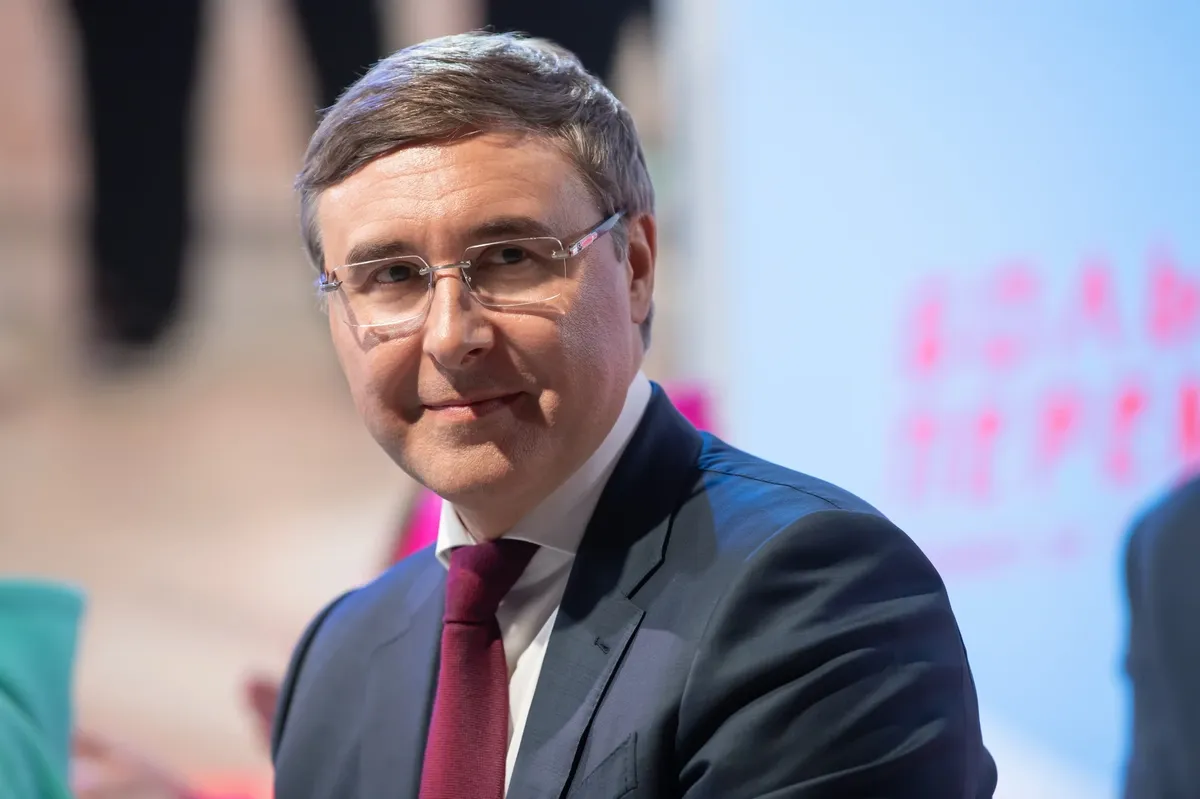
On May 24, the Minister of Science and Higher Education of Russia Valery Falkov said: “The Bologna system should be treated as a past stage. The future for our own unique education system, which should be based on the interests of the national economy. ” By the evening of May 25, this statement was warmly supported by the State Duma, the Council of People's Commissars, Nikolai Patrushev and even the Russian Investigative Committee. And although, according to the forecasts of Rosobrnadzor, it will take at least two years to exit the Bologna education system, there is a feeling that it has been sentenced.
Recall what the Bologna system is. Instead of the traditional 5-year higher education for the USSR and the post-Soviet countries (mainly) with the qualification “Specialist” in the West, there were two levels of higher education in terms of duration and content, according to the results of which the qualifications of the “bachelor”/“license” (3-6 years of study ”(1-2 years of study) were assigned. In 1998, the education ministers of leading European countries agreed to unify the academic qualifications system in order to improve academic mobility, give students the opportunity to plan their professional trajectories, transfer to other educational institutions, and re -click the grades received in them.
Russia formally joined the Bologna process in 2003,
But since the mid-1990s, a number of decisions of Russian state bodies responsible for higher education, Bachelor and Master have been introduced into the national system of academic qualifications.
Note that this system was quite traditional for old Russia. It appears back in the XVIII century as a result of sporadic rule-making in separate universities: for example, at Moscow University, the first instructions on the preparation of “bachelors of philosophy”, which, at the end of the undergraduate, opened the path to the magistracy, dates back to the 60s of the 18th century.
In 1803, the highest decree “On the structure of schools” introduces uniform degrees of “candidate” (i.e., in fact, bachelor or license), “master” and doctor. And the reason for the national regulatory registration of general requirements for the level of candidates, masters and doctors at all universities of the empire was ... trade in fake dissertations! It was in 1816 that abuses were revealed in the production of law in the Derpt (now Tartu) university in the doctor of law. It was found that the tailor Walter and manufacturer Weber bought scientific degrees of doctors of law without going through the necessary tests and without a basic education. After the investigation, committed by the Ministry of Education, the emperor highly indicated: Walter and Weber’s diplomas to be taken away for destruction, rector and dean to set aside from his posts, and develop uniform rules on production to scientific degrees, which would exclude such disgrace in the future. Such rules were approved in 1819.
The degree of "candidate" will be canceled in 1884, but in essence it will be preserved in the form of a "diploma": since 1884 it was issued to those who studied at the university for four years and passed all the exams. The degree of "master" at the same time required the spelling and defense of the dissertation; For admission to defense, it was necessary to introduce a “diploma”, that is, in fact, this is the same “undergraduate” system - “magistracy”. Therefore, it will not be an exaggeration to argue that the two -level system of higher education, followed by graduate school and is the same “our own unique system”, broken by the Bolsheviks along with the abolition of scientific degrees by decree of October 1, 1918 “On some changes in the composition and structure of state scientists and higher educational institutions of the Russian Republic”.
I emphasize that I am now not entering into consideration of the comparative advantages of 5-year and 4+2-year education and whether the potential advantages of the specialty outweigh its “informality” for European universities. The thesis of Mr. Reich Minister himself about the "non -stable" of the two -level system.
If the true goal of Mr. Falkov is the maximum difficulty of academic exchanges, a decrease in university mobility and the further exclusion of Russia from the global scientific environment - the measure offered by him is good for such a goal, but insufficient.
Its ministry should not dwell on half measures, but prohibit studying foreign languages at universities
And to introduce a reverse competition on this basis (i.e., do not accept anyone who had more than three at the school in English), as well as dismiss all professors who will be printed in foreign magazines, and deprive the degree of persons who went abroad.
In some foreign countries, the latter, by the way, was successfully applied. True, not for long. But the effect is still felt. I advise Professor Falkov to get acquainted with regulatory acts and orders issued by his German colleague Bernhard Rust - I think the Russian ministry can draw a lot of adequate to their current goals and objectives.
As for the setting of “economic interests” at the forefront of the national qualification system-here Mr. The Minister behind reality. She is already there: I will remind you that more than 120 rectors of Russian universities are involved in the business of the manufacture and post -warranty service of fake dissertations. None of them in the ministry conducted any investigation, even if you take completely anecdotal rectors like Maximtsev, who covered the defense without writing dissertations. So the “economic interests” of Russian dealers did not suffer from education.