
Translated material
Crosses-noliki
The Local Council of the Ukrainian Orthodox Church associated with the Russian Orthodox Church proclaimed independence from Patriarch Kirill, but not from Moscow. And what, it was possible?
Between Scylla and Haribda
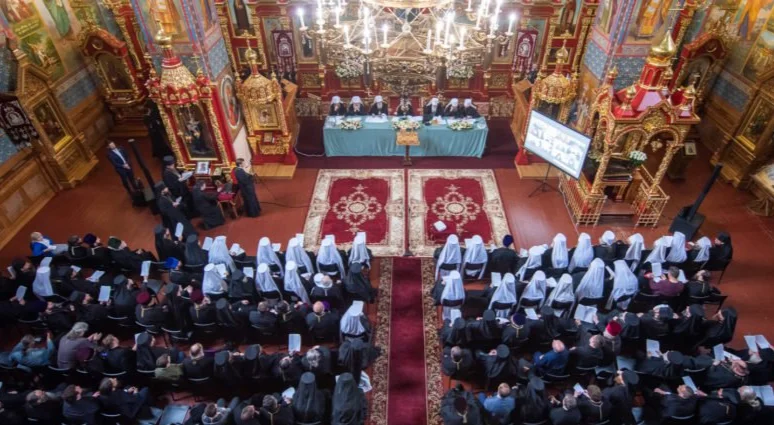
The Ukrainian Orthodox Church of the Moscow Patriarchate (UOC MP) set a record on May 27. In one day, she was able to hold four events of the highest church level in the Kiev Convent at once - the expanded meeting of the episcopate, clergy, monks and laity, an emergency meeting of the Holy Synod, the Bishop Cathedral and, finally, the local cathedral with the participation of the same bishop, the clergy, monks and laity. At all events, the Kyiv Metropolitan Onufry (Berezovsky), who had previously had a reputation of the temperate moskvofil, chaired by all events.
Such a rich program is caused by the requirement of a significant part of the bishops and priests of Ukraine to immediately proclaim autocephaly and break all ties with Moscow against the backdrop of what it does with Ukraine. Already 20 dioceses of the UOC -MP officially stopped the liturgical commemoration of Patriarch Kirill (Gundyaev), and about 400 parishes over the past three months moved from the UOC -MP to the Orthodox Church of Ukraine (PCU), whose autocephaly was proclaimed by the Patriarch of Constantinople in 2019.
However, the word “autocephaly” collection-sino-bombs did not dare to draw in their decisions a patriotic part of the clergy and flocks in their decisions. Actually, a substantial decision is only the decree of the Council of the UOC (now, probably, it is more correct to call it so, without the addition of MP), consisting of 10 points, which we will analyze.
On the political issue, the cathedral took a clear position. He named the actions of the Russian Federation in Ukraine with his own name (which prohibits the use of Roskomnadzor in Russia) and recognized them as a violation of the commandment “not to kill”. The cathedral called on the leadership of the Russian Federation and Ukraine to continue negotiations and stop bloodshed. With the position of Patriarch Kirill (Gundyaev) regarding the “military operation”, the Soborians expressed “disagreement”.
But then casuistry begins. The charter on the Office of the UOC has made changes, "which indicate the complete independence and independence of the Ukrainian Orthodox Church." The level of this independence is so high that the UOC itself will begin to cook the world (used in the anointing of the newly chosen ones and when the temples consecrated), while its main confessional competitor - autocephalous PTC - should receive Miro in Constantinople. Also, unlike PCU, the UOC reserved the right to open parishes in all countries of the world where there is a Ukrainian diaspora, that is, in the territories that the Patriarchate of Constantinople considers his own. At the time of martial law, the decentralization of church administration is announced - some attributes of autocephaly receive ordinary dioceses of the UOC. A similar decision was made by the Synod of the then authentic Russian Church in 1920, following the results of the Civil War. He returned to each bishop the right to be a full -fledged Primate of his little local church, as was the case in the first centuries of Christianity, before the beginning of the imperial hypertensiveization of the church after the “churching” of the Roman emperor Constantine. That's exactly - a decentralized - a catacomb church in the USSR lived.
In relation to PCU, the cathedral retained the rigid rhetoric of previous years, putting several preliminary conditions for the dialogue.
Thus, the PCU must stop accepting the temples and the clergy from the UOC into its jurisdiction, to recognize the failure of its autocephaly, which is now allegedly inferior to the level of independence of the UOC, and get new ordination of its episcopate and clergy in the UOC. Obviously, these conditions are impossible, and before they were not expressed in such a categorical form.
Aerobatics
Despite the anti -war rhetoric of the decree, in general it is convenient for Moscow (and promotional) propaganda. Contrary to the requirements of the radical part of the UOC, no rupture of canonical communication with the Moscow Patriarchate has proclaimed. Yes, complete administrative independence is approved, the Primate of the UOC will now not participate in the meetings of the Synod of the Russian Orthodox Church, and the bishops of the UOC - in the cathedrals of the Russian Orthodox Church, but administrative relations were already impossible under martial law. At the same time, the Patriarchate of Constantinople, historically former the maternal church for the Kyiv Metropolis, is condemned, and confrontation with autocephalous PEC is tightened. Such a decision, without a doubt, provoke the transition of the radical part of the UOC clergy in the PCU, so that the structure of Metropolitan Onufry will quantitatively. And in conditions of martial law, such transitions will sometimes be accompanied by power excesses, which always likes to savor Moscow propaganda.
From the point of view of world Orthodoxy, the UOC remains the church, albeit independent, but affiliated with the Russian Orthodox Church. Its status will be perceived by analogy with the Orthodox Church in America (OSA), which Moscow even granted autocephaly, but this autocephaly was not recognized by most local Orthodox churches. But the application of the UOC for the active opening of parishes in the territories of other churches (primarily - Constantinople) will be very annoying. This is perceived in the modern Orthodox world as “heresy of ethnic fusery”-the doctrine that the church should be arranged according to the ethno-cultural, and not according to the territorial-geographical principle. The link to the fact that Ukrainian refugees should nourish Ukrainian priests, because there are plenty of Ukrainian priests in the Patriarchate of Constantinople, and in the Polish Orthodox Church, and in other local churches - and they are always ready to quickly accept new from the UOC.
From the side, the decisions of the Council of the UOC look like the proclamation of the “third path” - in confrontation with both Moscow and Constantinople, that is, with both the main centers of world Orthodoxy.
But in practice, this is a desperate attempt in unprecedented historical conditions, formally tearing all ties with Moscow, playing the international church arena still on its side.
We can say that the ideology of this cathedral consists in the separation of the metaphysical category of Moscow from its actual embodiment in the person of the leadership of the Russian Federation and Patriarch Kirill (Gundyaev), from which the cathedral, of course, is dissolved. The highest piloting of canonical dialectics and church diplomacy, you can not say anything!
Preliminary intrigues
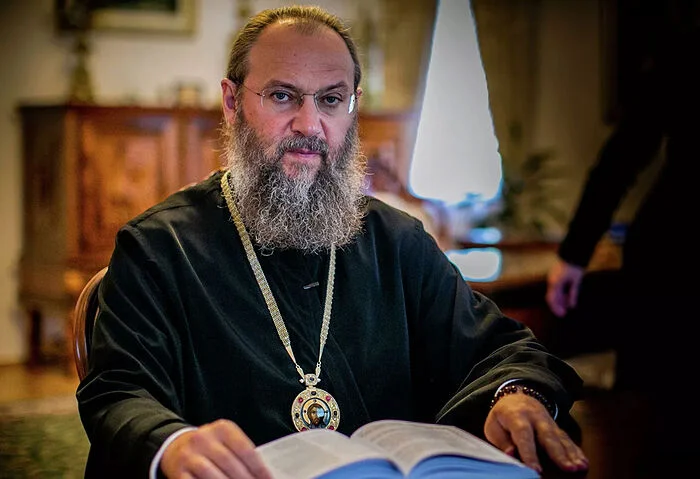
The preparation for the current cathedral was accompanied by a number of curious intrigues. According to the former responsible editor of the Moscow Patriarchate Journal, Sergei Chapnin, who has now moved to the United States, was removed from the preparation of the UOC -Metropolitan (Pakanich) managers, through which the main communication of church Kiev with the Moscow Patriarchate was carried out. After that, according to rumors (which, however, the speaker of the Patriarchate Vladimir Legoyda refuted , but the rumors did not lose belief from this), Metropolitan Onufry, which was not responded, tried to get through to the Patriarch several times. Obviously, Moscow does not agree with the transition of the entire power to the UOC to its previously nominal Primate. Of course, in the conditions of martial law, Anthony risks greatly, frankly lobbying the interests of the Patriarchate in Kyiv, but probably he has his own vision of the geopolitical prospects of the Russian-Ukrainian conflict ...
A great surprise was the pro -automatic position of the Dnipropetrovsk and especially Odessa dioceses of the UOC, who were considered by the bastions of the “Russian world” until February 24. The diocesan assembly in the Dnieper, under the chairmanship of Metropolitan Irenaeus (middle), almost unanimously supported autocephaly, and the same meeting in Odessa chaired the Russian Office of the Russian Orthodox Church, Metropolitan Agafangel (Savvin), called for the Council of “change the status of the UOC”, bringing it into compliance with the “new realities of the existence of the Ukrainian state”. One of the most popular bloggers of the UOC, the cleric of its Lugansk diocese, Archimandrite Feognost (Pushkov), was very waiting for the proclamation of autocephaly at the cathedral. Despite the fact that now he is in the territory controlled by the Armed Forces of the Russian Federation, about. Feognost wrote: “85% of the episcopate and believers [Ukraine] do not want to have anything in common with the Moscow Patriarchate ... Forcing the church in Ukraine to slave attachment to Moscow, they laid the foundation of hatred. Moscow! Let Ukraine already !!! "
To be continued
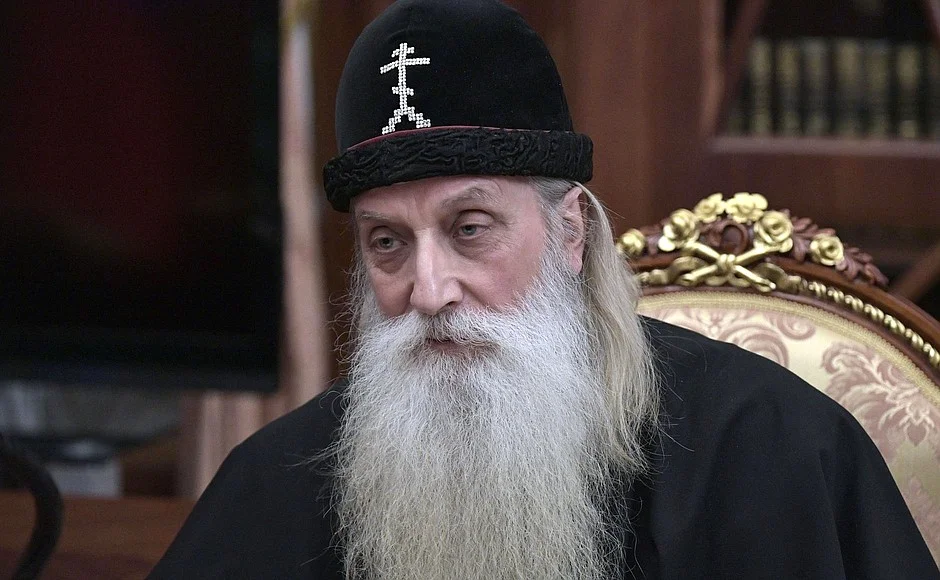
So far (former?) The structures of the UOC wander in the wilds of canonical casuistry, their compatriots-old people act more decisively. According to the head of the World Union of the Old Believers, the Cathedral of the Belokrinitsky Old Believer Metropolis in Brail (Romania) granted autocephaly of the Kyiv Archbishopia, which was previously part of the Russian Orthodox Old Believer Church with a center in Moscow. Recall that the Moscow Old Believers Metropolitan Cornelius supports the “special operation” even more temperamental than the Patriarch of the Russian Orthodox Church.
And in the Moskovo Danilov Monastery on May 27 (how many church events this day was accepted!) Synod of the Russian Orthodox Church, led by Cyril (the second member of this Synod, nominally, is still the Kiev Metropolitan Onufry, but they met, naturally, without it). Regarding Ukraine, the Synod was limited to expression of gratitude "to all workers to help refugees and injured civilians who remained in the conflict zone, as well as the victims, food and things." But relative to another country of his “canonical responsibility”-Lithuania-adopted a resolution full of anxiety: “To consider the issue of changing the status of the Vilnius-Lithuanian diocese, to establish a commission” (it was headed by the Patriarch himself); "To submit the results of the work of the commission for consideration." The fact is that a group of influential clerks of this diocese recently made the initiative of isolation from the Russian Orthodox Church. Historically, Lithuania was part of the Kyiv Metropolis within the boundaries of 1686, which of the Patriarchate of Constantinople and provided autocephaly three years ago.
The same Constantinople also claims to the territory of Azerbaijan, where the ROC diocese is now operating. Historically, this is part of the Caucasian Albania, and now the zone of influence of Turkey, on the territory of which the Patriarchate of Constantinople is located. The canonical rights of the Russian Orthodox Church are also doubtful to part of the territory of Kazakhstan and to the countries of Central Asia (these are the canonical territory of the Antioch Patriarchate), in Latvia, Estonia (in the interwar period, which were part of the Constantinople Patriarchate) and Belarus are the same organic part of the historical Kyiv Metropolitan, as well as the present Ukraine. And with the canonical belonging of some regions of Russia (for example, the North Caucasus), things are not easy.
Be that as it may, reformatting the structure of the Moscow Patriarchate in Ukraine will cause such a serious tectonic shift in all world Orthodoxy that Moscow will not have tools to keep the remnants of the canonical territory of the Moscow Patriarchate.