
Translated material
My personal denazification
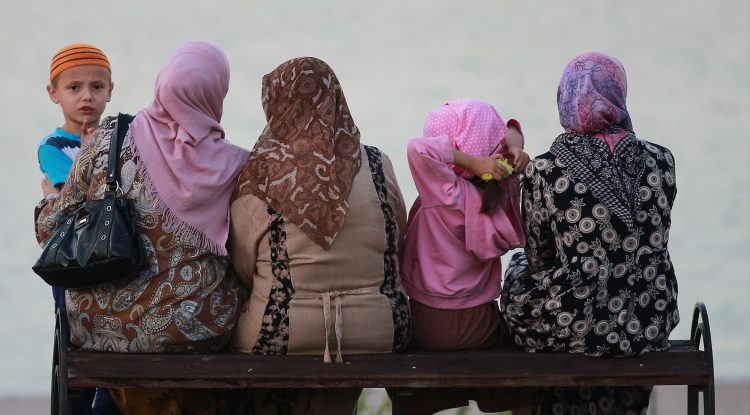
Journalist Farid Kurbangaleev - about the life of "non -Russians" in Russia
The Russian authorities and the pro -Kremlin media say that the purpose of the current war, which Russia wages against a neighboring state, is the “denazification” of Ukraine. But in fact, the authorities of Russia were engaged in “denacing” the Russian authorities - in relation to the “non -Russian” peoples living in the Russian Federation, ”said Farida Kurbangaleeva.

“Chukchi Tatar,” an unfamiliar woman wrote to Facebook on Facebook. To put it mildly, she did not like my post about the consequences of the Russian occupation in Buch, and she decided to send me a knock on an indestructible argument. It turned out to be my nationality, and this is explainable: there is nothing more shameful for the representative of the “state -forming people” than to be Chukchi, or Tatar, or Khokhl. That is - non -Russian.
This case made me recall the "denazification", which Putin motivated the military invasion of Ukraine. Contrary to his plan, since the beginning of a full -scale war, many spoke that it was required by Russia itself - and I completely agree with this. But the point is not only this.
What Putin calls “denazification” is not a fight against Nazism, but a desire to destroy national identity, to make Ukrainians not exist as a people. That is why in the occupied territories, according to the reports of the Ukrainian authorities, Ukrainian books are removed from libraries and then burned , and in schools they cancel the study of the Ukrainian language. There is no language - there is no culture, no identity, no people. At the same time, before that, other peoples have already been denacted in Russia. To a greater or lesser extent bloody - but, in any case, quite successfully.
My personal denazification began when I was a little more than three - then I went to kindergarten. At this age, I spoke perfectly in my native Tatar. My relative loves to recall how I briskly explained to her the meanings of pictures from the book about the world: “Menu ba әshәke gumbә, ә menca - әibәte” (“This is an inedible mushroom, and this is the right one”).
I admit, I can hardly repeat this trick now. The educators of the kindergarten were strictly punished: the Soviet child should have only one language-Russian. Everything else - from the evil one, forget.
Denacification did its job-and I understood the first class in Tatar well, but I could already speak with difficulty. So I communicate now: I understand everything, but in order to answer, I switch to Russian. Why waste time, frantically choosing words.
At the Tatarsky school, many had an unloved subject. Still: you knew that his study is absolutely pointless. At home, they rarely speak it, but somewhere else they don’t say at all, and in the future you are unlikely to need it. Some of my classmates-Tatars did not go to Tatar, and together with Russian children visited local history: that is, they practically did not know their native language by that time.
It was a late scoop in which the myth of friendship and equality of peoples was still actively supported. “Look how Farida studies well,” my teacher Anna Viktorovna addressed my classmate Roma. “Though a Tatar.”
I will assume that my mother also heard the same approving maternal intonation, who immediately after graduation - before entering the physical department of Kazan University - worked as a nanny in kindergarten. Another nanny - a woman from a Russian village - affectionately called the mother "you are my otlashechka." Approximately at the same time, one could hear in the Kazan tram: “Hey! Well, stop talking in your own language! ”
But we will not be distracted. These are my memories, not my mother.
I can say that almost all my city peers-Tatars-those whose childhood was in the 1980s-is a generation of language disabled people. Talking in Tatar was embarrassed and embarrassing. The main native speaker at that time were immigrants from the village. Of course, there was still a layer of the city intelligentsia - but so thin and fragile that in the cities of Tatar was almost inaudible. Unless in the National Theater.
Therefore, when in the 1990s the “sovereignty” was proclaimed in the republic, and the Tatar language was made to study, to teach this subject in schools and universities, for the most part, rustic ones became. Many of them spoke Russian with a strong accent, kept holding as confidently and did not even dress as well as their colleagues teaching physics, algebra or English. The attitude towards them was relevant: "collective farmers."
It is hard to imagine that some schoolboy was scolded for deuces in Tatar. Moreover, some parents openly admitted that they encourage children not to teach him. No one was worried about the certificate-fives and fours were still painting the graduation in it, but not to spoil the person’s life due to an unnecessary object. The same thing was the same in technical schools and institutes.
The time has come, and we ourselves became parents. What could we say to our children in the “mother’s language”? A couple of primitive phrases. Grandpa and grandmothers tried to catch up, but “lost” here is a keyword.
Several times I watched the picture when my mother’s “other mother, who“ spoke ”the child, was focused in the sandbox: this is all due to the fact that at home you speak two languages with him. This is wrong, we must decide. Among these “mentors” were those who gave their kids to schools of early development, where children study the English “AS Early as Possible” - either from the moment the child begins to turn over, or hold the head. After all, everyone knows that the sooner you begin to learn the second language, the better.
At the same time, Russians in Tatarstan are very tolerant Russians. They have long been accustomed to Tatar names, national holidays, interethnic marriages. They know the words “Istnmesz” (“Hello”), “Rhmәt” (“Thank you”) and even joke “Alla Birsә” (“God will give”). When I left for Moscow, I realized that in other regions the problem is not limited to the fact that the Russians do not want to learn the languages of nationalities. Russia is a country, although multinational, but xenophobic.
My experience of the host on the Russia channel was quite indicative. There was 2007 in the yard. On the federal broadcast, Alexander Burataeva and Lilia Gildeeva had already worked, but the negative wow effect was still obvious. I periodically stumbled on the Internet on the requests to “remove this chock” or the questions “what - they could not find Russians? And where is Katya, Masha, Natasha? ”
Colleagues, in general, treated me adequately and kindly. Well, except for the funny clarification whether I went to the Hajj and whether I ate a horse. As well as the usual issue for any national issue that sounds like this:
-And what can you call you in Russian?
- It’s impossible, this is my only name.
Anger, bargaining, reluctant acceptance.
I know many cases when Fidail tumbled by Fedya, Gulnur - Guley, Kamil - Kolya. Yes, and what to go far: my grandmother Hadich Fazleevna lived in a communal apartment under the nickname "Aunt Katya" for 50 years. My friend, Avarka Maryan, said that, studying at Moscow State University, she often introduced herself to Maryana. It seemed to her that they would treat her better. One girl from a university company periodically told her: "Well, you have to, you are so normal - just like us."
I remember how an employee of Sberbank, holding my passport in a citizen of the Russian Federation and having read my name, asked a citizen what state I am. As the director of the school, which my eldest daughter went into, doubted that her intellectual abilities are the same as that of the peers-Moscow: “Southern children (!) Physically mature, but sometimes mentally lag behind.” The midwife in the Moscow maternity hospital clarified whether it is customary to vaccinate newborn children in my country.
Once in a shopping center, a wallet was stolen from me. The first word that the arrived policeman uttered was: "Churbani?" I fell into a stupor, because, in my understanding, the law enforcement officer has no right to pronounce such a word. I replied: “These were two women of Slavic appearance,” which clearly shook the policeman into a stupor.
My second cousin Azamat could not rent an apartment in Moscow. Hearing his name on the phone, Muscovites were interested in: "Are you, Uzbek?" - And they hung up. He did not have time to tell them either a good position or a stable salary in Sberbank. Housing rented only through friends.

In order not to limit myself to examples from my personal life, I called my non -Russian friends and friends. I did not make any efforts, did not look for anyone and did not beg you to give me a comment. These are all the stories of “one handshake”.
Ibrahim, Kumyk, born in Grozny: “Once I gave documents for execution of a passport and could not get it for eight months. They told me that he was not ready yet. As a result, I just sat in the office of an employee of the passport office and said that I would not leave here until I get a document. The man clearly did not expect such impudence. I thought a little and took out my passport from the drawer of the table. ”
Arthur, a Chechen, born in Grozny: “We fled from Chechnya during the first Chechen, I changed many different schools. In the fifth grade he studied in Cherkessk. Once in the lesson, it was about the Chechens, and the teacher said, looking directly at me: “You are all terrorists, you need to isolate.” Having become a student, I could not get a job. I did not become a waiter in a cafe, a consultant in a store and a distributor of advertising flyers. A few years ago I was not allowed on New Year's Eve at the Moscow night club. The guard looked into my passport and refused, and answered the request, answered “without comment”. ”
Alexandra, Buryatka from St. Petersburg: “I did not want to go down in the subway, where they always looked at us hostile. Once we went there with the whole family and heard someone said: “We bred here.” Another time, I went to the escalator, and an unfamiliar man began to squeeze me out of line with his shoulder. I continued to go. Then he sharply pushed me back and said: “Do you have to always let the Russians go forward, understand?”
Alexandra became one of the organizers of the ethnic initiative "Buryats against the war in Ukraine." She asked Russian subscribers to talk about the manifestations of xenophobia, which they had to face in life. Messages have been going on for more than a month. Reading them, Alexandra almost stopped sleeping and wrote to me once at three in the morning, that she, like many of her respondents, needs a psychotherapist.
But I will return to my Tatars and to my denazification. A few years ago, Tatarsky in Tatarstan was again not obligatory to study. He was happy to visit not only the Russians, under the pressure of which the law was adopted, but also many Tatars. Why? It is clear to everyone that this is absolutely pointless: they don’t say almost anywhere in the Tatar, and in the future it will probably not be needed. Well, at least at this round, history was not forbidden to talk at home. The message was like this: “talk at home” and even “how bad that it was forbidden to you before”.
Thank you very much, but "conversations at home" is also a road to nowhere. This is also a loss of tongue, simply stretched in time. I can say this by the example of my acquaintances of Russians living in the Czech Republic for many years.
Here is a mother who rejoices for her 15-year-old daughter: “Well, yesterday, she signed a postcard with her grandmother without a single mistake!” That is, the girl says perfectly in Russian (because she talks at home at home), but she has big problems with grammar. The children of this girl will speak a little worse, and to write is already very bad. Grandchildren will speak broken and tell friends that the grandmother was Russian - cool, tell me?
Without systematic lessons and scientific programs, textbooks and teaching aids, courses and constant practice - the language cannot be preserved. Especially if you teach it optionally. Imagine if Russian would also be studied in schools. Or chemistry, or algebra. How many schoolchildren would wish to visit these subjects? Loss of a language in the conditions of “you want to learn-you want no” is a question of a couple of generations.
None of my Russian friends who were born and raised in Tatarstan have no Tatar and is not going to teach. As an illustration, I will give examples of conversations with my friends. Both are intelligent women with higher education and high level of empathy. "Chukchi of the Tatar" they will never call me.
Dialogue number one (took place before the abolition of the mandatory study of the Tatar language in schools):
- Tatar stands in the schedule every day, how tired it is! Katya (daughter, name changed) is very tired of him. Rather, he would be removed!
- And what will you do if it is removed?
- I want English to be delivered, and it would be good if Italian. I dream that she would leave to study in Italy.
“But not all children will go there.” Many will live in Tatarstan all their lives.
- So what? Why do they need Tatar?
- To talk with friends, for example. Listen, would you not want to know the Tatar to talk to me? After all, I speak to you in Russian.
- Well, you give! Is this a big victim too much - to study the Tatar in order to just talk to you?
Dialogue number two, but I will give it as a monologue (I was uttered after the abolition of the Tatar language as an obligatory subject):
- Thank God, Tatar was removed. As I recall the school, I will start up so (it says in Tatar the phrase “My homeland is the Republic of Tatarstan”, deliberately carpeting words). It would be better if some local history was put instead of him. I have a bunch of Russian colleagues who came from Kazakhstan at work. With difficulty, Russian citizenship is obtained here, they pass the Russian exam, imagine. But there they are oppressed, forced to teach Kazakh. I even thought: it is good that my grandparents came to build KamAZ, not a conditional baikonur at one time. And then I would have to suffer like that - to teach Kazakh or resolve issues with Russian citizenship.
Wait, please. Here my grandparents did not come anywhere to build a KAMAZ. And other grandparents did not come either. They lived all their lives on this earth. Before that, their grandparents lived on it for centuries. They spoke, read and wrote in Tatar. Until someone decided to administer and regulate this process. Denachet Tatars, roughly speaking.
Yes, Putin introduced the term into circulation, but, of course, not the process itself. The policy of unification of the "foreigners" was pursued in the Russian Empire, and under the Soviet regime - reached the climax. Over the past 100 years, the Tatars twice changed the alphabet. To the Bolshevik coup and for some time after it - the Tatars wrote and read in Arabic. This writing was not touched even when on the fence of the Lyadsky kindergarten in the center of Kazan hung a sign “The entrance is forbidden to musicians and Tatars”.
In the late 1920s, the Tatars were transferred to Yanalife-an alphabet based on Latin, and already in 1939 to Cyrillic-by the way, the most inappropriate option for Tatar phonetics. As a result, the Tatars were cut off from a huge layer of literature, poetry, philosophical and religious works created on the basis of the Arab alphabet. And accordingly, from their own history and culture.

My father, born in the 1940s, spent his childhood and youth in the old Tatar settlement-the lowland part of Kazan, where the Tatars historically lived. Now this area has been turned into a colorful tourist bast with a pronounced national color. But it must be understood that until 1917 the Tatars did not have much choice: for the most part, they did not have the right to live in the prestigious upper part of the city.
According to my dad, in his childhood there was not a single Russian who did not know how to speak Tatar. And by the middle of the last century there lived a lot of Russians there. His childhood girlfriends - Polina and Katya - switched to Tatar whenever they wanted to be sickening at a mother who did not know Tatar. This means that where the denazification process did not penetrate, wonderful results were visible - genuine, not the ostentatious friendship of peoples. With true equality, mutual respect and preservation of national identity.
Nowadays, this plot seems fantastic, and I can’t find the answer to the question: why was it not shameful for those Russians to speak Tatar and where did these Russians go? I also feel guilty from the fact that I myself did not make enough effort to develop and preserve the language in my family. I think it was necessary to hire a tutor. I think that I had to buy a tutorial. I think you need to talk more with old parents. At least now, at least somehow. And at least through a stump-column, but still try to talk with children.
So in the words of an unfamiliar woman from Facebook there is a share of truth. In some ways, I really “Chukcha Tatar” is an incomprehensible hybrid, a person without a clan and a tribe and without a tongue, trying to grasp the dying roots.
Well, what will happen later, when Ukraine won in the war with Russia not only moral, but also physical victory? What will happen when Ukrainians free the occupied territories when they return the Ukrainian language to schools, when new beautiful books are printed on it? And Russia (I really want to believe it) will finally really be free. Что будет не с украинцами, разумеется, а с нами — денацифицированными российскими чебуреками? Хочу ошибаться, но я, кажется, знаю — что.
Недавно я случайно наткнулась в фейсбуке на откровенно ксенофобский комментарий. В ветке обсуждались санкции, которые власти США побоялись ввести против Алины Кабаевой. Один из участников разговора заметил: «А что с нее взять? Обычная татарская женщина: муж, дети, семья. Много ума не надо». Этот комментарий лайкнул человек, с которым у меня несколько десятков общих друзей, автор пламенных постов против войны в Украине.
На мое недоуменное замечание, фейсбук-друг наставил кучу смайликов-скобочек и написал: «извините». А когда я заметила, что мне совсем не смешно, резко сменил тон. Он несколько раз повторил, что «говорит со мной на равных» и посоветовал «не нагнетать душную тему».
Так что мы, нерусские, пойдем ко дну с этим кораблем — туда, куда его отправили свободные украинцы. Говорящие на родном языке и дома, и в школе, и на работе, и где захотят.
Мы пойдем туда вместе с нашей либеральной общественностью, которая будет искренне радоваться победе Украины, а потом возьмется строить «прекрасную Россию будущего». Но кое-что в этой России останется прежним. В ней никого не заставят учить неродные или ненужные языки. Ведь это нарушение прав, свобод и вообще недемократично. Стремящихся делать это самостоятельно будет все меньше. Желающие смогут разговаривать дома или брать факультатив. И не нагнетать, разумеется. Тот, кто попробует возмущаться, будет объявлен националистом и русофобом.
Это я, чукча татарская, вам говорю.
The author’s opinion may not coincide with the opinion of the editorial office.