
Translated material
David against Goliath. Is it true that together with the missile cruiser "Moscow" went to the bottom of the whole military era
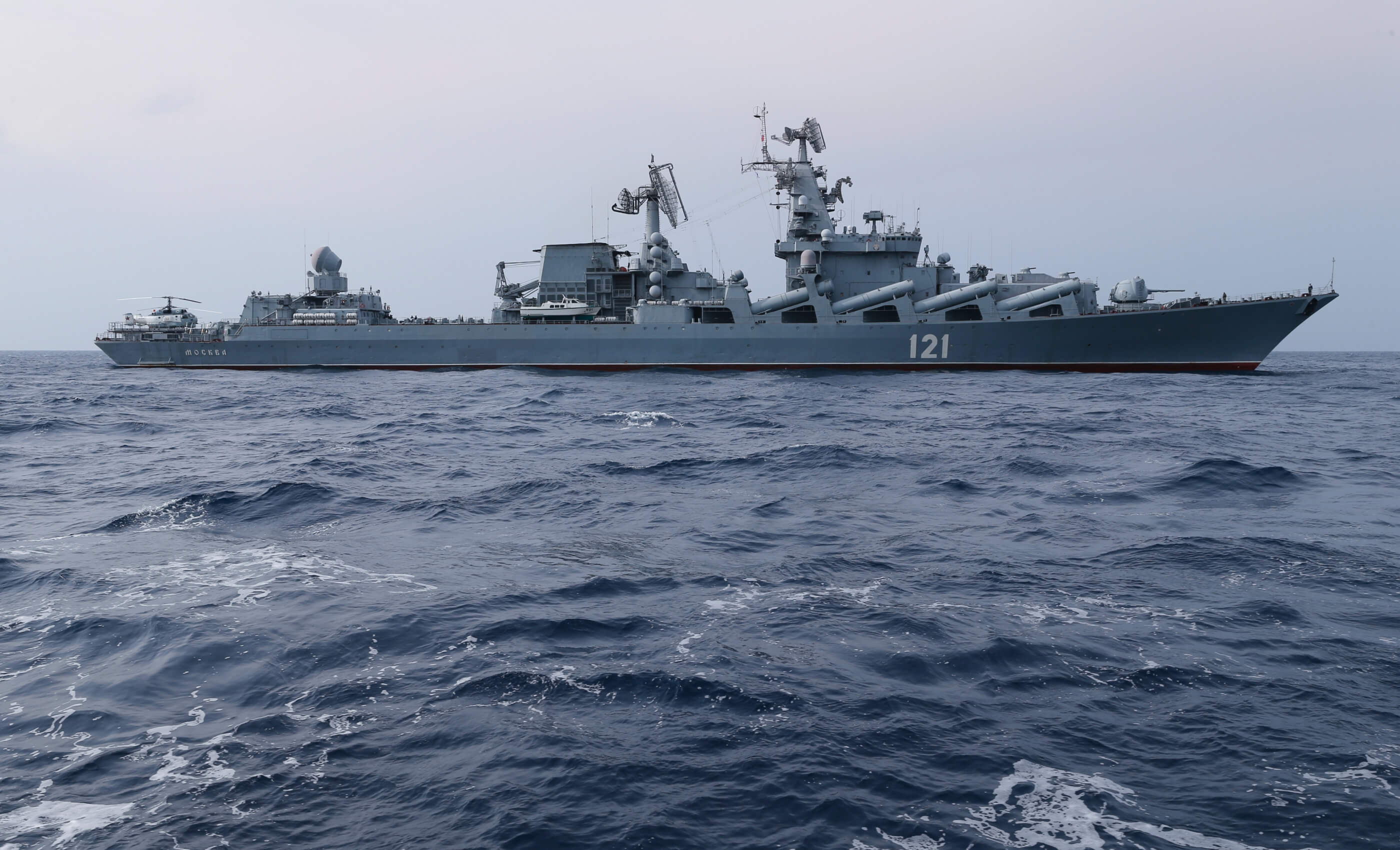
Moskva missile cruiser. Photo: Russian Defense Ministry Press Service / Ap
The Moscow missile cruiser, the Moscow missile cruiser became not only an important symbolic loss for the Russian armed forces, but also made many military thinks whether traditional weapons remain as effective in the era of mobile point blows that may not be attached to places of intense battles.
With the permission of The Atlantic, Mediazona publishes the translation of the text of the Elliot Arman, a former American Marine and a participant in special operations in Afghanistan and in the Middle East, and now a writer and journalist, in which he argues about the prospects for warfare in the XXI century amid fighting in Ukraine. In the original, the text was published on May 22.
On March 9, 1862, at the height of the Civil War in the United States, the Monitor’s warship entered into battle with the Ship of the Confederation of Virginia. The four -hour duel, which became the first battles of armadillos in history, ended in a draw - and instantly put the wooden battleships completely useless and outdated.
On December 7, 1941, Japan attacked Pearl Harbor. If the battle of the battleships marked the final victory of iron over the tree, then the Japanese deck aircraft set the point in the dispute “Who is stronger: the battleship or aircraft carrier?”, Sending to the bottom the best American warships in just a couple of hours.
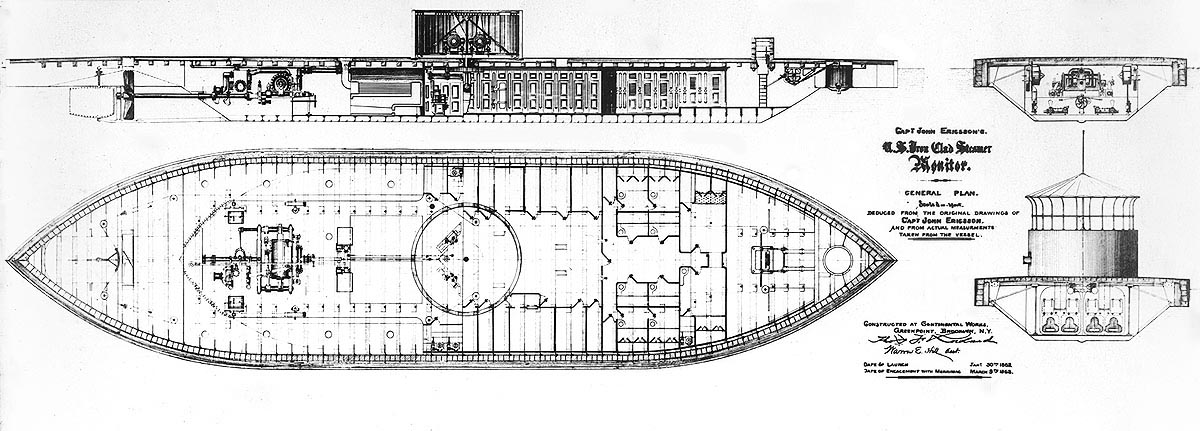
Scheme of the warship "Monitor". Photo: US NAVAL HISTORICAL CENTER PhotOGRAPH / Wikipedia
On April 14, 2022, the Ukrainian military sank the Russian cruiser Moscow using the Neptune anti -ship missiles. This blow forced the generals of the leading world powers to think: is this a new page in military affairs? After 20 years of wars in the footsteps of the attacks of September 11, the attention of the US Armed Forces is first focused on the opponent of the opponent of the same level with them. In the Pentagon with similar challenges, they have not encountered the Cold War and are ready for fundamental changes. This process is accompanied by violent disputes, especially in the Marine Corps.
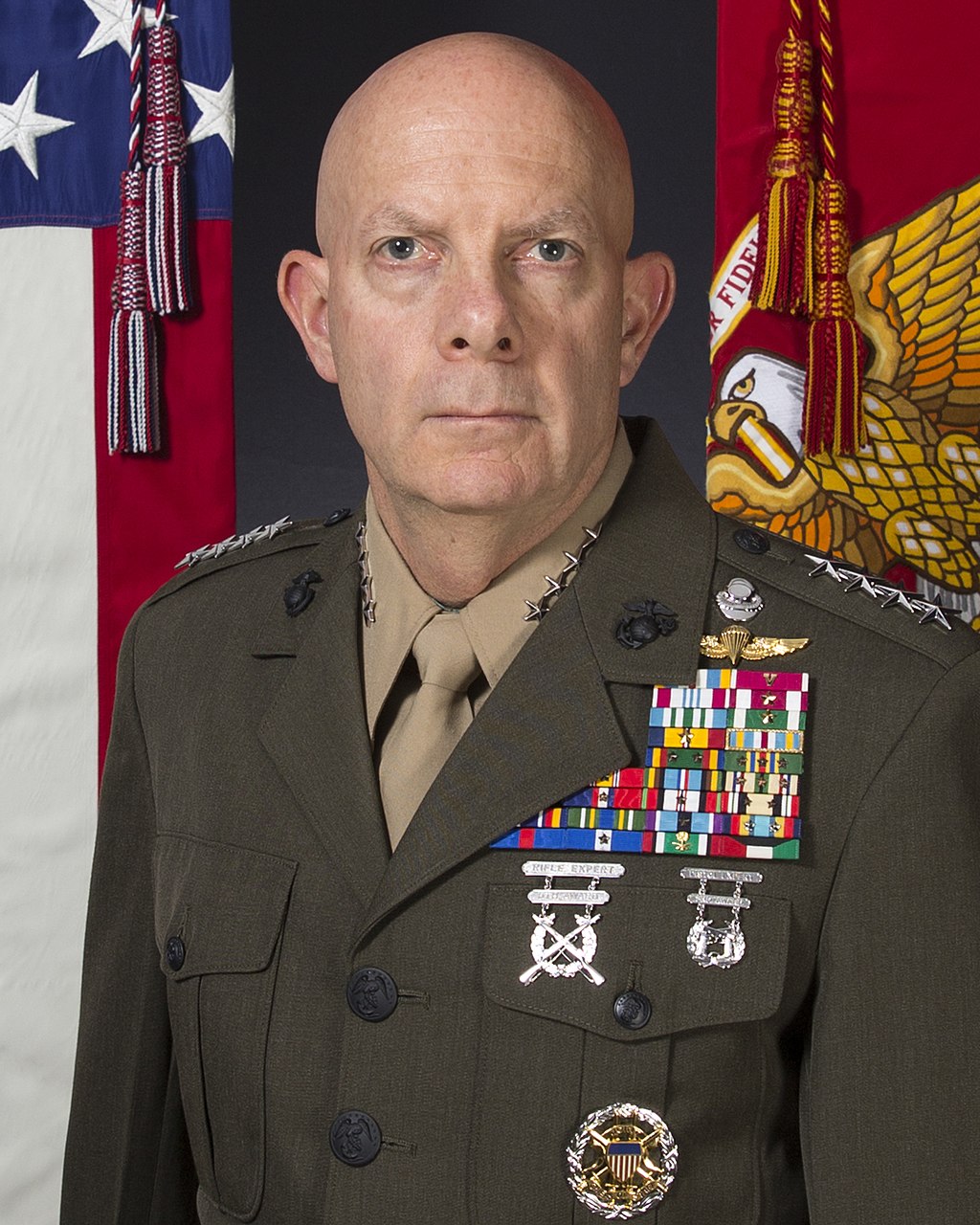
General David Berger. Photo: History.navy.mil
In March 2020, General David Berger, commandant of the Marine Corps, published a document called Force Design 2030 - a strategy for the development and reorganization of the marine corps: “Preparation of personnel, equipment, organization and doctrine of the marine corps body do not comply with the requirements of a rapidly changing future operational situation.” The “future operational situation” means a potential military conflict with China in the Pacific Ocean. But in many respects, this hypothetical conflict resembles a current war in Ukraine.
The US armed forces are “platform-centric”: the army relies on tanks, the fleet-on ships, air forces-on airplanes, and all this is a technologically advanced and incredibly expensive equipment. But the war in Ukraine shows that the main means of damage on Earth is not a tank, but the Javelin anti -tank missile. The main means of damage in the air is not a plane, but a stinger air defense missile. And the blow to the cruiser "Moscow" showed that the main means of defeat on the water is not a warship, but the Neptune missile.
Berger is sure that now the war will have to wage in a new way. In his development strategy, the general emphasizes: “We must recognize the consequences of the spread of high -precision missiles, shells and other smart weapons - and also look for innovative means of combating these threats.” The weapons, which the general writes about, is exactly what allows the Armed Forces of Ukraine to burn Russian tanks, knock down Russian helicopters and drown Russian warships. The successes of the “anti -platform -centric” Ukrainian David in the fight against the “platformocentric” Russian Goliath are greeted with enthusiasm in the West, but the events on the battlefield in Ukraine look anxious for the American Goliath.
The US armed forces, like Russia, historically built around the same platforms - large and expensive military equipment. The refusal of warfare with the help of such funds is fraught with as sociocultural difficulties (how is it, a pilot without an airplane? A tanker without a tank? A sailor without a ship?), And difficulties associated with the redistribution of resources. It is necessary to rebuild not only the armed forces itself, but also the defense industry. She will have to abandon obsolete high -budget projects - for example, aircraft carriers such as Gerald R. Ford, each of which costs $ 13 billion - in favor of new, potentially less beneficial technology from the point of view of spending. Take at least the Dron-Kamikadze Switchblade, which can destroy the tanks-it costs only 6 thousand dollars apiece.

Switchblade 300 10C unmanned system. Photo: CPL. Alexis Moradian / Us Marine Corps Via Ap
Berger's main idea is to get borne. A few months ago, he announced a reduction in the numerical composition of the Marine Corps. All tank units, as well as several infantry battalions, aviation squadrons and artillery batteries will be disbanded. According to Berger, the corps “proceeds from the fact that additional resources will not be allocated”, therefore, “you need to abandon part of the existing funds in order to release resources to such necessary new funds.”
Divest to Invest (reducing expenses in the same area for the development of another) becomes a new motto of marine infantrymen, but not everyone agrees with this approach. A group of retired generals publicly opposed Berger - an unprecedented example of disagreement in the ranks of the highest military command.
One of the disagreements, Berger's predecessor as head of the corps, General Charles Krugli complains: “It is proposed to abandon the most powerful trusted weapons and purchase equipment that is still under development. We are represented by old farts who want the Marine Corps to always remain the same as in the good old days, as if we do not understand how important the technology in the modern war is. It has nothing to do with reality. ”
To discount the criticism of Krilak would be a mistake. During his stay at the post, he introduced several significant innovations and developed a strategy that allowed the Marines to quickly respond to military challenges in the world after the events of September 11. Under him, the marine infantry adopted the Bell V-22 OSPREY convertoplane, the first of its kind serial aircraft with rotary screws, which is both a plane and a helicopter.
The strategic vision of the current commandant Berger is also unique in a sense: in the case of a hypothetical conflict with China, he offers to move between the islands in the southern part of the Pacific Ocean with platoons of 60–70 well -trained and well -equipped marine infantrymen who will apply blows to the Chinese fleet from these bridgeheads with the help of modern missile systems and other weapons of the long -range radius of action. The war at the sea, according to Berger, is won by a series of point blows - about those that were inflicted on the Moscow cruiser.
The round -of -the -way is extremely skeptical in the assessment of such a strategy: “It is impossible to imagine that the marine infantrymen could go unnoticed on disputed islands and receive supplies there. In addition, one cannot underestimate the power of the Chinese armed forces. Yes, marines are able to shoot well and move quickly between positions. But do they know how to evade Chinese missiles? All this will lead to big losses, and getting the wounded and killed will be extremely difficult. You won’t send the fleet for them. ”
However, Berger also has like -minded people. For example, Admiral James Stavridis, who served more than forty years in the South China Sea. “The army of the future is the Marine Corps today,” he says. “Berger does a very important thing.” The marine infantrymen themselves often say that the corps should be best ready for situations for which America is worst of all. In the 1930s, it was the Marines who developed a doctrine of landing operations, which during the Second World War allowed not only to seize a number of islands in the Pacific Ocean, but also to help the Ground Forces to liberate Europe. The sea infantry, according to Stavridis, always attached great importance to innovations.
It must be understood that all these are not just disputes within the same kind of troops, but rather serious thoughts on how to effectively wage war in the coming decades: with the help of traditional expensive or with the help of promising and relatively cheap weapons. History knows many such examples. On the eve of the First World War, many senior military ranks professed the “cult of the attack”: they believed that well -trained troops could reveal any defense. This principle has established itself well during the Napoleonic Wars, but against the charming rifles and machine guns of the beginning of the 20th century it turned out to be ineffective. Millions of victims and the notorious battles on Marne and Somme convinced the generals of that era that you can’t just throw people with bayonets in a direct attack.

Seth Multon. Photo: multon.house.gov
Seth Multon, a former Marine Corcodier, a war veteran in Iraq and a member of the House of Representatives in the Armed Forces Commission, believes that conservative generals simply do not realize how much modern technologies are changing the situation on the battlefield and how quickly the military needs to adapt to them. “If you look at what types of weapons are most often asked by Ukrainians,” says Multon, “then these are not any towed howitzers, but drones with weapons on board, anti-tank and anti-ship missiles.”
But what if Berger is mistaken? Can his strategy lead to the fact that the corps will be ready only to an extremely highly specialized military scenario that will never happen? According to Multon, here it must be borne in mind that the corps has always played the role of an incubator of new ideas. Sea infantry is one of the smallest and flexible births of the Armed Forces. “The United States has enough resources to give the corps everything for the war, which will not be,” says Multon. “But not to give money for the war that is already going on is an unacceptable mistake.”
Events in Ukraine seem to confirm Berger’s hypothesis about the success of the “anti -platform -centric” warfare. The First World War at one time also showed that the defense may be stronger than the attack. Of course, nothing forever, and the most modern methods of warfare will be replaced even more advanced. When we finished the interview, General Kruglak once again emphasized the importance of this thought: “We need to be careful and not to extract incorrect lessons from the situation in Ukraine. Look: you take some measures. Then you understand that the enemy accepted countermeasures. And you already need to come up with countermeasures on its countermeasures. ”

The French line is Magino. Photo: AP
One of the most famous countermeasures developed after the end of the First World War was the French line of Magino - the real shrine of the “defense cult”. But the French did not take into account one important point. Over two decades, progress has gone ahead: more advanced tanks, planes appeared, new military doctrines were developed. All this again shifted the balance of power. The offensive again turned out to be stronger than protection. During the Blitzkrieg in June 1940, the Germans simply bypassed the allegedly impregnable Magino line.
Berger and the Marine Corps remains to be hoped that their strategy will not turn into a new Magino line, but will protect the generation of Americans from their own battle on Somma or Moscow.
Author: Elliot Akerman
Original: A Whole Age of Warfare Sank with the Moskva ; The Atlantic, May 22, 2022
Translation: Alex Dee